Housed inside the 19th-century Mercado da Ribeira on Avenida 24 de Julho, Time Out Market brought the food-hall concept to Lisbon before it became a global export. The format corrals some of the city's most recognised chefs and producers under one iron-and-tile roof, making it a practical entry point into Portuguese culinary culture rather than a shortcut around it.
 Discover on Pearl
Pearl is the En Primeur Club membership app — saves, bookings, and concierge access live there. Same editors, same standards.
- Address
- Mercado da Ribeira, Av. 24 de Julho, 1200-479 Lisboa, Portugal
- Phone
- +351 21 060 7403
- Website
- timeout.pt
Where the Ribeira Meets the Restaurant Scene
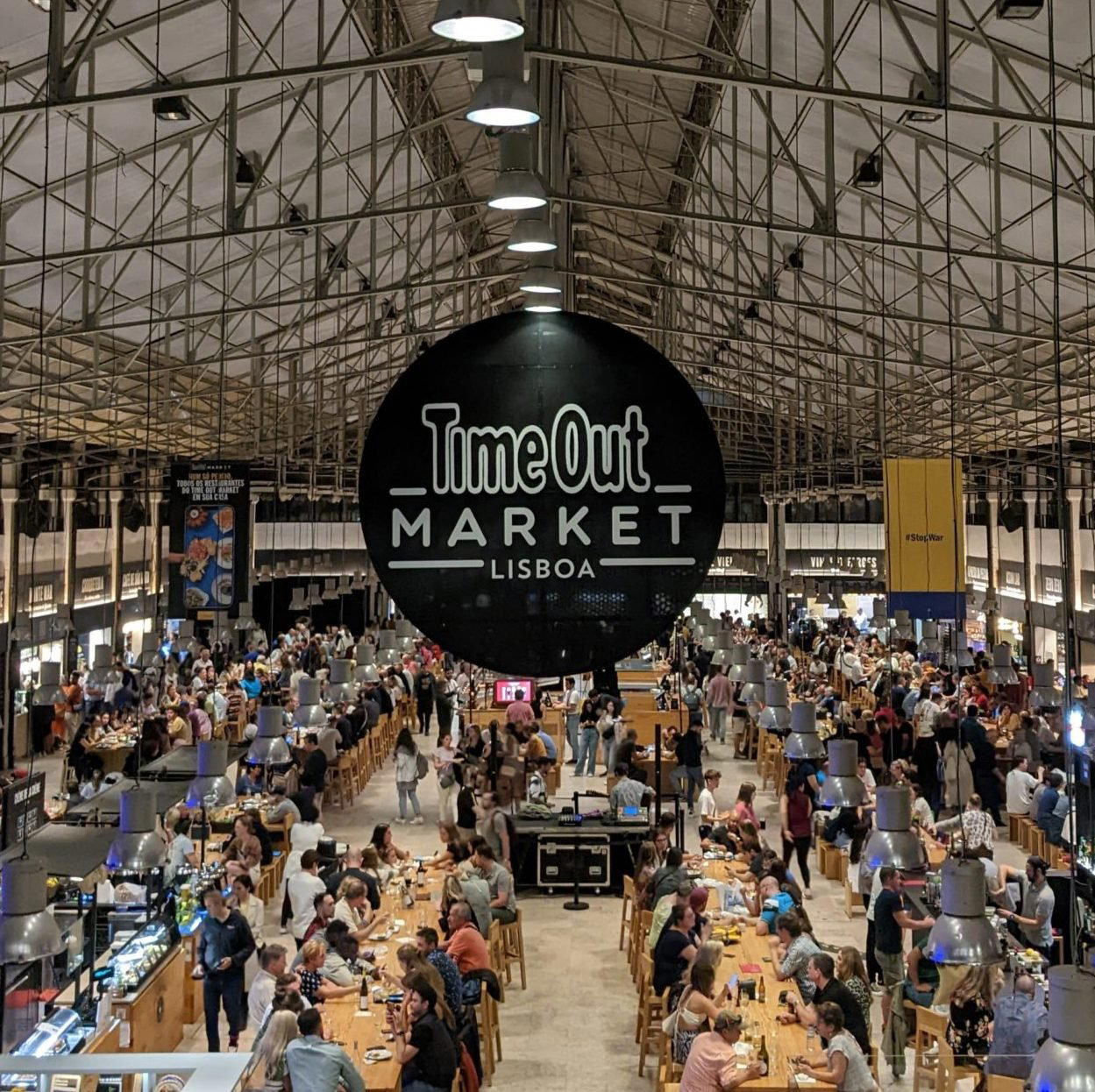
The approach along Avenida 24 de Julho sets the tone. The Mercado da Ribeira building, cast iron, 19th-century bones, the Tagus a few hundred metres south, has served as Lisbon's central market for well over a century. Time Out Market uses the western hall of that structure as a Portuguese food hall. The surrounding neighbourhood, Santos and Cais do Sodré, was already shifting from a late-night district into something with more daytime pull, and the market accelerated that change. The physical environment still reads as market rather than restaurant: long communal tables, a noise level that climbs by early evening, natural light through the arched windows during the day.
The Food-Hall Model and What It Does for Portuguese Cuisine
Food halls have proliferated across Europe over the past decade, but the Lisbon format carried a specific editorial logic from the start. Rather than aggregating random tenants, the Time Out Market model, at least in its original Lisbon iteration, curated stalls around named chefs and recognised producers, giving visitors a structured way into a food culture that can otherwise feel opaque to first-time visitors. That distinction matters. Portuguese cuisine is not a monolith: it runs from the deeply conservative (bacalhau preparations that have changed little in generations) to the architecturally ambitious (the tasting-menu restaurants at the top of the city's fine-dining tier). A single market visit can sit somewhere in between, exposing the range without requiring a week of reservations.
That positioning places it in a different competitive tier from Lisbon's fine-dining circuit. Restaurants like Belcanto and CURA operate at the €€€€ end of the market, with tasting menus, reservation windows measured in weeks, and a service formality that sets a specific kind of expectation. Eleven and 50 Seconds from Martin Berasategui sit in the same bracket. Time Out Market operates at a completely different register: counter service, communal seating, and a format designed for movement rather than a fixed table. Neither approach is a substitute for the other.
Portuguese Culinary Culture Through a Collective Lens
What the market does well is function as a cross-section. The cultural roots of Portuguese food, Atlantic seafood, the bacalhau tradition, pastry techniques with Moorish and Jesuit origins, wines from regions that remain underknown outside the country, are all accessible in compressed form. For a visitor who has three days in Lisbon rather than ten, that compression is practically useful. The pastel de nata alone has an entire cultural history embedded in it: developed by monks at the Jerónimos Monastery in Belém, commercialised in the 19th century, now so widely replicated that the distinction between versions matters more than the fact of the thing itself.
The market's proximity to the Tagus also reinforces the logic of Atlantic-sourced cooking. The river and ocean fishing traditions that define much of southern Portuguese cuisine are not an abstraction here, they're a few minutes' walk from the counter where you order them. That geographic grounding is harder to appreciate inside a tasting-menu restaurant, where the sourcing is present in the food but the context has been edited out.
How It Sits in the Wider Portuguese Dining Picture
Portugal's restaurant scene beyond Lisbon has developed considerable depth over the past two decades. Vila Joya in Albufeira, Casa de Chá da Boa Nova in Leça da Palmeira, and The Yeatman in Vila Nova de Gaia have all built strong credentials at the serious end. The Algarve has its own fine-dining circuit, with Ocean in Porches and Gusto by Heinz Beck in Almancil drawing destination diners. Porto has Antiqvvm. Madeira has Il Gallo d'Oro in Funchal. Even inland, Ó Balcão in Santarém and coastal properties like Fortaleza do Guincho in Cascais and Al Sud in Lagos round out a national scene that has expanded well beyond the capital.
Time Out Market does not compete with any of these. It operates as an entry point or a parallel track, somewhere a visitor might eat lunch before a dinner reservation at a formal restaurant, or somewhere a local uses on a weekday when the overhead of a tasting menu makes no sense. The food-hall model has since been exported to cities including Miami, Boston, and New York, where formats like Le Bernardin's neighbourhood sit at the opposite end of the spectrum. Lazy Bear in San Francisco represents yet another model, chef-driven communal dining that shares some of the market's social format while operating at a completely different price and ambition tier. The Lisbon original remains the reference point for how the brand is understood globally.
Seasonal and Timing Considerations
Summer in Lisbon runs long and hot, and the market's location near the waterfront makes it a practical midday stop during peak months, when the city above Baixa can feel relentless by early afternoon. The Cais do Sodré neighbourhood is accessible directly from the train station of the same name, which connects to Belém and Cascais along the waterfront line. Evenings from Thursday through Saturday push noise and occupancy to their limits; if the communal-table format is a deterrent, a Tuesday lunch sits at the quieter end of the weekly cycle. The 2Monkeys creative format nearby offers a contrast in the smaller-venue register if the market's scale is not the right fit.
Planning a Visit
The market does not require a reservation, and walk-in is the standard format, with stalls operating on individual queuing systems. Arriving before noon on weekdays keeps wait times manageable at the most popular counters. The market is open daily from 10 AM to 12 AM. The Avenida 24 de Julho address sits directly on the city's main waterfront artery, with tram and bus connections running frequently; the Cais do Sodré metro station is a short walk east.
Peers in This Market
Comparable venues nearby, for context on price, style, and recognition.
| Venue | Cuisine | Price | Notes |
|---|---|---|---|
| Time Out MarketThis venue — the venue you are viewing | Portuguese Food Hall | $$ | |
| Tricky's | Modern Portuguese Small Plates | $$$ | Bairro Alto |
| Hanoi Green | Authentic Vietnamese | $$ | Chiado |
| A Praça | Portuguese Mediterranean | $$ | Alcantara |
| Café Social Eatery | Lebanese-Inspired Middle Eastern | $$ | Belém |
| Sítio Valverde | Modern Portuguese | $$$ | Baixa |
Continue exploring
More in Lisbon
Restaurants in Lisbon
Browse all →
Bars in Lisbon
Browse all →
Hotels in Lisbon
Browse all →
At a Glance
- Lively
- Trendy
- Modern
- Energetic
- Casual Hangout
- Group Dining
- Family
- Brunch
- Open Kitchen
- Craft Cocktails
- Beer Program
Hipster-leaning bustling atmosphere with bright lighting and communal seating amid diverse food stalls.