TiER sits in Neukölln, one of Berlin's most active drinking neighbourhoods, at Weserstr. 42. The bar operates within a Berlin scene that has moved well past novelty formats toward program-led venues where what's in the glass carries the weight. For visitors mapping the city's serious drinking circuit, TiER belongs on that list alongside the capital's more credentialed addresses.
 Discover on Pearl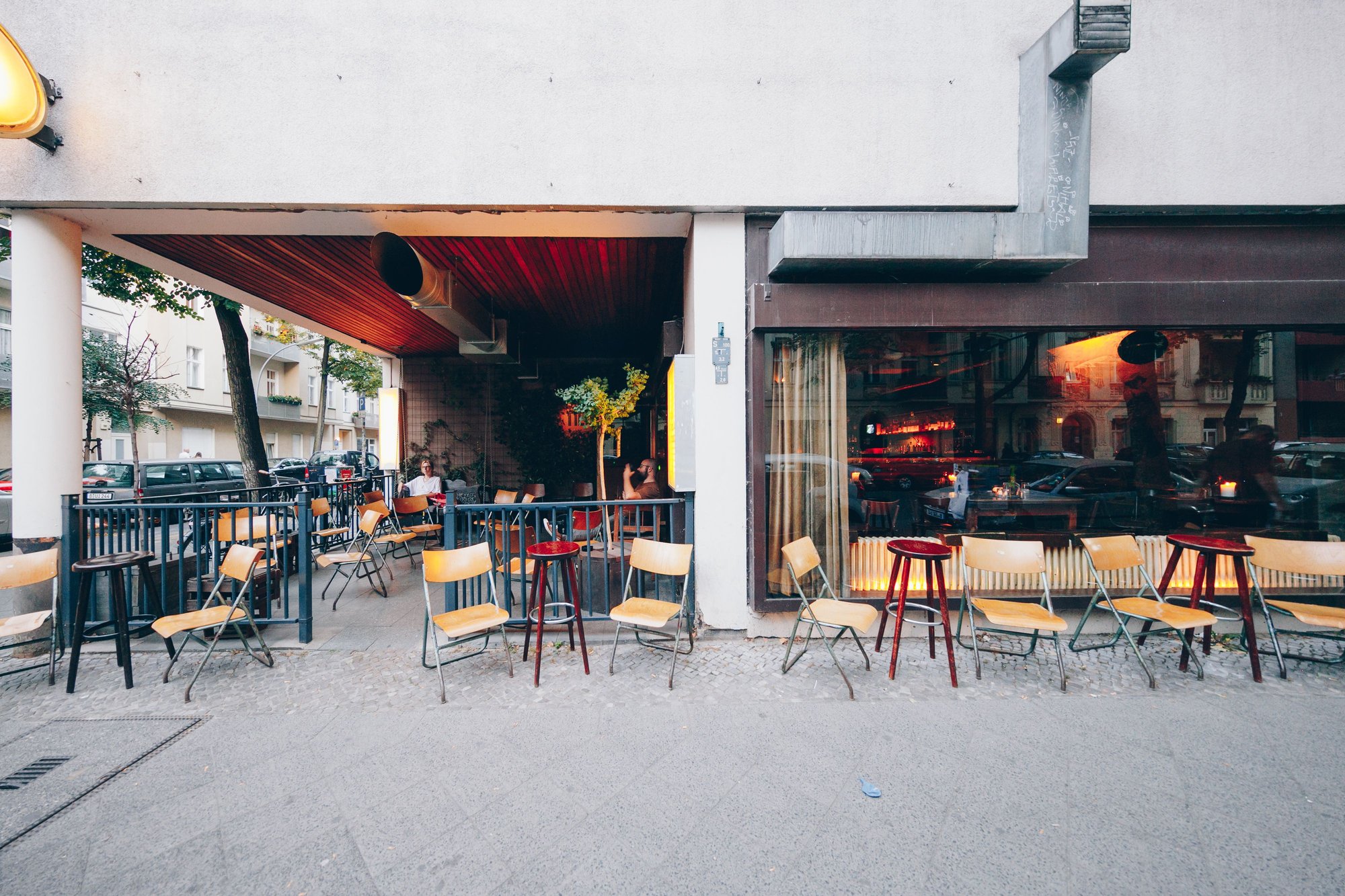
Neukölln's Drinking Culture and Where TiER Sits Inside It
Berlin's bar scene has never been monolithic. The city splits, broadly, between the high-volume club infrastructure that draws international attention and a quieter, more considered tier of neighbourhood drinking rooms where the program does the work. Neukölln, and Weserstrasse in particular, belongs to the second category. The street runs through a part of the city that has accumulated a density of independent bars, wine rooms, and bottle shops over the past decade, none of them competing on spectacle. TiER, at number 42 on that street, operates in this environment: a room where the surroundings are incidental and what you're drinking is not.
That neighbourhood context matters when placing TiER against Berlin's more formal fine-dining addresses. Venues like Rutz and FACIL operate with full sommelier teams, deep cellar programs, and Michelin recognition that frames the wine list as infrastructure for a tasting menu. Nobelhart & Schmutzig anchors its wine selection tightly to its radical localism. TiER operates differently: this is a bar-first address, where the list exists as the destination rather than the support act.
The shortlist, unlocked.
Hard-to-book tables, cellar releases, and concierge-planned trips.
Get Exclusive Access →The Wine List as the Room's Defining Argument
In a city where wine bars have multiplied faster than they have differentiated, what separates the serious from the decorative is curation depth and the thinking behind it. The broader European natural wine movement produced a wave of venues that stock similar producers, pull from the same Loire and skin-contact playbook, and present lists that feel interchangeable. The more interesting Berlin addresses have moved past that into something with a clearer point of view.
TiER's Weserstrasse address places it within walking distance of a cluster of Neukölln venues that have collectively shaped the neighbourhood's reputation for program-led drinking. The street-level format common to this part of the city, smaller rooms with direct access from the pavement, creates an atmosphere that is immediate rather than ceremonial. You are not announced; you arrive and sit. That informality places different pressure on the list: without the architecture of a formal dining room to signal quality, the glass has to do it alone.
Germany's own wine production provides useful contextual scaffolding here. The country's Riesling tradition, and particularly the Mosel's precision-acid style, has gained significant international critical re-evaluation over the past fifteen years. Venues like Schanz in Piesport sit inside wine country that is generating renewed collector interest. A Berlin bar with serious curatorial ambition has access to that domestic pipeline alongside whatever import range it builds. The question, always, is whether the selection reflects a position or just availability.
Berlin's Fine-Dining Peer Set and the Contrast It Creates
Mapping TiER against the city's Michelin-recognised restaurants is useful not because TiER competes with them on food, but because the comparison clarifies what it is. CODA Dessert Dining holds two Michelin stars and approaches its beverage program with the same technical rigour it applies to the kitchen. Restaurant Tim Raue operates at two stars with a kitchen that has defined one strand of Berlin's international dining identity. These are venues where the investment in wine is partly a function of price point and Michelin expectation.
TiER operates outside that framework. The Weserstrasse room is not positioned around tasting menus or star recognition, which means its list is built for a different reader: someone who arrives specifically to drink, probably with a working knowledge of producers and regions, and who expects the selection to reward that knowledge. That reader exists in Berlin in larger numbers than the city sometimes gets credit for. The same audience that supports the serious natural wine rooms in Prenzlauer Berg and Mitte has been moving south and east into Neukölln as the neighbourhood's options have improved.
For comparison outside Berlin, Germany's most credentialed wine-program restaurants offer a useful calibration. Aqua in Wolfsburg and Vendôme in Bergisch Gladbach carry some of the deepest cellar depth in the country, operating at three-star level where the list reflects decades of acquisition. Waldhotel Sonnora in Dreis is similarly regarded. These are reference points for what German wine curation looks like at its most resourced. A neighbourhood bar in Neukölln is doing something structurally different, but the underlying question, whether the list reflects a genuine position, applies equally.
What the Weserstrasse Location Signals
Address is rarely neutral in Berlin. Mitte fine dining, Charlottenburg old-guard restaurants, Kreuzberg informal creative kitchens, Neukölln independent bars: the geography carries its own expectations. Weserstrasse in particular has been a consistent address for programme-led venues that trade on knowledge rather than ceremony. A bar that opens on this street is making an implicit statement about its audience and its register.
That positioning also connects to a broader European trend. Cities from Copenhagen to Lisbon have seen the emergence of wine-bar formats that sit between a retail bottle shop and a formal restaurant: knowledgeable staff, rotating list, low-intervention producers, minimal food, high conversational intensity. Berlin has its own version of that format, and the Neukölln cluster around Weserstrasse is among the city's more developed expressions of it. For visitors already familiar with counterparts in other European capitals, the city's serious bar tier offers comparable depth. Our full Berlin restaurants guide maps the broader picture for anyone building an itinerary.
International reference points are worth noting for context. The wine-bar format has been theorised most thoroughly in cities like New York, where venues like Le Bernardin and Atomix represent the fine-dining end of beverage-program ambition, and where the gap between that tier and the neighbourhood bar has driven a productive middle category. Berlin is working through a similar differentiation, and TiER's location suggests it is operating in that productive middle.
Planning a Visit
TiER is located at Weserstr. 42, 12045 Berlin, in the Neukölln district. The area is accessible by U-Bahn via the Hermannplatz or Rathaus Neukölln stations. Weserstrasse is walkable from both. The neighbourhood is leading visited in the evening, when the street's bar density makes it practical to treat a visit to TiER as part of a longer circuit rather than a standalone destination. No booking method, hours, or pricing are confirmed in our current data, so checking direct before visiting is advisable.
Quick reference: Weserstr. 42, 12045 Berlin, Neukölln. Visit in the evening. Confirm hours before arrival.
Weserstr. 42, 12045 Berlin, Germany
Comparable Spots, Quickly
A quick look at comparable venues, using the data we have on file.
| Venue | Cuisine | Price | Awards | Notes |
|---|---|---|---|---|
| TiER | This venue | |||
| CODA Dessert Dining | Creative | €€€€ | Michelin 2 Star | Creative, €€€€ |
| Rutz | Modern European, Modern Cuisine | €€€€ | Michelin 3 Star | Modern European, Modern Cuisine, €€€€ |
| Nobelhart & Schmutzig | Modern German, Creative | €€€€ | Michelin 1 Star | Modern German, Creative, €€€€ |
| FACIL | Contemporary European, Creative | €€€€ | Michelin 2 Star | Contemporary European, Creative, €€€€ |
| Horváth | Modern Austrian, Creative | €€€€ | Michelin 2 Star | Modern Austrian, Creative, €€€€ |
Need a table?
Our members enjoy priority alerts and concierge-led booking support for the world's most difficult tables.
Get Exclusive AccessThe shortlist, unlocked.
Hard-to-book tables, cellar releases, and concierge-planned trips.
Get Exclusive Access →