
Our verdict
A 7th arrondissement address with a century of brasserie tradition behind it, Thoumieux on Rue Saint-Dominique has steadily climbed the Opinionated About Dining Casual in Europe rankings, reaching #568 in 2024 and #671 in 2025. Chef Sylvestre Wahid brings a technically rigorous background to a format that prizes comfort over ceremony, making this one of the more considered brasserie kitchens on the Left Bank.

Pearl is the En Primeur Club membership app, where members save venues, book tables and use the concierge.
The menu
What to order
- Duck Confit
- Tarte Tatin
- Mille-feuille
- Lemon Tart
- Profiteroles
- Veal with Whipped Potatoes
A Brasserie with a Century of Rue Saint-Dominique Behind It
The brasserie as a Parisian institution has been under pressure for decades. Rising rents in destination arrondissements, the pull of tasting-menu prestige, and a younger dining public with less appetite for the old codes have thinned the ranks of brasseries that operate with any real kitchen discipline. What remains splits unevenly between tourist-facing rooms coasting on heritage décor and a smaller cohort that takes the format seriously enough to earn recognition from critics who hold casual dining to demanding standards. Thoumieux, at 79 Rue Saint-Dominique in the 7th, belongs to the latter group. The address has operated as a dining institution on this stretch since 1923, which means it has outlasted several waves of Parisian dining fashion, a fact that matters less for sentiment than for what it signals about the room's relationship with its neighbourhood.
The 7th arrondissement is not a dining destination in the way that the 11th or the 6th are discussed in contemporary food coverage. It is expensive, residential, and adjacent to the Musée d'Orsay and Invalides, which gives it a steady international footfall that can flatten a kitchen's ambition toward the average. That Thoumieux reads as a serious brasserie against that backdrop, rather than a comfortable one, is the more relevant fact about its position.
Where Chef Sylvestre Wahid Fits the Brasserie Frame
Editorial angle on Thoumieux's kitchen is genuinely interesting, because Sylvestre Wahid is not the type of chef the brasserie format typically attracts. His training and earlier career placed him in fine-dining contexts, the kind of technical formation more commonly associated with counters that price menus at three figures and deliver courses in single-digit portions. Bringing that discipline to a brasserie format inverts the usual trajectory. Most chefs move from casual to formal as their careers develop. Wahid's presence here applies fine-dining-grade technique to a room that serves lunch crowds and neighbourhood regulars rather than occasion diners on six-week waitlists.
This is not a new phenomenon in Paris. The city has a history of serious chefs choosing democratic formats over prestige rooms, a preference that connects to a strain of French culinary thinking that values the daily meal as the measure of a kitchen's character. What Thoumieux demonstrates is that the chef-as-auteur model, usually discussed in the context of creative or haute cuisine addresses like Alléno Paris au Pavillon Ledoyen or Arpège, can operate within a brasserie's looser architecture. The question is whether the format survives the chef's ambitions or whether the chef's ambitions survive the format. The OAD trajectory suggests the balance has held.
What the OAD Rankings Actually Indicate
Opinionated About Dining's casual category in Europe is a useful signal precisely because it is voter-driven by a community of serious eaters rather than awarded by inspectors working to a fixed rubric. The progression at Thoumieux, Recommended in 2023, ranked #568 in 2024, ranked #671 in 2025, is worth reading carefully. The 2025 number is nominally lower than the 2024 figure, but this is a list that grows in total entries each cycle as the voter pool expands. Both point toward a kitchen that performs reliably rather than occasionally.
For context on where brasserie-tier cooking sits against the wider Paris scene, the city's leading addresses in creative and classic French cuisine, Kei, L'Ambroisie, operate at €€€€ price points with entirely different audience expectations. Thoumieux belongs to a different competitive set entirely, one where the measure is consistency across lunch and dinner services, five days a week, rather than the precision of a single long tasting menu.
The Brasserie Format in a Fine-Dining City
Paris remains the reference city for French fine dining internationally, with addresses like Troisgros, Bras, Auberge de l'Ill, and Paul Bocuse anchoring the regional prestige tier. But the brasserie is arguably a more accurate expression of how Parisians actually eat, and how they have eaten for the better part of two centuries. The format originated in the beer halls brought south by Alsatian migrants in the 19th century and evolved into the all-day, full-menu rooms that define the street-level dining experience of inner Paris. Le Procope, operating since 1686, is the extreme end of that institutional continuity.
What distinguishes the better contemporary brasseries from their mid-century counterparts is less format and more attention. The kitchen at a serious brasserie today has access to better sourcing networks, more technically trained cooks, and a dining public that is more ingredient-literate than the one that packed these rooms in the 1970s. The challenge is maintaining that quality under the pressure of high covers and double services, a test that tasting-menu kitchens, with their controlled output and advance bookings, do not face in the same way.
The comparison extends beyond Paris. Electric Diner in London operates in a similar casual-but-considered tier, as does the broader ecosystem of technically informed informal kitchens in cities where fine-dining culture is well developed. The brasserie model translates differently by city, but the underlying tension between comfort and discipline is consistent.
Planning Your Visit
Thoumieux opens for lunch and dinner six days a week, with consistent hours across the week: 12–2:30 pm and 6–11 pm, Monday through Sunday. The Rue Saint-Dominique address is accessible from the Invalides and La Tour-Maubourg metro stations, placing it within easy reach of the 7th arrondissement's main residential and cultural points. For first-time visitors arriving in autumn or winter, the lunch service offers a lower-pressure entry point than weekend evenings, when neighbourhood demand is higher.
| Venue | Format | Price Tier | Booking Lead Time | Hours |
|---|---|---|---|---|
| Thoumieux | Brasserie, lunch + dinner | Not published | Moderate (walk-in possible at lunch) | Mon–Sun 12–2:30 pm, 6–11 pm |
| Alléno Paris au Pavillon Ledoyen | Creative tasting menu | €€€€ | Weeks to months in advance | Lunch + dinner (closed weekends at lunch) |
| L'Ambroisie | Classic French, à la carte | €€€€ | Several weeks in advance | Lunch + dinner (closed weekends) |
| Kei | Contemporary French-Japanese | €€€€ | 1–3 weeks in advance | Lunch + dinner (closed Sunday–Monday) |
For a wider view of what Paris's dining, drinking, and hotel options look like across the city, see our full Paris restaurants guide, our full Paris hotels guide, our full Paris bars guide, our full Paris wineries guide, and our full Paris experiences guide. For context on the wider French kitchen tradition that informs Wahid's approach, Flocons de Sel in Megève and Mirazur in Menton represent the alpine and Mediterranean ends of French fine-dining ambition. For an international reference point on technically grounded seafood cuisine, Le Bernardin in New York City operates at a comparable level of kitchen rigour within a very different format.
What People Recommend at Thoumieux
Visitors consistently point toward the cooking's precision relative to the price point and the room's ability to function as a neighbourhood restaurant rather than a destination performance. For a first visit, the lunch service on a weekday gives the clearest read on what the kitchen does at its baseline, without the weekend crowd dynamics that can compress service quality in high-demand rooms.
Comparable Options
Comparable options at a glance, pulled from our tracked venues.
| Venue | Cuisine | Price | Awards | Notes |
|---|---|---|---|---|
| ThoumieuxThis venue (the venue you are viewing) | Classic French Brasserie | $50–100 | Not listed | Not listed |
| Alléno Paris au Pavillon Ledoyen | Modern French Fine Dining | $150–200 | 3 Michelin Stars · World's 50 Best #79 | Creative |
| Kei | Modern French with Japanese Influences | $300–500 | 3 Michelin Stars · World's 50 Best #93 | Contemporary French, Modern Cuisine |
| L'Ambroisie | Classic French Haute Cuisine | $300–500 | 2 Michelin Stars · World's 50 Best #23 | French, Classic Cuisine |
| Le Cinq - Four Seasons Hôtel George V | Modern French Fine Dining | $300–500 | 3 Michelin Stars · World's 50 Best #24 | French, Modern Cuisine |
| Plénitude | Modern French Sauce-Led Fine Dining | $300–500 | 3 Michelin Stars · World's 50 Best #14 | Contemporary French |
Recognition history
Dated appearances from independent guides and award organizations, with the underlying list record or original source where available.
Opinionated About Dining Casual in Europe Recommended
Opinionated About Dining
Full recognition history (4 entries)
Opinionated About Dining Casual in Europe Ranked #671
Opinionated About Dining
Opinionated About Dining Casual in Europe Ranked #568
Opinionated About Dining
Opinionated About Dining Casual in Europe Recommended
Opinionated About Dining
Continue exploring
More in Paris
Restaurants in Paris
All restaurants in Paris →
Bars in Paris
All bars in Paris →
Details
- Elegant
- Classic
- Lively
- Sophisticated
- Date Night
- Business Dinner
- Group Dining
- Celebration
- Special Occasion
- Brunch
- Hotel Restaurant
- Historic Building
- Live Music
- Private Dining
- Extensive Wine List
- Sommelier Led
- A La Carte
- Prix Fixe
- Tasting Menu
- Wine
- Vegetarian Friendly
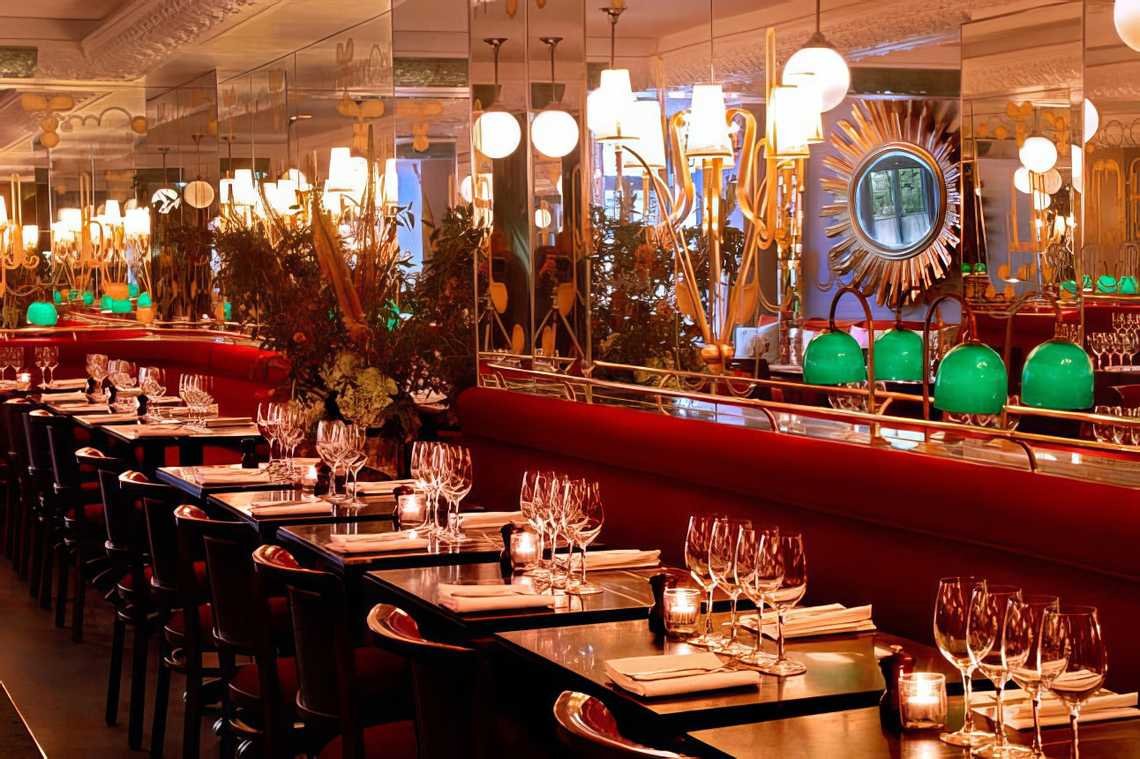
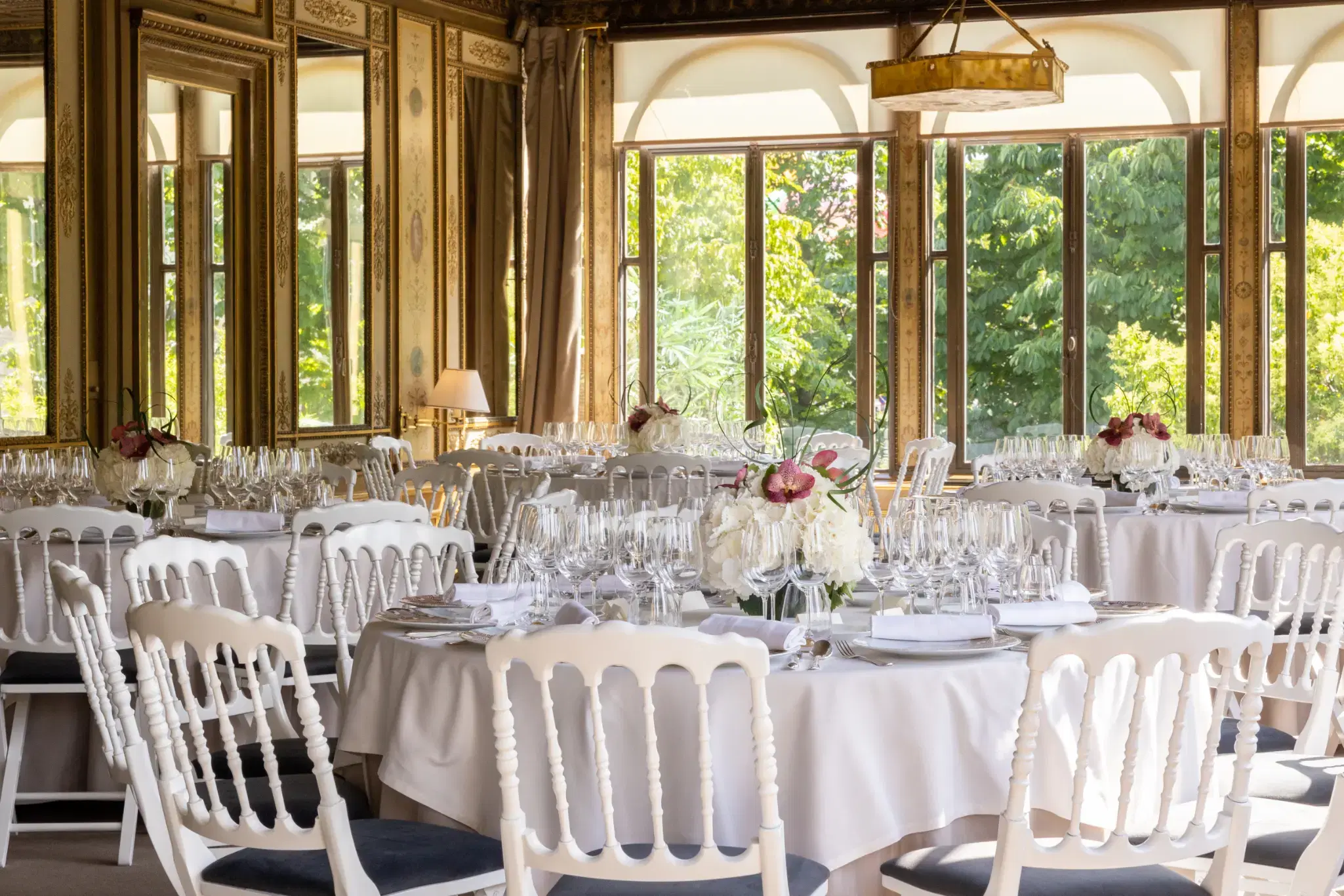
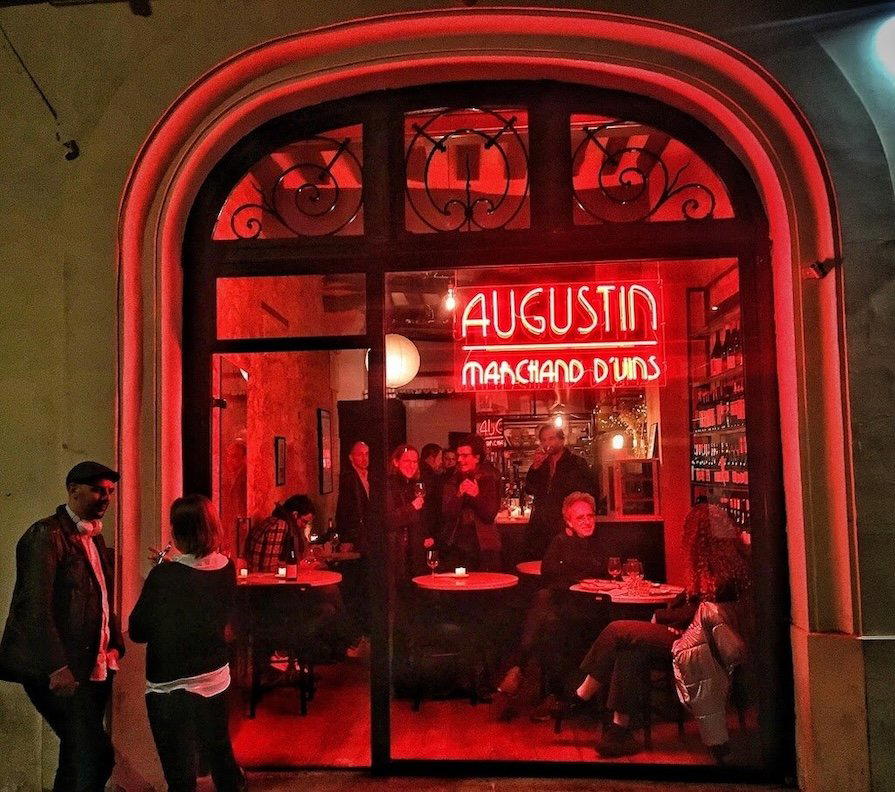
Grand Belle Époque decor with large mirrors, mouldings, emerald ball lamps, and long red benches; modern touches create an elegant yet comfortable atmosphere with a lively, bustling energy typical of a classic Parisian brasserie.