Our verdict
Paris's oldest surviving café-restaurant, Le Procope has served the Left Bank since 1686 on Rue de l'Ancienne Comédie. Today it operates as a full brasserie under Chef Bruno Ménager, ranked in Opinionated About Dining's Casual Europe list for consecutive years and open seven days a week through midnight.

Pearl is the En Primeur Club membership app, where members save venues, book tables and use the concierge.
The menu
What to order
- Coq au vin
- Joue de Bœuf braisée
- Semi-cooked duck foie gras
A Room That Preceded the Revolution
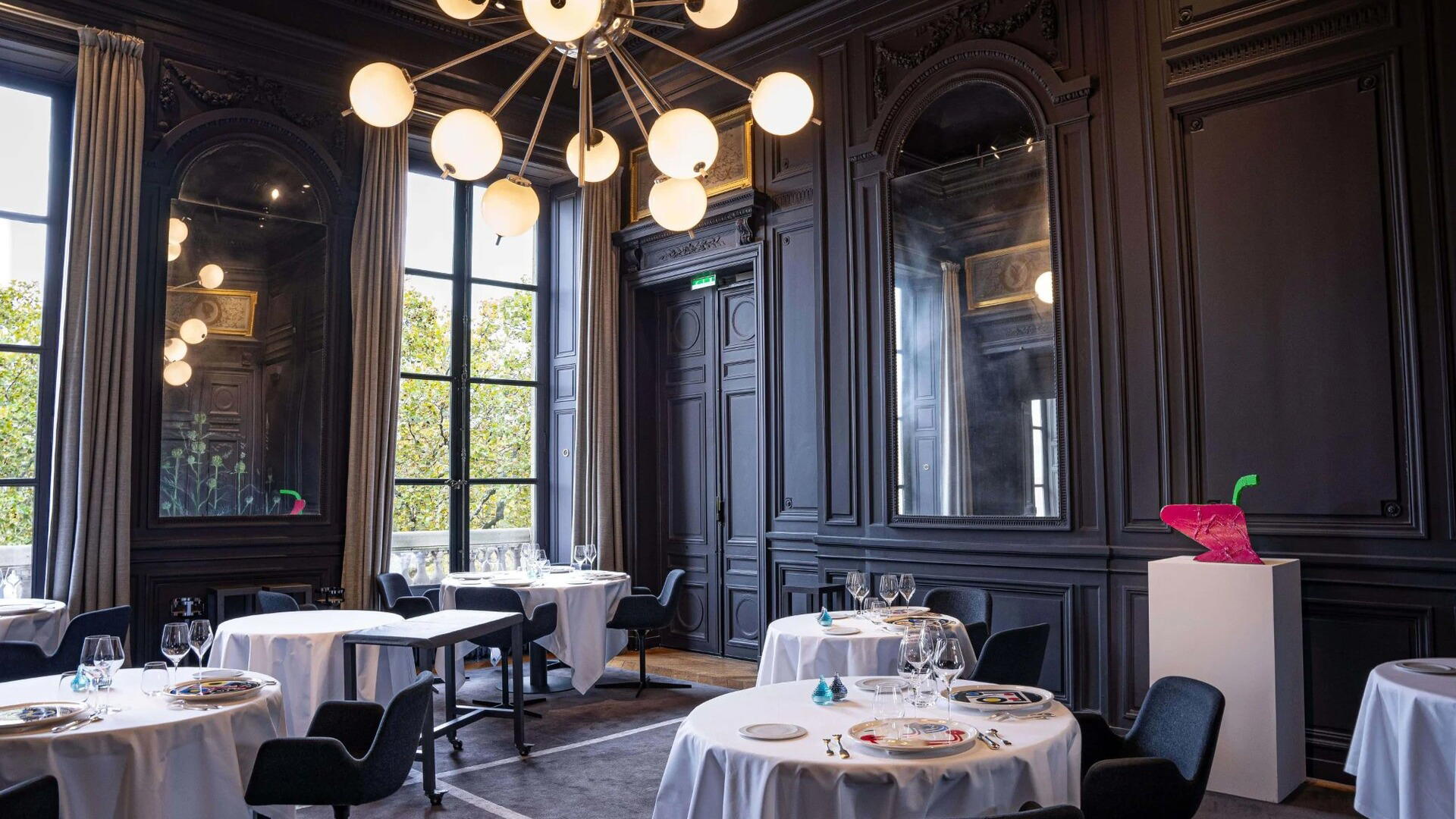
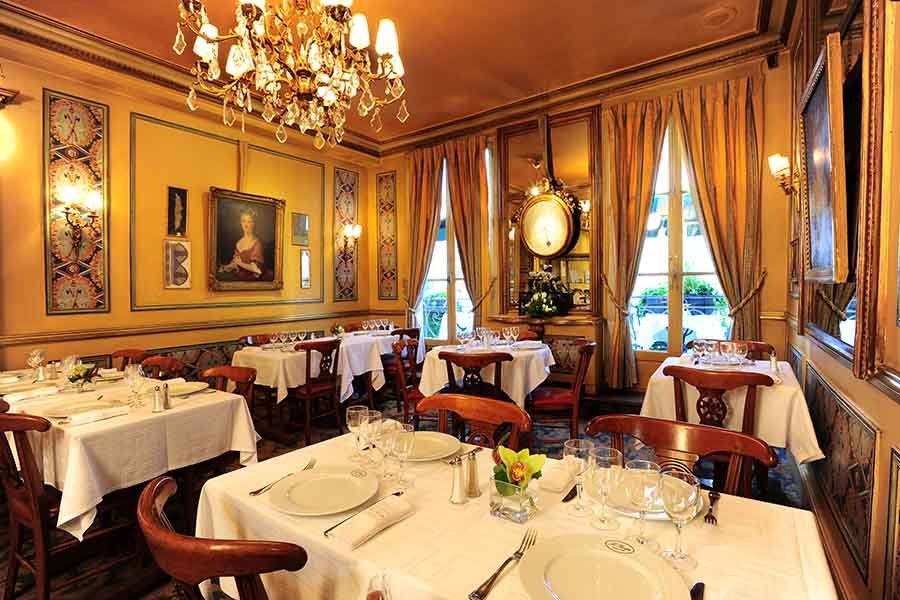
There is a particular kind of Parisian dining room that functions as living archaeology. The mirrors are old, the panelling is older, and the sense that serious conversation has happened at these tables for centuries is not manufactured atmosphere but documented fact. Le Procope, at 13 Rue de l'Ancienne Comédie in the 6th arrondissement, sits at the far end of that category. Opened in 1686 by Sicilian-born Francesco Procopio dei Coltelli, it is generally credited as Paris's oldest surviving café-restaurant, a claim supported by centuries of continuous operation and a guest list drawn from French intellectual and political history. Voltaire drank coffee here. So, reportedly, did Robespierre and Napoleon. The room you eat in today carries that weight without performing it, which is the hardest trick any historic venue can manage.
The address itself situates Le Procope within the Saint-Germain-des-Prés dining corridor, a neighbourhood that now houses everything from €€€€-bracket creative restaurants to zinc-topped neighbourhood bistros. For context on that wider Left Bank scene, see our full Paris restaurants guide. Le Procope occupies a middle register: a brasserie format, priced accessibly against the area's upper tier, open from noon to midnight every day of the week.
The Choreography of a French Brasserie Floor
The editorial angle through which Le Procope reads most clearly is service. French brasserie service operates according to a choreography that is distinct from both fine-dining formality and the studied casualness of modern bistro culture. It is purposeful, unsentimental, and precise. Dishes arrive when they should. Wine is poured without theatre. The maître d' reads the room rather than scripts it. This is a style of front-of-house work that takes years to calibrate and that is increasingly rare in Paris as the city's dining culture splinters between high-ceremony tasting menus and aggressively relaxed natural-wine counters.
At Le Procope, the brasserie floor carries that tradition with the kind of institutional ease that only comes from an operation that has been running the same format for decades. Tables turn at a pace that keeps the room alive without feeling pressured. Staff navigate a room of tourists, locals, and curious first-timers simultaneously, which is a more demanding skill set than it appears. The capacity to hold that balance, open seven days a week through midnight, is a signal of operational maturity. For comparison, many of Paris's more celebrated casual addresses hold shorter hours and accept fewer covers precisely because the logistics of sustained brasserie service are difficult to maintain at quality.
Brasserie Cooking in a City That Invented It
The brasserie format emerged from Alsatian traditions in the nineteenth century and became, over time, the civic dining room of France. Choucroute, steak frites, sole meunière, crème brûlée: the brasserie canon is not a conservative holdover but a codified language that rewards precision. Under Chef Bruno Ménager, Le Procope operates within that tradition.
What the awards record does confirm is sustained recognition at a credible level. Le Procope appears in the Opinionated About Dining Casual Europe ranking for consecutive years, placed at #412 in 2024 and #451 in 2025. OAD's Casual Europe list is built from a database of critical votes weighted toward professional and expert palates, which makes a sustained ranking, even at positions in the mid-hundreds, a meaningful signal of consistent quality rather than reputation inertia.
For points of comparison in Paris at the upper end of French cooking ambition, Alléno Paris au Pavillon Ledoyen and Arpège represent the creative €€€€ bracket. L'Ambroisie holds the Place des Vosges classic French position. Kei occupies a contemporary French-Japanese register. Its comparisons run closer to Thoumieux in the 7th: a brasserie with culinary ambition and a historically anchored identity, working a different register than the city's €€€€ tasting-menu circuit entirely.
Across France more broadly, the persistence of serious brasserie culture runs alongside the country's fine-dining heritage at houses like Troisgros, Paul Bocuse, Bras, Auberge de l'Ill, Flocons de Sel, and Mirazur. The brasserie format sits outside that prestige tier deliberately, offering a different kind of value: the pleasure of a well-executed canon dish in a room with genuine character, served by people who have done this long enough to make it look effortless.
For those interested in how the brasserie format travels, Electric Diner in London and Le Bernardin in New York represent how French-inflected dining rooms adapt to Anglo-American markets. The contrast with Le Procope, operating in the building where the format was effectively invented, is instructive.
Saint-Germain Context and When to Go
The 6th arrondissement runs at tourist intensity for most of the year, and Rue de l'Ancienne Comédie is a short walk from both the Odéon theatre and the busier stretches of Boulevard Saint-Germain. Le Procope's midnight closing time makes it a credible post-theatre option in a neighbourhood where most kitchens wind down earlier. Noon opening across all seven days means it absorbs the full weekly range of Left Bank traffic, from weekday business lunches to weekend tourist flows. For planning the rest of a Paris stay around this part of the city, our Paris hotels guide, bars guide, wineries guide, and experiences guide cover adjacent options across categories.
Quick reference: Le Procope, 13 Rue de l'Ancienne Comédie, 75006 Paris. Open Monday through Sunday, noon to midnight. OAD Casual Europe ranked #412 (2024) and #451 (2025).
Frequently asked questions
Is Le Procope a family-friendly restaurant?
The brasserie format tends to accommodate mixed-age groups without difficulty, and Le Procope opens at noon every day of the week, including weekends. That full-day schedule gives families flexibility that tasting-menu restaurants rarely offer. The address on Rue de l'Ancienne Comédie is walkable from several major Left Bank landmarks, which suits itineraries built around the 6th arrondissement.
Is Le Procope better for a quiet night or a lively one?
A brasserie running until midnight seven days a week in the 6th arrondissement is not built for silence. Le Procope's OAD Casual Europe ranking (451 in 2025, 412 in 2024) reflects consistent footfall, which means the dining room carries volume at most hours. If a quieter sitting is the priority, arriving at noon on a weekday is the sensible move.
What's Le Procope known for in terms of accolades?
Le Procope has received recognition including: Opinionated About Dining Casual in Europe Ranked #451 (2025); Opinionated About Dining Casual in Europe Ranked #412 (2024).
What's the best thing to order at Le Procope?
Le Procope operates as a brasserie, the format whose French canon includes choucroute, steak-frites, onion soup, and plateau de fruits de mer. Chef Bruno Ménager leads the kitchen, so asking staff for the dish that reflects his current focus is a reliable approach on arrival.
What cuisine category does Le Procope fall under?
When is Le Procope open?
Hours at Le Procope: Hours: Monday 12 pm–12 am Tuesday 12 pm–12 am Wednesday 12 pm–12 am Thursday 12 pm–12 am Friday 12 pm–12 am Saturday 12 pm–12 am Sunday 12 pm–12 am.
Category Peers
| Venue | Cuisine | Price | Awards | Notes |
|---|---|---|---|---|
| Le ProcopeThis venue (the venue you are viewing) | Classic French Brasserie | $50–100 | Not listed | Not listed |
| Alléno Paris au Pavillon Ledoyen | Modern French Fine Dining | $150–200 | 3 Michelin Stars · World's 50 Best #79 | Creative |
| Kei | Modern French with Japanese Influences | $300–500 | 3 Michelin Stars · World's 50 Best #93 | Contemporary French, Modern Cuisine |
| L'Ambroisie | Classic French Haute Cuisine | $300–500 | 2 Michelin Stars · World's 50 Best #23 | French, Classic Cuisine |
| Le Cinq - Four Seasons Hôtel George V | Modern French Fine Dining | $300–500 | 3 Michelin Stars · World's 50 Best #24 | French, Modern Cuisine |
| Plénitude | Modern French Sauce-Led Fine Dining | $300–500 | 3 Michelin Stars · World's 50 Best #14 | Contemporary French |
Recognition history
Dated appearances from independent guides and award organizations, with the underlying list record or original source where available.
Opinionated About Dining Casual in Europe Recommended
Opinionated About Dining
Full recognition history (3 entries)
Opinionated About Dining Casual in Europe Ranked #451
Opinionated About Dining
Opinionated About Dining Casual in Europe Ranked #412
Opinionated About Dining