The Wild Fox
Our verdict
The Wild Fox sits at the intersection of San Francisco's specialty coffee culture and Japanese convenience-food traditions, serving onigiri and musubi alongside carefully sourced coffee. In a city where multicultural food formats regularly produce genuinely interesting hybrids, this café-meets-izakaya concept earns its place in the conversation. It operates in a register that sits well below the city's Michelin-starred tier, casual, ingredient-focused, and worth knowing about.

Pearl is the En Primeur Club membership app, where members save venues, book tables and use the concierge.
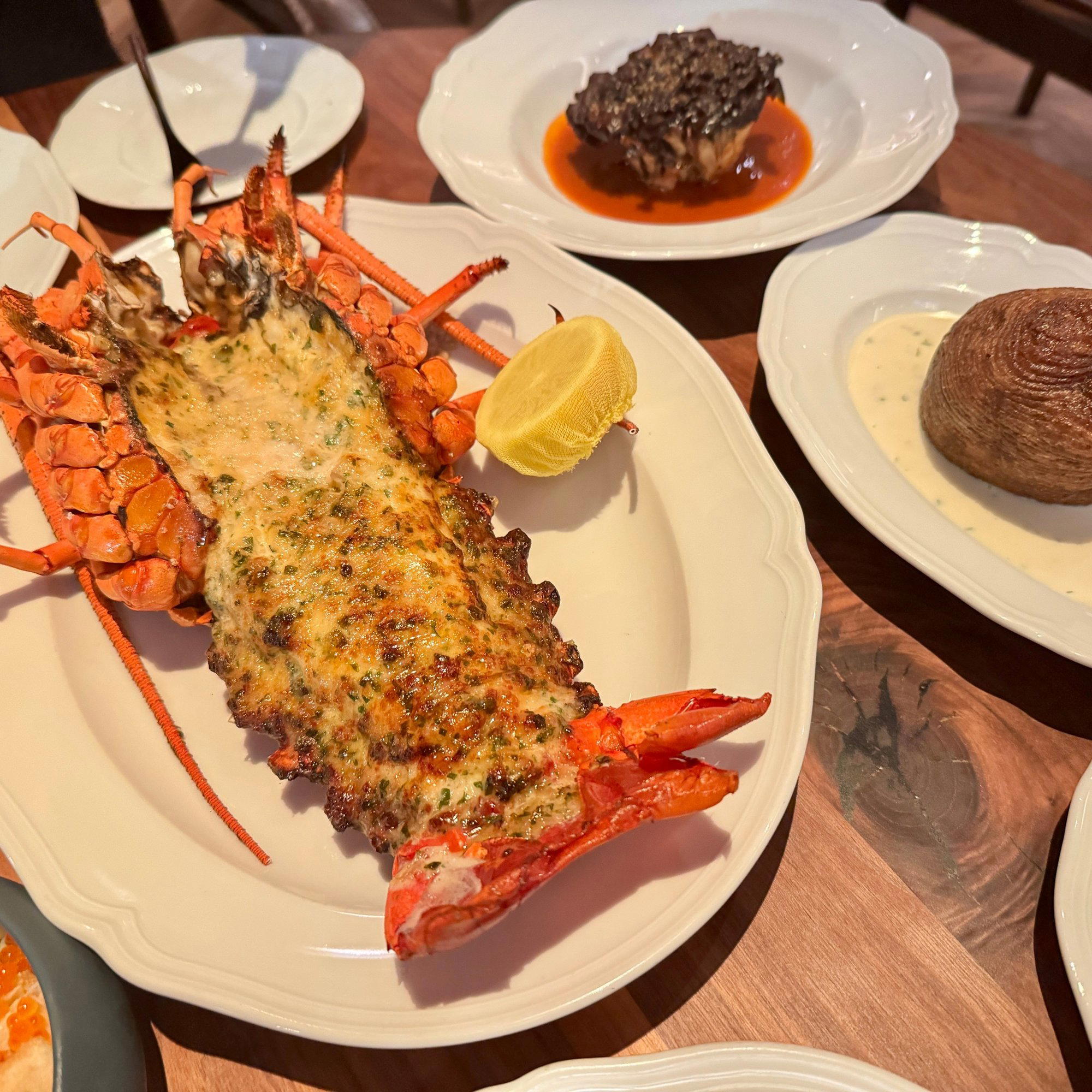
Coffee, Rice, and the Logic of Sourcing
San Francisco has spent the better part of two decades refining what a coffee shop can do. The city's café culture moved early from volume-driven espresso bars to single-origin programs with direct-trade relationships, and that shift created space for a parallel question: what food format belongs alongside serious coffee? The answer, at The Wild Fox, is Japanese. Onigiri and musubi, rice-based hand foods built around seasoned fillings, wrapped in nori, portable and precise, turn out to be a more coherent pairing with specialty coffee than the pastry case ever was. Where ingredient sourcing defines the coffee, it also defines the food, and the format's Japanese convenience-store roots translate naturally into a café that takes provenance seriously without theatrical presentation.
That sourcing logic is worth examining on its own terms. Onigiri, in its traditional context, lives or dies on rice quality and seasoning discipline. The grain matters: short-grain Japanese varieties carry a specific stickiness and mild sweetness that holds the form and delivers a clean base for fillings. In Japan, convenience stores like 7-Eleven have refined the form to a minor science, with rice temperature, salinity, and nori crispness calibrated to within narrow tolerances. When that tradition moves into a San Francisco café, the interesting question is whether the sourcing commitment of the specialty coffee world, traceability, relationship-based procurement, quality at every step, carries across to the food. At The Wild Fox, the menu's focus on onigiri and musubi suggests a deliberate alignment rather than an afterthought snack program.
Where This Sits in the San Francisco Food Spectrum
San Francisco's dining map has two gravitational poles. At one end, the city's fine-dining tier, venues like Benu, Atelier Crenn, Lazy Bear, Quince, and Saison, anchors a nationally competitive tasting-menu scene that draws comparisons to Alinea in Chicago, Le Bernardin in New York City, and Alain Ducasse's Louis XV in Monte Carlo. At the other end, the city's neighbourhood food culture, taquerias, dim sum houses, Japanese lunch counters, operates with a different but equally serious relationship to craft. The Wild Fox operates firmly in that second tier, but with a sensibility borrowed from the first: the idea that a small format, executed with ingredient discipline, deserves the same attention as a twelve-course menu.
That positioning is increasingly common in cities with mature food cultures. SingleThread Farm in Healdsburg and The French Laundry in Napa occupy the agricultural-sourcing end of the fine-dining spectrum; venues like The Wild Fox occupy the daily-use end of the same sourcing conversation. Musubi, originally a Hawaiian adaptation of onigiri using Spam, has undergone a regional upgrade across California, with the Spam swapped for higher-quality proteins and the rice sourcing brought up to match. That evolution tracks closely with what happened to the burger, the taco, and the ramen bowl in premium urban markets: format democratized, ingredients upgraded.
The Coffee Side of the Equation
Specialty coffee in San Francisco operates inside a competitive and well-documented ecosystem. The city's coffee culture has national reach, roasters and café concepts that began here have shaped the third-wave movement's vocabulary. Within that context, a café pairing coffee with Japanese small plates is positioning itself in a specific niche: the food-forward café that treats the counter as a complementary program rather than an afterthought. The beverage-to-food sourcing alignment matters here. When the coffee is traced to specific farms and the food uses quality-first ingredients, the overall offer coheres. When only the coffee receives that treatment, the food reads as filler. The Wild Fox's menu focus on onigiri and musubi, both formats that reward good rice, proper seasoning, and clean fillings, suggests the latter scenario is not the intent.
For comparison, coffee-and-food hybrids in other cities have moved in similar directions. Tokyo's specialty coffee shops often pair single-origin espresso with Japanese pastries or savory rice dishes. In New York and Los Angeles, the café-meets-izakaya format has developed a small but serious following. San Francisco, with its deep Japanese-American community history and strong café culture, is a natural environment for the same convergence. Providence in Los Angeles and Atomix in New York City operate at a different scale and price point, but they share The Wild Fox's core logic: ingredient sourcing as the organizing principle of the menu, whatever the format or price tier.
Getting There and Planning Your Visit
The Wild Fox operates in San Francisco, a city served by BART, Muni, and a reliable ride-share infrastructure that makes neighbourhood-level exploration direct. The café format means no advance booking is required, this is a walk-in operation, subject to normal café-hour constraints. For visitors building a broader San Francisco itinerary around food and drink, the city's resources are deep: consult our full San Francisco restaurants guide, our full San Francisco bars guide, and our full San Francisco hotels guide for context on where The Wild Fox sits within the wider dining map. If you are exploring beyond the city, our San Francisco wineries guide and San Francisco experiences guide cover the regional offer in depth. For reference, Emeril's in New Orleans illustrates a different model of casual-to-formal range within a single city's food culture, useful context for understanding how San Francisco's own spectrum operates.
Frequently asked questions
Does The Wild Fox fit into San Francisco's Japanese food tradition?
San Francisco has one of the most historically layered Japanese-American food cultures in the continental United States, rooted in communities like Japantown that predate most of the city's current restaurant scene. The Wild Fox sits within that continuum through its focus on onigiri and musubi, rice-based formats with deep roots in Japanese everyday cooking. Positioning those dishes as the anchor of a specialty coffee café connects a working food tradition to the city's current café culture rather than treating it as a novelty.
What's the best thing to order at The Wild Fox?
The menu is built around onigiri and musubi, so those rice-based hand foods are the logical starting point. Both formats depend heavily on ingredient sourcing and rice technique, which makes them a reliable signal of what the kitchen prioritises. Order alongside the coffee rather than separately, the two sides of the menu are designed to work together.
How hard is it to get a table at The Wild Fox?
The Wild Fox operates as a café rather than a reservation-based restaurant, so the booking difficulty that applies to San Francisco's tasting-menu tier, Benu, Atelier Crenn, simply doesn't apply here. Walk-in access is the expected format. Peak morning and midday windows in high-foot-traffic San Francisco neighbourhoods can mean a short wait, but there is no reservations system to plan around.
What's the standout thing about The Wild Fox?
The combination of specialty coffee and Japanese hand foods on a single focused menu is the defining characteristic. San Francisco has strong independent scenes in both categories, but venues that treat onigiri and musubi as the kitchen's primary format, rather than an add-on, remain a small subset. The menu's specificity is the point.
Is The Wild Fox worth it?
At a café price point, the value calculation is simpler than at San Francisco's tasting-menu venues. The kitchen commits to a narrow format, onigiri, musubi, specialty coffee, rather than spreading across a broad menu, which typically means stronger execution within that range. For the category, that focus tends to justify the visit.
Recognition, Side-by-Side
Comparable venues nearby, for context on price, style, and recognition.
| Venue | Cuisine | Price | Notes |
|---|---|---|---|
| The Wild FoxThis venue (the venue you are viewing) | Japanese Cafe | $20–30 | Not listed |
| Izakaya Sozai | Authentic Japanese Izakaya | $30–50 | Inner Sunset |
| Moki's Sushi & Pacific Grill | Japanese Sushi & Pacific Fusion | $30–50 | Bernal Heights |
| The Ramen Bar | Tokyo-Style Japanese Ramen | Not listed | Financial District |
| Wayo Sushi Restaurant | Authentic Japanese Sushi | $30–50 | Nob Hill |
| Suzu | Japanese Ramen | $10–20 | Japantown |
Continue exploring
More in San Francisco
Restaurants in San Francisco
All restaurants in San Francisco →
Bars in San Francisco
All bars in San Francisco →


Details
- Modern
- Cozy
- Minimalist
- After Work
- Open Kitchen
- Batch Brew
- Curated Filter Coffees
- Espresso Focused
- Guest Roasters
- Iced Coffee Cold Brew
- Multi Roaster
- Seasonal Drinks
- Seasonal Menu
- Rare Experimental Processing
- Retail Beans
- Single Origin Focus
- A La Carte
- Small Plates
- Coffee
- Tea
Current opening hours
- Monday
- 7 AM–5 PM
- Tuesday
- 7 AM–5 PM
- Wednesday
- 7 AM–5 PM
- Thursday
- 7 AM–5 PM
- Friday
- 7 AM–5 PM
- Saturday
- 8 AM–2 PM
- Sunday
- 8 AM–2 PM
Hours can change for holidays and private events. Hours as of .
Espresso and stillness, sweetness and bloom, where ritual meets flavor in a delightful space.