The Well at Jordan's Farm
Our verdict
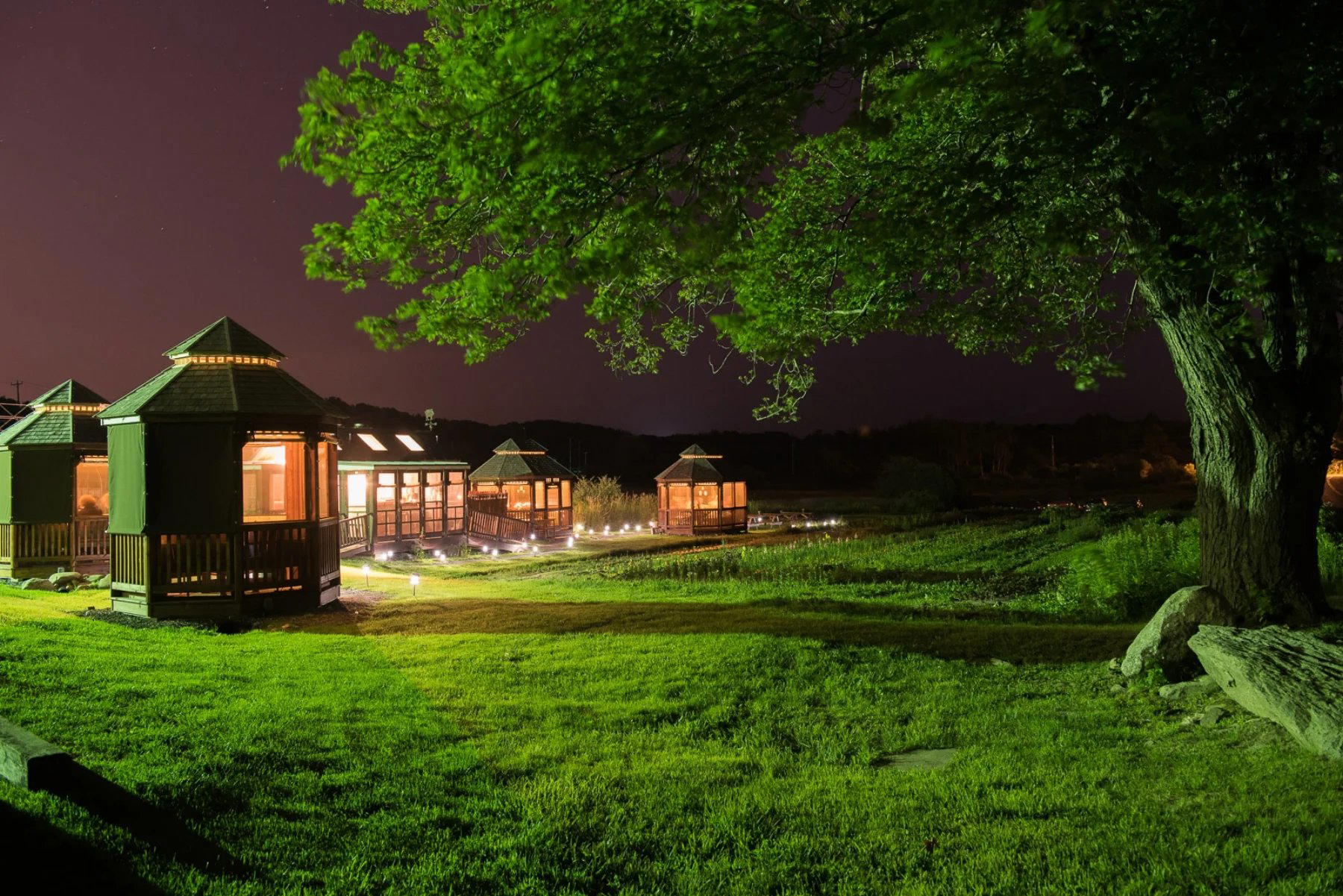
Set on a working farm in Cape Elizabeth, Maine, The Well at Jordan's Farm translates the surrounding land directly into the kitchen — a model that places provenance ahead of pageantry. The setting is agricultural, the menu seasonal, and the approach grounded in the kind of ingredient honesty that has made farm-to-table a serious culinary category rather than a marketing phrase.

Pearl is the En Primeur Club membership app — saves, bookings, and concierge access live there. Same editors, same standards.
The menu
What to order
- Poached lobster
- Pan-seared hake
- Halibut with butter sauce
- Steak tartare
- Homemade bread and butter
Where the Farm Is the Menu
Cape Elizabeth sits at the southern edge of Greater Portland, far enough from the city's restaurant corridor to feel genuinely rural, close enough to draw a crowd that knows what it's eating. The drive to Jordan's Farm along Wells Road passes stone walls, open fields, and the particular quality of coastal Maine light that shifts fast in summer and disappears early in autumn. The Well at Jordan's Farm does not perform its agricultural identity — the land around it is simply the source material, and the kitchen processes what that source material offers.
This model, where a working farm functions as both supplier and setting, has become a serious format in American dining. Blue Hill at Stone Barns in Tarrytown and Single Thread Farm in Healdsburg represent the format at its most ambitious and most expensive. The Well operates in a different register — Maine rather than New York's Hudson Valley, working farm rather than estate property, but the underlying logic is the same: the distance between ground and plate, measured in feet rather than supply-chain days, is itself the editorial statement.
The Case for Provenance Over Production
Farm-sourced dining in the American Northeast has a particular credibility problem to solve. The growing season is short, the winters long, and any restaurant that claims to run a genuinely seasonal menu through February is either importing heavily or serving storage crops. Cape Elizabeth's climate makes this honesty unavoidable. What grows here, grows in specific windows, and a kitchen that respects those windows will serve something different in July than in October, not because of a chef's creative arc, but because the fields dictate it.
That seasonal discipline is what separates the serious farm-table format from its looser cousins. Operations like Smyth in Chicago and Lazy Bear in San Francisco build menu frameworks around hyper-seasonal sourcing even in urban settings, sourcing from named farms at peak moments. The Well's geographic position at Jordan's Farm collapses that sourcing chain entirely. The provenance is the address.
This also means the menu at The Well is not the kind that photographs well year-round with consistent visual signature. Root vegetables, alliums, cold-weather brassicas, and preserved summer produce carry autumn and winter service. The abundance of peak summer, tomatoes, corn, cucumbers, summer squash, shifts the kitchen into a different gear. Knowing which season you're visiting matters more here than at most restaurants, because the experience you get in August and the one you get in November are genuinely different meals.
Cape Elizabeth's Dining Context
Cape Elizabeth is not a restaurant town in the conventional sense. It is a residential coastal community with a working waterfront tradition, and its dining options reflect that character rather than competing with Portland's increasingly dense culinary scene. The Lobster Shack handles the waterfront seafood category with a directness that tourists and locals share equally. The Well occupies a different niche: it is the town's farm-sourced, sit-down option for people who want the agricultural context, not just the protein.
For a fuller picture of what Cape Elizabeth offers across all meal types and occasions, our full Cape Elizabeth restaurants guide maps the options by category and neighbourhood character.
The regional context matters here. Maine's food identity is anchored in seafood and dairy, lobster, oysters, cheese from small-scale creameries, but the vegetable farming tradition in communities like Cape Elizabeth is less publicized and arguably more interesting to follow right now. Jordan's Farm has been operating as an agricultural property for generations, and the restaurant built around it draws on that continuity in ways that a purpose-built farm-to-table concept in an urban setting cannot replicate.
How This Format Compares Nationally
At the highest price bracket, The French Laundry in Napa and The Inn at Little Washington source from on-site or adjacent kitchen gardens as part of a multi-course format priced accordingly. Addison in San Diego and Providence in Los Angeles represent the format applied to seafood-forward menus in warmer climates with longer growing seasons.
At the opposite end of the spectrum, mission-driven operations like Oyster Oyster in Washington, D.C. focus the sourcing model through a specific sustainability or ecological lens. Atelier Moessmer Norbert Niederkofler in Brunico applies a similar discipline in the European Alpine context, where altitude and climate constrain the pantry as decisively as a Maine winter.
The Well sits closer to the accessible end of this spectrum than the tasting-menu tier. That positioning makes it a more practical entry point for understanding what farm-sourced dining actually delivers when the theatre is stripped away, no amuse-bouches, no 12-course progression, just the question of what grows well here and how to cook it.
Restaurants that have explored comparable territory in different American cities include Frasca Food and Wine in Boulder, The Wolf's Tailor in Denver, ITAMAE in Miami, Emeril's in New Orleans, and Atomix in New York City, each working with local sourcing as a structural commitment rather than an occasional menu note. Le Bernardin in New York City applies a comparable seriousness to seafood sourcing specifically, with documented supplier relationships that run decades deep.
Planning Your Visit
Cape Elizabeth is accessible by car from Portland in roughly 20 minutes, and the Jordan's Farm address on Wells Road is findable without complication. The farm setting means parking is not an urban problem. Visiting in peak Maine summer, from late June through August, gives you the widest range of in-season produce. Autumn service through October tends to lean into storage crops, root vegetables, and the shorter harvest from the farm's later plantings.
Frequently asked questions
Is The Well at Jordan's Farm child-friendly?
The setting is a working farm on Wells Road in Cape Elizabeth, which makes it naturally engaging for children who have never seen agricultural land up close. That said, farm-integrated dining formats in this category typically involve structured seatings and a pace tied to the kitchen rather than flexible family-style service. Families with younger children should confirm seating format and timing directly with the venue before booking.
How would you describe the vibe at The Well at Jordan's Farm?
The atmosphere follows the farm itself: agricultural, grounded, and deliberately unhurried. Cape Elizabeth is a residential coastal community, not a restaurant corridor, so the experience sits closer to a private farm supper than a conventional dinner-out. Expect the land and the season to set the tone rather than any designed hospitality concept.
Does The Well at Jordan's Farm operate year-round, or is it seasonal?
Maine's agricultural calendar runs hard against winter, and the Northeast's growing season typically closes by late autumn, which shapes the operational calendar for any farm-anchored dining format. The Well at Jordan's Farm sits on working agricultural land in Cape Elizabeth, meaning its menu availability is directly tied to what the farm produces. For current scheduling, check the venue's official channels through its Wells Road address or check for updates closer to your intended visit date.
What's the must-try dish at The Well at Jordan's Farm?
Because the menu at a farm-integrated venue like this is driven by what Jordan's Farm is actively producing in a given week, no single dish anchors the experience year-round. The more useful frame is the produce itself: Cape Elizabeth's growing season peaks in late summer, and any visit timed to that window will see the kitchen working with the farm at full output. Specific dishes are best confirmed when booking.
A Quick Peer Check
Comparable venues nearby, for context on price, style, and recognition.
| Venue | Cuisine | Price | Notes |
|---|---|---|---|
| The Well at Jordan's FarmThis venue — the venue you are viewing | Seasonal Farm-to-Table American | $50–100 | Not listed |
| The Lobster Shack | Classic Maine Lobster Shack | $30–50 | Cape Elizabeth |
| Five-O Shore Road | Italian-Inspired Coastal Bistro | $50–100 | Shore Road |
| Artemisia Cafe | New American Cafe | Not listed | West End |
| Rose Foods | Authentic Jewish Deli | $10–20 | Oakdale |
| Flo's Hot Dogs | Classic Steamed Hot Dogs | $1–10 | Cape Neddick |
Continue exploring
More in Cape Elizabeth
Restaurants in Cape Elizabeth
All restaurants in Cape Elizabeth →

Bars in Cape Elizabeth
Browse all →



Details
- Rustic
- Romantic
- Whimsical
- Scenic
- Intimate
- Date Night
- Special Occasion
- Celebration
- Garden
- Private Dining
- Standalone
- Farm To Table
- Local Sourcing
- Organic
- Garden
- Tasting Menu
- Prix Fixe
- Vegetarian Friendly
- Allergy Accommodating
Current opening hours
- Monday
- Closed
- Tuesday
- Closed
- Wednesday
- 5:30–9 PM
- Thursday
- 5:30–9 PM
- Friday
- 5:30–9 PM
- Saturday
- 5:30–9 PM
- Sunday
- Closed
Hours can change for holidays and private events. Last verified .
Rustic and enchanting outdoor setting with candlelit gazebos, screened to keep out bugs and rain, surrounded by acres of farmland and vegetable beds. Intimate and peaceful atmosphere with a blissful sense of quiet, despite proximity to Portland.