Holy Donut

Ranked on Opinionated About Dining's Cheap Eats list three consecutive years through 2025, Holy Donut has become a fixed reference point in Portland, Maine's casual dining conversation. The Commercial Street location puts potato-based doughnuts at the center of a format that attracts serious food critics and morning commuters alike. Founder Leigh Kellis built the operation on a distinctive dough recipe that separates it from the city's broader pastry field.
Pearl is the En Primeur Club membership app — saves, bookings, and concierge access live there. Same editors, same standards.
- Address
- 177 Commercial St, Portland, ME 04101
- Phone
- (207) 331-5655
- Website
- theholydonut.com
- Directions
- Get directions
 Saves & bookings on Pearl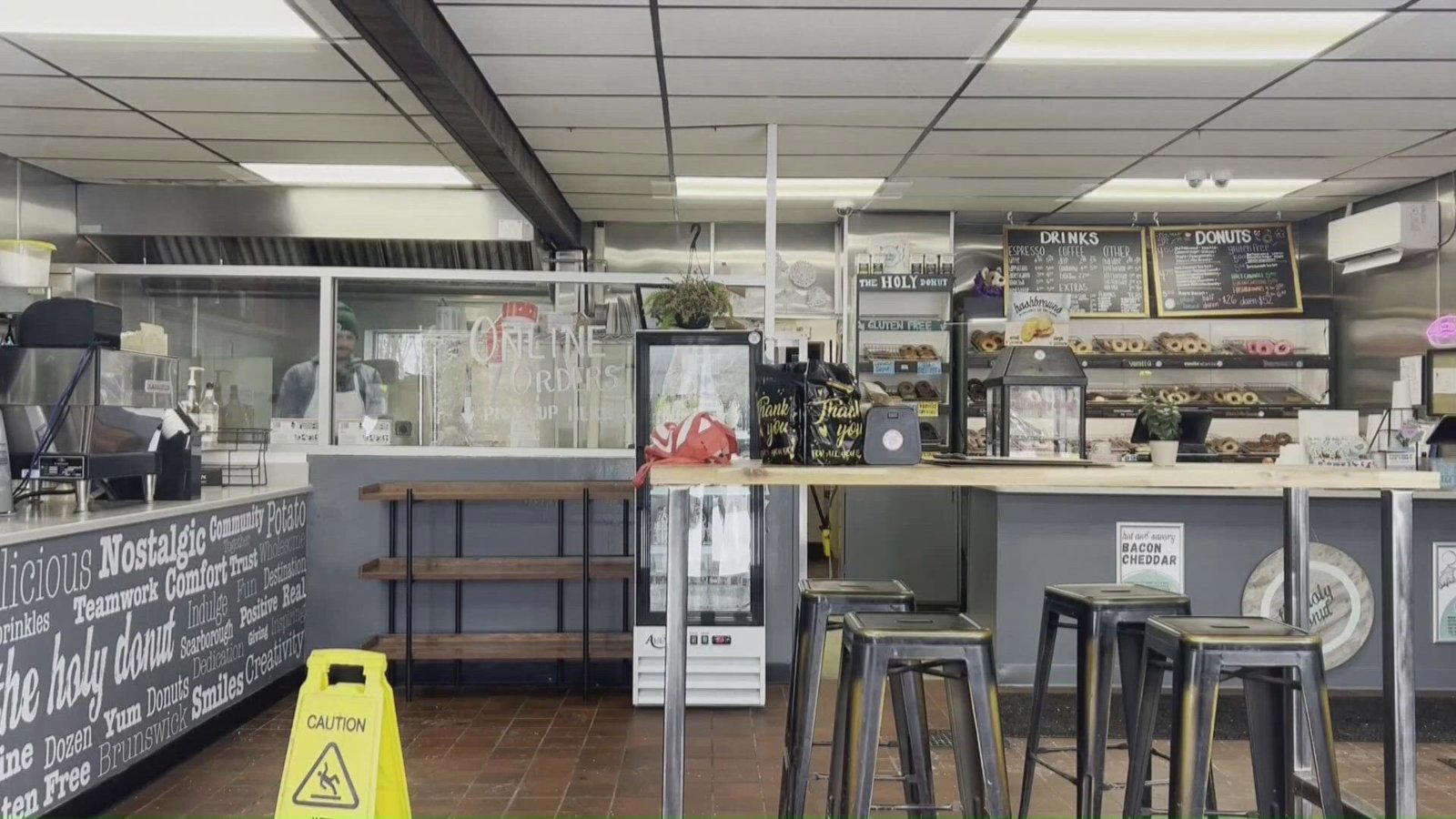
Portland, Maine's Doughnut Counter and What It Signals About the City's Food Culture
Portland, Maine occupies an unusual position in American food culture: a small coastal city with a restaurant-to-resident ratio that punches well above its population size. The waterfront strip along Commercial Street concentrates much of that energy, drawing visitors who arrive for the lobster rolls and leave having discovered something else entirely. Holy Donut sits at 177 Commercial St in that corridor, and its appearance on Opinionated About Dining's Cheap Eats in North America list in 2023, 2024, and 2025 places it inside a critical framework that applies the same evaluative rigor to a $5 doughnut as to a tasting menu. That consistency of recognition matters: OAD's Cheap Eats list is not a popularity contest, and a three-year run with an improving rank (from Recommended in 2023 to #261 in 2024 to #308 in 2025) reflects sustained execution rather than a single viral moment.
The doughnut as a serious food category has undergone considerable critical reassessment in American cities over the past fifteen years. Shops like Blue Star Donuts in Portland, Oregon applied European technique and premium ingredients to a format long dominated by chain production. Pip's Original Doughnuts & Chai, also in the Pacific Northwest, built a loyal following around small-batch, made-to-order formats. On the East Coast, Donut Pub in New York City holds a different kind of cultural authority, rooted in decades of neighborhood presence rather than ingredient sourcing. Holy Donut's position in this broader conversation rests on a specific technical choice: incorporating Maine potato into the dough, which produces a denser, moister crumb than conventional yeast or cake doughnut recipes. That choice is not merely a differentiator; it is a commitment to a regional ingredient that connects the product to its geography in a way that bridges the gap between casual and intentional food.
The Physical Experience Along Commercial Street
The Commercial Street location operates within walking distance of the working waterfront, a few minutes from the ferry terminal and the concentration of fish markets and seafood counters that define the eastern end of the street. The setting is unpretentious. Portland's food culture rewards that register: the city's most-discussed restaurants, from Kann with its Haitian wood-fire cooking to the tightly-run pizza programs at venues comparable to Ken's Artisan Pizza in Portland, Oregon, tend to prioritize product clarity over ambient theatrics. Holy Donut fits that pattern. The draw is the case of doughnuts and the line that forms around it, not a designed interior or table service.
But the underlying principle of wine list thinking, selecting from within a defined category with attention to provenance, technique, and how individual items relate to a larger philosophy, applies usefully to the restaurant's doughnut selection. The Maine potato dough functions as the house's signature base, the equivalent of a cellar's house style. From there, the rotation of flavors and glazes operates like a curated list: bounded, internally coherent, and organized around a point of view rather than an attempt to offer everything to everyone. That approach is more closely related to how a sommelier builds a by-the-glass list than to how a chain doughnut operation develops new SKUs.
How Holy Donut Sits Within Portland's Broader Dining Context
Portland, Maine has attracted serious national food attention for roughly a decade, and the restaurant community that has developed here is notable for its concentration of independently operated spots without the corporate-backed scaling that shapes dining in larger cities. The comparisons to higher-end tasting menu formats are worth making explicitly: Le Bernardin in New York, Alinea in Chicago, The French Laundry in Napa, and Single Thread Farm in Healdsburg all operate at price points and in formats that require extended planning, multiple courses, and a specific kind of occasion framing. The restaurant operates at the opposite end of that spectrum, but both ends of the spectrum can be evaluated rigorously. OAD's decision to maintain a dedicated Cheap Eats list alongside its full restaurant rankings reflects exactly that position. Venues like Lazy Bear in San Francisco and Emeril's in New Orleans occupy the middle range of occasion-dining, while the restaurant operates in the daily-use register where consistency and ingredient specificity do the critical work. Dynamo Donut & Coffee in San Francisco is a useful peer comparison: a single-product-focused operation that has earned critical recognition through ingredient sourcing and flavor discipline rather than scale.
The other Portland, Maine restaurants worth understanding as context include Berlu, which represents the Vietnamese-inflected fine dining side of the city's restaurant culture, and demonstrates how broadly the city's food reputation extends across format types and price points. Portland's dining scene is not organized around a single cuisine tradition; it is organized around independent operators making specific, committed choices about ingredients and technique. The restaurant belongs to that culture.
Planning Your Visit
The Commercial Street location is accessible on foot from most of Portland's waterfront accommodation options, and from the ferry terminal for visitors arriving from the islands. Portland's food day tends to start early, and the doughnut case turns over with it: arriving mid-morning on a weekend puts you ahead of the afternoon tourist traffic while still catching the full selection. For anyone building a day around the city's food culture, the restaurant works as a starting point before moving on to lunch and dinner spots across the broader Portland restaurant scene.
Just the Basics
Comparable venues nearby, for context on price, style, and recognition.
| Venue | Cuisine | Price | Notes |
|---|---|---|---|
| Holy DonutThis venue — the venue you are viewing | Park Ave, Maine Potato Donuts | $ | Not listed |
| Coffee ME Up | Not listed | $ | West Side Portland, American Cafe & Bakery |
| Luncheonette | Bayside, Modern American Cafe | $$ | Not listed |
| Blyth & Burrows | Not listed | $$ | Old Port, American Seafood Bar with Asian Influences |
| Novare Res Bier Cafe | Old Port, European-Inspired Bier Cafe | $$ | Not listed |
| Rose Foods | Oakdale, Authentic Jewish Deli | $$ | Not listed |
Recognition history
Dated appearances from independent guides and award organizations, with the underlying list record or original source where available.
Opinionated About Dining Cheap Eats in North America Ranked #308
Opinionated About Dining
Opinionated About Dining Cheap Eats in North America Ranked #261
Opinionated About Dining
Opinionated About Dining Cheap Eats in North America in Recommended
Opinionated About Dining
Continue exploring
More in Portland
More from Chef Leigh Kellis
Browse all →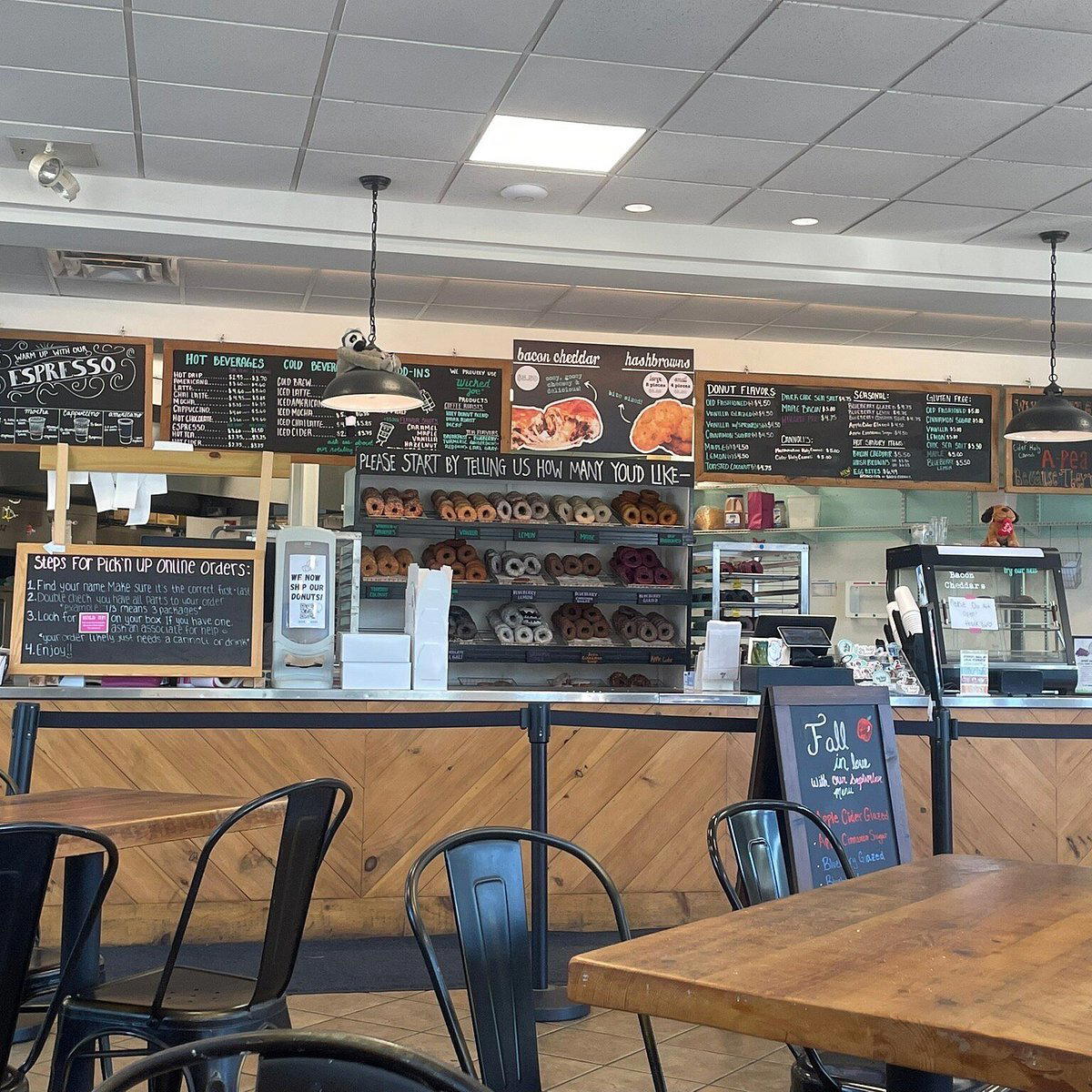
Restaurants in Portland
Browse all →
Bars in Portland
Browse all →

At a Glance
- Cozy
- Trendy
- Casual Hangout
- Family
- Standalone
- Local Sourcing
Current opening hours
- Monday
- 7 AM–3 PM
- Tuesday
- 7 AM–3 PM
- Wednesday
- 7 AM–3 PM
- Thursday
- 7 AM–3 PM
- Friday
- 7 AM–4 PM
- Saturday
- 7 AM–5 PM
- Sunday
- 7 AM–5 PM
Hours can change for holidays and private events. Last verified .
Cozy casual donut shop with limited seating, positive vibes, and a fun art-filled space.