The Shota


1 Michelin Star
Our verdict
The Shota + San Francisco elevates Edomae sushi to theatrical art within an intimate eight-seat counter, where Michelin-starred Chef Ingi Son crafts eighteen-course omakase experiences using fish flown directly from Tokyo's Toyosu Market and premium Gifu rice, creating San Francisco's most authentic Japanese fine dining destination.

Pearl is the En Primeur Club membership app — saves, bookings, and concierge access live there. Same editors, same standards.
- Address
- 115 Sansome St, San Francisco, CA 94104
- Phone
- (628) 224-2074
- Website
- theshotasf.com
- Directions
- Get directions
- Booking
- Book on Tock
The menu
What to order
- Fatty_tuna
- Scallop_nigiri
- Uni
- Goldeneye_snapper
- Black_cod
Inside a Financial District Office Block, San Francisco's Kaiseki-Sushi Counter Earns Its Following
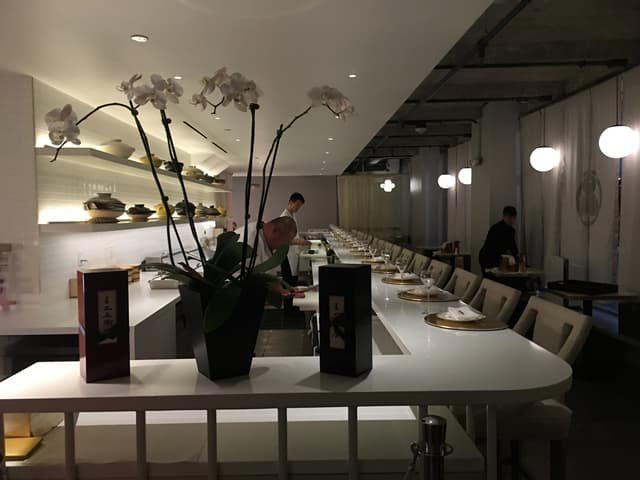
The approach to The Shota does little to prepare you for what follows. The address on Sansome Street lands you in the Financial District's grid of glass towers and office lobbies, the kind of block that empties by 6 pm most evenings. Getting past the building entrance and locating the counter inside requires a moment of deliberate navigation, and that threshold effect is part of what its regulars have come to value. San Francisco's leading omakase rooms tend to occupy either purpose-built ground-floor spaces in dining-dense neighbourhoods or quietly recessed addresses that reward those who already know. The Shota sits firmly in the latter category, which filters its room toward a clientele that has arrived with genuine intent.
How the Format Works: Edomae Meets Kaiseki
The structure of the meal at The Shota reflects a format that has gained particular traction among San Francisco's serious Japanese counters: a hybrid of Edomae sushi tradition and kaiseki sequencing. Where a strictly Edomae counter runs almost entirely on nigiri with minimal cooked interludes, and a kaiseki progression moves through a long arc of small composed dishes, this format weaves both. The result is a meal that shifts register several times across its duration, moving between warm prepared dishes and precisely cut raw fish in a rhythm that keeps the diner oriented to seasonality rather than to a single technique.
Opinionated About Dining, which ranked The Shota at #399 in its 2025 North America list (up from #411 in 2024), describes the kitchen's use of imported Japanese ingredients alongside local California produce as a defining characteristic. That dual sourcing strategy has become a point of differentiation among the better Northern California Japanese counters: it positions the menu against both the strict Japanese purist tradition and the California-only locavorism that dominates much of the city's contemporary dining scene. The kitchen here works in a middle register, and it earns Michelin recognition for doing so, holding a single star as of 2024.
What Keeps Regulars Returning
The question of what draws loyal guests back to a counter like this, rather than rotating across the city's other high-end omakase options, tends to resolve around a few consistent factors. The first is sequencing discipline. In Edomae tradition, the order in which nigiri is presented carries meaning: fish that demands a cleaner palate comes early, richer and fattier cuts follow, and the progression has an internal logic that a well-trained regular begins to anticipate. When that logic also incorporates kaiseki pacing, with cooked dishes acting as palate resets and textural contrasts, the meal rewards return visits differently than a format that simply adds more nigiri.
Opinionated About Dining's description of the counter points to specific preparations that recur across visits and form part of the vocabulary returning guests track: chawanmushi that arrives delicate and silky, finished with fava beans and borage flowers; nigiri described as impeccably knifed, interspersed with small composed dishes built around seasonal produce. The kasugo nigiri, using the jewel-skinned fillets of young sea bream, represents the kind of ingredient that only appears within a narrow seasonal window, and guests who have been before know to notice its presence or absence on any given evening. Similarly, the firefly squid preparation, paired with broccoli rabe, white miso, and mandarin, belongs to a fleeting seasonal moment in early spring.
That seasonal specificity is the second anchor for repeat visits. A counter operating at this level is a different experience in March than in October, and regulars at kaiseki-inflected omakase rooms often plan their returns around seasonal shifts rather than simply the desire to eat well. The Financial District location, which might seem to limit the room to expense-account dining, in practice creates a booking context in which those most invested in tracking the menu's evolution over time will secure their seats in advance.
The third factor is scale. Chef Ingi Son leads the kitchen, and the counter's sustained dual ranking across consecutive Opinionated About Dining lists indicates that consistency, not novelty, is the measure by which it is being judged.
The Shota Among San Francisco's Top-Tier Counters
San Francisco's upper-tier Japanese dining has stratified in a way that mirrors what has happened in New York and Los Angeles over the same period. The city now supports a small cohort of counters operating at the $$$$ price point with omakase formats, Michelin recognition, and sourcing programs sophisticated enough to track Japanese seasonal produce and fish directly. Kusakabe, which also holds Michelin recognition, works within Edomae tradition and occupies a comparable tier. jū-ni operates at a similar price register with a kaiseki-influenced omakase format. Hamano Sushi represents a different point in the market, with a more accessible format.
Masa in New York City represents the most expensive and maximalist expression of Japanese counter dining in North America. Sushi Masaki Saito in Toronto offers a data point on how the Edomae-kaiseki hybrid format is being executed at the highest tier across the continent. Within San Francisco's multi-cuisine fine dining bracket, The Shota's Michelin star positions it alongside $$$$ contemporaries including Lazy Bear (Progressive American) and Atelier Crenn (Modern French), though the omakase counter format it operates within is categorically distinct from those tasting-menu restaurants in terms of seat count, pacing, and the relationship between guest and kitchen.
At the national fine dining scale, comparators like The French Laundry in Napa, Alinea in Chicago, and Le Bernardin in New York City operate across different cuisine traditions entirely, but the same selective booking logic applies. Single Thread Farm in Healdsburg is the most direct Northern California comparator in terms of Japanese-influenced kaiseki pacing at the leading price tier, though it works within a different physical format. Providence in Los Angeles and Emeril's in New Orleans anchor the broader American fine dining context without overlapping with the omakase counter tradition.
Planning Your Visit
The Shota operates Wednesday through Sunday with a single evening service window from 5 pm to 9 pm. It is closed Monday and Tuesday. The Financial District address means the surrounding area is quiet by dinner service time, with parking and transport logistics that differ from the city's restaurant-dense neighbourhoods like Hayes Valley or the Mission. The $$$$ price range places it at the top of San Francisco's dining market. Booking timelines for counters at this recognition level typically require advance planning, and the relatively small guest count per service means availability can be limited, particularly on weekends.
| Venue | Format | Price Range | Michelin | OAD Ranking (2025) | Days Open |
|---|---|---|---|---|---|
| The Shota | Omakase counter (Edomae/Kaiseki) | $$$$ | 1 Star (2024) | #399 North America | Wed–Sun |
| Kusakabe | Omakase counter (Edomae) | $$$$ | Michelin recognized | Not listed | Varies |
| jū-ni | Omakase counter (Kaiseki-influenced) | $$$$ | Michelin recognized | Not listed | Varies |
| Lazy Bear | Tasting menu (Progressive American) | $$$$ | 2 Stars | Not listed | Varies |
For further planning across the city, see our full San Francisco restaurants guide, our full San Francisco hotels guide, our full San Francisco bars guide, our full San Francisco wineries guide, and our full San Francisco experiences guide.
Frequently asked questions
What do regulars order at The Shota?
The format is omakase, meaning the kitchen sets the sequence entirely. Returning guests track the menu's seasonal markers rather than selecting dishes. Preparations that have been documented in critical coverage include a silky chawanmushi with fava beans and borage flowers, kasugo (young sea bream) nigiri, and a firefly squid course paired with broccoli rabe, white miso, and mandarin. These dishes reference specific seasonal windows and shift with the calendar, which is part of what draws the room's most consistent guests back across multiple visits. The full progression moves between Edomae-style nigiri and small composed kaiseki courses, all built around Japanese-sourced and local California ingredients. See our San Francisco restaurants guide for further context on the city's omakase counter tier, and consult Kusakabe and jū-ni for alternative omakase formats at a comparable price point.
The Minimal Set
| Venue | Cuisine | Price | Awards | Notes |
|---|---|---|---|---|
| The ShotaThis venue — the venue you are viewing | Modern Japanese Omakase | $300–500 | 1 Michelin Star | Not listed |
| Lazy Bear | Modern American Tasting Menu | Not listed | 2 Michelin Stars · World's 50 Best #25 | Progressive American, Contemporary |
| Benu | Modern Asian Fusion Fine Dining | $150–200 | 3 Michelin Stars · World's 50 Best #33 | French - Chinese, Asian |
| Atelier Crenn | Contemporary French Fine Dining | $300–500 | 3 Michelin Stars · World's 50 Best #44 | Modern French, Contemporary |
| Quince | Modern French Fine Dining | $300–500 | 3 Michelin Stars · World's 50 Best #48 | Italian, Contemporary |
| Saison | Modern French-Italian | Not listed | Michelin Plate | Progressive American, Californian |
Recognition history
Dated appearances from independent guides and award organizations, with the underlying list record or original source where available.
Michelin 1 Star
Michelin
Opinionated About Dining Top Restaurants in North America Recommended
Opinionated About Dining
Full recognition history (5 entries)
Opinionated About Dining Top Restaurants in North America Ranked #399
Opinionated About Dining
Michelin 1 Star
Michelin
Opinionated About Dining Top Restaurants in North America Ranked #411
Opinionated About Dining
Continue exploring
More in San Francisco
Restaurants in San Francisco
Browse all →
Bars in San Francisco
Browse all →
Hotels in San Francisco
Browse all →

Details
- Modern
- Minimalist
- Elegant
- Intimate
- Sophisticated
- Date Night
- Special Occasion
- Celebration
- Chefs Counter
- Open Kitchen
- Sake Program
- Omakase
- Tasting Menu
- Counter Dining
- Sake
Serene, minimalist all-white decor with a quiet, clean atmosphere and warm, attentive service.