Kusakabe


Michelin Plate
Our verdict
Kusakabe occupies a focused position in San Francisco's omakase tier, where Michelin recognition and sustained critical attention from Opinionated About Dining signal consistent execution at the $$$$ price point. Chef Mitsunori Kusakabe's training informs a Japanese-rooted format operating Tuesday through Sunday from Washington Street in the Financial District.

Pearl is the En Primeur Club membership app — saves, bookings, and concierge access live there. Same editors, same standards.
- Address
- 584 Washington St, San Francisco, CA 94111
- Phone
- (415) 757-0155
- Hours
- Mon ClosedTue–Sun 5–9 PM
- Website
- kusakabe-sf.com
- Directions
- Get directions
- Booking
- Book on Tock
The menu
What to order
- Zuke chutoro
- Uni
- Wagyu beef
- Negitoro temaki
Where San Francisco's Omakase Tradition Gets Serious
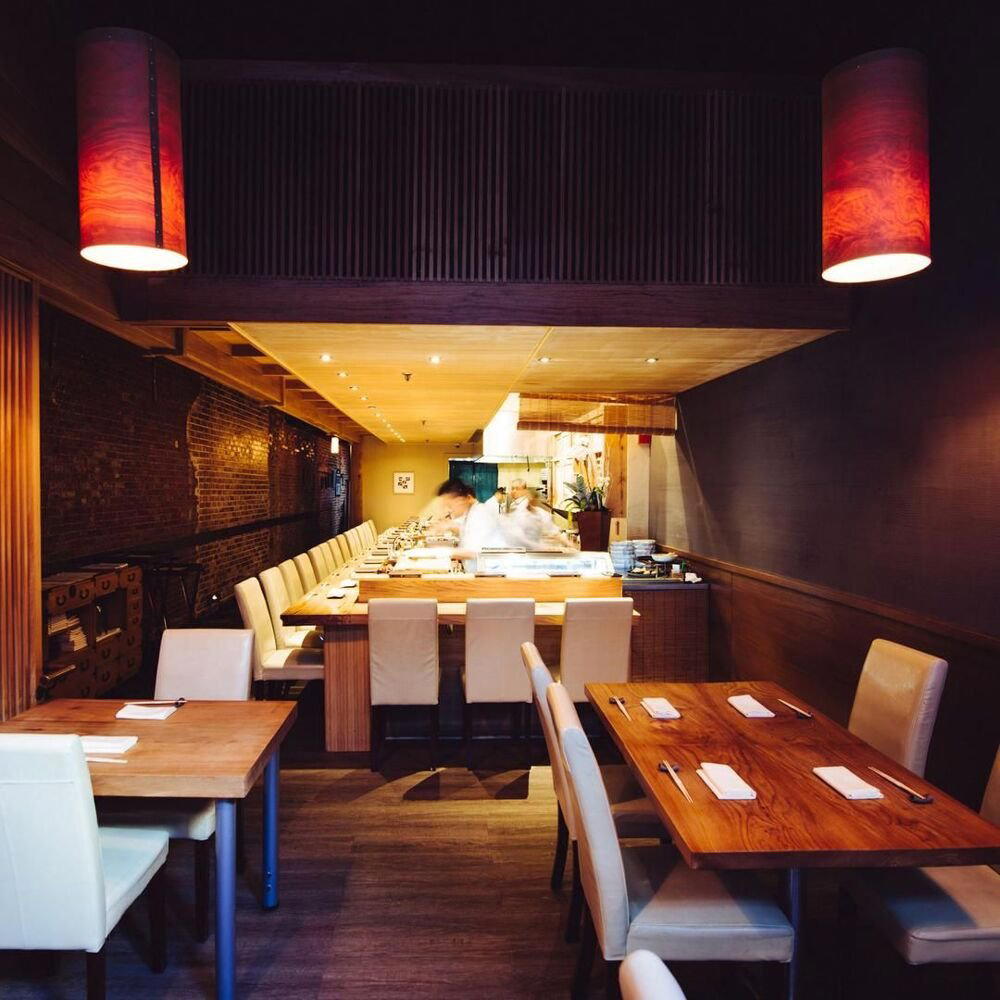
Washington Street in the Financial District is not where most diners expect to find one of San Francisco's more seriously regarded sushi counters. The neighbourhood runs on lunch crowds and early-evening cocktails, and the building gives little away from the street. That low-key placement is, in many ways, appropriate: the format operating inside — omakase, chef-led, Japanese in its discipline — does not require a marquee location to draw attention. It requires a kitchen that executes, and a counter that creates the conditions for that execution to land.
San Francisco's omakase scene has matured considerably over the past decade. Where the format once felt like a novelty at the upper end of the city's dining market, it now occupies a stable tier of its own, with a defined set of counters operating at the $$$$ price level and drawing on formal Japanese training to anchor their programs. The Shota and jū-ni represent the upper range of that tier; Hamano Sushi operates at a more casual register. Kusakabe holds its position in the middle of that structure with Michelin recognition in both 2024 and 2025, and a ranking of #597 in Opinionated About Dining's North America list in 2024, having first appeared as Recommended on that list in 2023.
The Chef Behind the Counter
In omakase dining, the counter is inseparable from the chef who runs it. The format demands a very particular kind of authority: not the brigade-driven hierarchy of a large kitchen, but the individual technical mastery of someone who can read the room, pace a meal, and make real-time decisions about what the fish on hand requires that evening.
That training shapes everything about how a meal at Kusakabe is structured. The chef-led omakase format is not a curated selection from a printed menu; it is a live editorial decision made around what is seasonal, what arrived that morning, and what the progression of a meal demands. The Japanese tradition this draws on is one of extraordinary restraint: the cook does less to the fish, not more, and the quality of sourcing becomes the central variable. That discipline is what Michelin's recurring Plate recognition reflects, consistent technical execution rather than theatrical spectacle.
Among San Francisco's $$$$ tier, Kusakabe sits in a different category from the Western-kitchen-led experiences at Lazy Bear or Atelier Crenn. Those restaurants operate with multiple Michelin Stars and ambitious conceptual frameworks. Kusakabe's proposition is more singular: Japanese technique applied with fidelity, at a counter format, by a chef with the kind of lineage that anchors the experience in something documentable. Diners choosing between the two tiers are making a choice between different kinds of ambition, not different levels of seriousness.
The Omakase Format in Context
The omakase model has proved durable at the premium end of the American dining market because it solves a specific problem: it removes the decision fatigue of the menu while concentrating all the quality variables in the kitchen rather than distributing them across a large selection. When a counter works, the pacing is the meal. Each piece arrives when it should, at the temperature it should, and the sequencing builds in a way that a carte selection rarely achieves.
That model has also proved resistant to the forces that erode consistency in larger-format restaurants. With a small seat count and a single chef directing the work, the variables are tighter. The counter becomes a controlled environment. This is why the most respected omakase programs in North America, from Masa in New York City to Sushi Masaki Saito in Toronto, maintain small seat counts and fixed formats. Kusakabe operates within that same logic.
San Francisco sits in an advantageous position for a sushi counter of this calibre. The city's proximity to Pacific fishing grounds, combined with established relationships in the wholesale Japanese seafood market, means that sourcing at the level the format demands is logistically achievable in a way that it is not in every American city. The omakase counters that have succeeded here have all capitalised on that supply chain access, and Kusakabe is no exception.
Among San Francisco's Broader Fine Dining Field
The city's fine dining market at the $$$$ level is concentrated and competitive. Michelin-starred restaurants including Benu, Quince, and Saison define the upper tier alongside Atelier Crenn. Within that field, the omakase format occupies a specific niche, high in price, high in technique, but operating on Japanese rather than European cooking logic. For diners whose reference point is Le Bernardin in New York City, Alinea in Chicago, or The French Laundry in Napa, Kusakabe represents a different axis of ambition, not less serious, but differently structured.
Comparisons further afield also hold weight. Single Thread Farm in Healdsburg and Providence in Los Angeles represent the Northern California and West Coast fine dining poles; Emeril's in New Orleans sits at the other end of the American regional spectrum. Against that backdrop, Kusakabe's focus is notably narrow and notably specific, which is precisely what makes it valuable to the diner who knows what they are looking for.
For those building a broader picture of the city's food and drink offer, our full San Francisco restaurants guide maps the field across categories and price points. The city's hotel, bar, winery, and experience circuits are covered in our San Francisco hotels guide, bars guide, wineries guide, and experiences guide.
Know Before You Go
- Address: 584 Washington St, San Francisco, CA 94111
- Cuisine: Sushi, Japanese (omakase format)
- Price: $$$$
- Hours: Tuesday to Sunday, 5–9 pm. Closed Monday.
- Awards: Michelin Plate (2024, 2025); Opinionated About Dining Leading Restaurants in North America #597 (2024)
- Guest Rating:
- Booking: Advance reservations advised given the counter format and limited seat count
Frequently asked questions
What's the price range at Kusakabe?
Pricing at Kusakabe is listed as $$$$.
What distinctions does Kusakabe have?
Kusakabe has received recognition including: Michelin Plate (2025); Opinionated About Dining Top Restaurants in North America Ranked #597 (2024); Michelin Plate (2024); Opinionated About Dining Top Restaurants in North America Recommended (2023).
What's the must-try dish at Kusakabe?
Kusakabe runs a strict omakase format, meaning Chef Mitsunori Kusakabe controls the sequence and selection entirely — there is no à la carte option and no single dish to request. The kitchen determines what arrives and when, which is the point: the progression itself is the experience. What the Michelin Plate recognition (awarded consecutively in 2024 and 2025) signals is consistent execution across the full sequence, not a single standout plate. Arrive without a target dish in mind.
Is Kusakabe focused on a specific cuisine style?
What time does Kusakabe open and close?
Hours at Kusakabe: Hours: Monday Closed Tuesday 5–9 pm Wednesday 5–9 pm Thursday 5–9 pm Friday 5–9 pm Saturday 5–9 pm Sunday 5–9 pm.
Where exactly is Kusakabe?
Kusakabe is located at 584 Washington St, San Francisco, CA 94111, San Francisco.
Reputation First
| Venue | Cuisine | Price | Awards | Notes |
|---|---|---|---|---|
| KusakabeThis venue — the venue you are viewing | Kyoto-Style Japanese Omakase | $150–200 | Michelin Plate | Not listed |
| Lazy Bear | Modern American Tasting Menu | Not listed | 2 Michelin Stars · World's 50 Best #25 | Progressive American, Contemporary |
| Benu | Modern Asian Fusion Fine Dining | $150–200 | 3 Michelin Stars · World's 50 Best #33 | French - Chinese, Asian |
| Atelier Crenn | Contemporary French Fine Dining | $300–500 | 3 Michelin Stars · World's 50 Best #44 | Modern French, Contemporary |
| Quince | Modern French Fine Dining | $300–500 | 3 Michelin Stars · World's 50 Best #48 | Italian, Contemporary |
| Saison | Modern French-Italian | Not listed | Michelin Plate | Progressive American, Californian |
Recognition history
Dated appearances from independent guides and award organizations, with the underlying list record or original source where available.
Michelin Plate
Michelin · 2026 Michelin Plate
Opinionated About Dining Top Restaurants in North America Ranked #597
Opinionated About Dining
Full recognition history (5 entries)
Michelin Plate
Michelin
Michelin Plate
Michelin
Opinionated About Dining Top Restaurants in North America Recommended
Opinionated About Dining