Our verdict
The opposite of west pairs Balkan Tapas Bar cooking with a Rainergasse address in Vienna, set for casual, conversational dinner or brunch.

Pearl is the En Primeur Club membership app, where members save venues, book tables and use the concierge.

The Fifth District and the Question of East
Vienna's fifth district, Margareten, sits on the quieter side of the Gürtel, far from the Innere Stadt's imperial set pieces and the tourist-facing restaurant density of the first. The neighbourhood has long attracted a mixed residential population, and its dining scene reflects that: fewer destination restaurants calibrated for visiting critics, more places doing specific things for people who already know what they want. The opposite of west operates from Rainergasse 37 within this context, a street address that locates it firmly inside local daily life rather than on any obvious visitor circuit.
The name itself signals an editorial stance before you've looked at a menu. In a European city whose culinary identity leans heavily on its Habsburg inheritance, its Wiener Schnitzel, its Mehlspeisen, its rooted orientation toward central European tradition, naming a restaurant after directional opposition is a declaration of intent. It positions the kitchen somewhere east of that default, whether that means Central Asian sourcing, South or East Asian technique, or something that borrows from multiple traditions simultaneously. That positioning matters because Vienna's high-end dining conversation is dominated by addresses that refine the Austrian canon: Steirereck im Stadtpark working at the apex of that tradition, Mraz & Sohn pushing it toward creative territory, Konstantin Filippou approaching it through a modern European lens. A restaurant oriented explicitly eastward occupies a different register entirely.
Cultural Coordinates: What "East" Means in This Context
Across European cities with significant Central and Eastern diaspora populations, the more interesting cooking has tended to migrate away from the historic centre and into residential districts where landlord economics are less punishing and the clientele brings more specific expectations. Vienna has a long relationship with eastern culinary traditions that predates any contemporary trend: the city's position as capital of an empire stretching into Hungary, the Balkans, and beyond meant that its food culture absorbed influences that most western European capitals never encountered. Paprika, fermentation traditions, the use of offal and preserved vegetables, the interplay between sweet and sour in savoury contexts, all of these have deep roots in Vienna's culinary inheritance even when they're not always visible on the city's main-stage restaurant scene.
The opposite of west, read through this lens, is less an outlier and more a continuation of something the city has always done quietly. The addresses that have drawn attention in recent years for similar directional ambitions, those working with Silk Road spicing, Caucasian ferments, or East Asian technique applied to European produce, tend to cluster outside the first district precisely because that's where the city's actual diversity lives. Margareten fits that pattern.
Where It Sits Relative to Vienna's Table
Vienna's formal fine dining tier, the restaurants operating at €€€€ price points with Michelin recognition or equivalent credibility, is relatively compact and stylistically coherent. Amador, Doubek, and the addresses already named above define that bracket. The opposite of west does not appear in that peer group on pricing or formal recognition grounds based on available data, which places it in a different conversation: the kind of restaurant that earns its following through consistent cooking and a specific point of view rather than through award positioning.
That positioning has its own logic. Vienna has a solid mid-tier creative scene, and the restaurants that operate there with genuine culinary identity often build more durable local loyalty than destination venues calibrated for visiting critics. Austria's wider fine dining geography, from Döllerer in Golling an der Salzach to Obauer in Werfen, shows how strongly the country's kitchen identity can anchor to regionalism. A Vienna restaurant pointing deliberately eastward is making the opposite argument: that the most interesting cooking in the city might come from looking outward rather than inward.
For a broader picture of how this address fits into the city's full dining range, the EP Club Vienna restaurants guide covers the spectrum from neighbourhood spots through Michelin-starred counters.
Planning Your Visit
The venue data available for The opposite of west is limited at this stage, which means specific booking methods, opening hours, and price confirmation require direct verification before you travel. The address at Rainergasse 37 in the 1050 postal district is confirmed. For restaurants of this type in Margareten, walk-in availability tends to be more realistic than at the formal fine dining tier, but given the neighbourhood's growing draw, an advance call or check of their current channels is advisable, particularly on weekend evenings.
| Venue | District | Price Tier | Booking Lead Time | Style |
|---|---|---|---|---|
| The opposite of west | Margareten (5th) | Not confirmed | Check directly | Eastern-oriented, details TBC |
| Steirereck im Stadtpark | Landstraße (3rd) | €€€€ | Weeks to months ahead | Creative Austrian |
| Konstantin Filippou | Innere Stadt (1st) | €€€€ | 2–4 weeks ahead | Modern European |
| Mraz & Sohn | Brigittenau (20th) | €€€€ | 2–4 weeks ahead | Modern Austrian, Creative |
If your Vienna trip extends to broader Austria, restaurants including Ikarus in Salzburg, Griggeler Stuba in Lech, Gourmetrestaurant Tannenhof in Sankt Anton am Arlberg, Kräuterreich by Vitus Winkler in Sankt Veit im Pongau, Landhaus Bacher in Mautern an der Donau, Schwarzer Adler in Hall in Tirol, Restaurant 141 by Joachim Jaud in Mieming, and Ois in Neufelden cover a range of regional styles and price points. For international reference points in the eastward-leaning creative category, Atomix in New York City represents what a fully developed Korean-influenced tasting counter looks like at the highest formal tier, and Le Bernardin in New York City remains the benchmark for how a strong culinary identity anchors long-term institutional credibility.
Frequently asked questions
What do people recommend at The opposite of west?
Can I walk in to The opposite of west?
What is The opposite of west known for?
Is The opposite of west overpriced or worth every penny?
How does The opposite of west fit into Vienna's broader scene of internationally influenced restaurants?
Style and Standing
Comparable venues nearby, for context on price, style, and recognition.
| Venue | Cuisine | Price | Notes |
|---|---|---|---|
| The opposite of westThis venue (the venue you are viewing) | Balkan Tapas Bar | $20–30 | Not listed |
| hiddenkitchen city | Healthy European Cafe | $10–20 | Stephansdom |
| Zum Finsteren Stern | Modern European Gastropub | $50–100 | Stephansdom |
| 360° OCEAN SKY | Modern Austrian-European Rooftop | $30–50 | Mariahilf |
| Hollerei | Vegetarian European with Asian & Mediterranean influences | $20–30 | Sechshaus |
| The View | Contemporary European with Austrian Specialties | $50–100 | Riesenrad |
Continue exploring
More in Vienna
Restaurants in Vienna
All restaurants in Vienna →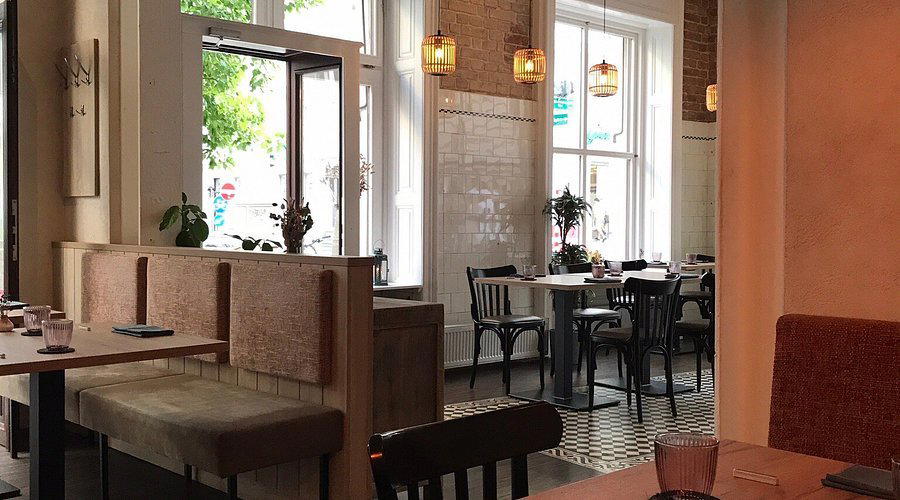

Bars in Vienna
All bars in Vienna →

Details
- Lively
- Warm
- Modern
- Date Night
- Casual Hangout
- Small Plates
Current opening hours
- Monday
- Closed
- Tuesday
- 5 PM–12 AM
- Wednesday
- 5 PM–12 AM
- Thursday
- 5 PM–12 AM
- Friday
- 5 PM–12 AM
- Saturday
- 5 PM–12 AM
- Sunday
- Closed
Hours can change for holidays and private events. Hours as of .
Warm hospitality with lively atmosphere.