
Counter-seating hamburger shop in Osaka’s Tenjinbashi area, selected for Tabelog 100 - Hamburger - 2026. The appeal is format discipline rather than luxury theatre: a compact burger meal, solo-friendly rhythm, and a price tier that keeps it closer to everyday Osaka eating than destination tasting menus.
Pearl is the En Primeur Club membership app — saves, bookings, and concierge access live there. Same editors, same standards.
- Address
- 大阪府大阪市北区天神橋3-8-2 2F
- Phone
- +81662328773
- Website
- tabelog.com
 Saves & bookings on Pearl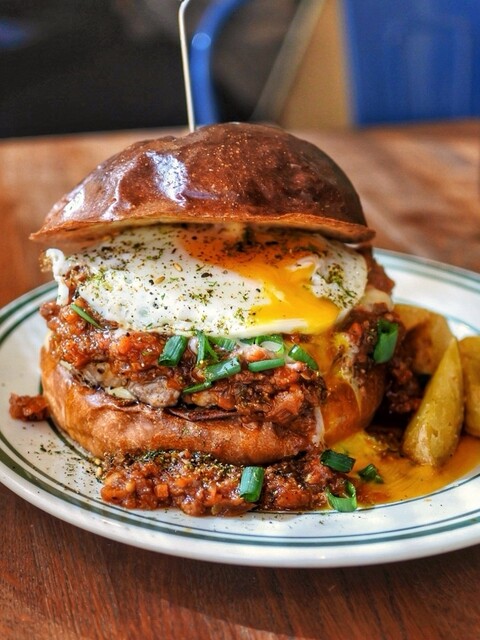
Tenjinbashi’s eating rhythm is built on compression: narrow staircases, second-floor rooms, short lunches, counter seats, and a local audience that judges quickly. In that setting, a hamburger shop does not need the ceremony of Osaka’s higher-spend restaurants. It needs sequencing. Bun, patty, heat, sauce, side, finish: the meal has a smaller arc than a dégustation, but the logic is the same. Each stage either keeps structure intact or exposes weak craft.
THE MUNCHIES BURGER WORKS. belongs to the city’s casual specialist tier, the band of Osaka dining where a single category can earn serious attention without drifting into luxury pricing. Its selection for Tabelog 100 - Hamburger - 2026 gives the shop a clear trust signal inside Japan’s crowded burger field, where recognition often goes to operators that treat the format as a disciplined build rather than a generic sandwich. The restaurant’s Tabelog score is 3.68, which matters in a category where small differences often separate neighbourhood convenience from destination-worthy specialist cooking.
A compact burger meal with the logic of a short tasting menu
The tasting progression here is not about courses in the formal sense. It is about the way a burger meal has to move: the first impression of the bun, the weight of the patty, the seasoning balance, the handling of fat, then the aftertaste that determines whether the last bite feels heavy or clean. Osaka has long been comfortable with casual formats that reward precision, from takoyaki stalls to standing bars and ramen counters. A hamburger shop in this context is judged less by novelty than by calibration.
That makes the category more interesting than it first appears. Japan’s premium burger culture often borrows from American diner language, but the better versions tend to behave like Japanese counter food: compact menus, close-range cooking, and a customer seated near enough to read the pace of service. Counter seating reinforces that scrutiny. There is less room for atmosphere to cover mistakes, and more emphasis on the build arriving in the right order, at the right temperature, and with enough structural discipline to survive the meal.
Within Osaka, this price-conscious specialist lane sits apart from the city’s more formal reservation restaurants. Pres operates in a much higher spend bracket, while Sangourmand shares a more casual price band but not the same hamburger focus. Ogimachi Udonya Asuro points to another Osaka habit: diners will travel for a narrow category when the execution is clear. THE MUNCHIES BURGER WORKS. sits in that same behavioural pattern, a place where the format is modest and the audience is exacting.
Tenjinbashi rewards specialists, not spectacle
Tenjinbashi and the wider Kita-ku area are useful terrain for understanding Osaka’s middle register of dining. The neighbourhood is not built only around grand occasions. It is dense with places that work for one person, a quick meal, or a specific craving, and that economy of purpose suits hamburger cooking. A burger here competes less with fine dining than with udon, bagels, bakeries, curry, pizza, and gyoza-adjacent comfort food: categories where repeat visits depend on reliability rather than theatre.
That competitive set helps explain why recognition in a hamburger list carries weight. A general restaurant award can blur categories; a category-specific list makes the comparison sharper. The question is not whether a burger can imitate a tasting menu, but whether it can deliver a satisfying beginning, middle, and end in a single compact format. The answer depends on proportion: bread to meat, garnish to fat, richness to acidity, and speed to accuracy.
Readers building a broader Osaka food map should treat this as one part of a wider casual-specialist circuit rather than a standalone trophy stop. Nearby and citywide references on EP Club include .cafe, 52CHO-ME BAKERY, 551 Horai (551蓬莱), 99 Pizza Napoletana Gourmet, and a canto (Italian). Together, they show how Osaka rewards tight formats across price levels, from bakery counters to regional Italian cooking.
The wider planning frame matters as well. Our full Osaka restaurants guide gives the dining context, while Our full Osaka hotels guide, Our full Osaka bars guide, Our full Osaka wineries guide, and Our full Osaka experiences guide help place a casual burger stop within a larger city itinerary. Osaka is a city where a lunch counter can carry as much editorial value as a formal dinner, provided the category is handled with discipline.
Where the format fits in a Japan-wide casual dining map
Japan’s casual dining strength lies in specialization. A narrow focus is not a limitation when the format is judged repeatedly by regulars, office workers, solo diners, and visitors who understand the category. That is why a hamburger specialist in Osaka can be read alongside udon, curry, onigiri, sake-bar food, and regional comfort formats elsewhere. The shared trait is not cuisine; it is the decision to compress a meal into a repeatable, highly legible structure.
For comparison across EP Club’s Japan and diaspora casual-food coverage, see -Grilled beef Sukiyaki- KAMAKURA TANUKIAN 鎌倉 たぬき庵 in Kamakura. 鮪と炭火焼き うお炭 秋葉原店 in Tokyo.know in Kumamoto, (Shoku) Vietnam in Kawasaki, [Curry Senmon Ten] Maruyama Kyoju. in Sapporo, [ki:] in Kyoto, Jōdo Saké Bar in Los Angeles, and Onigiri Time in Pasadena. The useful comparison is not flavor profile, but how each format turns a focused meal into a complete experience.
The editorial case for THE MUNCHIES BURGER WORKS. is therefore specific: it represents Osaka’s ability to take an imported casual format and judge it with the same seriousness applied to local staples. The meal’s arc is short, but the standard is not casual. In a city that eats with speed and precision, that distinction matters.
Budget and Context
Comparable venues to place this listing in its category.
| Venue | Cuisine | Price | Notes |
|---|---|---|---|
| THE MUNCHIES BURGER WORKS.This venue — the venue you are viewing | Kita, Gourmet American-style burgers | $$ | Not listed |
| Nick&Renée Toyonaka honten | Toyonaka, Gourmet Burgers | $$ | Not listed |
| FRANK Ride and Eat | Minoh, Burger & sandwich shop | $ | Not listed |
| Tabibito Chef no Thai Shokudo KHAO | Not listed | $$ | Kita, Casual Thai Curry & Asian Ethnic Kitchen |
| Mori Shoten | Kita, Dining | Not listed | Not listed |
| Yakiniku fujimoto Umeda ohatsu tenjin ten | Not listed | $$ | Kita, Yakiniku (Japanese BBQ) |
Recognition history
Dated appearances from independent guides and award organizations, with the underlying list record or original source where available.
Tabelog 100 #34 · No. 34
Tabelog · Tabelog 100 - Hamburger - 2026
Continue exploring
More in Osaka
Restaurants in Osaka
Browse all →




Bars in Osaka
Browse all →




Hotels in Osaka
Browse all →



Wineries in Osaka
Browse all →
At a Glance
- Trendy
- Lively
- Cozy
- Solo
- Casual Hangout
- Standalone
Casual, compact second-floor burger shop with counter seating and a lively lunchtime atmosphere, focused on freshly made gourmet burgers rather than extended dining.