The Milky Way
Our verdict
On West Pico Boulevard in Los Angeles, The Milky Way has occupied a quiet but enduring place in the city's dining conversation since its founding. A neighborhood fixture with a following that extends well beyond its immediate surroundings, it represents the kind of restaurant that Los Angeles does particularly well: specific in identity, resistant to trend cycles, and sustained by return visits rather than opening buzz.

Pearl is the En Primeur Club membership app, where members save venues, book tables and use the concierge.

The menu
What to order
- Leah's Cheese Blintzes
- Fish & Chips
- Cream of Broccoli Soup
- Eggplant Parmesan
A West Pico Institution in a City That Rarely Sits Still
Los Angeles has a complicated relationship with restaurant longevity. The city's dining scene moves fast, rewards novelty, and has a shorter institutional memory than New York or San Francisco. Against that backdrop, the restaurants that accumulate decades of return visits rather than opening-week headlines occupy a distinct and underappreciated category. The Milky Way, at 9108 West Pico Boulevard, belongs to that category. Its address places it in a stretch of the city where neighborhood loyalty and culinary consistency have historically mattered more than press cycles, a part of Los Angeles where restaurants survive on reputation built slowly, table by table.
West Pico Boulevard sits in a corridor that connects the Beverly Grove area to the edges of Century City, running through a predominantly Jewish neighborhood that has long supported a particular kind of dining culture: kosher and kosher-adjacent restaurants, delicatessens, and family-run institutions that have served the same communities for generations. The Milky Way fits within that tradition. Its presence on this block is not incidental, it reflects the neighborhood's character and the kind of audience that values consistency and familiarity over spectacle.
The Atmosphere That Defines the Room
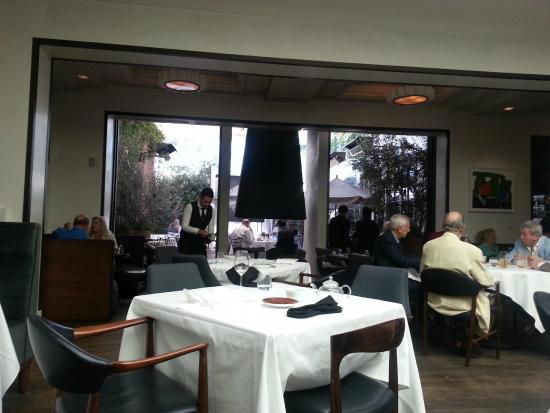
Los Angeles dining rooms of a certain era have a specific sensory quality that newer openings rarely replicate: warm lighting that flatters rather than performs, the low murmur of conversations that have been happening for years between the same people, and a physical space that shows the kind of comfortable wear that cannot be designed in. These rooms feel inhabited rather than installed. The Milky Way carries those qualities, and they matter more than any single dish or credential. The experience of sitting in a room with genuine history is increasingly rare in a city that builds and demolishes restaurant concepts on two-year cycles.
That atmosphere also functions as a context for the food. When surroundings are familiar and unhurried, dishes arrive without the pressure of a performative tasting menu or a theatrical plating ritual. The meal becomes a conversation rather than a presentation, a format that suits the neighborhood and the audience that has kept this address on its regular rotation for years.
Where The Milky Way Sits in the Los Angeles Dining Spectrum
Los Angeles's current fine-dining tier is occupied by restaurants that have earned significant external recognition: Providence for its contemporary seafood, Kato for its precise New Taiwanese approach, Somni for molecular ambition, and Hayato for its Japanese kaiseki discipline. These are restaurants that operate in a national and international competitive set, priced against peers in cities like New York, Chicago, and San Francisco. Osteria Mozza occupies a slightly different register, Italian, neighborhood-rooted, but still widely recognized beyond Los Angeles. Nationally, the category of destination restaurants includes institutions like Le Bernardin in New York City, The French Laundry in Napa, and Alinea in Chicago. The Milky Way does not compete in that tier, and that is not a criticism. It serves a different and arguably more durable function: the trusted neighborhood restaurant that regulars return to without needing a reason beyond the fact that it is familiar and good.
That function is as relevant in Los Angeles as it is in the cities associated with old-world dining culture. What makes West Pico's version of it interesting is the cultural specificity it carries. Kosher dining in Los Angeles has its own history and its own standards, and the restaurants that have maintained quality within those constraints over long periods deserve the same editorial attention as any award-seeking tasting-menu format. The comparison set here is less Lazy Bear in San Francisco or Single Thread Farm in Healdsburg and more the long-running neighborhood institutions that anchor specific communities in American cities, places like Bacchanalia in Atlanta or Emeril's in New Orleans, which carry the weight of sustained local loyalty.
The Cultural Weight of a Neighborhood Address
Restaurants that survive for decades in a single neighborhood do so because they become part of the social fabric in ways that go beyond the food. Birthdays, Friday-night dinners, post-synagogue lunches, anniversaries: these occasions repeat, and the restaurants that host them accumulate a kind of meaning that no opening review can manufacture. The Milky Way has that kind of presence on West Pico. It is a place that has been part of family rituals for people who grew up in this part of Los Angeles, and that continuity is itself a form of quality assurance.
Across the country, a handful of restaurants have achieved similar cultural embedding in specific communities. Blue Hill at Stone Barns in Tarrytown has become inseparable from a certain kind of farm-to-table conversation. The Inn at Little Washington defines what a certain tier of American country-house dining looks like. Addison in San Diego has anchored the fine-dining conversation in its city for years. The Milky Way's version of that embedding is more local and more intimate, which is precisely what makes it worth attention. In a city where Atomix in New York City or 8 1/2 Otto e Mezzo Bombana in Hong Kong represent one end of the international dining spectrum, there is editorial value in documenting the other end: the restaurant that has never needed a global reputation because its local one has always been enough.
Planning a Visit
Frequently asked questions
Is The Milky Way a good choice for a Friday night dinner in the Pico-Robertson area?
The Pico-Robertson neighborhood is one of Los Angeles's most established Jewish communities, and Friday-night dining carries particular cultural weight in this part of the city. The Milky Way's location at 9108 West Pico Boulevard places it at the center of that tradition. As with any community-rooted restaurant on a culturally significant night, early reservations or advance contact is advisable, as demand from the local community tends to be consistent and predictable across the week's end.
Fast Comparison
Comparable venues nearby, for context on price, style, and recognition.
| Venue | Cuisine | Price | Notes |
|---|---|---|---|
| The Milky WayThis venue (the venue you are viewing) | New American Kosher Dairy | $30–50 | Not listed |
| Swingers | Retro American Diner | $20–30 | Beverly Grove |
| 25 Degrees | American Burgers & Bar | $20–30 | Hollywood |
| Running Goose | Modern Californian with Central American influences | $30–50 | Yucca Corridor |
| Stamp Proper Foods | Healthy American Cafe | Not listed | Los Feliz |
| The Edmon | Modern American Gastropub | $30–50 | Hollywood Studio District |
Continue exploring
More in Los Angeles
Restaurants in Los Angeles
All restaurants in Los Angeles →
Bars in Los Angeles
All bars in Los Angeles →
Hotels in Los Angeles
All hotels in Los Angeles →
Wineries in Los Angeles
All wineries in Los Angeles →

Details
- Cozy
- Intimate
- Classic
- Well Known
- Family
- Casual Hangout
- Brunch
- Date Night
- Standalone
- Historic Building
- Farm To Table
- Sustainable Seafood
- Local Sourcing
- A La Carte
- Family Style
- Kosher
- Vegetarian Friendly
- Pescatarian Friendly
- Gluten Free Options
Current opening hours
- Monday
- 12–9 PM
- Tuesday
- 12–9 PM
- Wednesday
- 12–9 PM
- Thursday
- 12–9 PM
- Friday
- Closed
- Saturday
- Closed
- Sunday
- 10:30 AM–9 PM
Hours can change for holidays and private events. Hours as of .
Warm and friendly with soft, beautiful decor featuring Spielberg family photos and film posters; intimate dining room with a nostalgic, welcoming atmosphere.