The Marshal

The Marshal in Hell's Kitchen makes a specific argument: that farm-to-table integrity should extend to the glass, not just the plate. The wine list draws deliberately from New York producers, positioning local viticulture as the natural companion to locally sourced cooking. On 10th Avenue, it operates as a quiet but coherent counterpoint to the neighbourhood's louder dining options.
Pearl is the En Primeur Club membership app — saves, bookings, and concierge access live there. Same editors, same standards.
- Address
- 628 10th Ave, New York, NY 10036
- Phone
- (212) 582-6300
- Website
- the-marshal.com
- Directions
- Get directions
 Saves & bookings on Pearl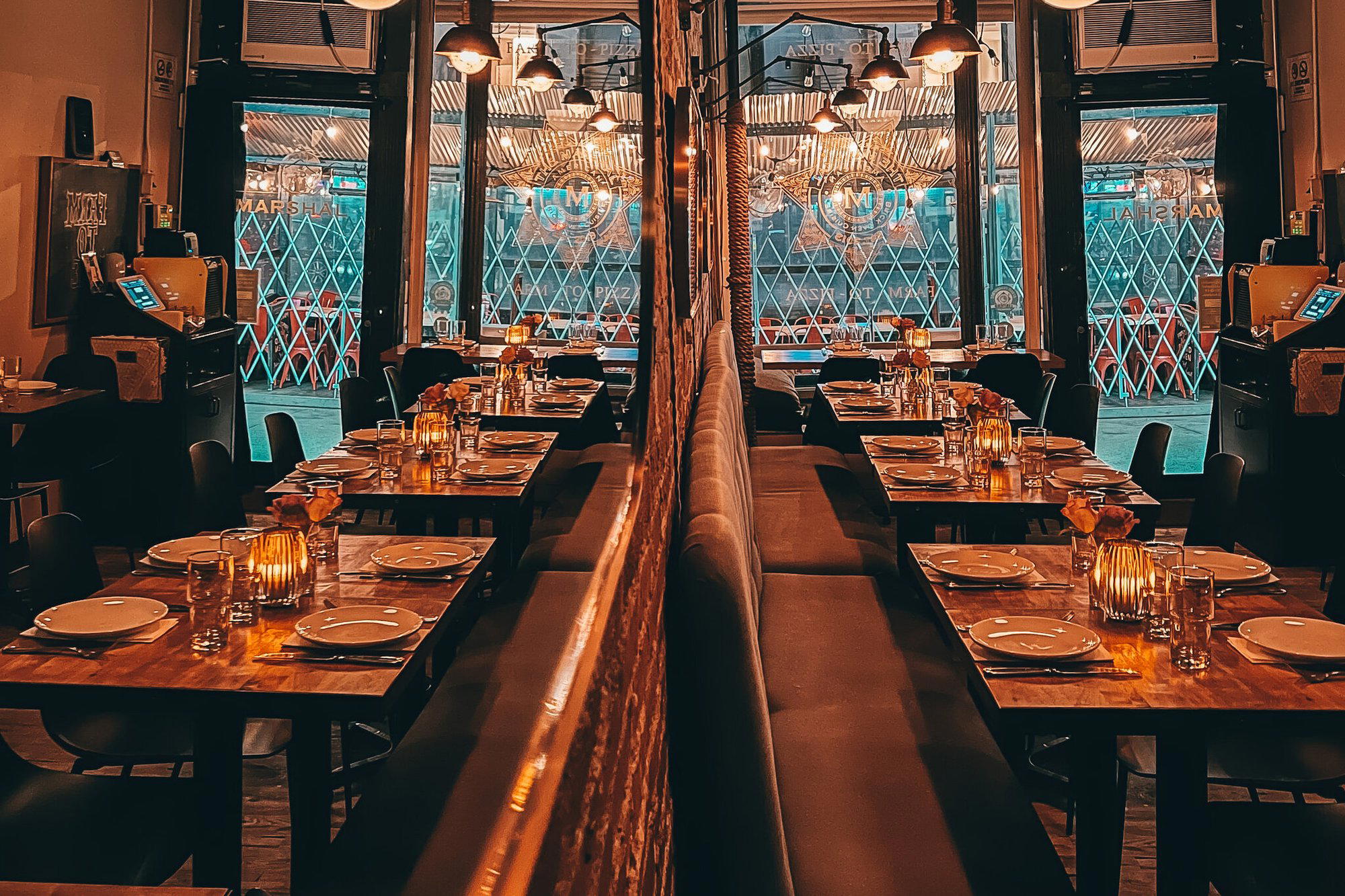
The Argument on the Plate and in the Glass
Farm-to-table as a restaurant category has been so thoroughly absorbed into mainstream dining that the phrase has nearly lost meaning. In cities like New York, where Le Bernardin and Per Se anchor one extreme of the market and fast-casual grain bowls market the other, the middle ground of earnest, produce-led cooking can feel indistinct. What gives The Marshal its editorial weight is a structural choice that most farm-to-table operations overlook entirely: the wine list follows the same sourcing logic as the kitchen. If the food draws from local producers, the argument goes, so should the drinks.
This is not a minor aesthetic decision. Across the American dining scene, restaurants that commit to regional sourcing on the plate routinely pour international wine from Burgundy, Napa, or Tuscany without apparent tension. The Marshal treats that inconsistency as a problem worth solving. The result is a New York-centric wine list that functions less as a beverage programme and more as a second menu, one that maps the state's vineyards with the same attention the kitchen gives to its ingredient suppliers.
What the Menu Architecture Reveals
Reading a menu as a document tells you how a restaurant understands its own identity. At one end of the New York spectrum, Masa operates on radical omission, a counter experience where the menu is almost entirely implicit. At the other, Saga builds elaborate tasting formats that foreground progression and sequence. The Marshal sits outside both registers. Its structure appears more relaxed, but the underlying logic is tight: every element on the plate and in the glass has been filtered through a consistent localist criterion.
That criterion does the work that a lengthy tasting menu might otherwise do. In high-concept restaurants from Alinea in Chicago to The French Laundry in Napa, the architecture of the meal is explicit, courses arrive in a declared sequence with a clear narrative. At the restaurant, the architecture is embedded in sourcing philosophy rather than course structure. The menu doesn't announce its logic; it enacts it. Diners who pay attention to the wine list will notice that it functions as an extension of the food programme rather than a separate department.
This approach places the restaurant in a niche comparable set that includes operations like Single Thread Farm in Healdsburg, where agricultural sourcing shapes both kitchen and cellar, and Lazy Bear in San Francisco, where the beverage programme is treated as structurally equivalent to the food. The scale is different and the ambition is quieter, but the underlying conviction about coherence across the meal belongs to the same category of thinking.
Hell's Kitchen as Context
The restaurant sits at 628 10th Avenue, which places it at the western edge of Hell's Kitchen, a neighbourhood whose dining character has shifted significantly over the past decade. What was once primarily a pre-theatre corridor serving Midtown commuters now holds a more mixed population of destination restaurants, neighbourhood regulars, and theatre-adjacent foot traffic. The western blocks of 10th Avenue in particular run at lower pressure than the more heavily touristed stretches closer to the Hudson Yards development.
That location matters for understanding how the restaurant operates in its competitive context. It is not positioned against the formal dining rooms of César or the prestige counter formats that define the city's upper tier. It occupies a different register: a neighbourhood restaurant with a coherent intellectual premise, priced and formatted for repeat visits rather than special-occasion ceremony. Across the American dining scene, this middle tier is where sourcing-led cooking has done most of its interesting work, from Emeril's in New Orleans to Providence in Los Angeles, restaurants that hold a clear point of view without requiring the formal apparatus of white tablecloths and tasting menus.
New York Wine as a Serious Category
The decision to anchor the wine list to New York producers deserves some unpacking, because the local wine category is not monolithic. The Finger Lakes has a credible international profile for Riesling, with producers working in a continental climate that generates wines with genuine tension and aging potential. The North Fork of Long Island has built a smaller but coherent reputation for Bordeaux varieties, particularly Merlot and Cabernet Franc, in a maritime climate that shares some structural similarities with Saint-Émilion. Hudson Valley producers are fewer in number but increasingly serious in quality. Taken together, these regions constitute a body of work that can sustain a restaurant wine list without compromise, provided the buyer knows where to look.
Most New York restaurants don't look there. The state's producers remain substantially underrepresented on city lists relative to their quality and availability, which means a commitment to New York wine requires active curation rather than passive purchasing from standard distributor sheets. That curation is itself a form of editorial labour, one that parallels the sourcing relationships a farm-to-table kitchen maintains with its ingredient suppliers. In that sense, the wine list at the restaurant functions as a second expression of the same philosophy that drives the kitchen, and its coherence with the food programme is what distinguishes it from restaurants that treat local sourcing as a marketing category rather than a structural commitment.
Know Before You Go
- Address: 628 10th Ave, New York, NY 10036
- Neighbourhood: Hell's Kitchen, Midtown West
- Price range: About $35 per person
- Wine focus: New York State producers
A Credentials Check
Comparable venues nearby, for context on price, style, and recognition.
| Venue | Cuisine | Price | Notes |
|---|---|---|---|
| The MarshalThis venue — the venue you are viewing | Wood-Fired Farm-to-Table American | $$ | Not listed |
| Sarge’s Deli | Classic New York Jewish Deli | $$ | Lower East Side |
| Dimes | Neighborhood American Cafe | $$ | Chinatown-Two Bridges |
| Mulberry & Vine | Healthy American Farm-to-Table | $$ | Tribeca-Civic Center |
| Diner | Classic American Diner | $$ | Williamsburg |
| Salty Lunch Lady's Little Luncheonette | American Sandwich Shop | $$ | Ridgewood |
Recognition history
Dated appearances from independent guides and award organizations, with the underlying list record or original source where available.
Star Wine List
Star Wine List
Continue exploring
More in New York City
Restaurants in New York City
Browse all →
Bars in New York City
Browse all →
Hotels in New York City
Browse all →





At a Glance
- Cozy
- Intimate
- Modern
- Date Night
- Group Dining
- Brunch
- Casual Hangout
- Open Kitchen
- Craft Cocktails
- Farm To Table
- Local Sourcing
Current opening hours
- Monday
- 11 AM–10 PM
- Tuesday
- 11 AM–10 PM
- Wednesday
- 11 AM–10 PM
- Thursday
- 11 AM–10 PM
- Friday
- 11 AM–11 PM
- Saturday
- 11 AM–11 PM
- Sunday
- 11 AM–10 PM
Hours can change for holidays and private events. Last verified .
Cozy and intimate with a welcoming bistro atmosphere featuring wood-fired cooking.