The Free Company


Michelin Plate
Our verdict
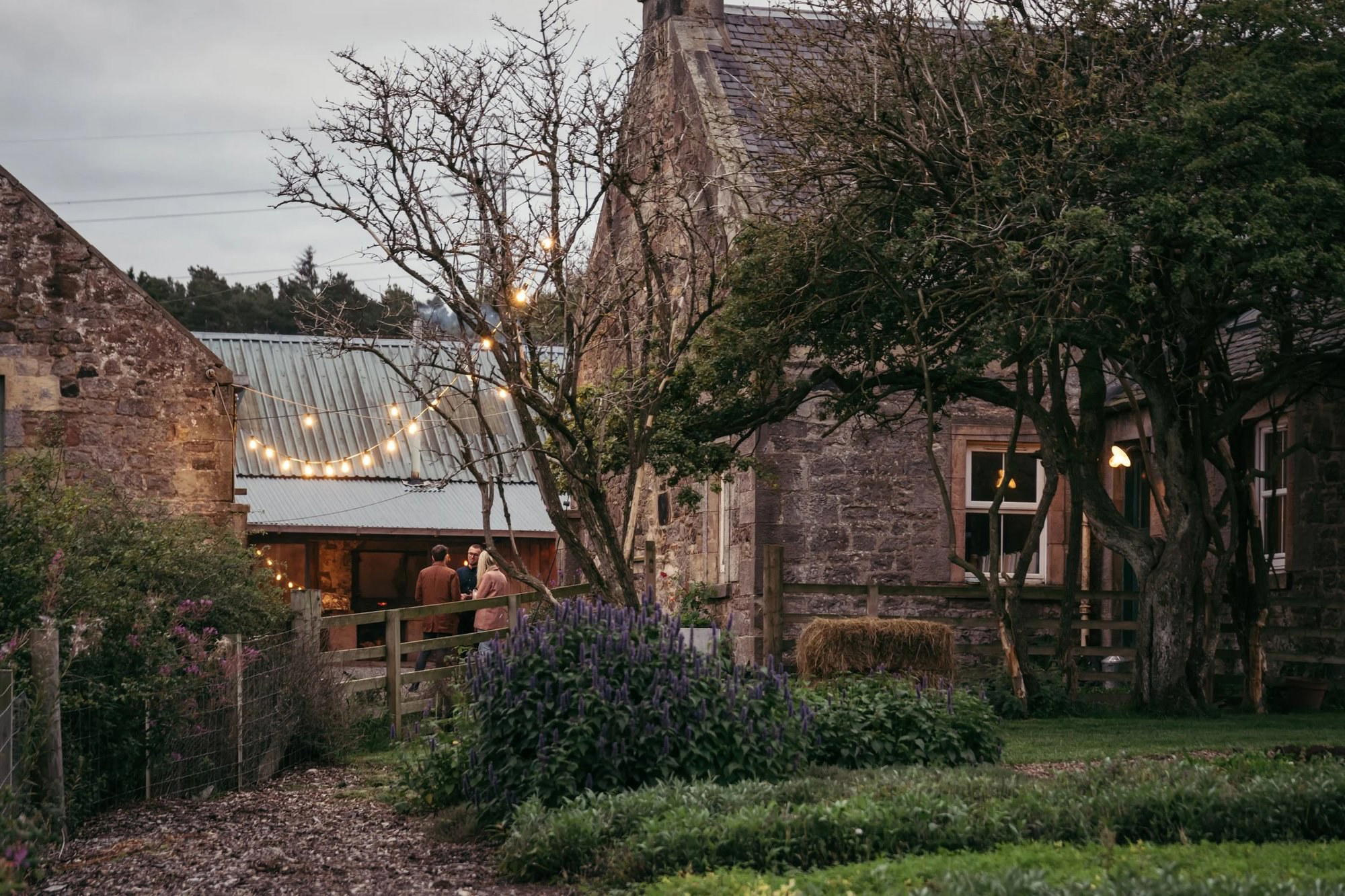
A converted dairy barn on a working no-dig farm at the edge of Edinburgh, The Free Company serves communal, produce-led dinners where the distance from soil to plate is measured in yards rather than miles. Two brothers have transformed their father's former farm into one of the Edinburgh area's most purposeful dining rooms, with refectory tables, a passionate service team, and dishes that make the sourcing story visible on the plate.

Pearl is the En Primeur Club membership app, where members save venues, book tables and use the concierge.
The menu
What to order
- Hogget offal flatbread with charcoal mayo and Corra Linn cheese
- Shetland hogget loin with kale and wee hogget pie
- Hay-baked celeriac with fava beans and sunflower seeds
- Smoked sourdough bread with whipped butter and honey
- Blackcurrant-leaf custard tart with scorched meringue
A Barn With Something to Prove
The approach to The Free Company sets expectations before a single dish arrives. Balerno sits on the southwestern edge of Edinburgh, where Midlothian's countryside begins in earnest, and the venue occupies a converted milking barn on a working farm that the family has run for years. The architecture is honest: old timber and stone adapted rather than erased, with the original structure providing the kind of low-ceilinged, thick-walled atmosphere that no interior designer can manufacture from scratch. You arrive somewhere that feels like it has always been here, because most of it has.
Inside, refectory-style communal tables define the room's social logic. This is not the format of the hushed fine-dining counter or the white-tablecloth enclave. Diners sit alongside strangers, conversations carry across the table, and the collective noise level sits at a register that encourages participation rather than retreat. For a section of the UK dining market accustomed to the carefully managed silence of rooms like The Ledbury in London or the technical formality of L'Enclume in Cartmel, The Free Company represents a deliberate counter-argument: that eating well and eating communally are not in conflict.
From the Ground Up: How the Farm Shapes the Menu
The sourcing model here is not a marketing footnote. The farm operates on no-dig principles, a method that prioritises soil health by avoiding the tillage that disrupts microbial networks and carbon storage. No-dig growing, championed by growers like Charles Dowding in the UK, tends to produce vegetables with deeper root systems and more concentrated flavour, because the soil structure is preserved rather than mechanically broken each season. The kitchen's access to this produce is not a supply chain negotiation but a walk across the yard.
A dish like pressed hogget shoulder with asparagus and radish illustrates the approach precisely. Hogget, the term for sheep older than one year but younger than two, carries more developed fat and a more pronounced flavour than lamb, and its pairing with asparagus and radish suggests a menu that tracks the growing calendar closely. The asparagus places the dish in late spring; the radish adds acidity and crunch in a way that processed or imported alternatives rarely match. The composition reads as thoughtful rather than decorative, and that distinction matters at this price point.
This kind of farm-to-table operation sits in a specific tier of UK dining, distinct from both the ingredient-as-spectacle restaurants that name suppliers in bold type across the menu and the casual gastropubs that gesture at provenance without following through. Venues that have built serious reputations around ingredient sourcing at the production level, including Moor Hall in Aughton and, in a different register, Gidleigh Park in Chagford, tend to share a commitment to the agricultural backstory that goes beyond supplier listings. The Free Company's version of that commitment is perhaps more legible than most, because the farm is the venue and the venue is the farm.
Scotland's Wider Dining Context
Edinburgh and its surrounding area have developed a dining identity that increasingly leans on Scottish produce as the primary editorial statement of a meal. Restaurant Andrew Fairlie in Auchterarder, which holds two Michelin stars, represents the formal end of that spectrum. The Free Company occupies a different position in the same conversation, one where the format is less ceremonial but the ingredient rigour is comparable. Both are making an argument about what Scotland's land and sea can produce; they are simply making it in different rooms.
Balerno itself is not a dining destination in the way that Edinburgh's Old Town or Stockbridge function as concentrated restaurant quarters. Its location means The Free Company draws a crowd that travels with purpose, which in practice produces a dining room of people who have chosen to be there rather than defaulted to it. That selectivity tends to generate a particular atmosphere: engaged, unhurried, and more willing than average to let a meal take its time. For anyone planning the evening from Edinburgh's centre, the drive west takes roughly twenty to twenty-five minutes, making it practical as a dedicated dinner outing rather than a spontaneous stop. Our full Balerno restaurants guide covers the broader options in the area if you are planning a longer visit.
The Service Model
In communal dining formats, service carries a heavier load than in conventional restaurant settings. At The Free Company, the service team is described as genuinely invested in the project rather than simply executing it, which in practice means guests encounter people who can explain the farm's practices, discuss the provenance of a dish, and sustain a conversation about the food without defaulting to a rehearsed script.
That quality of service engagement is not incidental to the experience; it is structural to it. Restaurants that build sourcing integrity into their identity need a front-of-house team capable of communicating that integrity in real time, or the story remains confined to the menu text. The Free Company appears to have solved that problem. For context on where this sits in the broader UK picture, venues at the formal end, like Le Manoir aux Quat' Saisons in Great Milton and Midsummer House in Cambridge, invest heavily in service as performance; The Free Company's version is warmer and less choreographed, which suits the barn setting and communal format considerably better.
Planning Your Visit
The Free Company is located at Balerno, Midlothian, Edinburgh EH14 7HZ, accessible by car from central Edinburgh in under half an hour. Given the farm setting and communal format, this is an occasion to commit to rather than fit around other plans. Booking ahead is advisable, and arriving without a reservation is unlikely to pay off. Specific pricing, current hours, and booking methods are best confirmed directly through the venue before you travel, as these details can shift with the season and the farm's calendar. If you are extending your time in the area, our guides to Balerno hotels, Balerno bars, Balerno wineries, and Balerno experiences cover the surrounding options.
For those building a broader itinerary of produce-led UK dining, the comparison set extends well beyond Scotland. Hand and Flowers in Marlow, hide and fox in Saltwood, and at the more technically ambitious end, Opheem in Birmingham, each represent a different interpretation of what ingredient-first cooking looks like in a British context. The Free Company's argument, made from a converted milking barn on the outskirts of Edinburgh, is among the more direct.
Frequently asked questions
Would The Free Company be comfortable with kids?
The communal refectory tables and converted milking barn create a relaxed, unfussy atmosphere that sits well outside formal dining territory. That said, the venue runs as a destination dining experience built around thoughtfully composed tasting-style dishes from the no-dig farm, so it suits children who are comfortable at the table for a longer meal.
What's the vibe at The Free Company?
Think farmhouse supper rather than formal restaurant: communal tables in a stylishly converted dairy barn, with a service team described as genuinely passionate rather than procedurally polished. The two brothers who run it took over their father's Midlothian farm, and that family ownership shows in the room's tone, convivial, purposeful, and closer to a gathering than a sit-down service.
Does The Free Company have a Michelin star or similar recognition?
The Free Company has received recognition including: This is the kind of restaurant where you can feel the love and enthusiasm poured into every part of the experience. Two brothers have taken over their dad’s former dairy farm and converted the old milking barn into a stylishly rustic dining….
What dish is The Free Company famous for?
The pressed hogget shoulder with asparagus and radish is the dish most directly associated with the kitchen's sourcing philosophy: hogget, being older than lamb, carries more depth and reflects the farm's slower, produce-led approach. Availability tracks the season and the no-dig farm's output, so it is not guaranteed on every visit.
Where do I go for The Free Company?
The Free Company is located at The Free Company, Balerno, Midlothian, Edinburgh EH14 7HZ, United Kingdom, Balerno.
Comparison Snapshot
Comparable venues nearby, for context on price, style, and recognition.
| Venue | Cuisine | Price | Awards | Notes |
|---|---|---|---|---|
| The Free CompanyThis venue (the venue you are viewing) | Modern Scottish Farm-to-Table | $50–100 | Michelin Plate | Not listed |
| Dùthchas | Modern Scottish Fine Dining | $50–100 | Michelin Plate | Leith |
| Clunie Dining Room | Modern Scottish with Wood-Fire Cooking | $50–100 | Michelin Plate | Braemar |
| Eight at Gazegill by Doug Crampton | Modern British Farm-to-Fork | $50–100 | Michelin Plate | Ribble Valley |
| Angels with Bagpipes | Modern Scottish | $100–150 | Not listed | Old Town |
| The Gannet | Modern Scottish Fine Dining | $50–100 | Michelin Plate · The Good Food Guide GFG Good | Anderston/City/Yorkhill |
Recognition history
Dated appearances from independent guides and award organizations, with the underlying list record or original source where available.
Michelin Plate
Michelin
The Good Food Guide Good Food Guide Best Local Restaurant
The Good Food Guide
National Restaurant Awards The Estrella Damm Sustainability Award
National Restaurant Awards
Continue exploring
More in Balerno
Restaurants in Balerno
All restaurants in Balerno →
Details
- Rustic
- Scenic
- Intimate
- Bohemian
- Special Occasion
- Celebration
- Group Dining
- Date Night
- Private Dining
- Garden
- Standalone
- Open Kitchen
- Natural Wine
- Craft Cocktails
- Beer Program
- Farm To Table
- Organic
- Local Sourcing
- Sustainable Seafood
- Garden
- Mountain
- Set Menu
- Family Style
- Natural Wine
- Foraged Cocktails
- Craft Beer
- House Made Cider
- Vegetarian Friendly
- Organic Focus
- Allergy Accommodating
Beautifully converted rustic barn with refectory-style communal trestle tables peppered with plant pots, creating a warm, intimate yet special atmosphere that feels both relaxed and magical.