Angels with Bagpipes
Our verdict
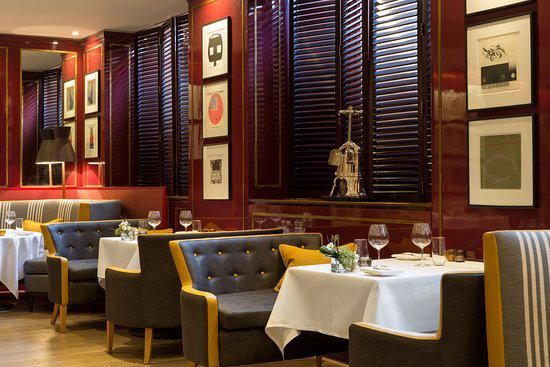
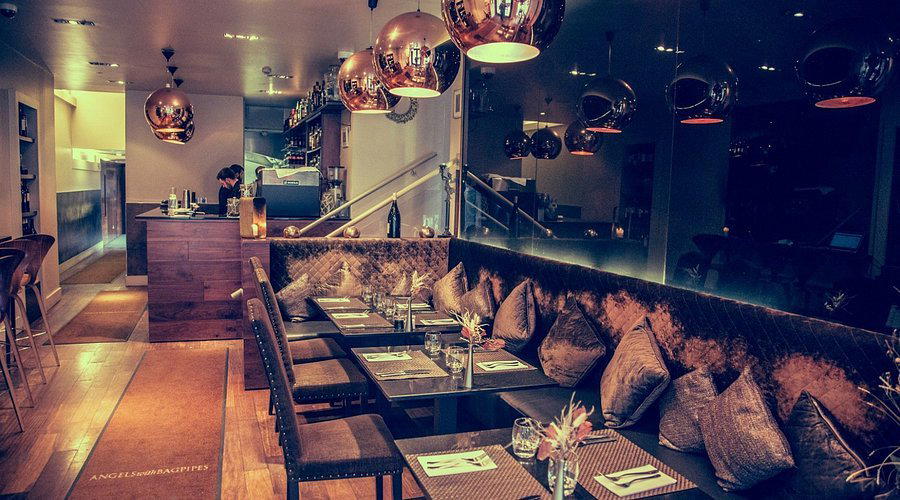
On the Royal Mile, yards from St Giles' Cathedral, Angels with Bagpipes occupies one of Edinburgh's most historically charged addresses. The restaurant sits within Edinburgh's fine-dining tier alongside peers such as The Kitchin and Martin Wishart, drawing visitors and locals who want considered Scottish cooking in a setting where the city's medieval fabric is impossible to ignore.

Pearl is the En Primeur Club membership app, where members save venues, book tables and use the concierge.
The menu
What to order
- Duck Breast and Foie Gras
- Haggis Bon Bons
- Seared Scallops with White Pudding
- Pan-fried Trout
- Beef Tartare
The Royal Mile at Table Height
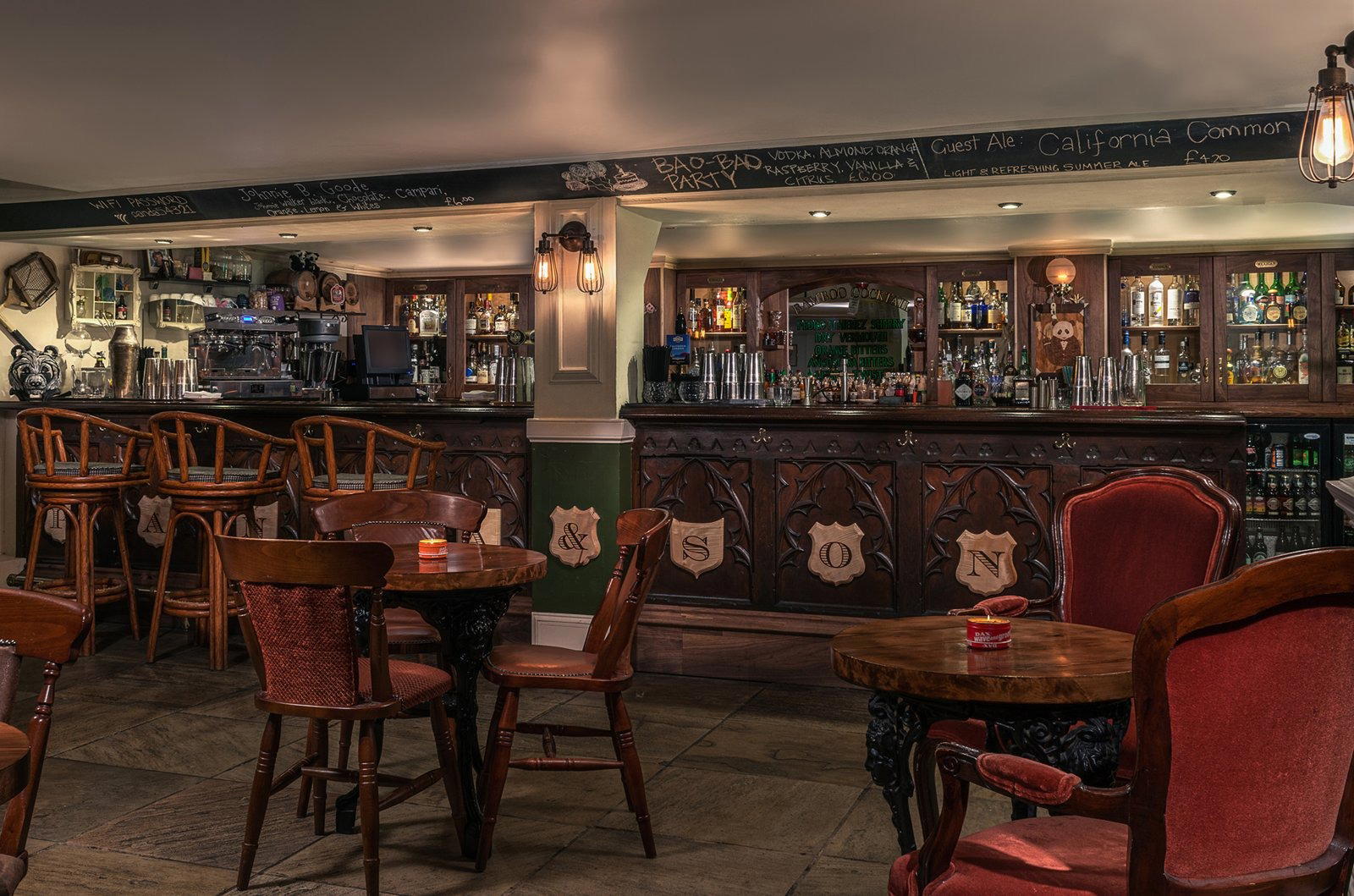
Edinburgh's Royal Mile carries a particular kind of atmospheric pressure, eight centuries of commerce, religion, and political drama compressed into a single street that slopes from the Castle esplanade down to Holyrood. Most visitors experience it at pavement level, moving between landmarks. Dining at 343 High Street means experiencing the same address differently: through a window, with a glass in hand, at a pace the street does not normally permit. Angels with Bagpipes occupies this position on one of Scotland's most historically loaded thoroughfares, and the weight of the location is part of what defines the meal before a single course arrives.
The Royal Mile's dining scene has historically been split between high-turnover tourist operations and a smaller number of restaurants making a serious case for Scottish produce. The latter category has grown steadily over the past decade as Edinburgh's broader fine-dining tier gained international recognition. For context, Edinburgh now holds multiple Michelin-starred addresses Martin Wishart in Leith, The Kitchin at Leith's waterfront, and a growing number of ambition-forward kitchens in the New Town and beyond. Angels with Bagpipes sits within that serious tier, on a street where that positioning requires more active assertion than it might elsewhere in the city.
Scottish Cooking and the Wine Question
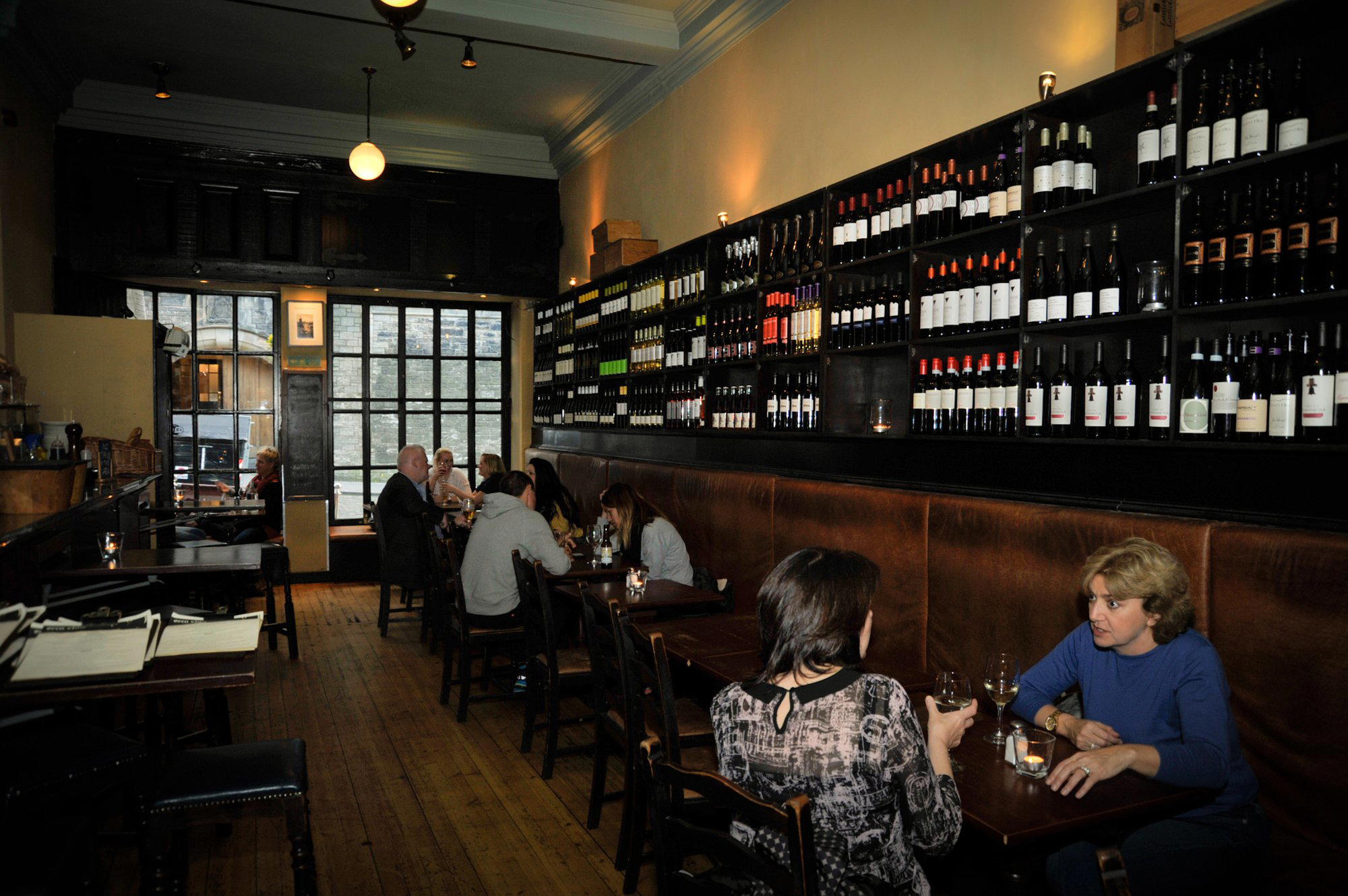
The editorial angle that most distinguishes a certain class of Scottish restaurant from its peers is not always the food itself, it is how seriously the operation treats its wine list. Scotland does not produce wine in any commercially meaningful volume, which means every bottle on a Scottish restaurant's list is an import decision, a curation choice, a statement of intent. In the cities that have developed strong fine-dining cultures without domestic wine production, Edinburgh among them, the cellar often becomes the clearest signal of how seriously a kitchen expects to be taken.
Across Edinburgh's top tier, wine programs have become increasingly considered. Timberyard has built a reputation for natural and low-intervention producers that aligns with its Nordic-influenced kitchen philosophy. Condita takes a similarly restrained approach to its pairings. AVERY operates at the creative end of the spectrum where beverage and kitchen are treated as a single program. These are the competitive reference points for any Edinburgh restaurant presenting itself as more than a dining-adjacent experience: the wine list must carry intellectual weight as well as breadth.
For a restaurant on the Royal Mile, the temptation is to stock recognisable labels for a tourist-heavy crowd. The more interesting approach, and the one that earns sustained local custom alongside visitor traffic, is a list built around terroir specificity, producer relationships, and pairing logic that the kitchen has actually thought through. That approach is what separates a wine list from a wine inventory.
The Broader Edinburgh Fine-Dining Frame
To understand where Angels with Bagpipes sits, it helps to understand what Edinburgh's fine-dining scene has become. The city's top-end restaurants now operate in a competitive set that compares comfortably with other British regional capitals. The benchmark addresses include Martin Wishart, which has held a Michelin star for over two decades and remains the clearest signal of what Leith's waterfront dining has become, and The Kitchin, which anchors its philosophy in Scottish provenance with a rigour that has earned consistent critical recognition.
Beyond Edinburgh, the British fine-dining conversation runs through addresses like L'Enclume in Cartmel, Moor Hall in Aughton, and CORE by Clare Smyth in London, restaurants where the cellar, the kitchen, and the room are treated as one integrated argument. The question Edinburgh's serious restaurants answer, implicitly, with every service, is whether they belong in that conversation. The Waterside Inn in Bray, Midsummer House in Cambridge, and The Hand and Flowers in Marlow each represent a different British regional answer to that same question. Edinburgh, through its growing tier of serious restaurants, is increasingly putting its own answer forward.
Internationally, the comparison extends to restaurants like Le Bernardin in New York City and Lazy Bear in San Francisco, where the wine program is inseparable from the overall critical identity of the address. Closer to home, Opheem in Birmingham, Ynyshir Hall in Machynlleth, Gidleigh Park in Chagford, and Hide and Fox in Saltwood each demonstrate that destination dining outside London requires a total offer, room, kitchen, and cellar, rather than a single strong component.
Visiting the Royal Mile: Practical Framing
The High Street address is as central as Edinburgh gets. The restaurant sits steps from St Giles' Cathedral and is reachable on foot from both Waverley Station and the New Town within ten to fifteen minutes. That accessibility cuts both ways: the Royal Mile draws the highest tourist volume in the city, which means the surrounding context is rarely quiet. The most considered time to visit, both for atmosphere and for the likely reduction in surrounding foot traffic, is outside peak festival season. August in Edinburgh is the Edinburgh Festival, and the Fringe transforms the Royal Mile into one of the most densely populated performance spaces in the world. Those visiting for food rather than spectacle will find the spring months (April through June) and late autumn (October, November) offer a more composed version of the city and, by extension, of dining along the High Street.
Given the address's profile and the restaurant's position within Edinburgh's serious dining tier, reservations are advisable well in advance of any planned visit, particularly around festival periods and the December holiday window when the city's better tables fill quickly. For broader planning of an Edinburgh dining itinerary, our full Edinburgh restaurants guide maps the city's leading addresses by neighbourhood and style.
Frequently asked questions
What's the address for Angels with Bagpipes?
Angels with Bagpipes is located at 343 High St, Edinburgh EH1 1PW, United Kingdom, Edinburgh.
Is Angels with Bagpipes a good restaurant for a special occasion dinner in Edinburgh's Old Town?
Angels with Bagpipes at 343 High Street occupies one of the most historically loaded settings in Edinburgh, directly adjacent to St Giles' Cathedral on the Royal Mile. The restaurant's positioning within Edinburgh's fine-dining scene, rather than the broader Old Town casual market, makes it a considered choice for occasion dining in the city centre.
What dish is Angels with Bagpipes famous for?
The kitchen's focus sits firmly within Scottish produce, drawing on the larder that Edinburgh's position between coastal and Highland suppliers makes possible. Checking directly with the restaurant before your visit is the most reliable way to understand the current menu direction.
Should I book Angels with Bagpipes in advance?
The High Street address at 343 Edinburgh EH1 1PW puts Angels with Bagpipes at one of the most-trafficked stretches of the city, steps from St Giles' Cathedral and within walking distance of both Waverley and Haymarket stations. That footfall, combined with the restaurant's standing in Edinburgh's fine-dining frame, means walk-in availability is not something to rely on, particularly at weekends and during festival season in August. Booking ahead is the straightforward approach.
What's the standout thing about Angels with Bagpipes?
Location and culinary seriousness operating in combination. Few restaurants in Edinburgh place a genuinely fine-dining kitchen this deep inside the Old Town, at a point on the Royal Mile where most neighbouring operations skew toward tourist throughput. The contrast between the address, eight centuries of civic and religious history at the door, and the considered cooking inside is what gives the restaurant its particular character.
Peers Worth Knowing
Comparable venues nearby, for context on price, style, and recognition.
| Venue | Cuisine | Price | Notes |
|---|---|---|---|
| Angels with BagpipesThis venue (the venue you are viewing) | Modern Scottish | $100–150 | Not listed |
| The Gardener's Cottage | Modern Scottish Farm-to-Table | Not listed | Greenside |
| Urban Angel cafe | Organic Brunch Cafe | $10–20 | New Town |
| Port of Leith Distillery | Modern Scottish Gastropub | $30–50 | Leith Docks |
| Merchants | Classic Scottish | $50–100 | Old Town |
| The Ivy on the Square | Modern British Brasserie | $50–100 | Greenside |