The Farmstead Nashville
Our verdict
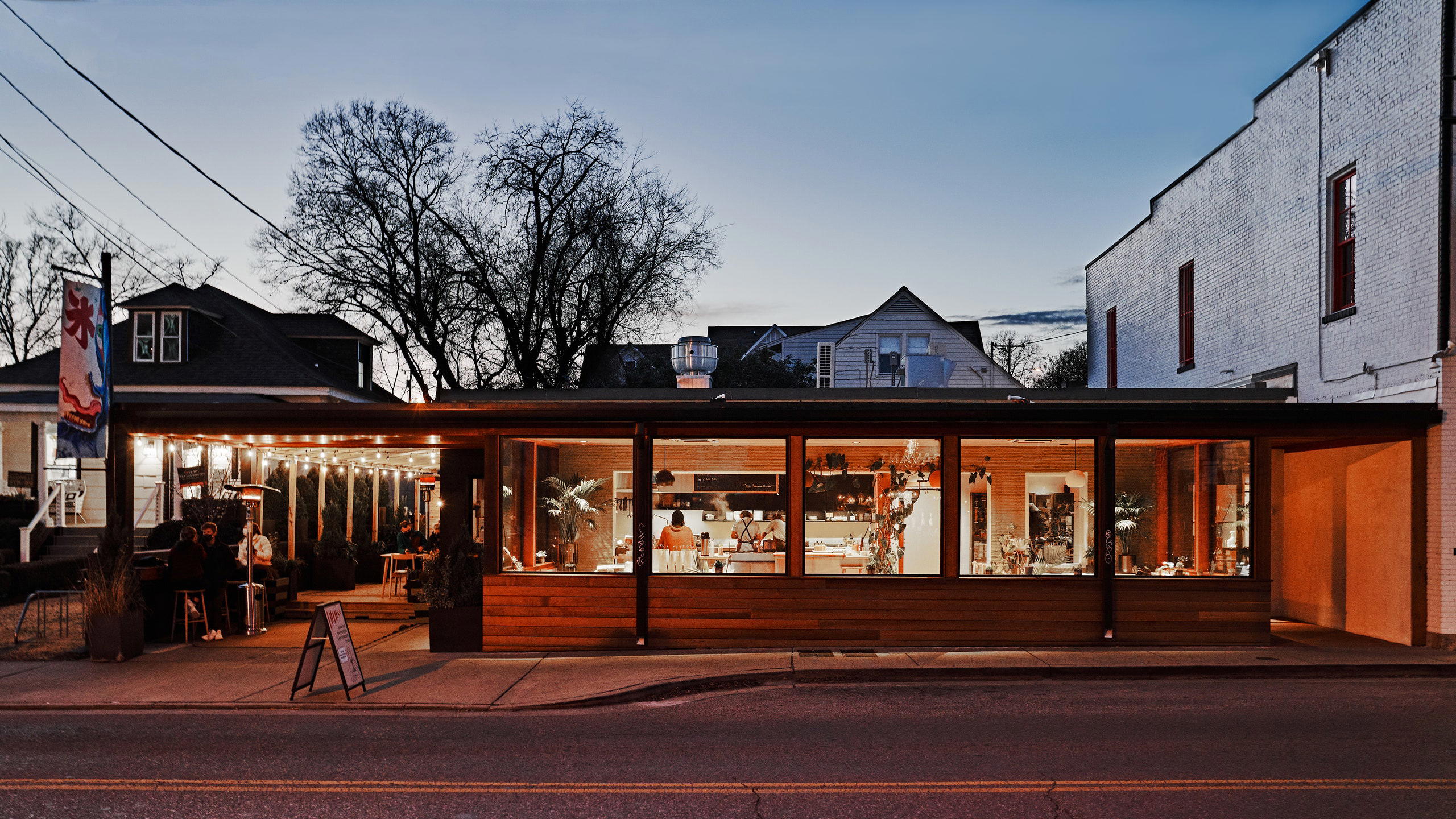
The Farmstead Nashville occupies a quieter register than the Broadway-adjacent dining circus, operating from a Columbine Place address in 37204 that signals neighborhood intent over tourist convenience. Where Nashville's progressive dining tier has largely chased tasting-menu spectacle, the farmstead format draws from a longer American agrarian tradition of cooking close to the source. For readers weighing the city's growing farm-to-table tier, this is a reference point worth understanding in context.

Pearl is the En Primeur Club membership app — saves, bookings, and concierge access live there. Same editors, same standards.
- Address
- 2806 Columbine Pl suite b, Nashville, TN 37204
- Phone
- (615) 707-6087
- Hours
- Mon 9 AM–3 PMTue–Wed 8 AM–3 PMThu 9 AM–3 PMFri 9 AM–5 PMSat–Sun 9 AM–3 PM
- Website
- farmsteadnashville.com
- Directions
- Get directions
- Booking
- Book on OpenTable
The menu
What to order
- PB & J Chicken Biscuit
- Shrimp & Grits
- Tennessee Hot Brown
- Fried Green Tomato Wrap
- Stuffed French Toast
Where Nashville's Agrarian Dining Tradition Takes Root
The address tells you something before the food does. Columbine Place sits in the 37204 zip code, a Nashville postal district that runs through Berry Hill and brushes the southern edge of 12 South — neighborhoods where the city's residential character is still legible beneath the commercial pressure. A venue here is not positioning itself against the honky-tonk corridor or the tourist-facing dining strip on Broadway. It is making a quieter claim about where serious eating in Nashville actually happens.
That geography matters because Nashville's dining identity has been in active negotiation for the better part of a decade. The city that the national food press once summarized as hot chicken and meat-and-three has developed a progressive tier with genuine ambition: Bastion at the $$$$ level, Locust with its progressive format, The Catbird Seat anchoring the chef's-counter tradition, and Peninsula expanding the Southern American register. The Farmstead Nashville enters this conversation from a specific angle: the farmstead tradition itself, which carries a different cultural weight than tasting-menu progressivism.
The Cultural Logic of the Farmstead Format
Farmstead cooking in the American context is not a trend — it is the recovery of something older than restaurants. The word originally described produce and provisions made on the farm itself, and the dining formats that carry the name today are making an implicit argument: that the distance between field and plate is a moral and culinary variable, not just a marketing detail. At its most rigorous, a farmstead-aligned kitchen sources within verifiable supply chains, adjusts its menu to what is actually available rather than what is conventionally expected, and treats ingredient provenance as the first form of quality control.
This approach puts farmstead-format venues in a different competitive conversation than their progressive-tasting peers. Where Lazy Bear in San Francisco or Alinea in Chicago operate through technique as the primary signal, farmstead kitchens ask the diner to value restraint and sourcing discipline first. American practitioners of this mode, Blue Hill at Stone Barns in Tarrytown being the reference point that shifted how the national conversation understood it, have made the case that agrarian fidelity is itself a form of sophistication. Nashville's geography, sitting within reach of Tennessee's farming counties, gives a farmstead-oriented kitchen here a supply argument that coastal venues often have to construct with more difficulty.
Nashville's Farm-to-Table Tier in Comparative Context
The American farm-to-table tier has stratified considerably over the past fifteen years. At the leading end, venues like Single Thread Farm in Healdsburg or The French Laundry in Napa have absorbed sourcing discipline into fine-dining formats where the price point reflects both the provenance and the technique applied to it. At a different tier, neighborhood-anchored venues with farmstead or farm-forward identities have built loyal local followings without seeking national attention, operating more like 12 South Taproom and Grill in terms of community function, but with a different culinary emphasis.
Nashville's own progressive tier has drawn national comparison. Addison in San Diego, Providence in Los Angeles, and The Inn at Little Washington in Washington each represent regional fine-dining formats that have achieved Michelin recognition. Nashville has not yet developed a Michelin-starred tier, the guide does not cover the city, which means venues here are assessed against each other and against nationally recognized programs without the shorthand that a star provides. For a farmstead-oriented kitchen, that absence of formal ranking may actually clarify the value proposition: the argument has to be made through the food and the sourcing, not through badge recognition.
Internationally, the agrarian dining model has had different expressions. Le Bernardin in New York City and 8 1/2 Otto e Mezzo Bombana in Hong Kong represent the classical fine-dining mode where sourcing is one variable inside a technically dominant kitchen. The farmstead approach inverts that hierarchy, which is precisely what gives it cultural distinctiveness, and why venues carrying the name need to substantiate the claim through their actual supply relationships rather than their menu language.
The 37204 Dining Context
The Berry Hill and 12 South corridor has become one of the more interesting zones in Nashville's dining geography. It sits south of the Gulch, clear of the Broadway tourist density, and close enough to Melrose and Wedgewood-Houston to absorb some of the creative-class energy those neighborhoods have accumulated. Restaurants in this zone tend to read as genuine neighborhood operations, places where the clientele are largely Nashville residents rather than conference attendees or bachelorette parties, and where the dining room dynamic reflects that. That context shapes what a meal here feels like before a dish arrives.
For readers building a Nashville itinerary across multiple nights, the 37204 area offers a different register than the downtown and Midtown concentration. Peninsula and the progressive options around the Gulch represent one mode; a farmstead-oriented address in this part of the city represents another, and the contrast is worth experiencing across a multi-day visit. Our full Nashville restaurants guide maps the city's dining zones against each other for readers planning across neighborhoods.
Know Before You Go
- Address: 2806 Columbine Pl, Suite B, Nashville, TN 37204
- Neighborhood: Berry Hill / South Nashville (37204 postal district)
- Phone: Not publicly listed, check current booking channels directly
- Price range:, budget accordingly for a farmstead-format dinner
- Reservations: Booking method not confirmed, contact venue or check current platforms
- Nearest dining context: 12 South corridor, Berry Hill, Melrose
Frequently asked questions
Is The Farmstead Nashville good for families?
The Columbine Place address in Nashville's 37204 zip code, covering the Berry Hill and 12 South corridor, suggests a neighbourhood-oriented setting rather than a destination fine-dining room. Confirming directly with the restaurant before a group visit is advisable.
How does The Farmstead Nashville fit into Nashville's broader farm-to-table dining scene?
The Farmstead occupies the 37204 corridor in Berry Hill, a zip code that has attracted a concentration of independent, chef-driven restaurants south of the Gulch. Nashville's farm-to-table tier has grown more stratified over the past decade, and a venue operating under the farmstead model in this neighbourhood positions itself within the producer-connected, locality-focused end of that spectrum rather than the hotel-restaurant or large-format end.
What's the best thing to order at The Farmstead Nashville?
What the farmstead cooking format typically foregrounds is produce sourced close to the restaurant, meaning the seasonal offerings at any given visit carry the most weight.
Where do I go for The Farmstead Nashville?
The Farmstead Nashville is located at 2806 Columbine Pl suite b, Nashville, TN 37204, Nashville.
At a Glance
Comparable venues nearby, for context on price, style, and recognition.
| Venue | Cuisine | Price | Notes |
|---|---|---|---|
| The Farmstead NashvilleThis venue — the venue you are viewing | Southern Farm-to-Table | $20–30 | Not listed |
| The Cookery | American Café with Aussie-Inspired Favorites | Not listed | Edgehill, American Café with Aussie-Inspired Favorites |
| Dicey's Tavern | Tavern-Style Thin Crust Pizza | $20–30 | Edgehill, Tavern-Style Thin Crust Pizza |
| Big Al's Deli | Southern Comfort Food Deli | $10–20 | Cumberland Heights, Southern Comfort Food Deli |
| The Café at Thistle Farms | Not listed | $20–30 | Richland-West End, Farm-to-Table American Cafe with Afternoon Tea |
| Midtown Cafe | American with Southern Flair | $30–50 | Music Row, American with Southern Flair |