The Creek & The Cave
The Creek & The Cave occupies a corner of Long Island City that Manhattan-focused dining coverage rarely reaches, making it one of the more instructive cases in New York's outer-borough bar and kitchen scene. Set on Jackson Avenue amid the gallery district that grew around MoMA PS1, it draws a crowd that crosses the Queensboro Bridge deliberately, not by accident.
- Address
- 10-93 Jackson Ave, Long Island City, NY 11101
- Directions
- Get directions
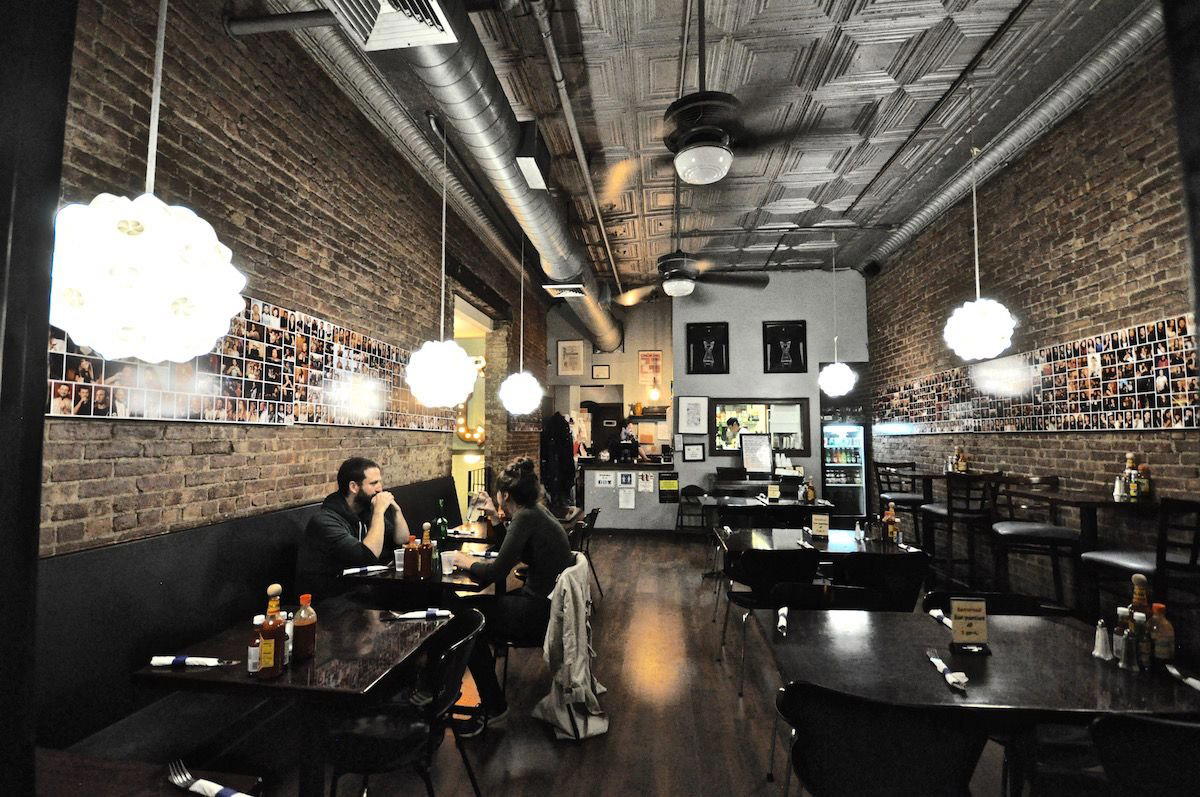
Long Island City and the Case for Crossing the Bridge
New York's dining conversation has spent the better part of two decades anchored to a handful of Manhattan zip codes. The outer boroughs have always had their advocates, but the argument has rarely been as legible as it is now, when neighborhoods like Long Island City have accumulated enough critical mass, in galleries, residential density, and a working kitchen culture, to support venues that would hold their own anywhere in the city. The Creek & The Cave, at 10-93 Jackson Ave in Long Island City, sits in that emerging tier: a bar and performance space that became a neighborhood fixture in a part of Queens defined more by industrial repurposing than traditional restaurant strips.
Long Island City's transformation followed a pattern visible in Brooklyn's Williamsburg a decade earlier and in parts of Chicago's West Loop around the same period. Spaces vacated by manufacturing became studios, then galleries, then the kind of mixed-use blocks where a drinks program and a stage can coexist with a credible kitchen. The Creek occupies that intersection, and its address on Jackson Avenue places it close to the MoMA PS1 building, one of the anchor institutions that gave the neighborhood a reason for out-of-borough visits before the restaurant scene arrived.
The Jackson Avenue Model: Bar, Stage, Kitchen in One Room
The format that The Creek & The Cave operates within, part bar, part comedy and live performance venue, part kitchen, is a specific New York type that has proved durable precisely because it resists single-category classification. It is not a restaurant with entertainment added on, nor a comedy club that happens to serve food. The model works when the components reinforce each other rather than compete, and when the room has enough physical personality to give each element breathing space. Jackson Avenue's warehouse-scale interiors, with their high ceilings and flexible floor plans, tend to accommodate that kind of layered programming better than purpose-built venues.
Venues like Le Bernardin, Atomix, Eleven Madison Park, Masa, and Per Se operate within a different register entirely, one defined by tasting menus, formal service, and booking windows that stretch months ahead. The Creek's value proposition is the opposite: accessibility, programming variety, and a neighborhood-first posture that treats the Queensboro Bridge crossing as a feature rather than an obstacle.
Local Product, Imported Technique: A Wider American Pattern
Across American cities, the more interesting bar kitchens have moved away from the generic bar-food baseline toward something more specific: kitchens that apply trained technique to locally sourced material, borrowing from fine-dining discipline without adopting fine-dining formality. That combination, local ingredients run through a more rigorous technical process, is visible at places like Lazy Bear in San Francisco, where the bar and communal table format houses cooking that draws on professional credentials, and at Smyth in Chicago, where the seasonal sourcing program sits inside a room that feels accessible rather than ceremonial.
The underlying logic is the same whether you're in New York, San Francisco, or New Orleans: technique travels, product is local, and the venues that make the combination work tend to have a kitchen lead with formal training and a clear sense of what the room actually needs. At Emeril's in New Orleans, that tension between regional identity and imported classical method produced something that shaped an entire generation of American cooking. More recently, farms-to-counter operations like Blue Hill at Stone Barns in Tarrytown and Single Thread Farm in Healdsburg have pushed that model toward its most disciplined expression, where sourcing is the editorial center of the whole operation.
The Creek sits at a more casual point on that spectrum, but the structural tension, between what kitchens can do technically and what neighborhoods actually want to eat, is the same one that drives decisions at Providence in Los Angeles, Addison in San Diego, and Frasca Food & Wine in Boulder. These are kitchens where the sourcing and technique conversation is always present, even when the room doesn't signal it loudly.
The Outer-Borough Bar as a Cultural Format
What makes the outer-borough bar-kitchen format in New York worth tracking is not simply that it's cheaper than Manhattan, though that arithmetic is real and significant. It's that the physical character of neighborhoods like Long Island City produces a different kind of room. The infrastructure left by industrial use, loading bays converted to entries, warehouse floors adapted for tables and a stage, gives spaces a scale and a texture that's difficult to replicate in purpose-built restaurant interiors. International comparisons are instructive here: the approach shares something with the cooking philosophy at Atelier Moessmer Norbert Niederkofler in Brunico, where the regional-product imperative shapes the entire program, and with the long-standing commitment to place-specific cooking at Dal Pescatore in Runate, where the room's character and the sourcing strategy are inseparable.
The Creek's Jackson Avenue location puts it within walking distance of MoMA PS1, which matters for programming context: the gallery draws a crowd already primed for spaces that blend cultural formats. That adjacency is not incidental. Venues in gallery-adjacent neighborhoods tend to accumulate a visitor base that travels with specific intent rather than stumbling in, which gives the kitchen and bar program a more defined audience to work with than a purely residential block would provide.
Planning a Visit
The Creek & The Cave is located at 10-93 Jackson Ave, Long Island City, accessible from Manhattan via the 7 train to Court Square or the E, M, or G lines to the same station. The journey from Midtown runs approximately fifteen minutes by subway. The Creek & The Cave is at 10-93 Jackson Ave, Long Island City, and is walk-in friendly. European kitchens working in the same local-ingredient, global-technique register, such as The French Laundry in Napa and The Inn at Little Washington, book months ahead by contrast, which underscores how different the accessibility calculus is at a neighborhood-anchored bar venue.
A Quick Peer Check
Comparable venues nearby, for context on price, style, and recognition.
| Venue | Cuisine | Price | Notes |
|---|---|---|---|
| The Creek & The CaveThis venue — the venue you are viewing | California-style Mexican | $$ | Not listed |
| Ursula Brooklyn | New Mexican | $$ | Bedford-Stuyvesant (West) |
| Chela | Modern Mexican | $$ | Park Slope |
| El Camion Cantina | Casual Mexican Cantina | $$ | East Village |
| Jajaja Mexicana | Plant-Based Mexican | $$ | West Village |
| Sa'tacos | Authentic Sinaloan Mexican Tacos | $$ | Inwood |
Continue exploring
More in New York City
Restaurants in New York City
Browse all →
Bars in New York City
Browse all →
Hotels in New York City
Browse all →






At a Glance
- Lively
- Trendy
- Energetic
- Casual Hangout
- Late Night
- Group Dining
- Live Music
- Open Kitchen
- Craft Cocktails
Dive bar atmosphere with lively comedy crowds, pinball machines, and a fantastic outdoor space.