The Bocuse Restaurant
The Bocuse Restaurant at the Culinary Institute of America in Hyde Park occupies a particular niche in American fine dining: a full-service French classical room run by students working toward professional credentials, yet priced and formatted to function as a genuine destination. The address on Campus Drive places it firmly within the CIA's Hudson Valley campus, where proximity to regional farms shapes what reaches the table.
 Discover on Pearl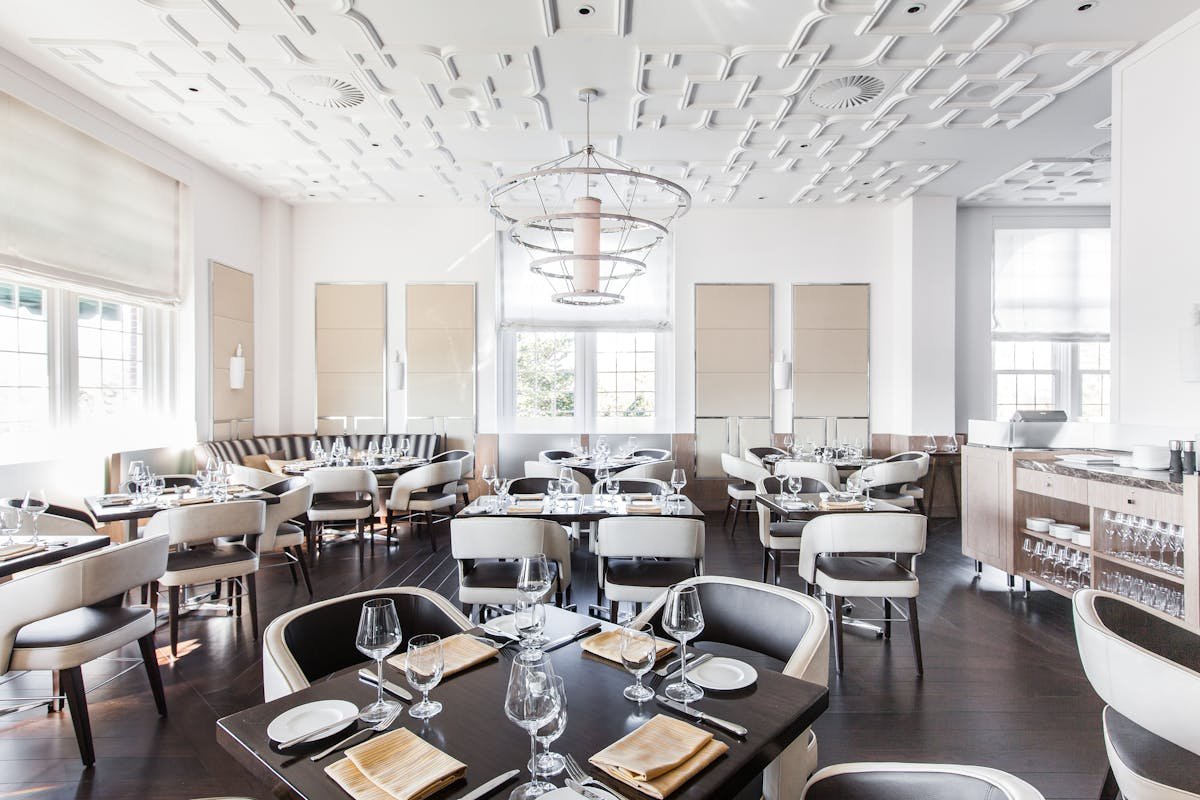
Where Pedagogy Meets the Dining Room
There is a particular kind of restaurant that exists only in a few places in the world: a training table where the stakes are genuinely high on both sides of the pass. The Bocuse Restaurant at the Culinary Institute of America's Hyde Park campus is one of the most discussed examples of that format in the United States. Named for Paul Bocuse, the French chef whose influence on classical technique and the elevation of chef culture throughout the late twentieth century remains well-documented, the restaurant operates as a working classroom inside a full-service fine dining room. What that means in practice is a guest experience shaped as much by institutional mission as by market competition — and understanding that context is how you get the most from a visit.
Hyde Park sits on the eastern bank of the Hudson River, roughly midway between New York City and Albany. The CIA campus itself is housed in a former Jesuit seminary, and the dining facilities on Campus Drive carry a certain weight of tradition that feels earned rather than manufactured. For context on the wider Hudson Valley dining scene, our full Hyde Park restaurants guide maps the broader options in the area, including spots like Delicias Colombianas Hyde Park, which anchors a very different part of the local food picture.
The shortlist, unlocked.
Hard-to-book tables, cellar releases, and concierge-planned trips.
Get Exclusive Access →Sourcing as Curriculum
American fine dining has spent the past two decades reorganizing itself around sourcing provenance. What began as a niche position held by places like Blue Hill at Stone Barns in Tarrytown — where Dan Barber built a program around the farm immediately adjacent to the dining room , has become a broadly shared assumption across the premium tier. The Hudson Valley is one of the regions where that shift happened earliest and with the most structural logic: the density of small farms, orchards, and artisan producers within a two-hour radius of New York City created an ingredient supply chain that chefs in the region could access long before farm-to-table became a marketing phrase.
The CIA's position in that geography is not incidental. Students working the Bocuse kitchen are, by institutional design, learning to work with regional ingredients as part of their classical French foundation. That combination , French technique applied to Hudson Valley produce , is the same tension that defines several of the most serious kitchens operating in the American Northeast. The difference at Bocuse is that the sourcing decisions are made within an educational framework, which means the menu changes with some regularity as cohorts rotate through stations. Consistency of execution varies more than it would at a fixed professional kitchen, but the ingredient base remains anchored to the region.
This places the Bocuse Restaurant in an instructive comparison with American fine dining programs that have prioritized sourcing as a non-negotiable structural element. Single Thread Farm in Healdsburg operates its own farm to supply the dining room; The French Laundry in Napa maintains gardens across the road. At the Bocuse, the sourcing relationship is collegiate and community-facing rather than vertically integrated, which is a different model but one with its own internal logic.
French Classical in a Changed Market
Classical French format dining has contracted significantly in the United States since its peak in the 1980s and 1990s. The rooms that survive at the leading of the market , Le Bernardin in New York City, for instance , do so by combining three-star Michelin recognition with a level of technical consistency that justifies high cover prices. Below that tier, French classical rooms face pressure from formats that feel newer: the open kitchen communal table of Lazy Bear in San Francisco, the tasting menu as conceptual art of Alinea in Chicago, the ingredient-as-message farm dining of Bacchanalia in Atlanta.
The Bocuse Restaurant sits outside that competitive pressure in a useful way. It is not competing for the same reservation dollar as Atomix in New York City or Providence in Los Angeles. Its mission is to provide advanced culinary students with a high-pressure, full-service environment in which to develop professional skills. That framing should inform how you evaluate the experience: judge it against what it is actually trying to do, and it performs at a level few institutions in the world replicate. Judge it against the cutting edge of American restaurant culture , the technical ambition of Addison in San Diego or the sourcing rigor of Frasca Food and Wine in Boulder , and the comparison becomes less useful.
Other institutions have tried versions of this model. Emeril's in New Orleans trained generations of cooks in a high-volume professional kitchen. The Inn at Little Washington has long operated as a mentorship environment for serious culinary talent. But none of those are teaching restaurants in the formal sense. The Bocuse format , fully student-staffed, academically supervised, French classical framework , remains specific to the CIA context.
What to Expect on Campus Drive
The room at 1946 Campus Drive operates with the formality that the format requires. Front-of-house students are learning service as a discipline, which means the experience tends toward the structured end of the spectrum. Tablecloths, plated courses, wine service , the physical markers of classical fine dining are present because they are the subject being taught, not because the CIA is making a statement about contemporary restaurant culture.
Visiting during the academic year, when active student cohorts are in service, gives the most complete picture of what the restaurant is designed to deliver. Summer and holiday periods may operate on different schedules or with reduced programming, so confirming directly with the CIA before planning a trip from a distance is advisable. For guests coming from New York City, Hyde Park is accessible by train on the Metro-North Hudson line, with the campus a short drive from the station. Restaurants at the CIA level of reputation attract visitors specifically for the format, so booking in advance is the appropriate approach.
Comparisons to other farm-adjacent or regionally sourced fine dining destinations in the Northeast, such as Causa in Washington, D.C. or Brutø in Denver, help locate the Bocuse in the American fine dining conversation, though the institutional context makes it genuinely its own category. For international reference points, the seriousness of purpose at a training table like this has loose parallels with programs affiliated with major culinary institutions in Europe, though 8 1/2 Otto e Mezzo Bombana in Hong Kong represents the kind of fully professional operation the CIA trains its graduates to eventually run.
Planning Your Visit
The Bocuse Restaurant is open during the CIA's academic calendar, which runs through most of the year with breaks. Practical details including hours, current tasting menu format, and reservation procedures are leading confirmed directly through the CIA's dining reservations system, as these change with each academic term. The address at 1946 Campus Drive, Hyde Park, NY 12538 is the consistent anchor point for navigation. The restaurant is one of several dining facilities on campus, so specifying Bocuse when booking is worth doing explicitly.
Frequently Asked Questions
- Is The Bocuse Restaurant good for families?
- It is a formal, multi-course French dining room in an academic setting, which makes it a poor fit for young children but reasonable for older teenagers with an interest in food or culinary education.
- Is The Bocuse Restaurant formal or casual?
- If you are visiting a named CIA fine dining room in a region that includes some of the most serious farm-driven restaurants in the country, expect formality: tablecloths, structured service, and a plated multi-course format. The level of dress and comportment the room expects aligns with that format, not with casual Hudson Valley bistro dining.
- What do regulars order at The Bocuse Restaurant?
- Given that the menu rotates with student cohorts and academic terms, the honest answer is to follow what the current menu emphasizes in terms of seasonal Hudson Valley ingredients , that is where the kitchen's sourcing identity is most visible, and it shifts meaningfully across the year. The classical French framework means technique will be applied to whatever is at peak availability in the region.
- Is The Bocuse Restaurant reservation-only?
- Given the structured academic service format and the fact that the room operates on a term schedule rather than a standard commercial calendar, advance reservations through the CIA's dining system are the practical requirement. Walk-in availability is not the operating assumption here.
- What makes The Bocuse Restaurant different from other fine dining options in the Hudson Valley?
- The CIA's Bocuse Restaurant is the only full-service French classical dining room in the Hudson Valley operating under an academic curriculum, where front-of-house and kitchen staff are enrolled students working toward professional credentials. That structure means the experience is simultaneously a working meal and a live training environment, a combination not replicated elsewhere in the region. Named for Paul Bocuse, whose influence on French culinary standards in the twentieth century is extensively documented, the restaurant carries an institutional lineage that distinguishes it from chef-driven independent restaurants in the area.
Peer Set Snapshot
These are the closest comparables we have in our database for quick context.
| Venue | Cuisine | Price | Awards | Notes |
|---|---|---|---|---|
| The Bocuse Restaurant | This venue | |||
| Le Bernardin | French, Seafood | $$$$ | Michelin 3 Star | French, Seafood, $$$$ |
| Atomix | Modern Korean, Korean | $$$$ | Michelin 2 Star | Modern Korean, Korean, $$$$ |
| Lazy Bear | Progressive American, Contemporary | $$$$ | Michelin 2 Star | Progressive American, Contemporary, $$$$ |
| Alinea | Progressive American, Creative | $$$$ | Michelin 3 Star | Progressive American, Creative, $$$$ |
| Atelier Crenn | Modern French, Contemporary | $$$$ | Michelin 3 Star | Modern French, Contemporary, $$$$ |
Need a table?
Our members enjoy priority alerts and concierge-led booking support for the world's most difficult tables.
Get Exclusive AccessThe shortlist, unlocked.
Hard-to-book tables, cellar releases, and concierge-planned trips.
Get Exclusive Access →