The Big R Restaurant
Our verdict
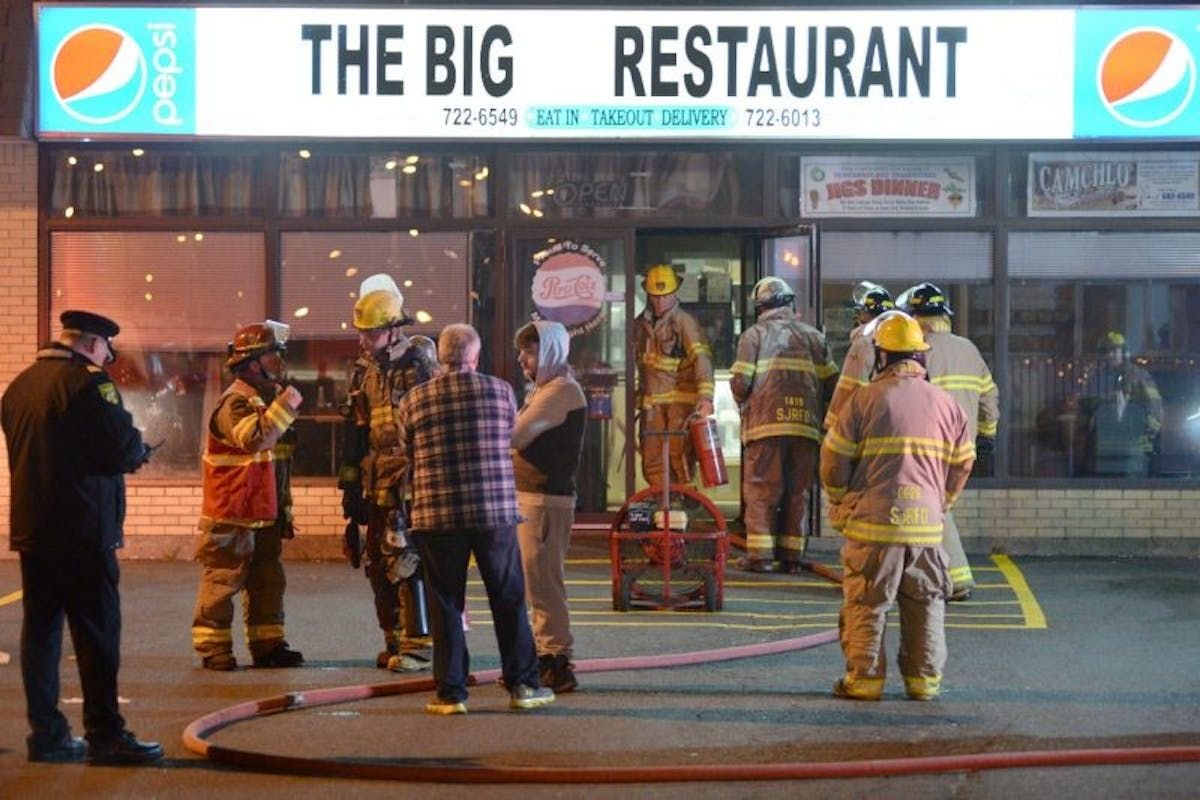
Located on Blackmarsh Road in St. John's, The Big R Restaurant occupies a corner of Newfoundland's capital where working-class neighbourhood character and local appetite converge. Positioned within a city whose dining scene has grown considerably in ambition over the past decade, The Big R sits in the everyday-dining tier that sustains any food culture beyond its headline addresses.

Pearl is the En Primeur Club membership app, where members save venues, book tables and use the concierge.
Blackmarsh Road and What It Tells You About St. John's
St. John's has spent the better part of two decades building a dining reputation that reaches beyond the province. Names like Raymonds Restaurant and Mallard Cottage have given the city a credible position on the national conversation, and the broader Newfoundland scene now draws comparisons with ambitious regional restaurants across Canada, from Narval in Rimouski to the Fogo Island Inn Dining Room in Joe Batt's Arm. But a city's dining culture is never fully explained by its prestige addresses. The streets that feed the actual population, the addresses on arterial roads where locals return not because of a reservation list but because the food is consistent and the setting is theirs, those places are as instructive as any tasting menu counter.
The Big R Restaurant at 201 Blackmarsh Road sits in that register. Blackmarsh Road runs through a residential and commercial corridor west of downtown St. John's, a part of the city where the architecture is functional and the clientele is local. This is not the harbour-view dining of the tourism-forward blocks, nor the neighbourhood feel of Quidi Vidi or the east end. It is the kind of address that a certain type of diner actively seeks: low on theatre, oriented toward value and familiarity, embedded in the everyday life of the city.
The Role of Neighbourhood Restaurants in a Mid-Size Canadian City
Canada's most-discussed restaurant cities, Toronto and Montreal above all, have deep enough dining ecosystems that neighbourhood restaurants operate almost invisibly alongside their Michelin-adjacent peers. A city like St. John's works differently. The gap between the formal dining tier, represented by places like Raymonds or Chafe's Landing Restaurant, and the workaday local option is more visible, which makes the mid-register and everyday tier more load-bearing for the overall food culture. Without a sufficient base of reliable, accessible restaurants, the headline addresses float without context.
Across Canada, this structural dynamic plays out differently by city. In Toronto, Alo anchors one end of a spectrum that runs through dozens of neighbourhood institutions. In Vancouver, AnnaLena sits within a dense residential dining culture that gives it a community grounding even at its price tier. Smaller cities with strong regional identities, like Creemore with The Pine or Singhampton with Eigensinn Farm, show how even non-metropolitan addresses can sustain genuine dining ambition. St. John's sits somewhere in between: metropolitan enough to support a fine-dining tier, provincial enough that each restaurant plays a more defined role in the ecosystem.
Restaurants on roads like Blackmarsh serve the majority of a city's eating-out occasions. They absorb the Tuesday night dinners, the after-work stops, the family meals that do not require a special occasion. In any functional food city, they are doing the actual work.
What to Expect from This Part of the City
The Blackmarsh Road corridor is practical St. John's. It connects residential neighbourhoods to the city's commercial spine, and the businesses along it reflect that function. A restaurant at this address is not competing with harbour-front atmosphere or heritage building charm. It is competing on consistency, price, and the specific kind of ease that comes from a place that knows its regulars. That is a different kind of competitive set than the one occupied by Jérôme Ferrer's Europea in Montreal or Tanière³ in Quebec City, and it should be assessed on different terms.
For visitors to St. John's whose primary dining agenda sits at the higher end, this neighbourhood gives an accurate read on how the city actually eats. It is also worth noting that Newfoundland's food culture is distinct in Canada: the province has its own ingredient traditions, its own relationship with seafood, and a history of feeding communities in conditions that demanded practicality. That tradition runs through the formal dining tier, visible in how Mallard Cottage and Raymonds frame local sourcing, but it runs equally through the everyday restaurants that never frame anything at all. They simply serve it.
Comparable everyday-tier coastal dining culture can be found in places like Catch22 Lobster Bar in Moncton, where Atlantic Canadian ingredient specificity shows up outside the fine-dining bracket. Cafe Brio in Victoria and Busters Barbeque in Kenora each show how regional character persists in restaurants operating well below the prestige tier. The principle holds in St. John's: what a city's neighbourhood restaurants do tells you something that its headline addresses cannot.
Planning Your Visit
The Big R Restaurant is located at 201 Blackmarsh Road in St. John's, Newfoundland, a direct drive or cab ride from the downtown core. For visitors building a St. John's itinerary across dining tiers, our full Division No. 1 restaurants guide covers the full range from prestige addresses to neighbourhood options. Those seeking the higher end of the St. John's spectrum should cross-reference Raymonds Restaurant and Mallard Cottage for contrast. Further afield in the province, the Fogo Island Inn Dining Room represents Newfoundland dining at a globally referenced tier and is worth the logistical commitment for serious food travellers. International reference points for the ambition end of the Atlantic seafood spectrum include Le Bernardin in New York City and Lazy Bear in San Francisco, both of which show how seafood-forward and regional cooking can operate at a global level, context that makes the range within a single city's dining scene easier to read. For wine-forward regional dining as a comparable format, Restaurant Pearl Morissette in Lincoln is a useful Canadian reference point outside the Atlantic provinces.
Frequently asked questions
Where exactly is The Big R Restaurant?
The Big R Restaurant is located at 201 Blackmarsh Rd, St. John's, NL A1E 1T1, Canada, Division No 1.
Is The Big R Restaurant worth visiting if I'm based downtown St. John's?
The restaurant sits at 201 Blackmarsh Road, outside the tourism-facing districts clustered around Water Street and Duckworth Street. That distance from the downtown core is itself the point: it places The Big R within a genuinely residential St. John's context rather than the city's more visitor-oriented dining corridor. If eating where the city's own residents eat is the objective, this part of St. John's delivers on that premise.
What should I order at The Big R Restaurant?
Blackmarsh Road draws a primarily local residential crowd rather than a tourism-facing one, which in St. John's typically signals straightforward, portion-focused cooking over elaborate tasting formats. Asking staff directly on arrival is the most reliable approach here.
The Minimal Set
Comparable venues nearby, for context on price, style, and recognition.
| Venue | Cuisine | Price | Notes |
|---|---|---|---|
| The Big R RestaurantThis venue (the venue you are viewing) | Dining | Not listed | Not listed |
| Mallard Cottage | Modern Newfoundland Seafood | $30–50 | Quidi Vidi, Modern Newfoundland Seafood |
| Chafe's Landing Restaurant | Traditional Newfoundland Seafood | $20–30 | Petty Harbour, Traditional Newfoundland Seafood |
| Raymonds Restaurant | Canadian | Not listed | Division No 1, Newfoundland Fine Dining |
| Mosaic Bar & Grille | Creative West Coast | $30–50 | Downtown, Creative West Coast |
Continue exploring
More in Division No 1
Restaurants in Division No 1
All restaurants in Division No 1 →
Bars in Division No 1
All bars in Division No 1 →
Details
Current opening hours
- Monday
- 8 AM–10 PM
- Tuesday
- 8 AM–10 PM
- Wednesday
- 8 AM–10 PM
- Thursday
- 8 AM–10 PM
- Friday
- 8 AM–11 PM
- Saturday
- 8 AM–11 PM
- Sunday
- 8 AM–10 PM
Hours can change for holidays and private events. Hours as of .