Raymonds Restaurant
Our verdict
This listing is retired after a June 2026 status audit found the place inactive at its stored address.
The menu
What to order
- Baguette French toast
Water Street and the Weight of Place
St. John's has among the more geographically defined food cultures in Canada. The province sits on fishing grounds that supplied Europe for five centuries, and that history never quite left the table. Codfish, salt-cured traditions, partridgeberry, and foraged coastal greens are not decorative references here, they are the actual building blocks of Newfoundland cooking. The city's fine dining scene, compact by national standards, has evolved around the question of what it means to cook seriously with ingredients that arrive from short distances and carry long histories.
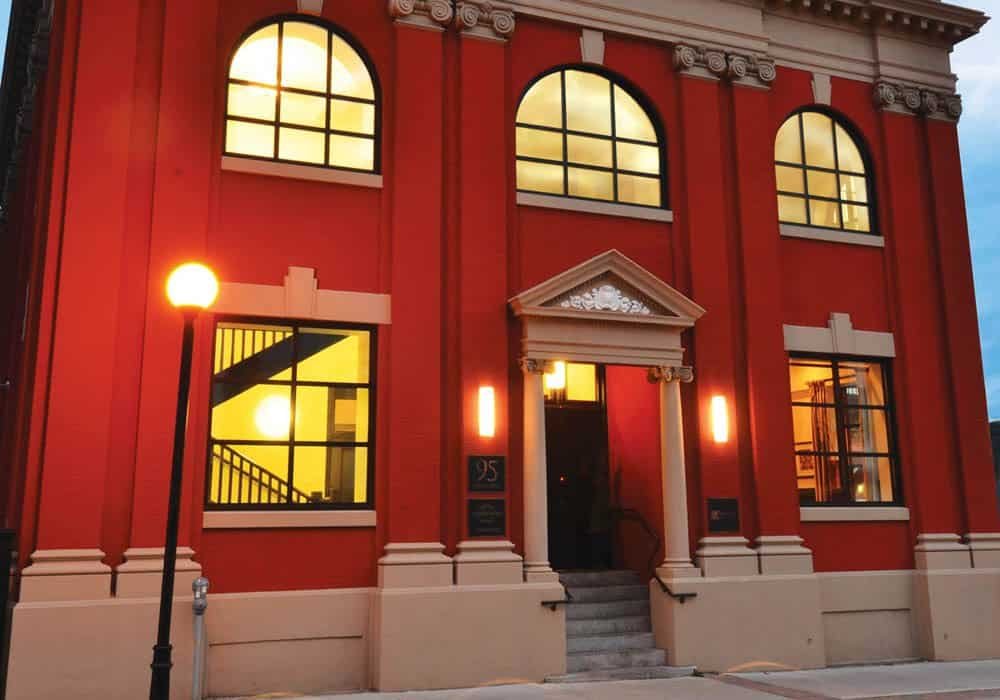
Raymonds Restaurant occupies a heritage building on Water Street in St. John's, and that address alone carries editorial weight. This is not a district that rewards surface-level concept dining. The restaurants that have earned sustained attention along this stretch, including Mallard Cottage, which operates further out in Quidi Vidi with a similar commitment to local sourcing, and Chafe's Landing Restaurant with its harbourside position, tend to be places where the room and the menu reinforce each other. Raymonds fits that pattern.
The Format and the Ritual of the Meal
Raymonds operates within the tasting menu tradition that shapes serious dining across Canada. What distinguishes the format in a city like St. John's is not the number of courses but the pacing. A meal here is structured to slow the diner down, a deliberate counterpoint to a province that still associates generosity with volume rather than restraint.
That pacing is part of the dining ritual in a way that distinguishes Atlantic fine dining from its Montreal or Toronto equivalents. The progression through courses is calibrated to reflect seasonal availability rather than a fixed menu architecture, meaning the meal's rhythm changes meaningfully across the year. Autumn brings preserved and root-vegetable preparations. Spring signals the return of fiddleheads and early greens. Summer opens access to the province's extraordinary wild berry and shellfish supply. Coming in February produces a categorically different meal from coming in July, and that variability is part of what gives the format its reason for existing.
Across Canada's regional fine dining scene, few rooms outside Newfoundland can claim the ingredient specificity that this province's geography imposes. The Fogo Island Inn Dining Room in Joe Batt's Arm operates on a similar principle of radical geographic specificity, though in a remote lodge context that serves a different kind of traveller. Raymonds sits in a city restaurant frame, which means it is accessible to both the committed dining tourist and the local table celebrating a significant occasion.
Where Raymonds Sits in the Canadian Dining Conversation
Canada's premium regional dining tier has expanded considerably over the past decade. Operations like Eigensinn Farm in Singhampton and Restaurant Pearl Morissette in Lincoln have demonstrated that serious culinary ambition does not require a metropolitan address. Raymonds belongs to that broader argument: that cooking rooted in a specific geography, executed with technical precision, can hold its own against city-centre institutions.
The comparison is not with Le Bernardin in New York City or Lazy Bear in San Francisco, where the competitive comparable set is defined by density and international foot traffic. The more instructive comparison is with places like Narval in Rimouski or AnnaLena in Vancouver, where regional identity and technical cooking coexist without one overwhelming the other.
Within St. John's specifically, Raymonds operates at the upper end of a small but committed local dining scene. The Big R Restaurant serves the city at a different price point and register, and the range between these two anchors gives St. John's more dining depth than visitors often expect.
The Room and the Approach to Service
Heritage commercial buildings on Water Street were built for trade, not fine dining, and that origin shows. Low ceilings, exposed masonry, and narrow floor plans are the architectural givens. What changes across the better restaurants in these spaces is how service and table spacing respond to that constraint. The rooms that handle it well treat the intimacy as an asset: closer tables, quieter rooms, and a service pace that acknowledges you are not going anywhere quickly.
That format positions Raymonds in a longer global tradition of serious restaurants that treat the meal as a structured event rather than a transactional experience. The parallel in Quebec is Jérôme Ferrer's Europea in Montreal, where the room's physical architecture sets a formal tone that the service team then reinforces. On the west coast, Cafe Brio in Victoria operates in a similar register of relaxed formality. The Atlantic equivalent has its own particular character, warmer in affect, more likely to reference the province's culture in both menu and conversation, less concerned with metropolitan polish for its own sake.
Planning a Visit
St. John's is served by St. John's International Airport (YYT), with direct connections from Toronto, Montreal, Ottawa, and Halifax. Water Street is walkable from most of the city's central accommodation, making Raymonds a logical centrepiece for an evening rather than a logistical project. The city's compact geography means you can cover substantial ground before dinner without requiring a car.
Reservation is recommended. Visitors travelling specifically for the restaurant should plan ahead, particularly in summer when availability tightens. The off-season offers a different calculus: fewer visitors, potentially shorter waits for bookings, and a menu that reflects the province's preserved-and-cured winter pantry rather than its summer abundance.
The province as a whole rewards the traveller willing to organise their visit around the table rather than treating restaurants as an afterthought to sightseeing.
Frequently asked questions
What's Raymonds Restaurant's location?
Raymonds Restaurant is located at 95 Water St, St. John's, NL A1C 1A4, Canada.
Is Raymonds Restaurant worth visiting from outside Newfoundland for food-focused travellers?
St. John's is served by St. John's International Airport (YYT), and Raymonds is a practical destination for a food-focused trip.
What's the signature dish at Raymonds Restaurant?
Raymonds' menu changes with the season and local supply.
Do they take walk-ins at Raymonds Restaurant?
Advance reservations are recommended.
What's Raymonds Restaurant best at?
Raymonds is known for Newfoundland fine dining rooted in Water Street and local ingredients.
Can Raymonds Restaurant accommodate dietary restrictions?
Dietary needs should be mentioned when booking.
Cuisine Lens
Comparable venues nearby, for context on price, style, and recognition.
| Venue | Cuisine | Price | Notes |
|---|---|---|---|
| Raymonds RestaurantThis venue (the venue you are viewing) | Canadian | Not listed | Not listed |
| Mallard Cottage | Modern Newfoundland Seafood | $30–50 | Quidi Vidi |
| Chafe's Landing Restaurant | Traditional Newfoundland Seafood | $20–30 | Petty Harbour |
| The Big R Restaurant | Dining | Not listed | Division No 1 |
| Chica’s Chicken | Nashville hot chicken shop | $10–20 | Not listed |
Continue exploring
More in Division No 1
Restaurants in Division No 1
All restaurants in Division No 1 →

Bars in Division No 1
All bars in Division No 1 →
Details
- Classic
- Brunch
- Special Occasion
- Standalone
- Craft Cocktails
- Local Sourcing
- A La Carte
- Vegetarian Friendly
- Vegan Options
- Gluten Free Options