Chafe's Landing Restaurant
Our verdict
Chafe's Landing Restaurant serves Traditional Newfoundland Seafood with waterfront views, local sourcing, and conversational pacing for lunch, dinner, or brunch.

Pearl is the En Primeur Club membership app, where members save venues, book tables and use the concierge.
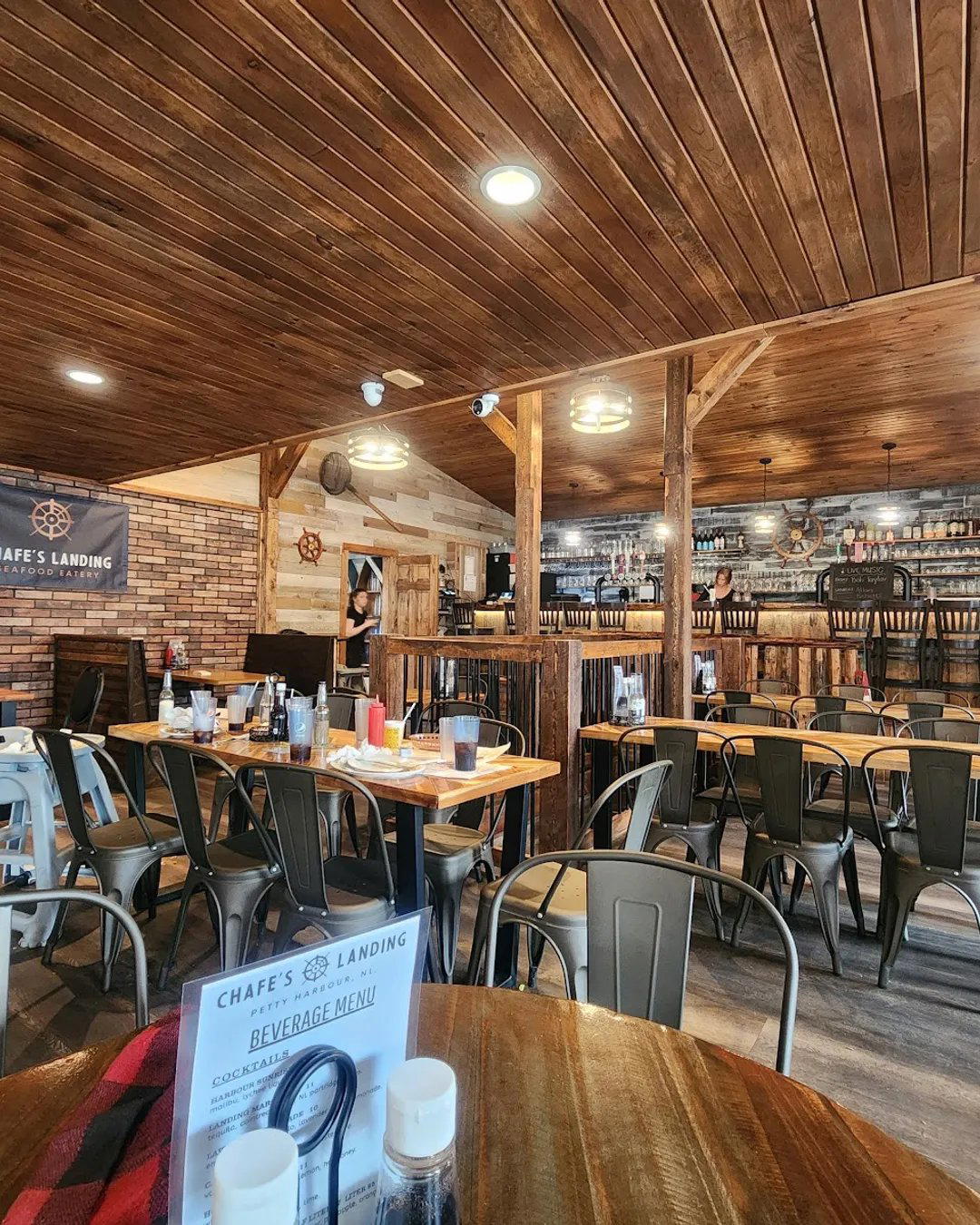
The menu
What to order
- Cod Tongues
- Lobster Roll
- Fish and Chips
Where the Atlantic Begins: Dining at the Edge of Petty Harbour
Petty Harbour sits roughly 20 kilometres south of St. John's, and the drive makes the distance feel longer in the leading sense. The road narrows, the spruce closes in, and the harbour appears suddenly below you, its coloured stages and salt-weathered wharves unchanged in character for generations. This is one of the oldest fishing outports in Newfoundland, a place where the relationship between the ocean and the table was never a marketing concept but a daily fact. Chafe's Landing Restaurant occupies that world. Positioned on Main Road at the edge of the harbour at 11 Main Rd, Petty Harbour, NL, it draws much of its identity from the same water that the village has fished for centuries.
Sourcing as Geography: What Newfoundland's Coastal Larder Looks Like
Newfoundland's position in the North Atlantic produces ingredients that are genuinely difficult to replicate elsewhere. The cold, clean waters off the Avalon Peninsula yield cod, crab, halibut, and shrimp at a quality that has driven the province's economy and table culture alike. In a region where supply chains from the mainland were historically unreliable, coastal communities developed a sourcing logic grounded in proximity: what came from the water or the land nearby was what ended up on the plate. That tradition is not nostalgic posturing at a place like Chafe's Landing. It reflects the actual geography of the supply.
Atlantic Canada's dining scene has, over the past decade, developed a clearer editorial identity around this kind of proximity sourcing. Restaurants such as Fogo Island Inn Dining Room in Joe Batt's Arm have built international reputations on the argument that Newfoundland's remote geography is a culinary asset, not a liability. The reasoning holds: when your fish arrives from a boat that docked two kilometres away, the cold chain is short, the freshness is measurable, and the flavour reflects it. Chafe's Landing, positioned inside one of the province's most historically active fishing communities, operates within that same logic at a more local, less publicized scale.
The Village Context: Petty Harbour as Ingredient
Understanding what Chafe's Landing represents requires understanding Petty Harbour itself. The community has maintained a working fishing fleet longer than many outports that have converted entirely to tourism infrastructure. That dual character, part living fishery, part heritage destination, shapes what a restaurant here can credibly offer. The proximity to active landing stages means the sourcing argument is not aspirational; it is structural. Fish moves from harbour to kitchen along a route measured in minutes rather than hours.
This mirrors patterns seen at other ingredient-led Canadian restaurants operating in rural or remote settings. Eigensinn Farm in Singhampton built its entire program around the logic that controlling the source controls the outcome. Restaurant Pearl Morissette in Lincoln applies the same philosophy to its Niagara farming context. In Newfoundland, the equivalent is the harbour, not the farm, but the underlying principle of geographic sourcing as culinary identity is consistent.
Petty Harbour in the St. John's Dining Orbit
The St. John's restaurant scene has matured considerably, with Raymonds Restaurant and Mallard Cottage anchoring its upper tier and drawing national attention over the past several years. Both operate within the city and pitch to a mixed local-and-visitor clientele. Chafe's Landing offers a different proposition: a harbour-village setting that requires a short deliberate drive from the city, removing the ambient noise of an urban dining room and replacing it with the specific atmosphere of a working outport.
That distinction matters for how you allocate an evening. The decision to drive to Petty Harbour is a decision to slow the meal down, to make the setting part of the experience rather than incidental to it. Restaurants that occupy this peripheral-but-intentional position in a city's broader dining orbit tend to attract visitors and locals who have already eaten around the centre and are looking for something more calibrated to place. The Big R Restaurant serves a different function in the local mix. Chafe's Landing operates in a tier defined less by price or format than by location specificity. For Canadian context on restaurants that use geography as their primary editorial statement, see our full Division No 1 restaurants guide.
How This Fits the Broader Canadian Conversation
Canada's ingredient-led dining movement has been concentrated in Toronto, Vancouver, Montreal, and Quebec City, where restaurants like Alo in Toronto, AnnaLena in Vancouver, Tanière³ in Quebec City, and Jérôme Ferrer - Europea in Montreal have built programs around Canadian terroir with significant critical infrastructure behind them. The more interesting argument, though, is happening at the edges of the country's culinary map, in outport Newfoundland, in rural Quebec (Narval in Rimouski), and in smaller markets where the sourcing story is not constructed but inherited.
Globally, the restaurants that have most persuasively argued for coastal sourcing as culinary identity operate with a similar discipline. Le Bernardin in New York City has spent decades making the case that the quality of seafood sourcing is the variable that separates serious fish cooking from competent fish cooking. Lazy Bear in San Francisco approaches American regional ingredients with an analogous rigour in a different format. The scale differs from a small Newfoundland harbour restaurant, but the underlying editorial argument about provenance is the same. In Atlantic Canada, Catch22 Lobster Bar in Moncton and Cafe Brio in Victoria represent how coastal ingredient identity can anchor different dining formats. The Pine in Creemore and Busters Barbeque in Kenora show how rural Ontario applies similar thinking to land-based ingredients.
Planning Your Visit
Petty Harbour is a short drive from St. John's, making Chafe's Landing a practical choice for a lunch or dinner that extends your time outside the city without requiring an overnight stay. The village is compact, and parking is generally available close to the water. The harbour itself is worth time before or after your meal regardless.
Frequently asked questions
Is Chafe's Landing Restaurant a family-friendly restaurant?
Petty Harbour's character as a working fishing community lends Chafe's Landing an unhurried, grounded atmosphere that tends to suit families. The village setting at 11 Main Rd is far removed from the urban pace of St. John's, which typically makes for a more relaxed dining tempo.
What's the vibe at Chafe's Landing Restaurant?
The setting in Petty Harbour, a harbour-side fishing village roughly 20 kilometres south of St. John's, does much of the atmospheric work. Expect the kind of place shaped by its geography: working waterfront, North Atlantic light, and a community that has run fishing fleets longer than most Canadian coastal towns. It reads as a dining room with a genuine local anchor rather than a constructed concept.
Is Chafe's Landing Restaurant a good day-trip dining destination from St. John's?
At roughly 20 kilometres south of St. John's, Petty Harbour is a practical distance for a dedicated lunch or dinner excursion rather than a detour. The drive along the narrowing coastal road into the harbour is part of the experience, situating the meal within the broader geography of Newfoundland's South Avalon coastline. It functions as both a destination restaurant and an entry point into a part of the island that most visitors miss entirely.
What's the best thing to order at Chafe's Landing Restaurant?
Given Petty Harbour's position as a working fishing port on the North Atlantic, the kitchen's strengths are most credibly rooted in local seafood, ingredients that the cold, clean waters of that coastline produce with real distinction. Checking directly with the restaurant for current offerings is the most reliable approach.
What's Chafe's Landing Restaurant's location?
Chafe's Landing Restaurant is located at 11 Main Rd, Petty Harbour, NL A1S 1N9, Canada, Division No 1.
Can I walk in to Chafe's Landing Restaurant?
Petty Harbour is a small community with limited dining options, which typically means tables at Chafe's Landing fill quickly, particularly in summer when day-trippers from St. John's make the 20-kilometre drive south. Calling or booking ahead before making the trip is the practical approach.
What makes Chafe's Landing Restaurant worth seeking out?
The short answer is location specificity: Petty Harbour at 11 Main Rd is a working fishing village, not a restaurant district, and Chafe's Landing draws its identity from that context rather than importing it. Canada's ingredient-led dining conversation has largely concentrated in Toronto, Vancouver, and Montreal, making a genuinely place-rooted coastal kitchen in Newfoundland a different proposition. The 20-kilometre drive from St. John's is itself an argument for the meal.
At-a-Glance Comparison
Comparable venues nearby, for context on price, style, and recognition.
| Venue | Cuisine | Price | Notes |
|---|---|---|---|
| Chafe's Landing RestaurantThis venue (the venue you are viewing) | Traditional Newfoundland Seafood | $20–30 | Not listed |
| Mallard Cottage | Modern Newfoundland Seafood | $30–50 | Quidi Vidi |
| The Big R Restaurant | Dining | Not listed | Division No 1 |
| Raymonds Restaurant | Canadian | Not listed | Division No 1 |
| Piatto Pizzeria + Enoteca Midtown | Authentic Neapolitan Pizza | $20–30 | East End |
Continue exploring
More in Division No 1
Restaurants in Division No 1
All restaurants in Division No 1 →

Bars in Division No 1
All bars in Division No 1 →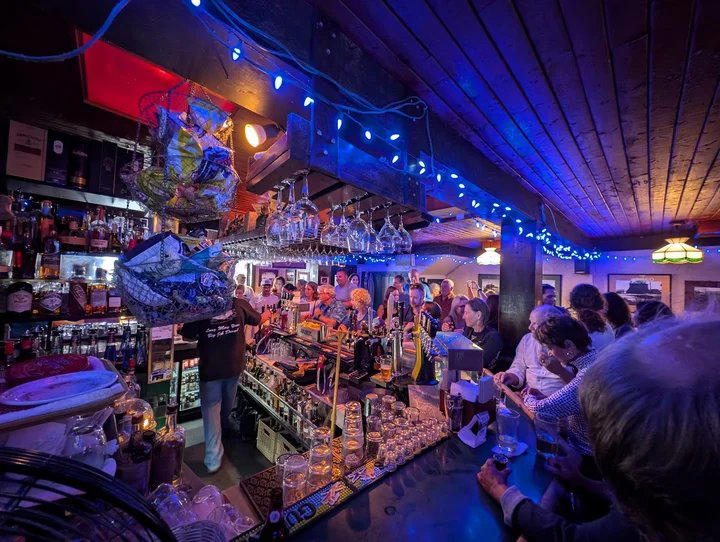
Details
- Rustic
- Cozy
- Scenic
- Casual Hangout
- Family
- Live Music
- Waterfront
- Historic Building
- Local Sourcing
- Waterfront
- A La Carte
- Vegetarian Friendly
Current opening hours
- Monday
- 12–8 PM
- Tuesday
- 12–8 PM
- Wednesday
- 12–8 PM
- Thursday
- 12–8 PM
- Friday
- 12–8 PM
- Saturday
- 12–8 PM
- Sunday
- 12–8 PM
Hours can change for holidays and private events. Hours as of .
Attractively decorated restored house with cozy upstairs seating and lively deck atmosphere on nice days.