Taquero Mucho
Our verdict
Taquero Mucho brings focused taco craft to West Avenue in central Austin, operating in a city where Mexican street food has long competed with barbecue and new American cooking for serious dining attention. The address puts it squarely in the urban core, accessible to both downtown workers and the broader Austin dining circuit. Check the venue directly for current hours and menu details.

Pearl is the En Primeur Club membership app — saves, bookings, and concierge access live there. Same editors, same standards.
- Address
- 508 West Ave, Austin, TX 78701
- Phone
- (512) 291-6867
- Hours
- Mon–Thu 11 AM–10 PMFri 11 AM–12 AMSat 10 AM–12 AMSun 10 AM–10 PM
- Website
- taqueromuchoaustin.com
- Directions
- Get directions
- Booking
- Book on OpenTable
The menu
What to order
- Birria tacos
- Poblano capeado tacos
- Nopalitos sopes
- Elote
Where Austin's Taco Culture Gets Serious
West Avenue in central Austin sits at an interesting intersection of the city's dining identity. Within a few blocks, you get the polished new American ambition of spots like Hestia and the ingredient-driven precision of Barley Swine, yet the taco — Austin's most democratic and contested food form — remains the category that locals defend with the most conviction. Taquero Mucho occupies this terrain at 508 West Ave, a central address that places it in reach of the city's lunch and dinner circuits rather than the food-truck lots and suburban strip plazas where much of Austin's taco culture has traditionally operated.
The taco, as a format, rewards sourcing discipline more than almost any other street food. When the tortilla is the primary vessel and the protein is the primary payload, there is nowhere for a weak supply chain to hide. In Mexico's most respected taqueria traditions, whether the adobada counters of Tijuana or the carnitas specialists of Michoacán, the quality of the ingredient defines the ceiling of the dish, and technique exists mainly to express that ingredient without obscuring it. Austin's taco scene has absorbed that logic gradually, moving from a model defined by convenience and price toward one where provenance and process carry genuine weight.
The Sourcing Argument at the Center of Austin Tacos
Across Austin's current taco conversation, the most meaningful dividing line is not between Tex-Mex and interior Mexican styles, nor between sit-down and counter service. It is between operators who treat the tortilla as a commodity and those who treat it as a craft object with its own ingredient story. Masa made from nixtamalized whole corn, sourced and processed deliberately rather than reconstituted from commercial masa harina, changes the structural and flavor character of every taco built on it. That gap is detectable to anyone eating across the category with attention.
The same logic applies to protein sourcing. Texas has one of North America's most developed networks of independent ranchers producing pastured pork, heritage beef, and goat, and Austin's leading operators have learned to draw on that infrastructure the same way the city's celebrated pitmasters do. la Barbecue and InterStellar BBQ have built reputations partly on the quality of the animals they source; the taco format imposes the same discipline, just applied to a different fire and a faster service model.
Taquero Mucho's position at a central Austin address, away from the food-truck aggregators and the tourist-facing districts, suggests an operator oriented toward a local regular rather than a transient audience. That demographic tends to be the more exacting one: Austinites who eat tacos multiple times a week are calibrated to small differences in tortilla texture, fat rendering, and salsa heat structure in ways that occasional visitors are not.
Austin's Mexican Food Tier and Where the Category Sits
Austin's dining scene is often discussed through the lens of its barbecue pedigree and its new American restaurant moment, but its Mexican food tier has quietly become one of the more interesting in a major American city. The influence of a large Mexican-American population, the proximity to the Texas-Mexico border food corridor, and a restaurant economy that rewards casual formats have combined to raise the floor across the category. A visitor eating down the taco spectrum in Austin today will find a wider range of regional Mexican cooking styles represented than in many cities with larger Mexican-origin populations.
That breadth makes differentiation harder and more meaningful at the same time. Taquero Mucho operates in a city where the competition within the taco format alone is significant, which means that any venue maintaining a presence on a central West Avenue address is doing so against a well-informed local audience. The broader Austin dining circuit includes technically accomplished restaurants across multiple price tiers, from the Craft Omakase counter to the live-fire ambition of Hestia, and that context shapes how even casual formats are judged.
For visitors building an Austin dining itinerary, the taco category operates differently from the reservation-required restaurant tier. It rewards walking in, eating quickly, and returning. The sourcing and tortilla questions are leading answered by eating rather than reading, and the West Ave location makes Taquero Mucho a practical stop within a wider downtown circuit. For broader context on how Austin's restaurant scene is structured across cuisines and price points, our full Austin restaurants guide maps the key categories.
The Wider Ingredient-Sourcing Conversation in American Dining
The emphasis on traceable sourcing that now defines the upper tier of American restaurant cooking did not originate in the taco format, but it has arrived there with force. Restaurants like Blue Hill at Stone Barns and Single Thread Farm in Healdsburg built their identities around farm-to-table sourcing at price points that assumed a certain kind of diner. The more interesting development in the past several years has been the migration of that sourcing discipline into accessible formats, where it changes the value equation rather than just the price point. A taco built on properly sourced corn and pastured meat at a street-food price represents a different kind of argument than a tasting menu with a pedigreed supply chain at three hundred dollars a head.
Austin is one of the cities where that argument is being made most actively, and the taco is its clearest vehicle. The city's combination of agricultural infrastructure, Mexican culinary tradition, and a dining public that has been educated by a decade of serious barbecue coverage makes it an unusually fertile ground for the format. Operators elsewhere, from the modernist fine dining of Alinea in Chicago to the seafood sourcing precision of Providence in Los Angeles, have demonstrated that sourcing transparency at any price point creates a stronger connection between kitchen and guest. In the taco format, that connection is immediate and physical: you taste the corn in the tortilla, and you either notice it or you don't.
Know Before You Go
| Address | 508 West Ave, Austin, TX 78701 |
|---|---|
| Hours | |
| Reservations | |
| Price | |
| Phone |
Frequently asked questions
Do they take walk-ins at Taquero Mucho?
Austin's taco format typically operates as walk-in counter service rather than a reservation model, and the West Ave address suits that kind of casual access.
What's the signature at Taquero Mucho?
In Austin's taco category, the tortilla itself is often the clearest indicator of a kitchen's priorities, whether it's pressed fresh on-site, the corn source, and the fat used for the cook are all worth asking about when you arrive.
Is Taquero Mucho good for vegetarians?
Mexican taco formats in Austin increasingly include vegetarian options, often built around seasonal vegetables, beans, or cheese with the same tortilla craft applied to meat-based fillings. The city's overall taco scene has broadened its vegetarian range considerably in recent years.
Is Taquero Mucho good value for money?
Austin's taco category generally represents the city's strongest value proposition in dining, delivering significant ingredient quality at accessible price points.
How does Taquero Mucho fit into Austin's broader Mexican food scene?
Austin's Mexican food tier has expanded well beyond Tex-Mex into regional Mexican styles, and taquerias on central corridors like West Avenue tend to serve a local-regular audience rather than a tourist one. That audience tends to be the more demanding one in terms of tortilla quality and protein sourcing. Taquero Mucho's central address puts it within the urban dining circuit that also includes restaurants like Hestia and Barley Swine, making it a practical and representative stop for anyone mapping Austin's full dining range.
Price and Positioning
Comparable venues nearby, for context on price, style, and recognition.
| Venue | Cuisine | Price | Awards | Notes |
|---|---|---|---|---|
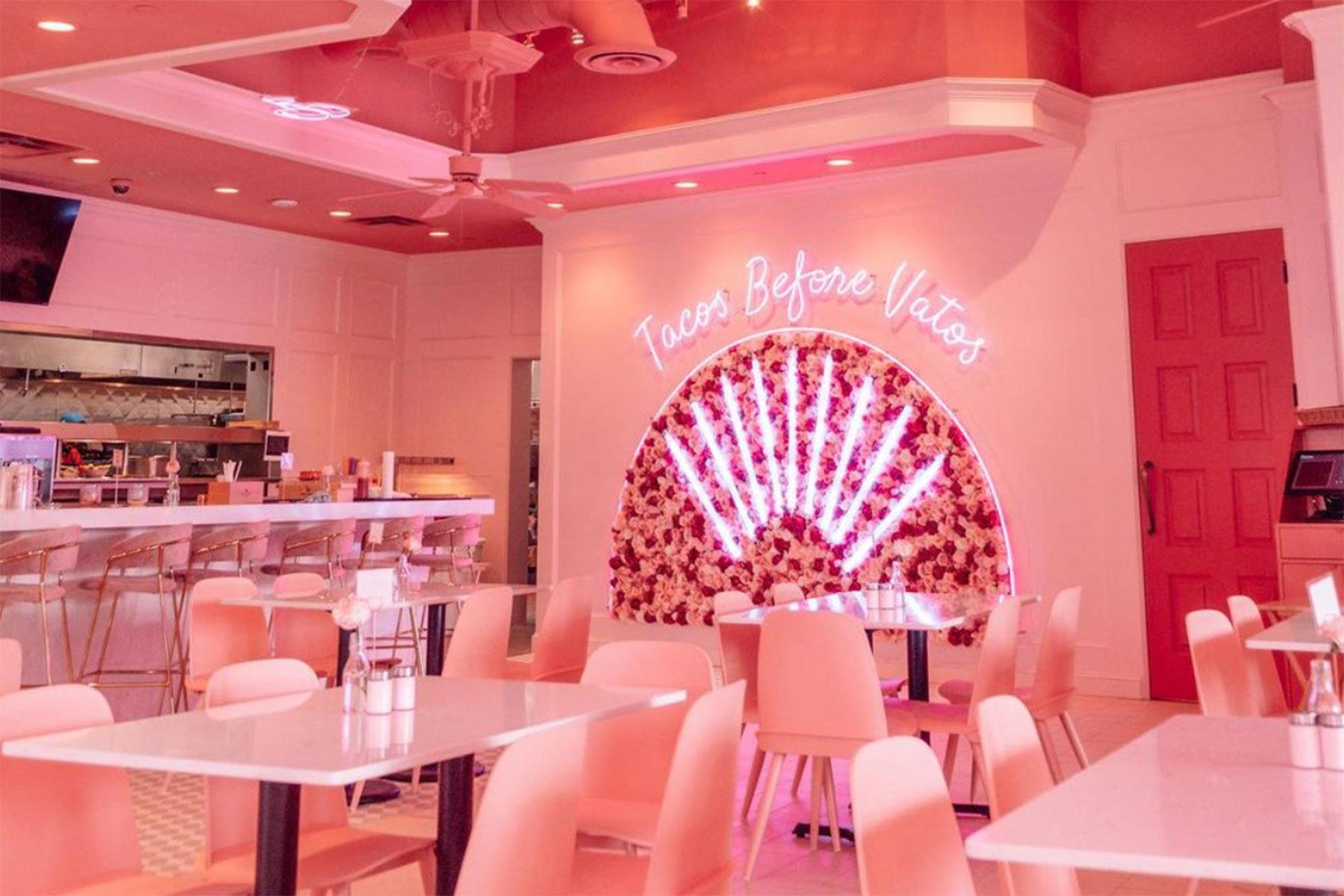
| Taquero MuchoThis venue — the venue you are viewing | Modern Pink Mexican Taqueria | $20–30 | Not listed | Not listed |
| Gabrielas Downtown | Authentic Michoacán Mexican | $20–30 | Not listed | Red River District, Authentic Michoacán Mexican |
| Mercado Sin Nombre | Mexican Heirloom Corn & Coffee Café | $10–20 | James Beard Award Semi Finalist | East Austin, Mexican Heirloom Corn & Coffee Café |
| Joann's Fine Foods | Tex-Mex Diner | $20–30 | Not listed | Bouldin, Tex-Mex Diner |
| Asadas Grill | Authentic Mexican Grill | Not listed | Not listed | North Austin, Authentic Mexican Grill |
| Mama Betty's Tex-Mex - Parmer ln | Tex-Mex Cantina | $20–30 | Not listed | Meadows of Brushy Creek, Tex-Mex Cantina |
Continue exploring
More in Austin
Restaurants in Austin
Browse all →
Bars in Austin
Browse all →
Hotels in Austin
Browse all →
Details
- Trendy
- Lively
- Whimsical
- Group Dining
- Casual Hangout
- Celebration
- Brunch
- Open Kitchen
- Craft Cocktails
- A La Carte
- Small Plates
- Pink Drinks
- Vegetarian Friendly
Current opening hours
- Monday
- 11 AM–10 PM
- Tuesday
- 11 AM–10 PM
- Wednesday
- 11 AM–10 PM
- Thursday
- 11 AM–10 PM
- Friday
- 11 AM–12 AM
- Saturday
- 10 AM–12 AM
- Sunday
- 10 AM–10 PM
Hours can change for holidays and private events. Last verified .
Lively, feminine pink interior dripping in playful energy with eclectic decor, flowers, and photo ops, creating a fun, sassy, and festive vibe.