Tamara Modern Indian Cuisine
Our verdict
Modern Indian cooking occupies a distinct tier in Orlando's dining scene, where few kitchens commit to the full range of the subcontinent's traditions. Tamara Modern Indian Cuisine, located on Visitors Circle in the International Drive corridor, represents one of the area's more serious efforts in this category, drawing a guest profile that extends well beyond the theme park crowds that define the surrounding block.

Pearl is the En Primeur Club membership app, where members save venues, book tables and use the concierge.
The menu
What to order
- Butter Chicken
- Chicken Tikka Masala
- Goan Fish Curry
Indian Cuisine in a City Still Learning to Take It Seriously
Orlando's International Drive corridor is not where most serious food writing begins. The address tells one story: a city block designed around throughput, visitor convenience, and family-scale portions. What makes Tamara Modern Indian Cuisine worth examining is not its location in spite of that context, but what its presence says about a broader shift in how the city's dining market is evolving. Indian cuisine has long occupied a midrange or bargain position in American restaurant culture, often reduced to buffet formats and approximated spice levels designed for broad tolerance. The kitchens now pushing against that ceiling, in cities from New York to Los Angeles, are doing so by anchoring menus in regional specificity, seasonal sourcing, and a willingness to let the complexity of South Asian flavor traditions stand without softening. The question worth asking about any modern Indian restaurant operating in a tourist-heavy American market is how far along that spectrum it has traveled.
The Physical Environment: Where You Land Before You Order
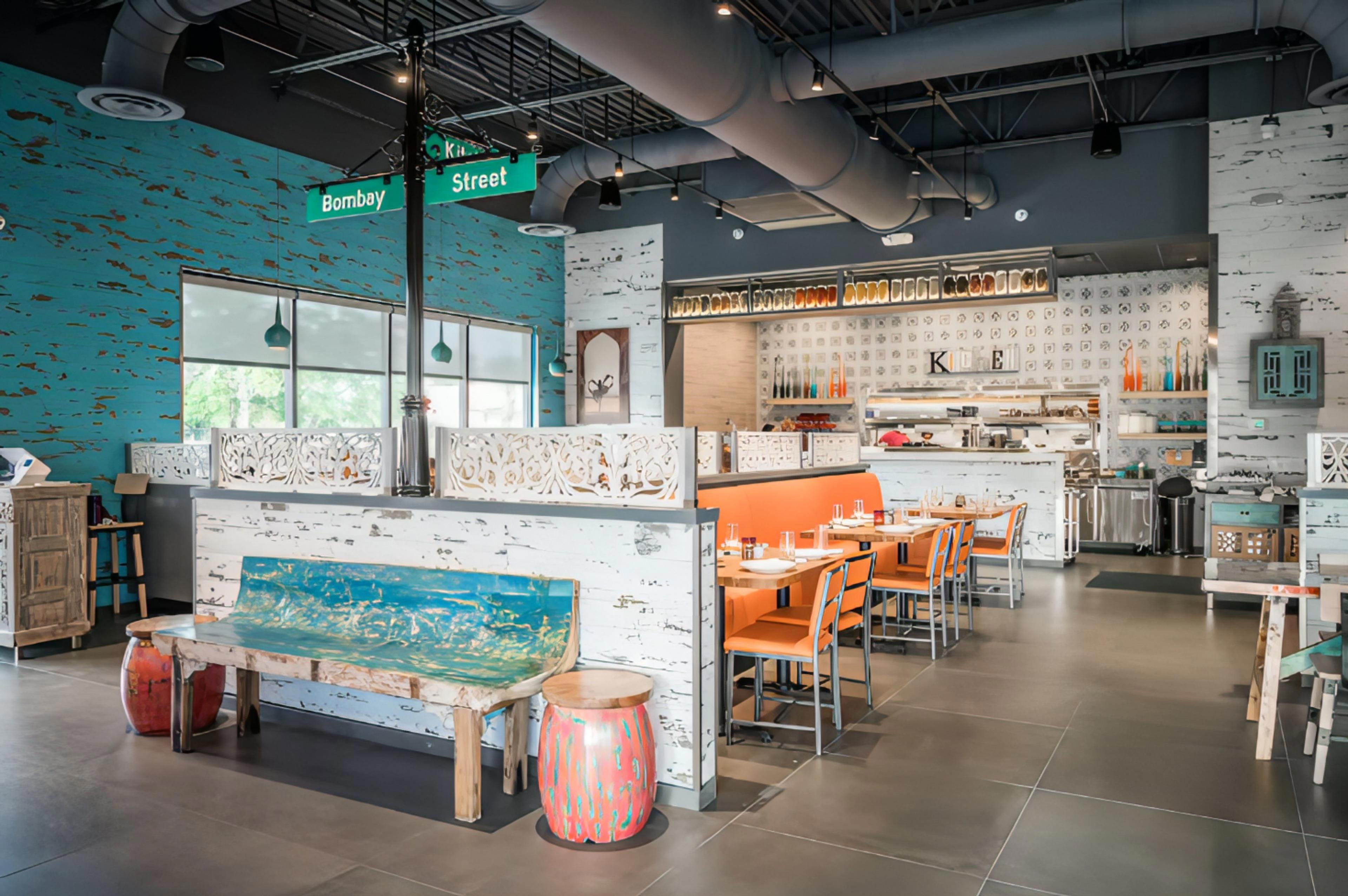
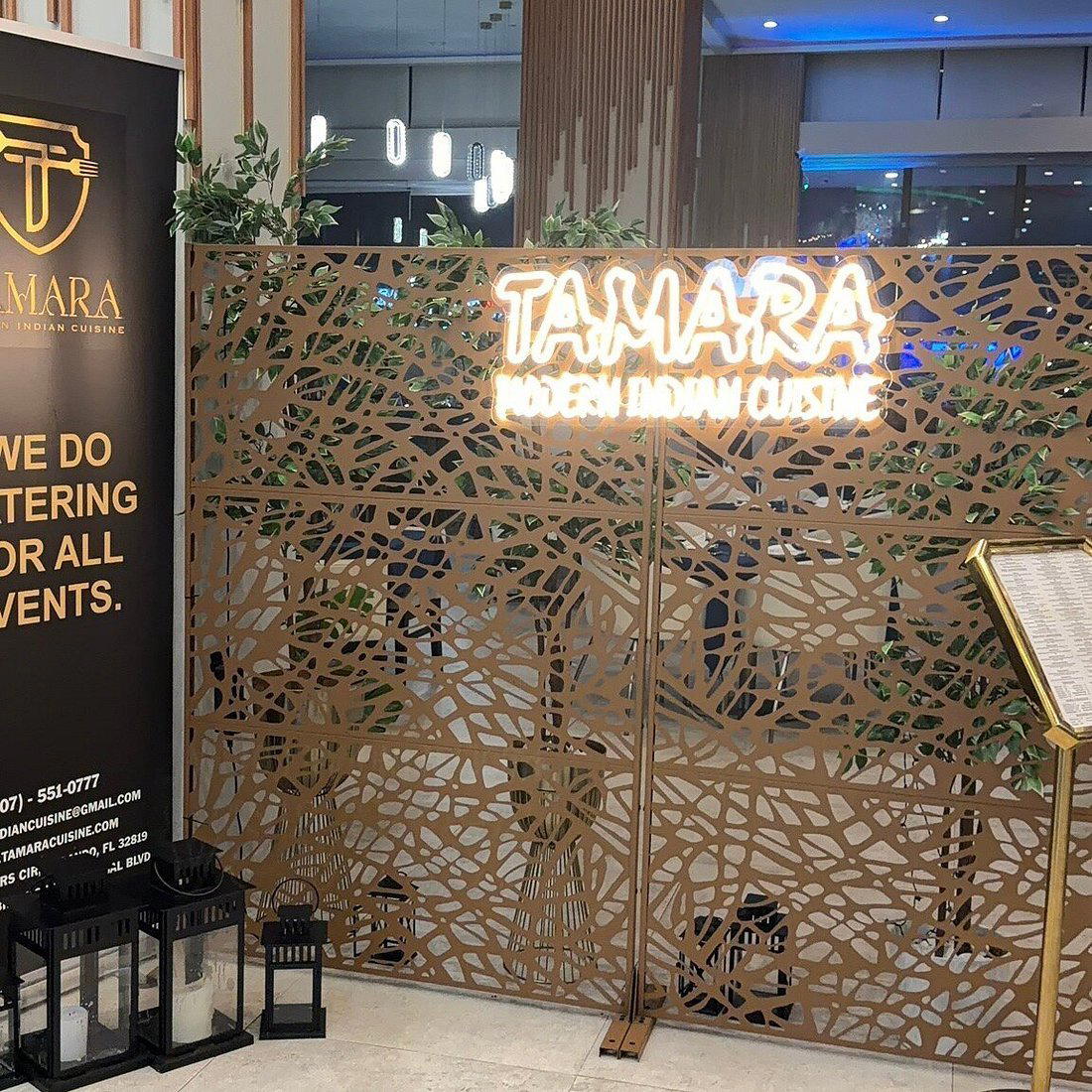
The International Drive address places Tamara in a competitive zone where the surrounding blocks are dense with chain formats, entertainment dining, and the kind of décor that prioritizes Instagram scale over atmosphere. Modern Indian restaurants at the more considered end of the category have generally moved toward interiors that draw on craft traditions, warm materials, and a deliberate quiet that allows the food to carry the room. Whether that describes Tamara's physical space in full requires a visit, but the location at 6801 Visitors Circle situates it in a market where the act of choosing a specific, cuisine-committed kitchen over a branded entertainment format is itself a decision with editorial weight. Guests arriving here are, by definition, opting out of something larger and louder nearby.
Ethical Sourcing and the Modern Indian Kitchen
The sustainability conversation in American fine dining has moved well past a marketing posture. Restaurants like Single Thread Farm in Healdsburg and Blue Hill at Stone Barns in Tarrytown have built their entire culinary logic around farm proximity, seasonal constraint, and near-zero waste kitchens. The conversation looks different inside an Indian kitchen, where the tradition itself has always carried a sophisticated relationship with plant-forward cooking, whole-animal use, and fermentation. Indian cuisine is, in structural terms, one of the most naturally sustainable of the world's major traditions: legume-heavy, vegetable-centric in many regional expressions, and built around preservation techniques that predate any contemporary zero-waste movement by centuries.
A modern Indian kitchen that takes sourcing seriously is not retrofitting an external framework onto an unwilling cuisine. It is, instead, returning to something the tradition already understood. The dal, the pickle, the slow-cooked braise that uses every part of the protein, the spice-forward vegetable dish designed to satisfy without supplementing: these are not sustainability gestures. They are the original architecture. Restaurants in this category that communicate their sourcing relationships honestly, whether through seasonal menu changes, local produce partnerships, or transparent protein sourcing, are working with a cuisine that accommodates those choices more naturally than most. For Orlando specifically, where Florida's agricultural output includes year-round produce, citrus, and Gulf seafood, a modern Indian kitchen has legitimate sourcing material to work with that a kitchen replicating a fixed regional menu from the subcontinent would not.
Orlando's Premium Dining Tier: Where Modern Indian Fits
The city's upper dining bracket is anchored by a small group of kitchens that operate at price points and ambition levels well above the visitor-economy average. Capa, a steakhouse operating at the $$$$ tier, represents the kind of destination dining that theme park resort infrastructure supports. Kadence and Natsu work the Japanese omakase format, a category that has consolidated around a specific counter-dining ritual with defined price expectations. Sorekara and Camille represent other non-European Asian cuisines making a serious case for themselves at the premium end. Modern Indian, when it operates at comparable ambition, enters a different competitive conversation than buffet-format peers. It prices against tasting menu formats and chef-driven à la carte rooms, and it needs to signal that through the quality of sourcing, the specificity of regional reference, and the discipline of execution.
For comparison, the national tier of restaurants pushing Indian cuisine into the fine dining conversation, including kitchens in New York where Atomix has demonstrated how Korean fine dining can occupy Michelin space at the very leading, has shifted the frame of reference for what refined South Asian cooking can achieve in America. The benchmark is no longer a curry house in a strip mall. It is a kitchen making decisions about sourcing, plating, and menu structure that can hold a conversation with Le Bernardin in New York City or Providence in Los Angeles on technique, even if the flavor traditions are entirely different.
Seasonal Logic in a Florida Kitchen
Florida's growing calendar creates conditions that few American states can match for year-round fresh produce availability. A modern Indian menu that responds to what is actually available from Florida growers in a given month, rather than operating from a fixed imported-ingredient list, is making a commitment to place as much as to tradition. The monsoon seasonality that structures much of Indian cooking, with its distinct wet and dry season ingredients, translates imperfectly but interestingly into a Florida growing calendar. Bitter melon, curry leaf, fresh turmeric, and drumstick (moringa) are all cultivable in Florida's climate. A kitchen paying attention to what local South Asian growers are producing, rather than sourcing exclusively through national distributors, is working in a genuinely interesting space where two food traditions intersect. Visiting between October and April, when Florida's growing season peaks, aligns with the moment when locally sourced ingredients are most available to a sourcing-conscious kitchen.
The Vegetarian Question, Answered by the Cuisine Itself
Few global cuisines have a more sophisticated vegetarian architecture than the Indian subcontinent's traditions. Gujarati, South Indian, and Rajasthani cooking in particular have developed a depth of vegetarian technique, from the fermented batters of dosa to the slow-spiced pulse dishes of the north, that does not read as accommodation or substitution. It reads as the full expression of the tradition. A modern Indian kitchen that communicates this clearly, rather than treating vegetarian requests as a secondary tier, is operating from a position of genuine culinary confidence. Guests with plant-forward preferences are, in this context, arriving at a cuisine that was already waiting for them. For current menu specifics or dietary accommodation requests, contacting the venue directly before visiting remains the most reliable approach, as menu compositions at this type of kitchen tend to shift with seasonal availability.
Know Before You Go
Frequently asked questions
Where is Tamara Modern Indian Cuisine located?
Tamara Modern Indian Cuisine is located at 6801 Visitors Cir, Orlando, FL 32819, Orlando.
Is Tamara Modern Indian Cuisine a good option for visitors staying near International Drive?
Tamara's address at 6801 Visitors Cir places it directly within the International Drive accommodation zone, making it one of the few restaurants in that corridor operating at a contemporary-cuisine level rather than a tourist-volume model. For visitors who want a meal that reflects current Indian cooking technique rather than a standardized buffet format, the proximity is a practical advantage. It is worth checking hours and availability in advance, as the restaurant's position in Orlando's limited premium-Indian category means it draws a broader city-wide audience, not just hotel guests.
What dish is Tamara Modern Indian Cuisine famous for?
No single dish has been formally documented as a signature item in available editorial records. What defines Tamara's kitchen approach is the application of modern Indian technique to Florida's seasonal produce calendar, which shapes the menu more than any fixed centerpiece dish. Asking the staff on arrival about the day's featured preparations is the more reliable approach.
Can I walk in to Tamara Modern Indian Cuisine?
Tamara sits on Visitors Circle at 6801 Visitors Cir, Orlando, FL 32819, a corridor that draws consistent foot traffic from the International Drive visitor economy. Walk-in availability depends heavily on the day and time, and the restaurant's position in Orlando's upper dining tier means peak-hour seats fill faster than nearby chain formats. Contacting the venue directly before arrival is the safer course.
What has Tamara Modern Indian Cuisine built its reputation on?
Tamara has positioned itself as a serious Indian kitchen in a city where the cuisine has historically been underrepresented at the premium dining level. Its reputation rests on bringing a contemporary approach to Indian cooking into the International Drive corridor, a location more associated with entertainment dining than culinary ambition. That positioning alone sets a clear expectation for the type of guest the kitchen is designed for.
Can Tamara Modern Indian Cuisine handle vegetarian requests?
Indian culinary tradition has one of the most developed vegetarian frameworks of any cuisine globally, drawing on Gujarati, South Indian, and Rajasthani repertoires that treat plant-based cooking as a primary category rather than an accommodation. A modern Indian kitchen in that lineage would naturally carry those options at the core of the menu, not as afterthoughts. Guests with specific dietary requirements should confirm current menu composition directly with the restaurant.
Should I splurge on Tamara Modern Indian Cuisine?
Tamara occupies a tier above the casual Indian restaurants that dominate Orlando's broader dining map, and the International Drive address means you are paying for culinary ambition in a location where that ambition is genuinely rare. No formal price data has been published, so the spend level relative to your expectations is best confirmed before booking. If serious modern Indian cooking in Orlando is the goal, Tamara is currently among the few kitchens in the city making that case.
City Peers
Comparable venues nearby, for context on price, style, and recognition.
| Venue | Cuisine | Price | Notes |
|---|---|---|---|
| Tamara Modern Indian CuisineThis venue (the venue you are viewing) | Modern Indian Cuisine | $20–30 | Not listed |
| Nile Ethiopian | Authentic Ethiopian | $20–30 | International Drive |
| Burntwood Tavern | Chef-Driven American Tavern | $30–50 | Metro West |
| Beaches & Cream | Classic American Soda Shop | $20–30 | Walt Disney World |
| Latitude & Longitude | Southern American with Florida Flair | $30–50 | Vistana |
| Pho 88 | Traditional Vietnamese Pho | $10–20 | Mills 50 |