Talay
Our verdict
On North Orange Avenue in downtown Orlando, Talay occupies a stretch of the city where the dining scene has shifted from tourist-adjacent to resident-driven over the past decade. The address places it in reach of the Ivanhoe Village corridor, a neighbourhood that now anchors some of Orlando's more considered restaurant programming. Expect a setting shaped by the pace of that district: deliberate rather than frantic, local rather than transient.

Pearl is the En Primeur Club membership app, where members save venues, book tables and use the concierge.
The menu
What to order
- Hor Mok Talay
- Peek Gai Tod
- Tod Mun Goong
North Orange Avenue and the Shift in Orlando's Dining Gravity
Orlando's serious dining has been quietly relocating northward. The tourist corridor around International Drive still dominates by volume, but the stretch of North Orange Avenue running through downtown and up toward Ivanhoe Village has accumulated a different kind of restaurant: locally funded, neighborhood-facing, less dependent on theme-park adjacency for its customer base. Talay, at 861 N Orange Ave, sits squarely in that northward shift. The address is a statement of intent in itself, placing the restaurant among a cohort that includes Sorekara (Japanese) and Camille (Vietnamese), both of which operate in the $$$$-tier and draw a repeat-visit crowd rather than a once-and-done tourist demographic.
That positioning matters for how you approach Talay. This is a restaurant shaped by its neighbourhood as much as by its menu, which means the rhythm of service, the composition of the room, and the general expectation of the diner differ meaningfully from what you encounter at, say, Capa (Steakhouse) inside Four Seasons Resort Orlando. Independent operators on North Orange are accountable to the same fifty tables walking in week after week. That accountability tends to produce a more calibrated house style.
The Lunch and Dinner Divide: Why the Time of Day Changes the Equation
In Orlando's upper-mid and premium dining tier, the gap between lunch and dinner service is rarely just a matter of daylight. At venues in this corridor, daytime service tends to be shorter in format, lighter in price, and considerably easier to access without forward planning. Evening service at comparable addresses, including Kadence (Japanese) and Natsu (Japanese), operates under materially different booking pressure: seats move faster, menus are longer, and the margin for walk-in flexibility narrows sharply on Thursday through Saturday.
The same structural divide almost certainly applies to Talay. Lunch at this tier of North Orange restaurant typically offers an abbreviated format, faster table turns, and a price point that lets a first-time visitor calibrate whether evening is worth the deeper commitment. Dinner, by contrast, is where the kitchen extends itself: fuller menus, longer pacing, and the kind of service investment that justifies the premium over a more casual alternative. For readers considering their first visit, lunch is a reasonable entry point. For readers who already know the address and want the fuller version, dinner on a mid-week evening is the rational choice in terms of access and atmosphere.
This daytime-versus-evening logic is particularly visible across American fine-casual dining, where kitchens often operate two distinct personalities within the same physical space. Venues like Lazy Bear in San Francisco and Blue Hill at Stone Barns in Tarrytown have made the dinner-only commitment total, eliminating lunch precisely to concentrate their leading work in a single daily service. Talay operates in a different economic context, one where the North Orange foot traffic makes a lunch program commercially sensible, but the underlying principle holds: the evening service is where a kitchen on this kind of block will most fully demonstrate its range.
Orlando's Independent Restaurant Tier in National Context
It is worth placing Orlando's emerging independent scene against a broader American frame. Cities like New York, Los Angeles, and Chicago carry their reputations through decades of accumulated critical infrastructure: think Le Bernardin in New York City, Alinea in Chicago, or Providence in Los Angeles. These are venues with long award histories and established positions in national dining conversation. Orlando does not yet carry that weight at scale, but the North Orange corridor is producing restaurants that would hold their own in secondary dining cities without apology.
The comparison set for Talay's neighbourhood is better drawn from cities like San Diego, where Addison operates, or from the mid-scale fine dining tier that cities outside the major coastal markets have built quietly over the past decade. What distinguishes these programs from their big-city peers is not ambition but infrastructure: smaller critical communities, fewer reviewers, and less institutional memory. That means a restaurant like Talay earns its standing through repeat business and word-of-mouth rather than through award cycles, which, in practice, often produces a more service-stable operation. Venues that survive on locals rather than on destination traffic tend to be more consistent by necessity.
For readers who regularly dine at destination-tier addresses like The French Laundry in Napa, Single Thread Farm in Healdsburg, or The Inn at Little Washington, Talay represents a different register entirely: neighborhood-scale rather than pilgrimage-scale, calibrated for re-visitation rather than singular occasion. That is not a downgrade. It is a different use case, and the North Orange corridor is increasingly good at this particular format.
It is also worth noting the broader context of Southeast Asian dining in American cities, which has moved significantly upmarket over the past fifteen years. Venues like Atomix in New York City have demonstrated that Asian-rooted cooking can command premium tasting-menu prices and serious critical attention without sacrificing identity. 8½ Otto e Mezzo Bombana in Hong Kong shows the reverse trajectory: European fine dining that has absorbed Asian market expectations without losing its core character. That broader movement creates more favorable conditions for a venue on North Orange than would have existed a decade ago.
For a fuller picture of where Talay sits within Orlando's current dining map, see our full Orlando restaurants guide, which covers the city's key neighbourhoods, price tiers, and the leading addresses across cuisine types. Further afield, readers planning trips to New Orleans can reference Emeril's in New Orleans for a useful point of comparison on how a Southern city manages the gap between tourist-facing and resident-facing dining at the premium end.
Know Before You Go
Address: 861 N Orange Ave, Orlando, FL 32801
Neighbourhood: Downtown Orlando / North Orange Ave corridor
Phone: Not publicly listed at time of publication
Website: Not publicly listed at time of publication
Dress code: Not specified; neighbourhood context suggests smart casual is appropriate
Timing note: Mid-week evening visits typically offer better table access than Friday or Saturday; lunch provides a lower-commitment entry point for first-time visitors
Frequently asked questions
How would you describe the vibe at Talay?
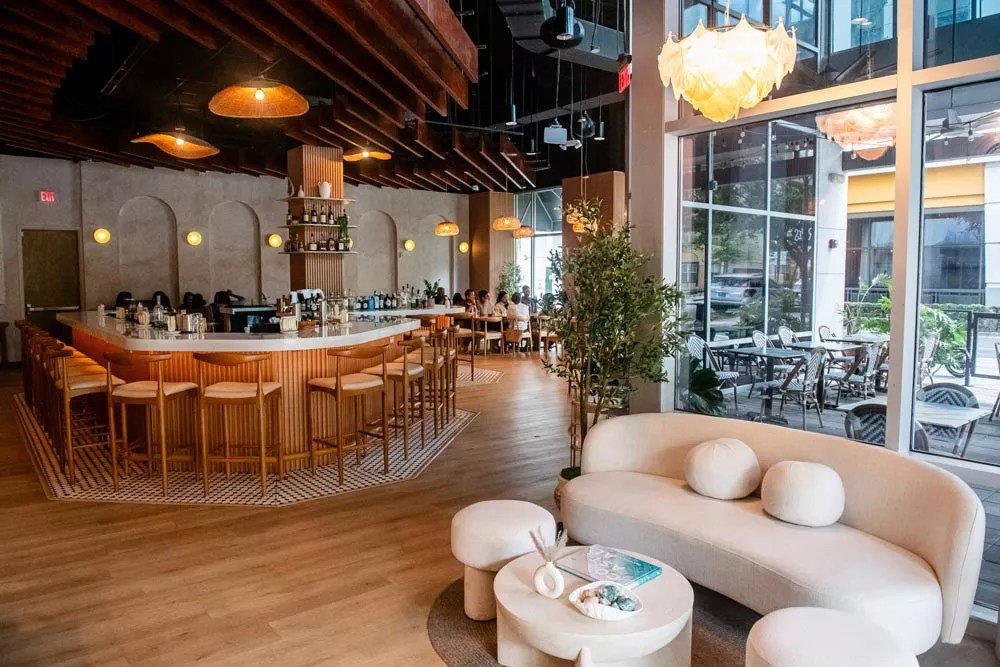
Talay sits at 861 N Orange Ave, which places it in Orlando's northward-shifting dining corridor rather than the tourist-heavy International Drive stretch. That address alone signals intent: this is a room oriented toward locals and regulars rather than convention crowds. The atmosphere tracks with that positioning, purposeful rather than performative.
What's the address for Talay?
Talay is located at 861 N Orange Ave, Orlando, FL 32801, Orlando.
Is Talay a good option for dining in downtown Orlando versus the International Drive corridor?
Talay's address at 861 N Orange Ave places it north of the core tourist concentration, which is precisely why Orlando diners seeking a neighborhood-oriented experience gravitate toward it. The North Orange Ave stretch has become a reference point for the city's independent restaurant tier, distinct from the high-volume, visitor-facing operations around International Drive. For travelers staying downtown or in Ivanhoe Village, it is a walkable alternative to the convention-district dining circuit.
What do regulars order at Talay?
North Orange Ave restaurants in this tier tend to operate tighter, rotating menus rather than static lists.
Should I book Talay in advance?
For Orlando restaurants operating in the independent tier on North Orange Avenue, walk-in availability varies sharply between lunch and dinner service, dinner demand generally runs higher. Contacting Talay directly before your visit is the safer approach, particularly for evening seatings or groups.
What if I have allergies at Talay?
The direct approach is to call ahead or reach out before visiting, especially for serious or anaphylactic allergies where kitchen protocols matter. Restaurants in the independent tier at this address typically handle requests on a case-by-case basis.
A Credentials Check
Comparable venues nearby, for context on price, style, and recognition.
| Venue | Cuisine | Price | Notes |
|---|---|---|---|
| TalayThis venue (the venue you are viewing) | Thai Seafood | Not listed | Not listed |
| BarkHaven | American Comfort Food | $20–30 | Ivanhoe Village |
| Lee & Rick's | Classic Seafood Oyster Bar | $20–30 | Orlo Vista |
| Cantina Catrina Orlando | Traditional Mexican Scratch Kitchen | $20–30 | The Florida Mall area |
| Helena Modern Riviera | Mediterranean-American Fusion | $30–50 | Convention Center |
| Latitude & Longitude | Southern American with Florida Flair | $30–50 | Vistana |