Taiwanese Gourmet

Cash only, no website, and a menu broad enough to require a lazy susan: the stinky tofu is pungent, the fried pork chop is worth the commute, and the whole steamed fish is as considered as anything served in Manhattan.
Pearl is the En Primeur Club membership app — saves, bookings, and concierge access live there. Same editors, same standards.
- Address
- 84-02 Broadway, Elmhurst, NY 11373
- Phone
- (718) 429-4818
- Website
- taiwanesegourmet.site
- Directions
- Get directions
 Saves & bookings on Pearl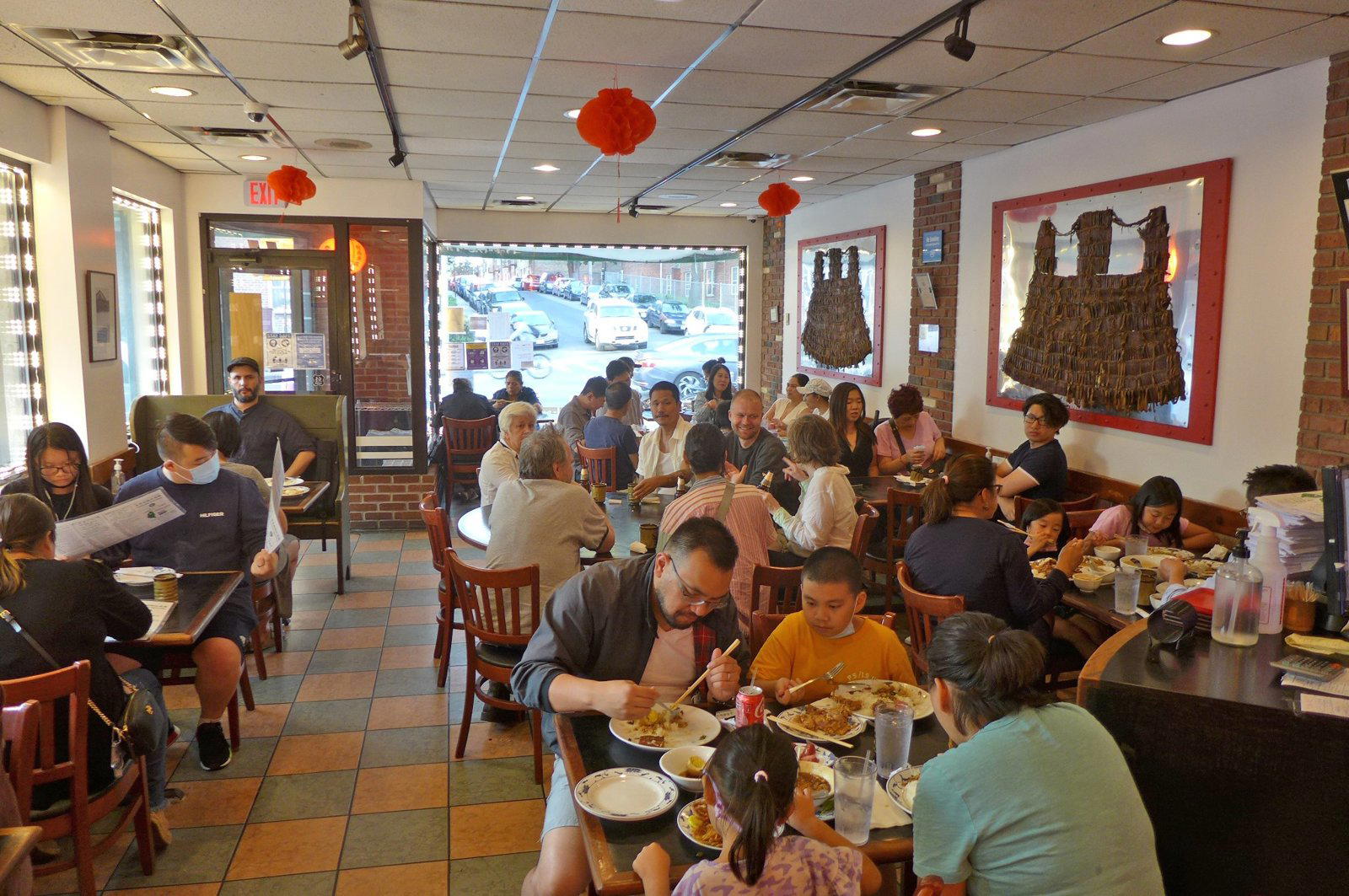
Elmhurst and the Taiwanese Table
Queens has long been the borough where New York's most specific regional cooking survives at full fidelity. Elmhurst, in particular, developed into among the more concentrated pockets of Taiwanese cuisine in the United States from the 1980s onward, as Taiwanese immigration to the New York metro area accelerated and communities anchored around the commercial stretch of Broadway near the 82nd Street subway stop. That context matters when approaching Taiwanese Gourmet at 84-02 Broadway: this is a restaurant in a neighborhood that already knew what Taiwanese food should taste like, not one that had to explain itself to an unfamiliar audience.
The cuisine itself draws on a layered history. Taiwan's cooking absorbed Min-Nan Fujianese traditions, Japanese colonial-era techniques, and the provisions of mainlanders who arrived in the late 1940s, and it developed its own street-food culture around night markets that bear little resemblance to any mainland Chinese model. At its core, Taiwanese home cooking relies on fermented condiments, fresh aromatics like ginger and scallion, and organ meats treated as first-rate rather than supplementary ingredients. Understanding that framework is the starting point for understanding what Taiwanese Gourmet does, and why the menu reads the way it does.
What the Ingredients Tell You
What matters most at Taiwanese Gourmet is what ends up on the table and where those elements fit in the tradition. The dish sometimes called flies heads, a stir-fry of flowering chives and ground pork with fermented black beans, is one of the more culturally specific preparations on the menu. Flowering chives, harvested before the bud fully opens, carry a more assertive flavor than the flat-leaf variety, and the fermented black bean adds a depth that marks the dish unmistakably as Hokkien-influenced. This is not pantry improvisation; it reflects a specific sourcing and flavor logic that connects Queens directly to the kind of home kitchens that built the recipe.
Same sourcing intelligence appears in the steamed whole fish, where ginger and scallion arrive as finishing aromatics rather than a marinade, in the Cantonese-adjacent style that Taiwanese cooking absorbed and adapted. Braised tofu skin wrapped around pork roll with daikon and savory minced meat represents another layer of that tradition: fermented and preserved ingredients working alongside fresh ones to build complexity. These are not fusion gestures; they are the actual components of Taiwanese cooking as practiced across decades. The stinky tofu, fermented to a degree that announces itself before the plate reaches the table, is served here without apology or mitigation, which tells you something about who the kitchen is cooking for.
That relationship between a specific immigrant community and a kitchen that answers to it is what distinguishes Elmhurst's restaurant row from the Taiwanese restaurants that have opened in Manhattan over the past decade. Places like 886 and Wenwen operate with a different mandate: they translate and reframe Taiwanese cooking for a mixed audience, and they do it with skill. Ho Foods takes a focused, noodle-forward approach on the Lower East Side. The restaurant operates without translation. The menu's breadth, the cash-only policy, and the lazy susan format are not affectations; they are the infrastructure of a restaurant that has been feeding a community since the 1990s on its own terms.
The Menu in Practice
The standard approach here is to over-order deliberately. The menu is extensive, and the lazy susan format at the table is designed for exactly that kind of abundance: multiple protein preparations, a vegetable dish, braised items, and soup sharing the surface simultaneously. Kidney and liver in a concentrated brown glaze, cooked to a soft, yielding texture, represent the kind of organ preparation that Taiwanese cooking handles with more confidence than most Western menus allow. The fried pork chop earns its reputation: the crust maintains a structural crispness that holds up beyond the meal itself, which makes leftovers a sensible plan.
For visitors calibrating expectations against the broader New York dining scene, it is worth noting where this kind of cooking sits relative to the city's more visible restaurants. The four-star tasting menus at places like Le Bernardin or the precision of Atomix occupy a different register entirely, as do the destination dining rooms that draw visitors from outside New York. The restaurant does not compete in that market and does not try to.
The same dishes that appear here have counterparts in Taipei at restaurants like Fujin Tree Taiwanese Cuisine and Champagne and Golden Formosa, where the tradition is performed in its original context. The Elmhurst version is not a replica, but the underlying flavor logic, the fermented notes, the aromatics, the treatment of protein, runs along the same lines.
Planning Your Visit
The restaurant sits on Broadway in Elmhurst, Queens, accessible from the 82nd Street–Jackson Heights stop on the E, F, M, and R trains. The restaurant is walk-in friendly, so arrive prepared. The format rewards groups: a table of four or more allows the kind of broad ordering that covers the menu's range. Coming with leftovers in mind is a practical strategy rather than an afterthought, particularly for the fried pork chop, which the restaurant's regulars have made something of a point.
Quick reference: 84-02 Broadway, Elmhurst, Queens. Accessible via the 82nd Street–Jackson Heights station (E/F/M/R).
- fly's heads
- fried stinky tofu
- steamed pork belly with ginger
- three-cup chicken
- oyster pancake
- steamed whole fish
A Credentials Check
Comparable venues nearby, for context on price, style, and recognition.
| Venue | Cuisine | Price | Notes |
|---|---|---|---|
| Taiwanese GourmetThis venue — the venue you are viewing | Authentic Taiwanese | $$ | Not listed |
| Blue Willow | Hunan and Szechuan Chinese | $$ | Midtown-Times Square |
| Hainan Chicken House | Malaysian Hainanese Chicken Rice | $$ | Sunset Park (East)-Borough Park (West) |
| Deli Chin | Chinese Deli | $$ | Upper West Side |
| La Nueva Victoria | Chinese-Cuban Fusion | $$ | Upper West Side (Central) |
| Tim Ho Wan Hell's Kitchen | Hong Kong-Style Dim Sum | $$ | Hell's Kitchen |
Recognition history
Dated appearances from independent guides and award organizations, with the underlying list record or original source where available.
New York Times Best Restaurants in New York City #61
New York Times
New York Times Best Restaurants in New York City
New York Times
Continue exploring
More in New York City
Restaurants in New York City
Browse all →
Bars in New York City
Browse all →
Hotels in New York City
Browse all →





At a Glance
- Lively
- Classic
- Well Known
- Group Dining
- Family
- Casual Hangout
- Late Night
- Standalone
Current opening hours
- Monday
- 11 AM–10 PM
- Tuesday
- 11 AM–10 PM
- Wednesday
- 11 AM–10 PM
- Thursday
- 11 AM–10 PM
- Friday
- 11 AM–10 PM
- Saturday
- 11 AM–10 PM
- Sunday
- 11 AM–10 PM
Hours can change for holidays and private events. Last verified .
Bustling and casual with extended families filling tables in evenings and weekends; limited space with basement seating available; warm hospitality with attentive servers keeping tea cups full.