Tacotarian
Our verdict
Tacotarian brings a plant-based taco format to Las Vegas's southwest suburbs, occupying a niche in a city more accustomed to steakhouses and buffets. Located at 6135 S Fort Apache Rd in the 89148 zip code, it addresses a genuine gap in the local dining grid for vegetable-forward Mexican-inspired fast-casual. For visitors extending their stay beyond the Strip, it represents a considered detour into everyday Las Vegas eating.

Pearl is the En Primeur Club membership app, where members save venues, book tables and use the concierge.
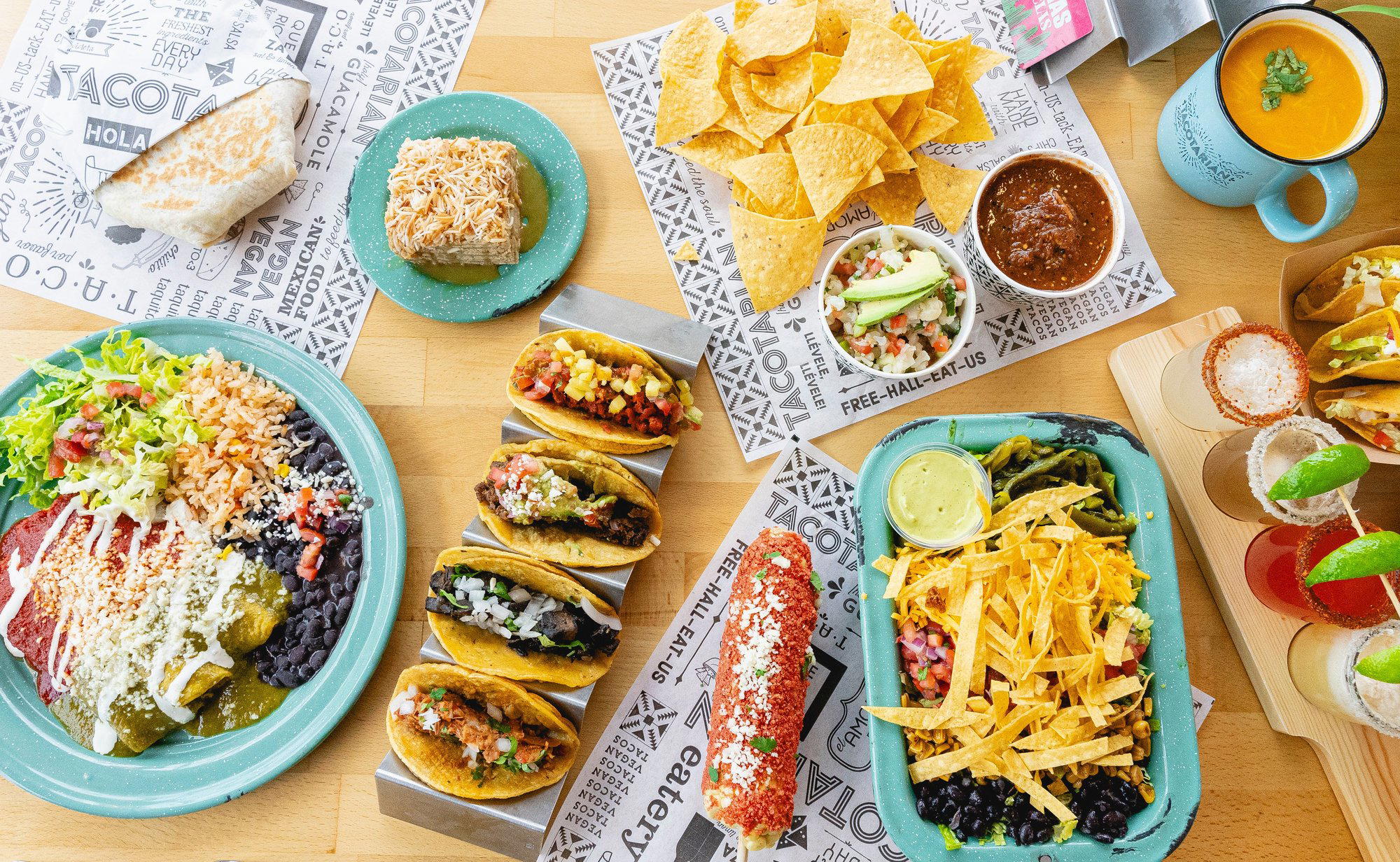
The menu
What to order
- Jackfruit Al Pastor
- Mushroom Carne Asada
- Giant Taco
- Street Tacos
- Burritos
- Queso Fundido
Where the Strip Ends and the City Begins
Southwest Las Vegas operates on a different register than the corridor of resort dining that defines most visitors' experience of the city. The neighborhoods around South Fort Apache Road are where locals eat: strip-mall storefronts, parking lots sized for suburban traffic, and a dining culture that answers to regulars rather than hotel concierges. Tacotarian sits inside that grid, at 6135 S Fort Apache Rd, Suite 402, in a market segment that Las Vegas has been slow to develop, the plant-based fast-casual taco.
For a city whose restaurant identity leans heavily on Craftsteak (American Steakhouse)-style protein abundance and the sheer volume of Bacchanal Buffet-scale operations, a kitchen organized entirely around vegetable-forward taco formats is a meaningful counter-position. It does not compete with the resort tier. It competes with the question of whether Las Vegas, as a city rather than a destination, has the dining infrastructure to serve its own population of around two million residents.
The Plant-Based Taco as a Format, Not a Trend
The plant-based restaurant category in the United States has matured considerably over the past decade, moving from fringe health-food operations to mainstream fast-casual formats with the same operational discipline as any conventional taco chain. What that shift produced, in cities across the country, is a template: a menu built around familiar Mexican-American taco architecture, tortillas, proteins, salsas, toppings, where the proteins are sourced from plants rather than animals, and where the kitchen's challenge is matching the textural and flavor complexity that meat delivers by default.
This is not a small technical ask. The taco, as a format, relies on contrast: warm tortilla against cool garnish, fatty protein against acid, crunch against give. Plant-based kitchens that do this well are working from a disciplined understanding of ingredient behavior, not simply swapping one protein for another. The operations that have built durable followings in this space, across Los Angeles, Austin, and now into secondary markets, tend to share a focus on sourcing quality analogs and building sauces and salsas that carry enough complexity to compensate for what animal fat provides almost automatically.
Tacotarian's positioning in Las Vegas follows this national pattern. The city's southwest residential corridor has the demographic profile, younger, more health-conscious, increasingly plant-curious, that supports this format outside the tourist economy. It is the same logic that has pushed independent plant-based operators into suburban positioning across the Sun Belt, where strip-mall rents allow for the lower ticket averages that vegetable-focused fast-casual requires to build volume.
Collaboration in the Kitchen: Why Front-of-House Matters in Fast-Casual
The editorial angle of team dynamics is worth addressing directly in a fast-casual context, because the collaboration model here is different from a white-tablecloth room where a sommelier mediates between kitchen and guest. In a plant-based fast-casual operation, the equivalent pressure falls on counter staff and order-takers: the people who explain what an ingredient actually is, why a particular salsa is hotter than expected, or how a jackfruit taco compares texturally to its conventional equivalent for a first-time guest.
That front-line communication function matters more in plant-based fast-casual than almost anywhere else in the restaurant category, because a significant proportion of guests are eating in the format for the first time or are skeptical converts. The kitchen can execute correctly, but if the counter staff cannot translate what is on the plate, the experience registers as unfamiliar rather than considered. Venues that have built consistent reputations in this space, from smaller operators to more scaled concepts, tend to share tight alignment between kitchen output and floor-level explanation. Whether Tacotarian has achieved that alignment in practice, the format demands it.
Las Vegas Beyond the Resort Tier
The broader Las Vegas dining grid is more layered than its resort reputation suggests. The city supports an active independent restaurant scene across its residential neighborhoods, and the southwest corridor in particular has seen consistent growth in locally oriented dining over the past several years. Venues like 108 Eats, 18bin, 777 Korean Restaurant, and A Different Beast each occupy distinct niches in the city's non-resort dining fabric, serving populations that live here and eat here year-round rather than for a long weekend.
Tacotarian belongs to that cohort. Its address places it firmly in the residential market, which means its success or failure is measured against repeat visits and local word-of-mouth rather than tourist throughput. That is a harder test in some ways and a more honest one in others. Resort dining benefits from a captive, high-spend audience with low price sensitivity and a bias toward novelty. Neighborhood dining needs to earn the same table back, week after week.
For comparison, the distance between what Tacotarian does and what the American fine-dining tier produces is vast: operations like Le Bernardin in New York City, Alinea in Chicago, The French Laundry in Napa, Providence in Los Angeles, or Single Thread Farm in Healdsburg operate in an entirely different register of kitchen investment, team scale, and price point. But the comparison is instructive in one direction: the discipline required to execute a focused format consistently, night after night, is not exclusive to fine dining. It is simply expressed differently at a fast-casual taco counter, where the margin for error on tortilla temperature, salsa balance, and protein texture is narrower because there is nothing else on the plate to absorb a mistake.
Operations like Lazy Bear in San Francisco, Blue Hill at Stone Barns in Tarrytown, Addison in San Diego, The Inn at Little Washington in Washington, and Atomix in New York City have each built their reputations on exactly this kind of format discipline, even at completely different price tiers. The principle scales down as well as up.
Planning Your Visit
Address: 6135 S Fort Apache Rd, Suite 402, Las Vegas, NV 89148. Getting There: The location is a 20-plus-minute drive from the Strip, more comfortably reached by car or rideshare than on foot. Reservations: Budget: Hours: Context: See our full Las Vegas restaurants guide for the broader city dining picture, including resort-tier options such as Emeril's in New Orleans-comparable operations and international fine dining like 8½ Otto e Mezzo Bombana.
Frequently asked questions
at Tacotarian?
EP Club does not have confirmed menu data for Tacotarian at this time. In plant-based taco operations of this format, the items that leading demonstrate kitchen skill are typically those using whole-ingredient plant proteins, jackfruit, mushroom, or legume-based fillings, rather than highly processed meat analogs. Those preparations show more clearly whether the kitchen has real command of texture and seasoning. Ask counter staff which items use the fewest processed substitutes.
How hard is it to get a table at Tacotarian?
Tacotarian operates in a suburban fast-casual format, which generally means seating is first-come rather than reservation-based. Wait times in this category are driven by lunch and early dinner rushes rather than advance booking windows. Peak times on weekends are the most likely pressure point. Arriving before noon or after 7 p.m. on weekdays typically reduces any wait in comparable operations.
What's the defining dish or idea at Tacotarian?
The defining idea is the taco as a plant-only format applied with the same structural logic as a conventional taqueria: tortilla, protein, salsa, garnish, acid. The discipline is in making that format work without the textural shortcuts that animal fat provides. Whether Tacotarian executes that idea consistently is the question a first visit is leading equipped to answer.
How does Tacotarian handle allergies?
EP Club does not have confirmed allergy-policy data for Tacotarian.
Is Tacotarian worth the price?
The value question in plant-based fast-casual is less about absolute price and more about whether the execution justifies the premium over a conventional taco operation. Plant-based ingredients at this quality tier typically cost more to source than standard proteins, and that cost is passed through to the menu. If the kitchen is executing with real precision on texture and flavor balance, the premium is defensible. If the menu leans heavily on processed analogs, the value case weakens.
Does Tacotarian work as a standalone dining destination for visitors staying on the Strip?
Tacotarian is positioned as a neighborhood operation in the southwest Las Vegas residential corridor, which makes it a deliberate detour rather than a convenient stop for Strip-based visitors. The 20-plus-minute drive is worth making for guests specifically interested in the plant-based taco format or in experiencing how Las Vegas eats beyond its resort economy. For visitors whose primary interest is resort-tier dining, the trip is harder to justify against the city's on-Strip options. It is most naturally suited to visitors with a rental car and an appetite for exploring the city's non-tourist dining grid.
Cuisine Context
Comparable venues nearby, for context on price, style, and recognition.
| Venue | Cuisine | Price | Notes |
|---|---|---|---|
| TacotarianThis venue (the venue you are viewing) | Plant-Based Mexican Street Food | $10–20 | Not listed |
| Border Grill | Modern Mexican | $30–50 | Boulder Junction |
| BBQ Mexicana | BBQ Mexican Fusion | Not listed | Rhodes Ranch |
| Ellis Island Restaurant | American BBQ & Steakhouse | $20–30 | off-strip |
| Hussong's Cantina | Authentic Baja Mexican | $20–30 | West Side |
| Carlos 'n Charlie's Restaurant | Traditional Mexican Fiesta Dining | Not listed | South Las Vegas |
Continue exploring
More in Las Vegas
Restaurants in Las Vegas
All restaurants in Las Vegas →
Bars in Las Vegas
All bars in Las Vegas →

Details
- Casual
- Trendy
- Energetic
- Casual Hangout
- Group Dining
- Family
- Solo
- Standalone
- Open Kitchen
- Beer Program
- Craft Cocktails
- Organic
- Sustainable
- A La Carte
- Margaritas
- Mexican Beers
- Specialty Cocktails
- Vegan Options
- Vegetarian Friendly
- Gluten Free Options
Current opening hours
- Monday
- 11 AM–9 PM
- Tuesday
- 11 AM–9 PM
- Wednesday
- 11 AM–9 PM
- Thursday
- 11 AM–9 PM
- Friday
- 11 AM–9 PM
- Saturday
- 11 AM–9 PM
- Sunday
- 11 AM–9 PM
Hours can change for holidays and private events. Hours as of .
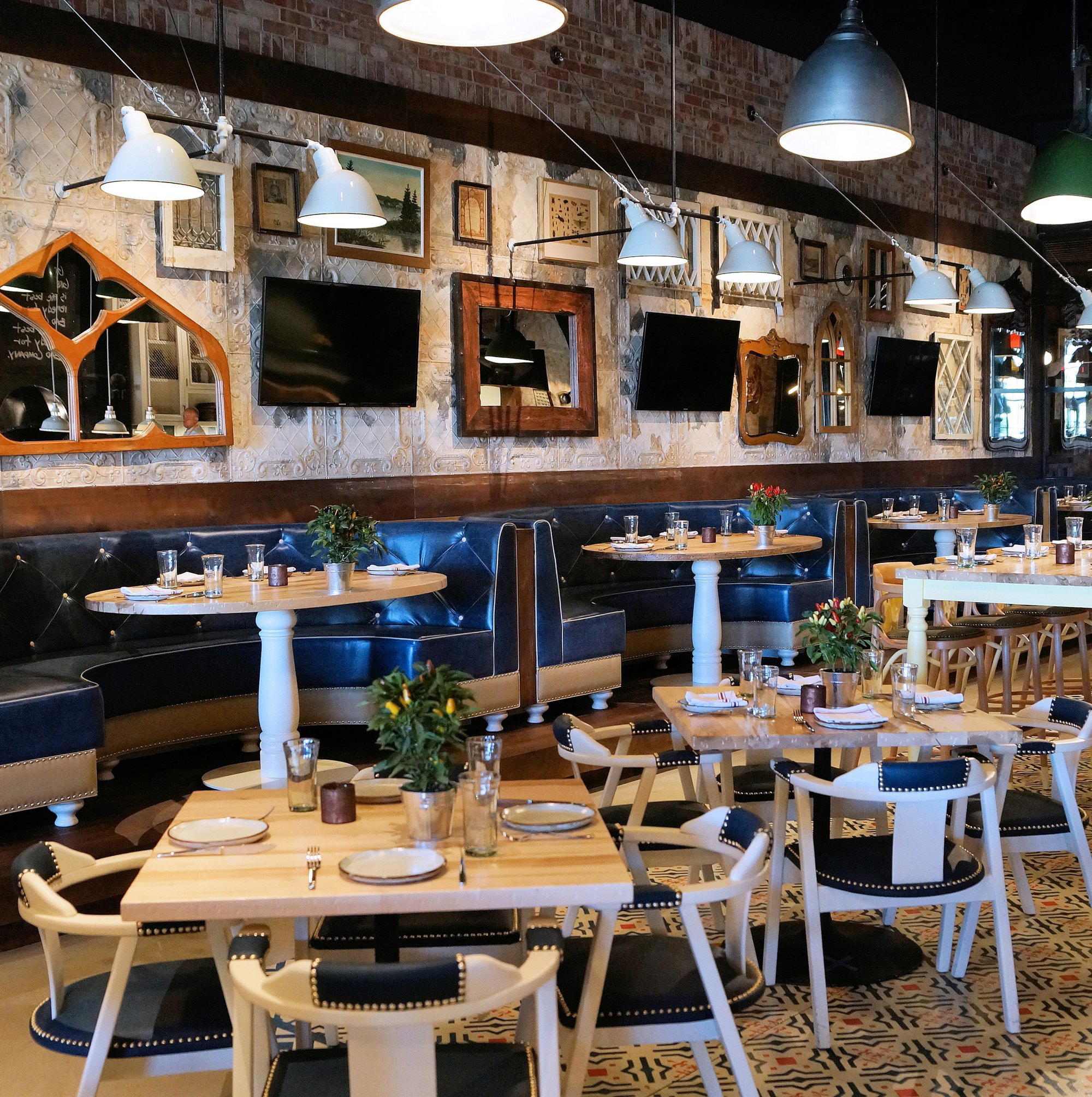
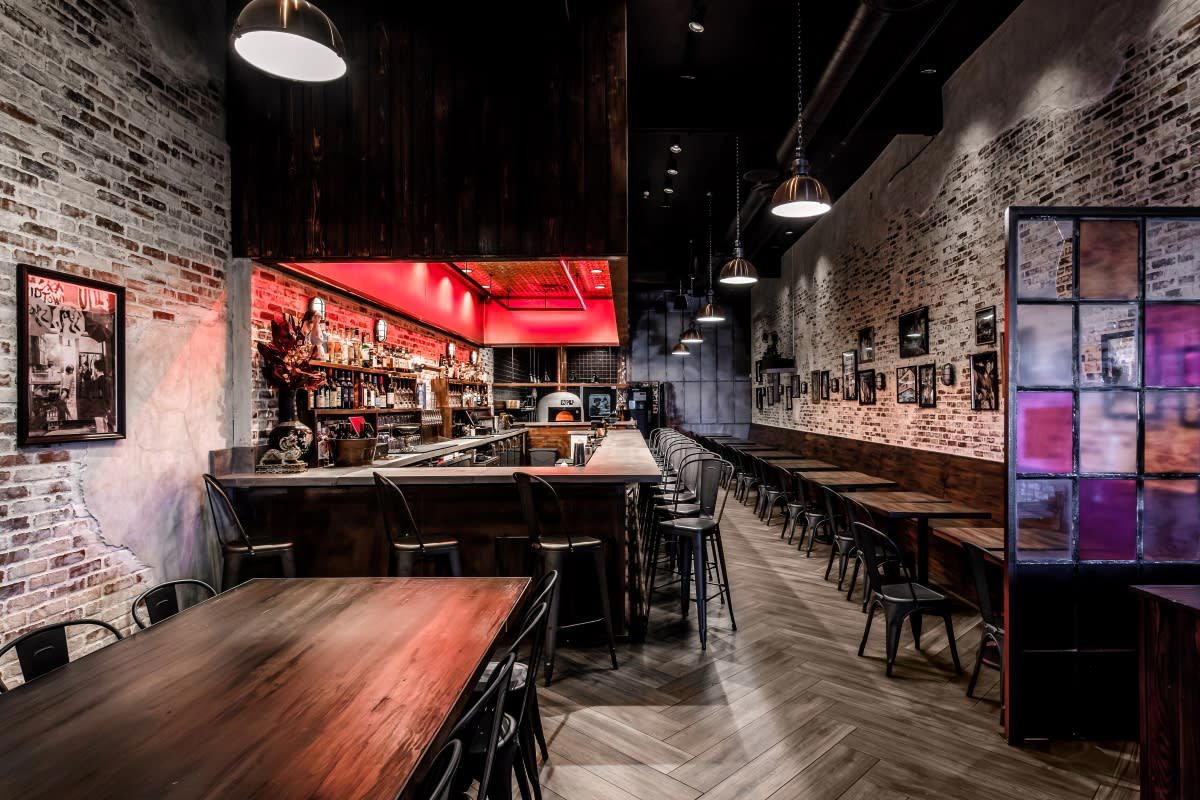
Bright, casual neighborhood taco shop with a lively, community-focused atmosphere celebrating sustainability and culinary creativity.