Tacos Árabes Bagdad
Tacos Árabes Bagdad sits at the intersection of Puebla's most discussed culinary tradition: the Arab-inflected taco that arrived with Lebanese immigrants in the early twentieth century and never left. Located on 27 Poniente near Avenida Rosendo Márquez, this is a reference point for understanding how Puebla absorbed Middle Eastern technique into its street-food canon, producing something that belongs to neither tradition entirely and both simultaneously.
Pearl is the En Primeur Club membership app — saves, bookings, and concierge access live there. Same editors, same standards.
- Address
- 27 poniente, Av. Rosendo Márquez 4301 esquina, 72160 Heroica Puebla de Zaragoza, Pue., Mexico
- Phone
- +52 222 257 5957
- Directions
- Get directions
 Saves & bookings on Pearl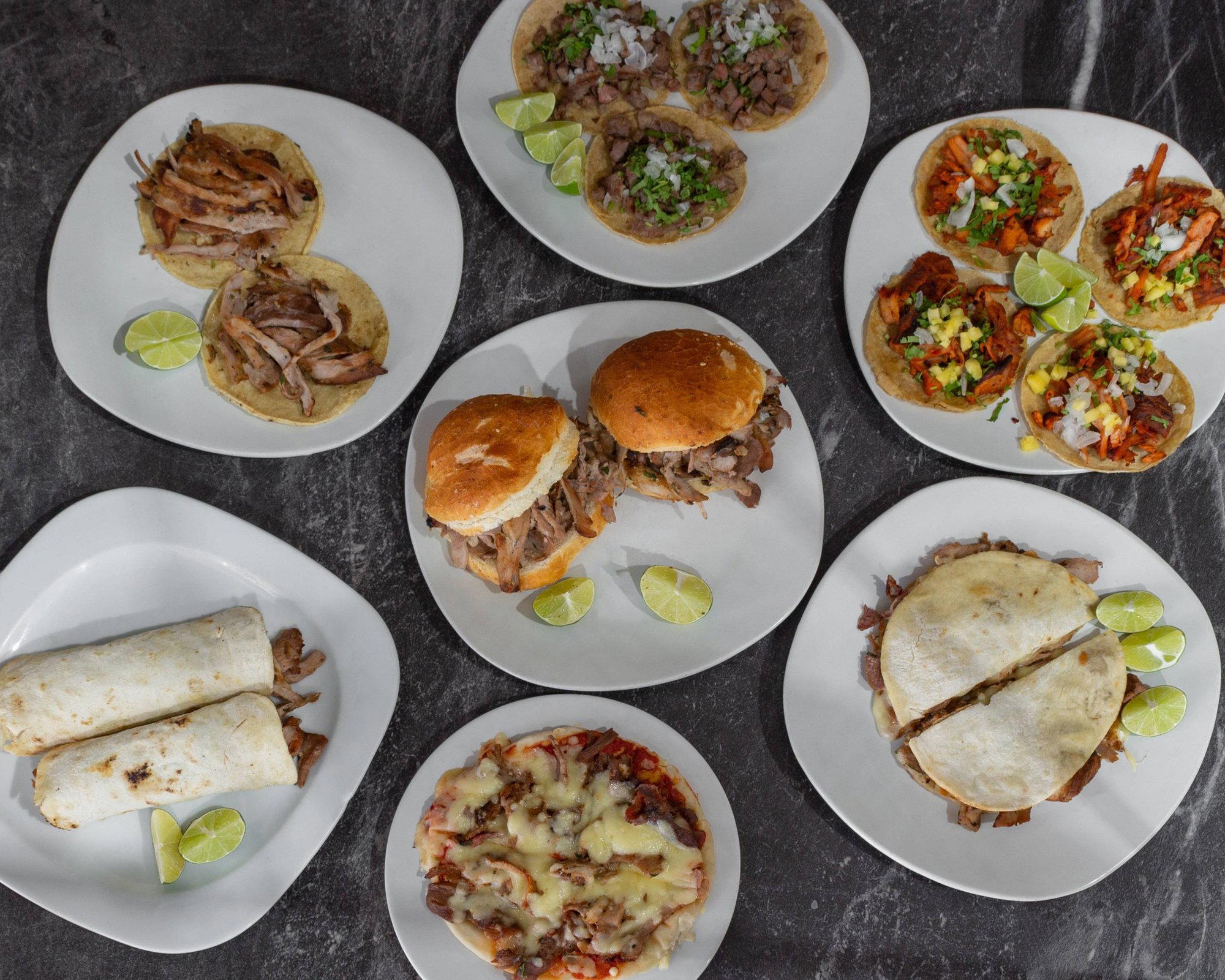
Where Puebla's Arab-Mexican Tradition Lives on the Street
Approach the corner of 27 Poniente and Avenida Rosendo Márquez in the western residential belt of Puebla and the signal is olfactory before it is visual. The scent of seasoned meat rotating on a vertical spit carries half a block in either direction, a sensory shorthand that connects this corner to the broader Lebanese-immigrant corridor that reshaped Puebla's street-food vocabulary across the twentieth century. This is the grammar of the taco árabe: not the corn-tortilla format associated with central Mexican tradition, but a thicker, flour-adjacent pan árabe wrap, a direct descendant of the flatbreads that Lebanese and Syrian immigrants brought when they settled in Puebla in significant numbers from the 1890s onward. The filling is spit-roasted pork, seasoned with spices that lean toward the Eastern Mediterranean as much as toward Oaxaca or Veracruz. Tacos Árabes Bagdad occupies this specific tradition not as a recent interpretation but as a practitioner of the form at street level, in the neighbourhood where the format evolved.
The Ingredient Logic Behind the Arab Taco
The taco árabe is, at its core, a sourcing story. The vertical spit roasting technique — known locally as trompo, the same word used in tacos al pastor — arrived in Puebla via Lebanese immigration and predates the Mexico City pastor tradition that is now globally recognised. Puebla's version retained the lamb-adjacent spice profile longer than its chilango cousin, which pivoted early toward achiote and guajillo. The pan árabe, cooked to order on a comal and thicker than a standard flour tortilla, serves as both wrapper and structural element. Its sourcing is local: Puebla's bakeries and tortillerías have been producing this specific format for decades, and the bread itself carries a distinct chew that differentiates it from anything you would eat at a taco stand in Guadalajara or Monterrey.
This matters because the ingredient chain for a proper taco árabe is shorter and more regionally specific than many visitors expect. The spicing on the trompo, the cut of pork used, the specific fermented accompaniments, and the bread format are all products of a Puebla micro-tradition, not a national one. For context, Mexico's broader contemporary restaurant scene, represented at the premium end by venues like Pujol in Mexico City or Alcalde in Guadalajara, has increasingly drawn from indigenous ingredient traditions and regional sourcing networks. The taco árabe predates that conversation by several generations and operates from a different sourcing logic entirely: it is a product of diaspora, adaptation, and the specific agricultural and commercial conditions of early-twentieth-century Puebla.
Puebla's Position in Mexico's Street-Food Geography
Puebla occupies a distinct position in Mexico's culinary map. The city is most internationally associated with mole poblano and chiles en nogada, both of which appear on the menus of high-end establishments like Casa Barroca in Puebla. But Puebla's street-food identity runs parallel to that fine-dining narrative and is arguably more distinctive. The taco árabe exists nowhere else in Mexico with the density, historical depth, or formal consistency that it has in Puebla. It is not a tourist-facing product, the neighbourhood around 27 Poniente is residential, not part of the centro histórico circuit, which means the customer base here is largely local and repeat.
That local orientation matters for how you read the format. A street stand calibrated to neighbourhood regulars operates differently from one positioned near the Zócalo or the Amparo Museum. Pricing stays accessible, the operation runs on volume and speed, and the product is not adjusted to outside expectations. Compare this to the farm-to-table framing at Animalón in Valle de Guadalupe or the contemporary technique at HA' in Playa del Carmen, and Tacos Árabes Bagdad is operating in an entirely different register, one where the editorial question is not about innovation but about fidelity to a specific, immigrant-derived form.
Mexico's restaurant culture has fragmented significantly across price and concept tiers. At the premium end, venues such as Le Chique in Puerto Morelos, KOLI Cocina de Origen in Monterrey, and Levadura de Olla Restaurante in Oaxaca draw on indigenous technique and regional sourcing as their primary editorial and commercial positioning. Street-level operations like Tacos Árabes Bagdad represent an older and different kind of specificity: the product is not designed to translate across contexts, and that resistance to abstraction is part of what makes it worth seeking out. See our full Puebla De Zaragoza restaurants guide for a map of how these tiers interact across the city.
How the Format Compares Across Mexican Street Food
The taco árabe sits in an interesting position relative to Mexico's other vertically-roasted meat traditions. Tacos al pastor, which evolved from the trompo technique after Lebanese immigration and is now Mexico's most internationally exported street taco format, differs from the taco árabe in several structural ways: the tortilla is corn and small, the achiote marinade produces a different colour and flavour profile, and pineapple is a standard accompaniment. The taco árabe dispenses with the pineapple entirely, uses the pan árabe rather than a corn tortilla, and produces a heavier, more filling unit that functions closer to a sandwich than a snack. Venues such as Carnitas Don Vasco in Cancún or California Prime in Celaya occupy entirely different categories of the Mexican meat-focused eating tradition, which illustrates how wide the street-food and casual dining spectrum runs across the country's regions.
For visitors whose reference points for Mexican dining are shaped by international coverage focused on Oaxacan or Yucatecan traditions, the taco árabe can read as an anomaly. It is not. It is the product of a specific and documented immigration wave, a coherent diaspora cuisine that found a permanent home in one city and stayed there. Operations like Huniik in Merida and Arca in Tulum foreground the Yucatecan and Maya ingredient traditions; Lunario in El Porvenir and Pangea in San Pedro Garza García work from northern Mexican terroir. Tacos Árabes Bagdad works from none of these, its reference point is Puebla's specific immigrant history and the adaptation it produced.
Planning Your Visit
Tacos Árabes Bagdad is located at 27 Poniente, on the corner with Avenida Rosendo Márquez, in the Heroica Puebla de Zaragoza postal district 72160. The address sits west of the centro histórico, in a residential neighbourhood that is direct to reach by taxi or ride-share from the city centre. No booking infrastructure exists for a street operation of this kind. The practical approach is to arrive with enough time to observe the trompo in rotation and eat on site or take away. Phone and website details are not publicly available through verified sources, so pre-visit confirmation is leading done by local enquiry on arrival in Puebla. Given the format, this is a daytime or early-evening operation by the nature of the product, though specific hours should be confirmed locally. For visitors building a broader Puebla itinerary, pairing this stop with the centro histórico dining options listed in our Puebla guide gives a useful cross-section of the city's different culinary registers. For a sense of where Puebla sits relative to Mexico's more globally visible fine-dining operations, see our coverage of Olivea Farm to Table in Ensenada and Le Bernardin in New York City for the broader international context against which Mexico's culinary identity is increasingly measured.
Continue exploring
More in Puebla De Zaragoza
Restaurants in Puebla De Zaragoza
Browse all →
Bars in Puebla De Zaragoza
Browse all →

At a Glance
- Well Known
- Rustic
- Casual Hangout
- Late Night
- Historic Building
Current opening hours
- Monday
- Closed
- Tuesday
- 12–10 PM
- Wednesday
- 12–10 PM
- Thursday
- 12–10 PM
- Friday
- 12–10 PM
- Saturday
- 12–10 PM
- Sunday
- 12–10 PM
Hours can change for holidays and private events. Last verified .
Casual street food atmosphere with authentic, no-frills taqueria setting.
Know Before You Go
- Getting there
- 27 poniente, Av. Rosendo Márquez 4301 esquina, 72160 Heroica Puebla de Zaragoza, Pue., Mexico