

Michelin Plate · La Liste Top Restaurants
Our verdict
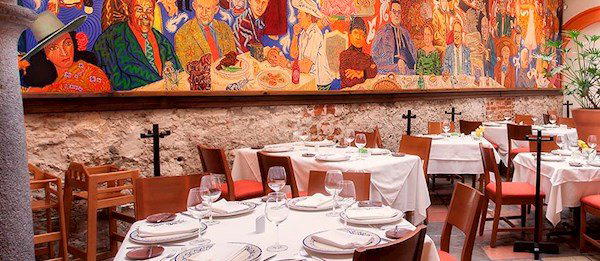
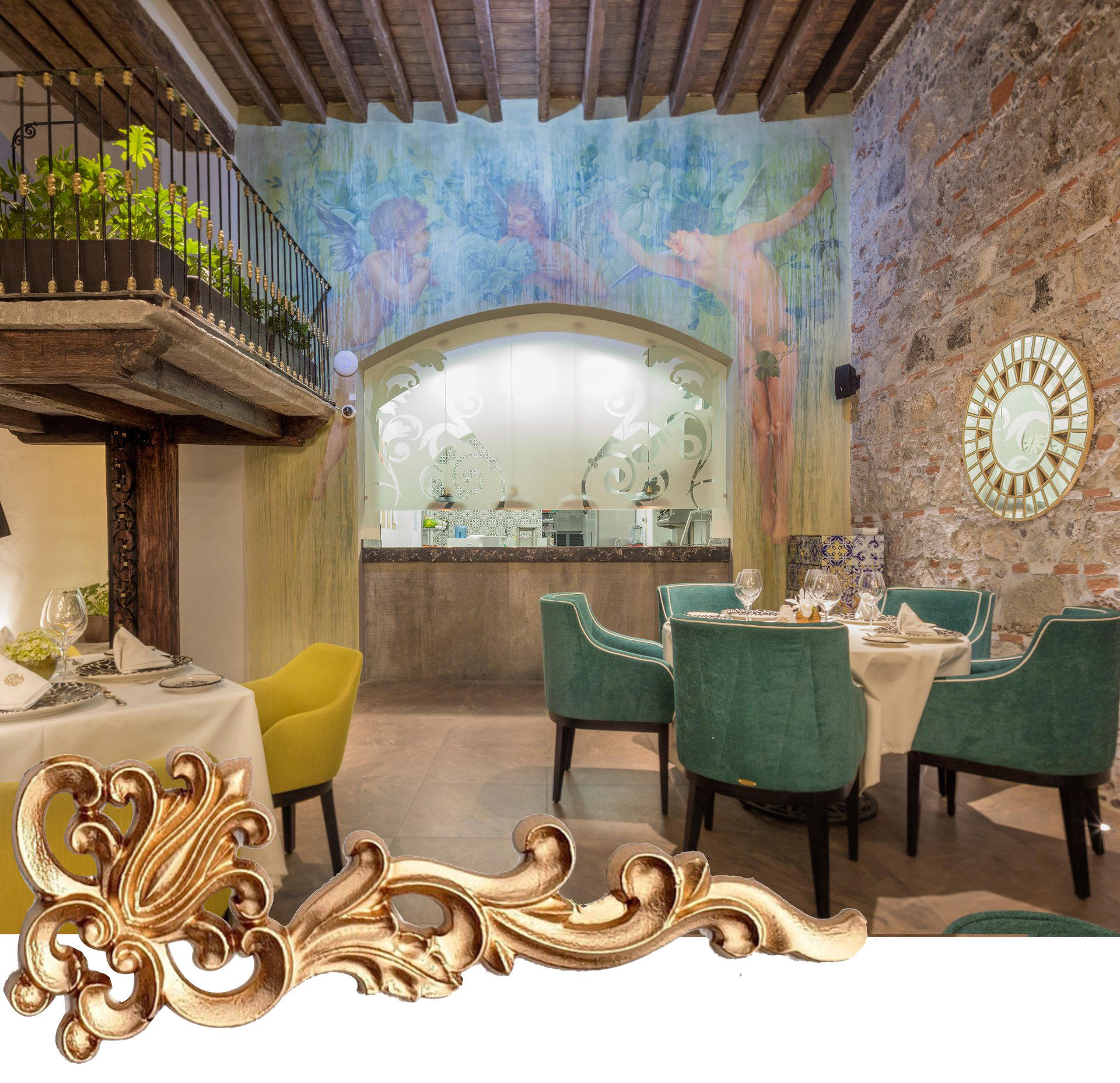
A Centro Histórico address with two consecutive years on La Liste's global ranking, El Mural de los Poblanos is the most credentialed table for traditional Poblano cuisine in the city. The kitchen works within a culinary tradition that shaped Mexican cooking far beyond Puebla's borders, from mole negro to chile en nogada, served in a setting that reflects the colonial grandeur of the surrounding streets.

Pearl is the En Primeur Club membership app, where members save venues, book tables and use the concierge.
The menu
What to order
- Mole Poblano
- Chiles en Nogada
- Degustación de Moles
- Tacos Árabes
Walking along Calle 16 de Septiembre in Puebla's Centro Histórico, the architecture does much of the framing before you've sat down. The Baroque facades and tiled archways that line this part of the historic centre belong to a city that UNESCO recognised as a World Heritage Site, and the dining culture here has always carried the weight of that status. Puebla is not a city that needs to explain its culinary credentials to Mexico, it is, by any serious account, the source of some of the country's most technically demanding and historically layered cooking. El Mural de los Poblanos, at number 506, sits within that tradition rather than simply referencing it.
The City That Built Mexican Cooking
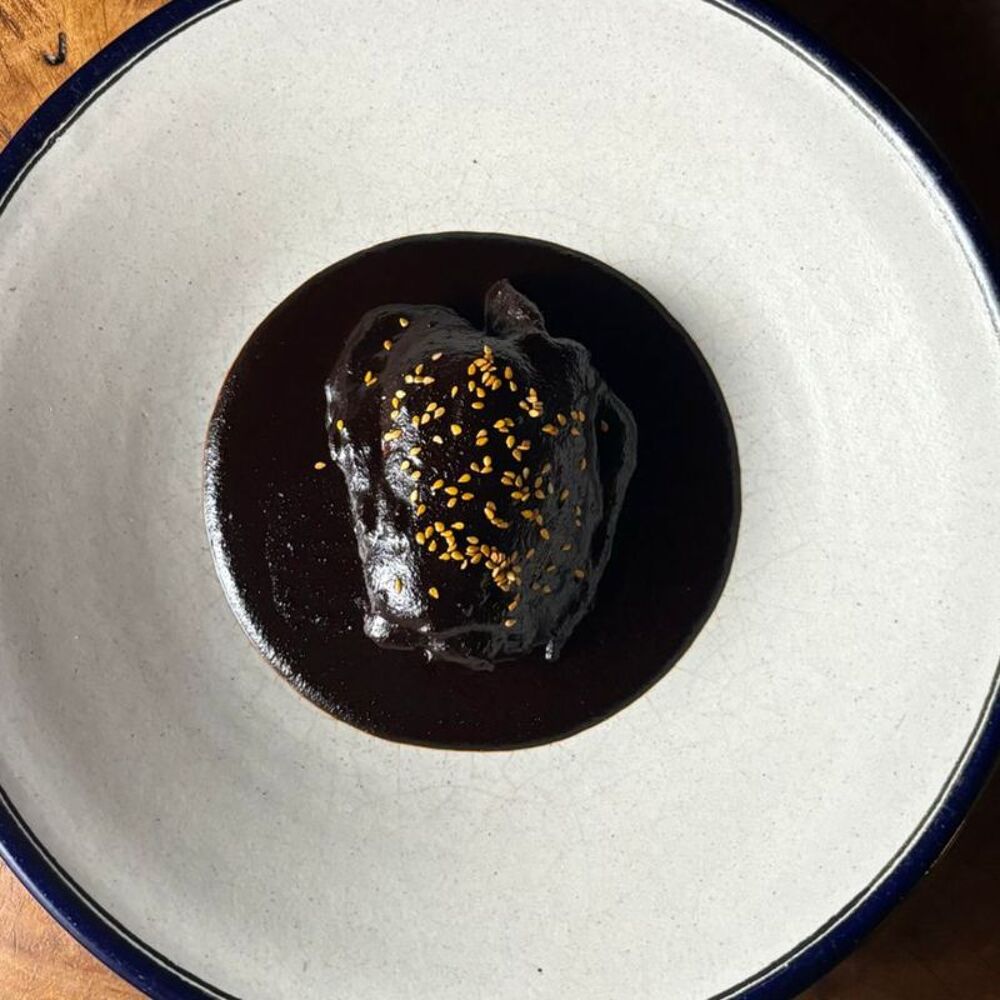
To understand what a kitchen operating in the Poblano tradition is actually doing, it helps to understand the scale of what that tradition encompasses. Mole poblano, arguably the most complex sauce in the Mexican canon, traces its documented history to the convents of this city. Chile en nogada, the dish that has come to symbolise Mexican independence celebrations, was first prepared here in the early nineteenth century. Chiles en adobo, pipián, and the vast taxonomy of antojitos built on nixtamalized masa, all of these have deep roots in Puebla's kitchens. A restaurant working seriously within this tradition is not playing a regional card; it is working with the primary source material for a national cuisine.
Mexico's highest-profile fine-dining tables, including Pujol in Mexico City and Alcalde in Guadalajara, tend to work with a broader, more reinterpreted Mexican pantry. Puebla-specific restaurants operating at a serious level are rarer, which is part of what La Liste's recognition signals, this is not a regional consolation prize but an acknowledgment that the cooking here competes within Mexico's upper tier.
Masa as the Foundation
The editorial angle that makes most sense for any serious Poblano kitchen is the one that begins with corn. Nixtamalization, the alkaline process that transforms raw maize into masa, is one of the great culinary technologies in the history of food. Without it, the tortilla, the tamale, the memela, and the gordita do not exist in the forms that made Puebla's street-level and formal cooking what it is. The process also unlocks nutritional profiles in the corn that remain otherwise inaccessible, which is one reason pre-colonial civilisations built diets around it so completely.
For a kitchen working with genuine commitment to Poblano identity, heirloom corn varieties are not a marketing position but a structural ingredient choice. Mexico holds extraordinary biodiversity in its native maize, varieties like bolita, cacahuazintle, and olotillo each produce masa with distinct textures and flavour profiles. Cacahuazintle in particular is associated with central Mexico and Puebla specifically, historically used in pozole and in finely ground masa preparations. Whether a kitchen sources selectively across these varieties shapes whether its tortillas and masa-based dishes carry the specificity the tradition demands. The broader shift across Mexico's serious restaurant sector toward named-origin, heirloom-variety corn is one of the more substantive developments in the country's dining scene over the past decade, a move visible at tables ranging from Levadura de Olla in Oaxaca to HA' in Playa del Carmen and KOLI Cocina de Origen in Monterrey.
La Liste Recognition in Context
La Liste aggregates critical scores from across multiple global guide systems and its rankings tend to reflect sustained quality signals rather than a single year's consensus. El Mural de los Poblanos has appeared in consecutive years: 77.5 points in 2025 and 76 points in 2026. Within La Liste's methodology, scores in this range place a restaurant inside a credible international tier without landing it in the rarefied bracket occupied by venues like Le Bernardin or Atomix. For Puebla specifically, this kind of recognition is significant because the city is not a conventional stop on the international fine-dining circuit in the way that Mexico City is. Comparable regional Mexican tables with La Liste presence include operations like Animalón in Valle de Guadalupe, Lunario in El Porvenir, and Olivea Farm to Table in Ensenada, all working from regional bases rather than capital-city platforms.
That combination, global list recognition alongside high-volume local satisfaction, is relatively uncommon. It typically indicates a kitchen that hasn't compromised its standard for accessibility and hasn't retreated into the kind of austere, low-feedback format that sometimes insulates quality claims from scrutiny. Tables like Le Chique in Puerto Morelos and Arca in Tulum operate in a more internationally curated mode; El Mural's profile is closer to a civic institution that also happens to rank globally.
The Poblano Table in Practice
Poblano cooking at its most serious is technically demanding in ways that are not always visible to the diner. A mole negro might involve thirty or more ingredients, multiple toasting and grinding stages, and hours of reduction. Chile en nogada, which appears seasonally in late summer when walnuts and pomegranate align on the calendar, is stuffed, battered, and sauced with a precision that makes it one of the most labour-intensive dishes in the national canon. The seasonal window for the dish, typically running from August through September, is worth factoring into visit timing for anyone travelling specifically to experience it in its primary geographical context.
The Centro Histórico address at Calle 16 de Septiembre 506 places the restaurant within walking distance of the city's main plaza, the Cathedral, and the Barrio del Artista. For visitors building a Puebla itinerary, the city's dining and cultural density in the centre makes staying nearby practical. Our full Heroica Puebla de Zaragoza hotels guide covers options across the Centro and surrounding neighbourhoods. The bars guide for Puebla is useful for understanding the city's mezcal and craft pulque scene, which has developed considerably. Rounding out the picture, the Puebla wineries guide and the experiences guide cover the wider cultural offer. For context on how El Mural fits into the broader regional dining picture, our full Puebla restaurants guide maps the city's serious tables in more detail. Pangea in San Pedro Garza García offers a useful comparison point for understanding how regionally-rooted Mexican kitchens have built global credibility from outside Mexico City.
Planning Your Visit
The restaurant operates in Puebla's Centro Histórico, an area that sees heavy tourist traffic in the daytime and considerably quieter evenings on weekdays. Phone and booking details are best confirmed directly through current local listings, as these change more frequently than editorial records reflect. Puebla is approximately two hours from Mexico City by road or by the frequent ADO bus service from TAPO terminal, making it a viable day trip, though an overnight stay allows for a more considered engagement with the city's food culture across multiple meals.
Frequently asked questions
Is El Mural de los Poblanos suitable for children?
The restaurant occupies a historic Centro Histórico address and focuses on serious Poblano cooking, the kind that includes technically complex preparations like mole negro. There is nothing in the record suggesting it is designed around families with young children, though Puebla's dining culture generally accommodates all ages.
Is El Mural de los Poblanos formal or casual?
A La Liste score of 76–77.5 points across 2025 and 2026 places the restaurant in recognised fine-dining territory, which typically corresponds to a composed, unhurried table environment. The Centro Histórico setting on Calle 16 de Septiembre reinforces that register. Specific dress code details are not published, but the level of recognition suggests dressing beyond tourist-casual is appropriate.
Is El Mural de los Poblanos Michelin-listed?
El Mural de los Poblanos has received recognition including: La Liste Top Restaurants (2026): 76pts; La Liste Top Restaurants (2025): 77.5pts.
What's the signature dish at El Mural de los Poblanos?
The restaurant operates in the Poblano tradition, where mole negro, a sauce that can involve thirty or more components, is the benchmark preparation any serious kitchen in this region is judged against. Given the cuisine category and La Liste recognition for sustained quality, corn-based preparations and regional mole variations are the likely anchors of the menu.
Where is El Mural de los Poblanos located?
El Mural de los Poblanos is located at C. 16 de Septiembre 506, Centro, 72000 Heroica Puebla de Zaragoza, Pue. Mexico, Heroica Puebla de Zaragoza.
| Venue | Cuisine | Price | Awards | Notes |
|---|---|---|---|---|
| El Mural de los PoblanosThis venue (the venue you are viewing) | Traditional Poblano Mexican | $20–30 | Michelin Plate · La Liste Top Restaurants | Not listed |
| Pujol | Modern Mexican Fine Dining | $200–300 | 2 Michelin Stars · World's 50 Best #60 | Mexican |
| Quintonil | Modern Mexican Fine Dining | $300–500 | 2 Michelin Stars · World's 50 Best #7 | Modern Mexican, Contemporary |
| Rosetta | Mexican-Italian Fusion Fine Dining | $30–50 | 1 Michelin Star · World's 50 Best #39 | Italian, Creative |
| Em | Modern Japanese-Mexican Fusion | $200–300 | 1 Michelin Star · World's 50 Best #71 | Mexican |
| Le Chique | Avant-Garde Mexican Tasting Menu | $200–300 | 1 Michelin Star · World's 50 Best #58 | Mexican, Contemporary |
Recognition history
Dated appearances from independent guides and award organizations, with the underlying list record or original source where available.
Michelin Plate
Michelin
La Liste Top Restaurants
La Liste
Full recognition history (3 entries)
La Liste Top Restaurants
La Liste
Continue exploring
More in Puebla
Restaurants in Puebla
All restaurants in Puebla →
Bars in Puebla
All bars in Puebla →
Details
- Classic
- Well Known
- Historic
- Elegant
- Special Occasion
- Celebration
- Group Dining
- Historic Building
- Craft Cocktails
- Local Sourcing
- A La Carte
- Mezcal
- Tequila
- Vegetarian Friendly
Current opening hours
- Monday
- 8 AM–12 AM
- Tuesday
- 8 AM–12 AM
- Wednesday
- 8 AM–12 AM
- Thursday
- 8 AM–12 AM
- Friday
- 8 AM–12 AM
- Saturday
- 8 AM–12 AM
- Sunday
- 8 AM–12 AM
Hours can change for holidays and private events. Hours as of .
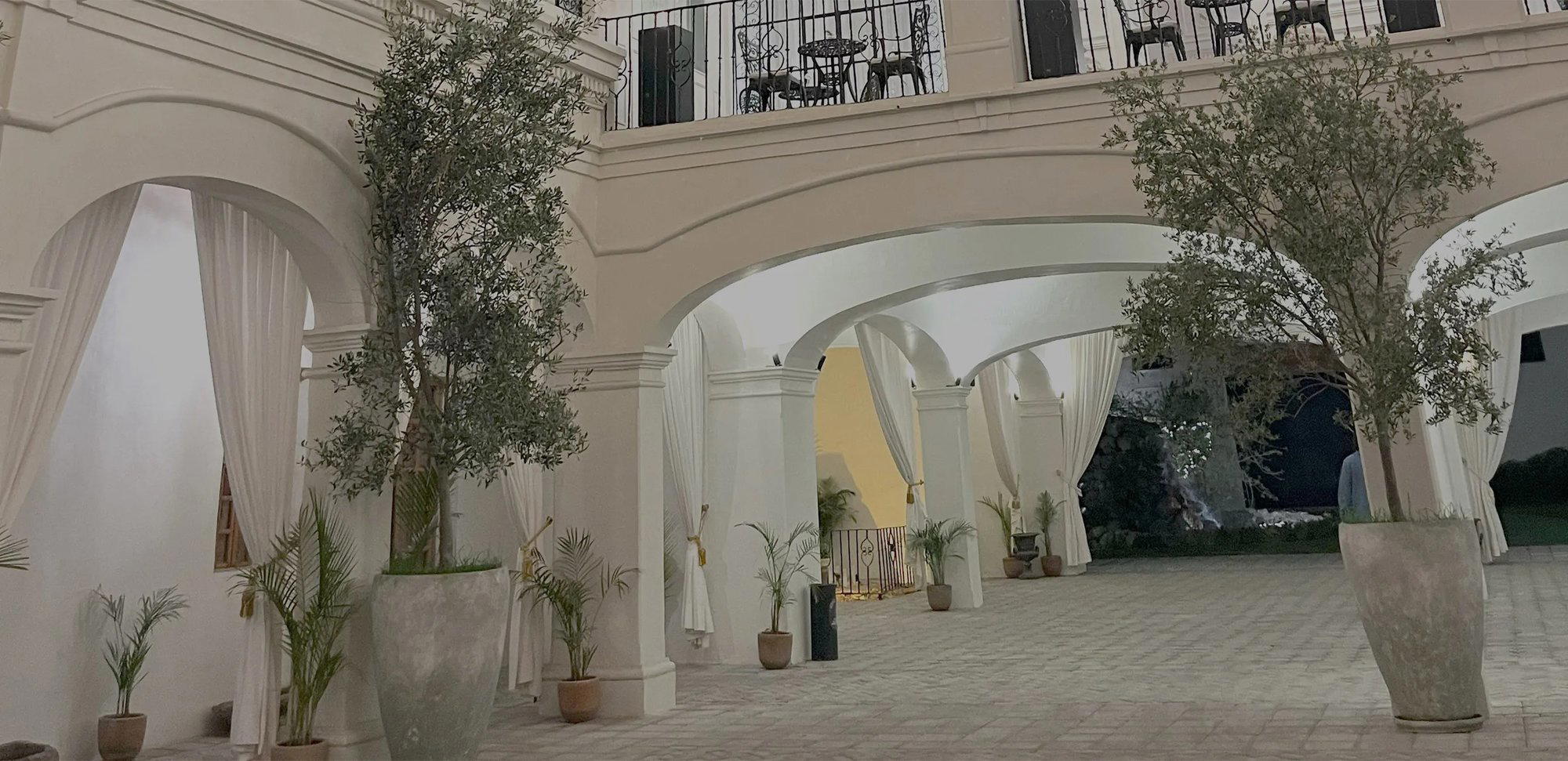
Dramatic traditional colonial-style space with burnt orange arches, tiled floors, warm lighting, and impressive colorful murals creating a rich, atmospheric historic setting.