Taco Nazo

LA Taco Best Tacos in LA #11
Our verdict
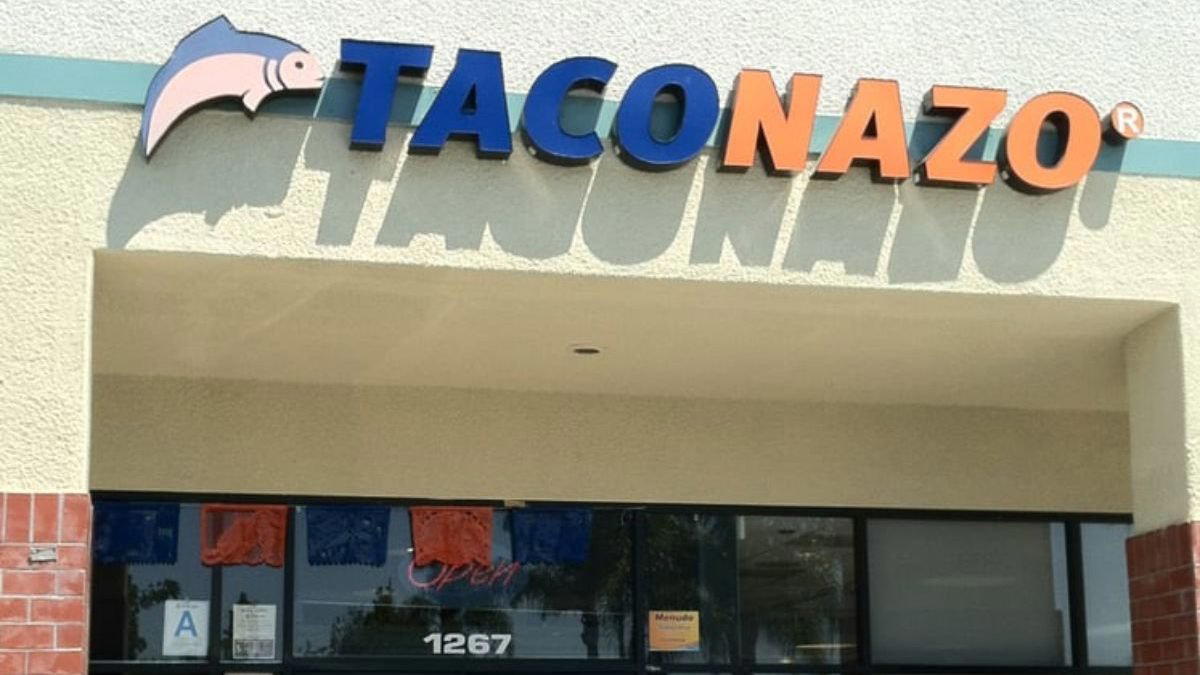
Established in 1978, Taco Nazo is the family-owned chain credited with introducing Ensenada-style fish tacos to Southern California, starting from a taco truck in La Puente. While the city's fine-dining circuit runs from omakase counters to tasting menus, Taco Nazo occupies a different but historically significant position: the place where Baja coastal cooking crossed the border and took root in the San Gabriel Valley.

Pearl is the En Primeur Club membership app, where members save venues, book tables and use the concierge.
Where the Fish Taco Entered Southern California
In 1978, while Los Angeles dining was largely oriented toward the Westside and downtown, a taco truck set up in La Puente in the eastern San Gabriel Valley and began serving something most Angelenos had never encountered: the Ensenada-style fish taco. Taco Nazo, founded that year and still operating as a family-owned chain, is the business most directly associated with transplanting that Baja California coastal format to Southern California. The fish taco as a regional staple did not arrive fully formed from a single source, but Taco Nazo's 1978 origin date places it among the earliest documented commercial operations to bring the format north of the border at scale.
The story of the fish taco's migration is also the story of how Southern California's food culture absorbed and transformed what it borrowed from Baja. Ensenada's street vendors had long served battered or grilled fish in corn tortillas, typically dressed with shredded cabbage, crema, and salsa. That format, stripped of its oceanside context and dropped into a suburb east of Los Angeles, became something slightly different: a regional food identity that now spans taqueria menus from San Diego to the San Fernando Valley. Taco Nazo sits at the beginning of that chain of influence.
La Puente and the San Gabriel Valley's Role in L.A. Food History
The address matters here. La Puente, at the western edge of the San Gabriel Valley, is not a neighbourhood that appears frequently in coverage of Los Angeles dining. The San Gabriel Valley's food reputation is built primarily on its Chinese, Taiwanese, and broader East and Southeast Asian restaurant density, with the stretch along Valley Boulevard and its side streets forming one of the most concentrated corridors of regional Chinese cooking in the United States. The area's Mexican-American communities, many of which predate the postwar suburban expansion, have their own distinct culinary presence, and it is largely separate from the taquerias and Mexican restaurants that dominate coverage of East Los Angeles or Boyle Heights.
Taco Nazo's La Puente location, at 13032 Valley Blvd, sits on the same arterial road that defines much of the San Gabriel Valley's restaurant culture. That placement is a reminder that the corridor has never belonged to a single cuisine. The fish taco operation started here, not on the Westside or in a neighbourhood with existing food-media attention, and its forty-plus years of operation in this location reflect the kind of community-rooted longevity that rarely generates press but tends to outlast trend cycles. For context, the fine-dining end of the Los Angeles spectrum, represented by venues like Providence (Contemporary Seafood), Kato (New Taiwanese, Asian), and Hayato (Japanese), operates in a different register entirely, with tasting menus priced well above three figures and booking windows measured in months. Taco Nazo represents the other end of a very long spectrum, and understanding Los Angeles eating means accounting for both.
The Ensenada Fish Taco: Format and Context
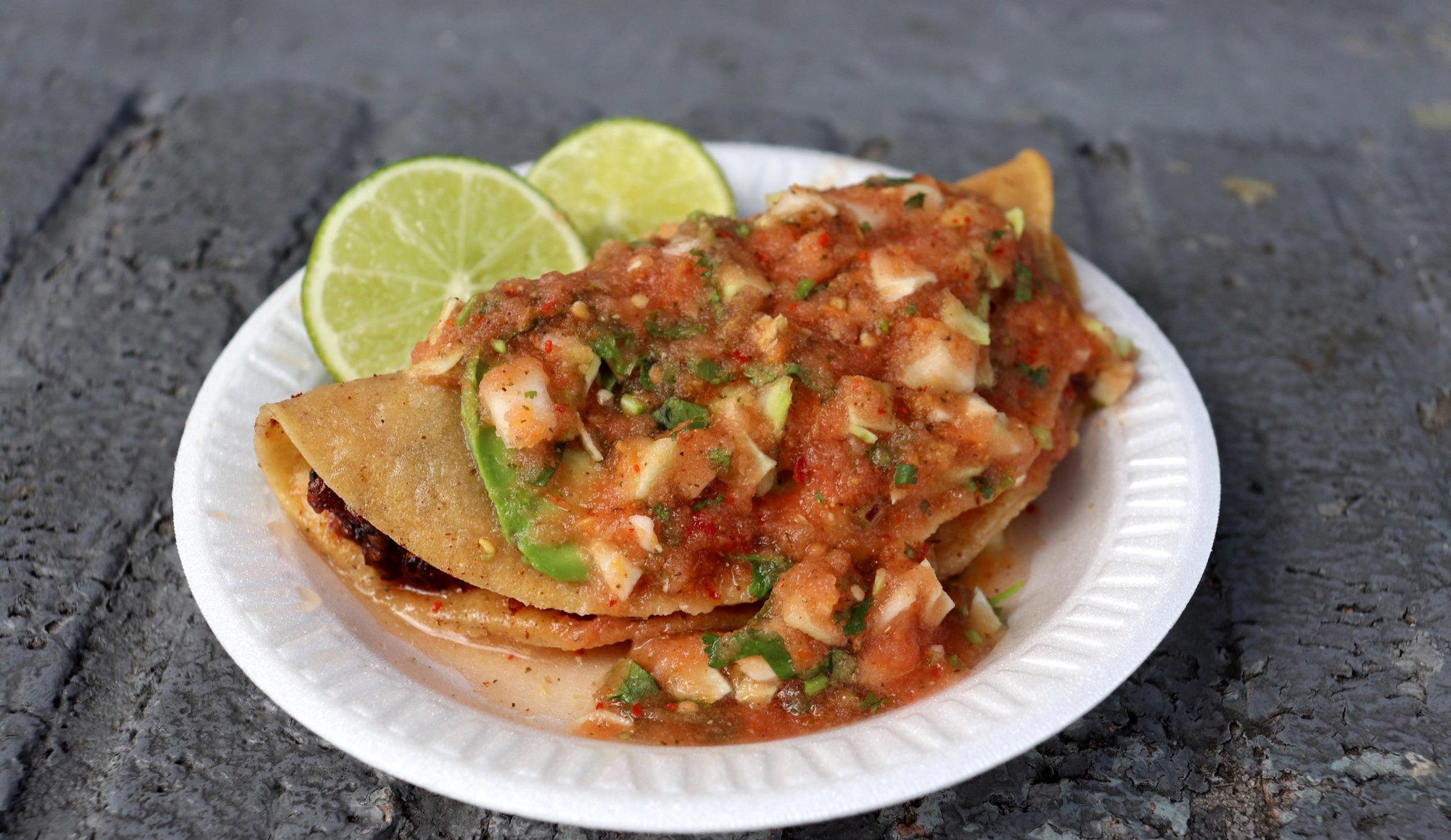
The Ensenada-style fish taco has a specific grammar. White fish, typically cod or similar, is either beer-battered and fried or char-grilled, placed in a corn tortilla, and topped with cabbage slaw, a white crema or mayo-based sauce, and fresh salsa. The result is a study in textural contrast: the crunch of the slaw against the soft tortilla, the richness of the sauce against the acidity of the salsa. It is a format designed for fast, street-level eating, and it does not require or benefit from elaboration.
What Taco Nazo did was codify this format for a Southern California audience over decades of operation. The fish taco is listed as the restaurant's signature item and the dish most associated with its reputation. That kind of single-dish identity is not unusual among long-running regional operations; it is how a format becomes a reference point. When food writers or critics discuss the history of Baja-influenced cooking in Los Angeles, Taco Nazo's 1978 origin is a fixed coordinate in that timeline.
The molecular and progressive end of Los Angeles dining, at venues like Somni (Molecular), and the European-influenced fine dining represented by Osteria Mozza (Italian), exists in parallel with operations like Taco Nazo rather than in opposition to them. Los Angeles has always accommodated both registers, and the city's food culture is less hierarchical than in markets where formal dining dominates the conversation. Comparable historical anchors exist in other cities: Le Bernardin in New York City, Emeril's in New Orleans, and The French Laundry in Napa each occupy their own fixed points in regional food history, but so do the taco trucks and family-owned counters that preceded or outlasted them.
Forty-Six Years of Operation
A business that started as a taco truck in 1978 and is still operating in 2024 has survived multiple economic cycles, shifts in neighbourhood demographics, and decades of competition from both independent operators and chains. That kind of operational continuity in the food business is not automatic; it requires an audience that returns consistently. Taco Nazo's expansion into a chain format, while remaining family-owned, suggests it found that audience and held it across generations. The San Gabriel Valley's food culture rewards that kind of consistency: long-running operations in the area tend to build regulars who span multiple generations of the same families.
For a broader look at where Taco Nazo fits within the full range of Los Angeles eating, from family-run operations in the eastern suburbs to the fine-dining corridors of Beverly Hills and downtown, see our full Los Angeles restaurants guide. Those planning a longer stay in the city can also reference our full Los Angeles hotels guide, our full Los Angeles bars guide, our full Los Angeles wineries guide, and our full Los Angeles experiences guide. For reference points in other cities with comparable historical weight, Lazy Bear in San Francisco, Alinea in Chicago, Single Thread Farm in Healdsburg, Atomix in New York City, and 8 1/2 Otto e Mezzo Bombana in Hong Kong each illustrate how a single operation can define a city's dining identity within its own register.
Planning Your Visit
Taco Nazo's La Puente location sits on Valley Blvd, accessible by car from central Los Angeles via the I-10 or I-605. As a casual, family-owned taco operation rather than a reservation-based restaurant, it operates without the booking friction that characterises the city's omakase counters and tasting-menu rooms. The fish taco remains the item most associated with the restaurant's forty-six-year reputation.
Quick reference: 13032 Valley Blvd #1858, La Puente, CA 91746. Family-owned, established 1978. Walk-in format; no reservation required.
Frequently asked questions
What do people recommend at Taco Nazo?
The fish taco is the dish most associated with Taco Nazo's reputation and the item that defined its identity when it opened in 1978. Taco Nazo is specifically credited with pioneering the Ensenada-style fish taco in Southern California: battered or grilled white fish in a corn tortilla, dressed with cabbage, crema, and salsa. That format is the reason the restaurant has held a fixed place in the regional food history of Los Angeles for over four decades.
How hard is it to get a table at Taco Nazo?
Taco Nazo operates as a casual, walk-in taco operation rather than a reservation-based restaurant, so there is no booking window or waitlist comparable to the city's fine-dining venues. Los Angeles's most sought-after tasting-menu counters book out weeks or months in advance; Taco Nazo functions in a different mode entirely, oriented toward accessibility and speed rather than scarcity and ceremony. Current hours should be confirmed before travelling, particularly for the La Puente location.
What makes Taco Nazo worth seeking out?
The case for Taco Nazo rests on historical significance and format integrity rather than on the experiential theatre that drives interest in the city's higher-end venues. A business that introduced Ensenada-style fish tacos to Southern California in 1978 and has continued operating for forty-six years occupies a documented position in the region's food history. For anyone interested in how Baja coastal cooking translated into a Los Angeles staple, the La Puente location is a direct line back to that origin point.
Just the Basics
| Venue | Cuisine | Price | Awards | Notes |
|---|---|---|---|---|
| Taco NazoThis venue (the venue you are viewing) | Baja-Style Mexican Taqueria | $10–20 | LA Taco Best Tacos in LA #11 | Not listed |
| Kato | Modern Taiwanese Fine Dining | $300–500 | 2 Michelin Stars · World's 50 Best #49 | New Taiwanese, Asian |
| Hayato | Traditional Japanese Kaiseki | $300–500 | 2 Michelin Stars · La Liste Top Restaurants | Japanese |
| Vespertine | Avant-Garde Tasting Menu | $200–300 | 2 Michelin Stars · La Liste Top Restaurants | Progressive, Contemporary |
| Camphor | Modern French with Southeast Asian influences | $150–200 | Michelin Plate · World Best Burgers World's 101 Best Burgers #15 | French-Asian, French |
| Gwen | Contemporary American Steakhouse | $50–100 | Michelin Plate · Wine Spectator Best of Award of Excellence | New American, Steakhouse |
Recognition history
Dated appearances from independent guides and award organizations, with the underlying list record or original source where available.
LA Taco Best Tacos in LA #11
LA Taco
Continue exploring
More in Los Angeles
Restaurants in Los Angeles
All restaurants in Los Angeles →
Bars in Los Angeles
All bars in Los Angeles →
Hotels in Los Angeles
All hotels in Los Angeles →

Wineries in Los Angeles
All wineries in Los Angeles →
Details
- Casual
- Lively
- Casual Hangout
- Family
- A La Carte
Current opening hours
- Monday
- 10 AM–9 PM
- Tuesday
- 10 AM–9 PM
- Wednesday
- 10 AM–9 PM
- Thursday
- 10 AM–9 PM
- Friday
- 10 AM–9 PM
- Saturday
- 10 AM–9 PM
- Sunday
- 10 AM–9 PM
Hours can change for holidays and private events. Hours as of .
Casual counter-service spot with simple indoor and umbrella-shaded outdoor seating.