Tabelog 100 #17
Our verdict
Tenma’s standing-bar culture is built for the evening: quick rounds, seafood-led plates, and a room where pace matters as much as polish. Tachinomi Dokoro Uo Sho Tenma belongs to Osaka’s higher-recognition tachinomi tier, selected for Tabelog 100 Tachinomi 2025, and makes the strongest case for travellers who want local drinking culture without turning dinner into a long tasting-menu commitment.

Pearl is the En Primeur Club membership app, where members save venues, book tables and use the concierge.
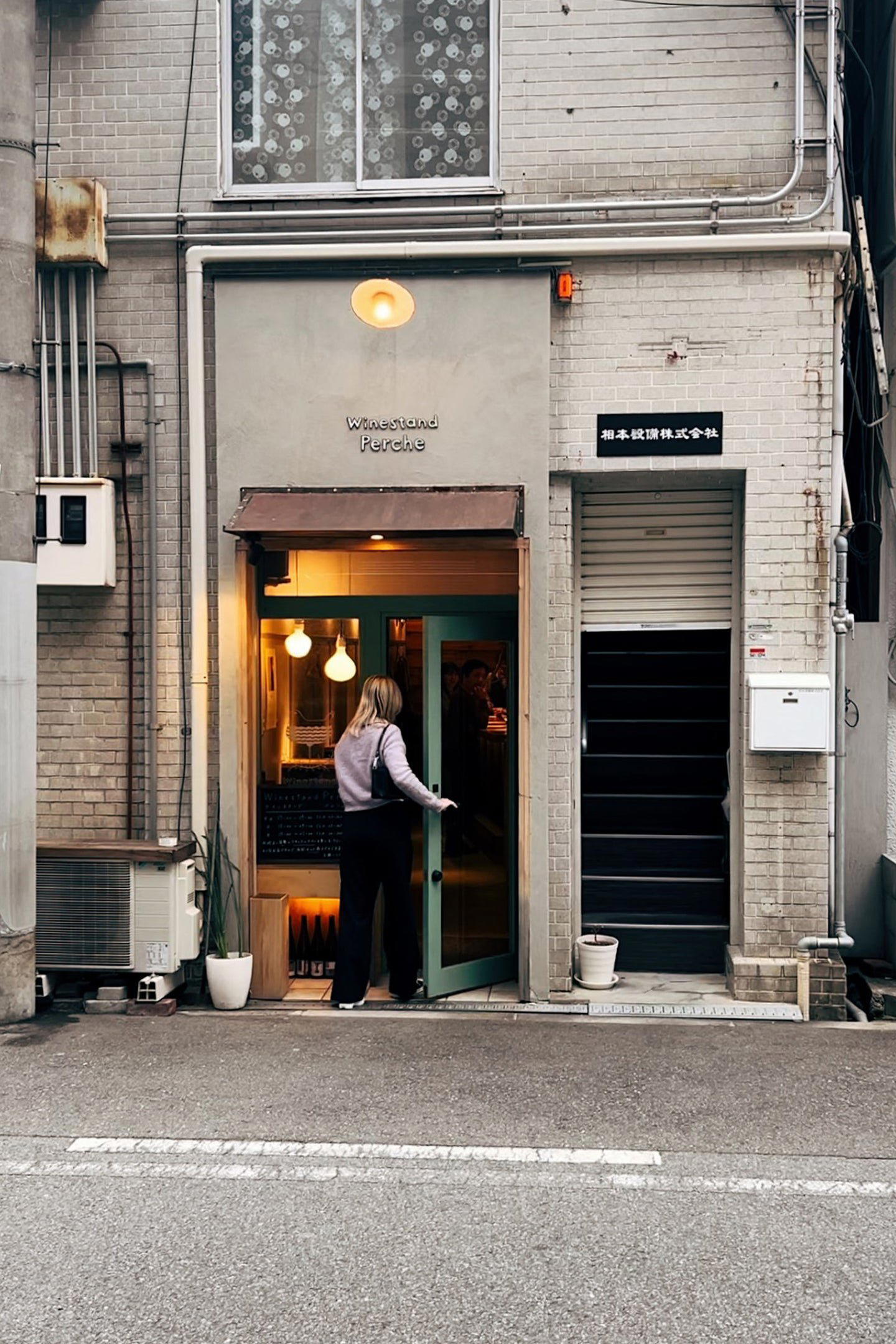
Osaka announces itself before the first order: shopfront light, narrow counters, office workers cutting through busy evening grids, and the particular city rhythm of drinking places built for movement rather than lingering ceremony. In Osaka, tachinomi is not a novelty format. It is a practical grammar for the city: stand, order decisively, eat something sharp or seafood-led, drink, move on if the night asks for it.
That is the context for Tachinomi Dokoro Uo Sho Tenma. Its selection for Tabelog 100 Tachinomi 2025 places it inside a competitive category that rewards consistency in a format where there is little room to hide. A standing bar cannot lean on linen, long pacing, or the theatre of a private room. The judgment is immediate: counter flow, sourcing confidence, drink compatibility, and whether the room feels better in motion than it would seated.
Osaka's standing-bar logic is an evening sport
The assigned category, stand-up bar and seafood, matters because it explains the venue more clearly than a chef narrative would. Osaka has plenty of daytime eating built around speed, from bakeries to department-store counters, but the city’s drinking streets change character after work. The value is not a formal lunch-to-dinner progression. It is the opposite: no listed lunch budget and a clear evening identity, which makes the room part of a larger local habit of eating with alcohol rather than structuring a meal around courses.
This lunch-versus-dinner divide is useful for travellers. Daytime Osaka often rewards single-purpose stops and efficient city eating across many unnamed counters and casual rooms. Osaka at night asks for a different plan. The point is not to secure a long table and surrender the evening. It is to read the room, order in short bursts, and let the city supply the second and third act.
Within Osaka’s tachinomi range, the pricing band also signals where this fits. Read alongside names such as Raku Nijin, Fu-n@, Stand Ruten, CHIKICHIKI Tenma ten, and Yama Hashiru, Tachinomi Dokoro Uo Sho Tenma belongs to a field where small differences in format and feel matter. It therefore sits in a zone where expectation is serious but the format remains casual: not a splurge restaurant, not a throwaway drink stop, and not a place that needs ceremony to justify itself.
Seafood gives the standing format its discipline
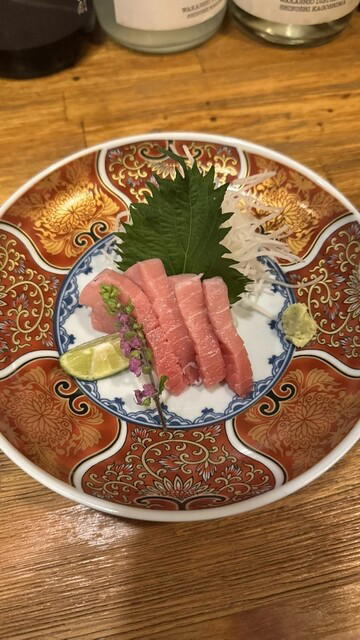
Seafood changes the stakes at a tachinomi counter. Fried snacks and simmered dishes can survive a loose room; seafood asks for tighter turnover, cleaner pacing, and sharper drink pairing. The appeal here is the Osaka version of precision without formality. A seafood-led standing bar has to deliver enough substance for dinner while preserving the looseness that makes tachinomi useful in the first place.
That balance is why the Tabelog 100 Tachinomi 2025 recognition is more than a badge. In a category built around short visits and high local comparison, selection indicates that the experience reads clearly to diners who understand the format. The score attached to the listing, 3.53, also places it in a Japanese review culture where small decimal differences can reflect a large amount of local scrutiny. For visitors, the takeaway is simple: this is not a generic drinking counter with food as background.
The chef story is not the story here. No named chef identity is needed to understand the appeal, and in Osaka that is often the point. The counter format gives authority to the operation rather than to a personality. The room, the seafood category, the standing rhythm, and the award selection do the critical work.
How to place it in an Osaka night
Osaka works well when treated as a city of multiple evening moves rather than a single booking target. A standing seafood bar can be the centre of the night, but it can also be the first serious stop before a different genre. Travellers building a broader Osaka itinerary can use Our full Osaka restaurants guide for restaurant planning, Our full Osaka bars guide for later drinking, Our full Osaka hotels guide for where to base the trip, Our full Osaka experiences guide for cultural scheduling, and Our full Osaka wineries guide for wine-focused detours.
The broader Kansai and Japan map helps clarify the choice. Osaka can do serious destination dining and imported casual formats, but tachinomi belongs to a more local drinking grammar. It is closer in spirit to compact specialist counters than to destination dining built around a long reservation window.
For readers comparing Japan through format rather than cuisine, the same logic applies beyond Osaka: other Japanese cities can frame single ingredients, casual specialisms, or dish traditions through their own local dining habits. Outside Japan, Japanese formats often travel, sometimes losing some of the friction and compression that make an Osaka standing bar feel so specific.
The editorial call is clear: use Tachinomi Dokoro Uo Sho Tenma for the part of Osaka that does not need a white-tablecloth frame to be serious. It is strongest after the city has shifted into evening mode, when seafood, alcohol, and counter pressure become the language of the meal.
Frequently asked questions
Where is Tachinomi Dokoro Uo Sho Tenma located?
Osaka.
What price level is Tachinomi Dokoro Uo Sho Tenma?
Pricing at Tachinomi Dokoro Uo Sho Tenma is listed as JPY 2,000 - JPY 2,999.
Can I walk in to Tachinomi Dokoro Uo Sho Tenma?
The provided public listing identifies Tachinomi Dokoro Uo Sho Tenma as a stand-up bar in Osaka. Check the venue's current channels before going for the latest operating details.
What's Tachinomi Dokoro Uo Sho Tenma best at?
Its strongest point is the format: a stand-up bar focused on seafood, with a price range of JPY 2,000–2,999 and a place in Tabelog's 2025 Tachinomi 100. That combination fits Osaka's after-work drinking culture.
Do they accommodate allergies at Tachinomi Dokoro Uo Sho Tenma?
No allergy policy is listed in the provided public record. Given the seafood focus, guests with allergies should verify ingredients before ordering. Check the venue's official channels for the latest details.
Nearby-ish Comparables
Comparable venues to place this listing in its category.
| Venue | Cuisine | Price | Awards | Notes |
|---|---|---|---|---|
| Tachinomi Dokoro Uo Sho TenmaThis venue (the venue you are viewing) | Standing seafood izakaya (tachinomi) | $20–30 | Tabelog 100 #17 | Not listed |
| CHIKICHIKI Tenma ten | Yakitori | $50–100 | Tabelog 100 #37 | JPY 6,000 - JPY 7,999 |
| Raku Nijin | Niboshi-focused ramen & tsukemen shop | $10–20 | Tabelog 100 #16 | JPY 999 - JPY 999 |
| Stand Ruten | Modern Japanese Standing Izakaya | $20–30 | Tabelog 100 #2 | JPY 2,000 - JPY 2,999 |
| Yama Hashiru | Yakitori Omakase | $50–100 | Tabelog 100 #77 | JPY 10,000 - JPY 14,999 View spending breakdown |
| Fu-n@ | Japanese Shokudo / Teishoku | Not listed | Tabelog 100 #44 | JPY 1,000 - JPY 1,999 JPY 1,000 - JPY 1,999 View spending breakdown |
Recognition history
Dated appearances from independent guides and award organizations, with the underlying list record or original source where available.
Tabelog 100 #17 · No. 17
Tabelog · Tabelog 100 - Tachinomi - 2025