

Table d'Amis holds a Michelin star and a regional title for vegetable cooking that places it among Kortrijk's most considered dining addresses. Chef Matthieu Beudaert's approach weaves vegetables through fish, meat, and pure vegetarian dishes alike, drawing on local producers including Keiems Bloempje cheese. The Sint-Maartenskerkhof address, beside one of the city's oldest churches, anchors a meal in the quieter, ecclesiastical quarter of a city increasingly confident about its table.
 Discover on Pearl
A Square, a Church, and a Kitchen with Something to Prove
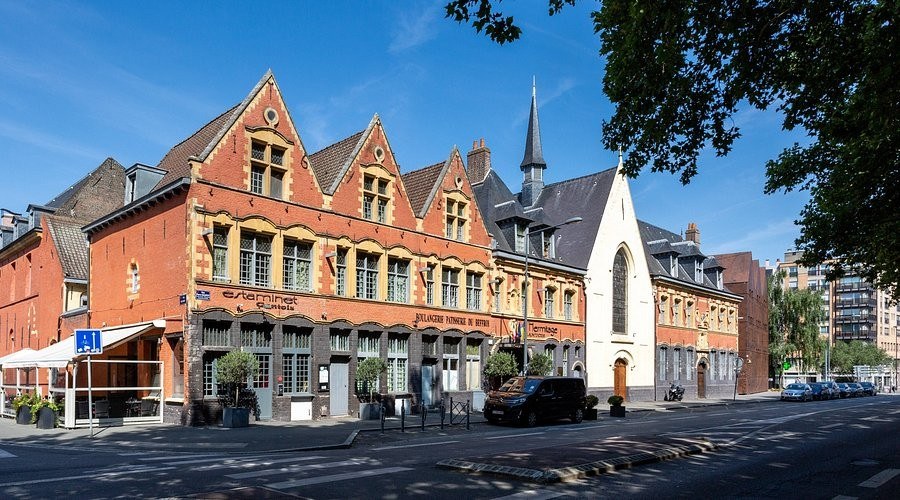
Sint-Maartenskerkhof is one of those addresses that earns its character from what surrounds it rather than what it announces. The cobbled square in front of Sint-Maartens church is among Kortrijk's older public spaces, the kind of spot where the city's civic and religious histories press close together. Table d'Amis occupies number 8 on that square, and the physical setting does real work before you reach the dining room: the stone façade, the low hum of a mid-sized Flemish city going about its evening, the sense that this is a neighbourhood restaurant in the truest sense, embedded in a place with its own weight and age. What the address signals is a kitchen that belongs to Kortrijk rather than performing for it.
That positioning matters in context. Kortrijk's fine dining tier has grown steadily over the past decade, with several addresses at the €€€ price point now competing for the same informed local and regional audience. Messeyne, Saint-Christophe, Va et Vient, and Restaurant Dirkjan Decock all operate at comparable price levels, and the city draws on the broader West Flemish tradition of treating local produce with technical ambition rather than nostalgic restraint. Table d'Amis sits inside that pattern, but its Michelin recognition and its vegetable-focused credential give it a specific identity within the peer group.
The Vegetable Question in Modern French Cooking
Modern French cooking, even in its Flemish interpretations, has historically organised itself around protein. The vegetable components filled out the plate, providing texture and colour in support of the centrepiece. What happened across northern European fine dining in the 2010s was a gradual rebalancing: vegetables moved from supporting role to structural equal, partly because producers got more interesting, partly because chefs who trained in the post-Noma atmosphere had learned to think differently about plant matter. The result, in the better kitchens, was not the replacement of classical technique but its redirection.
Table d'Amis sits inside that shift. Chef Matthieu Beudaert holds the title of Leading Vegetable Restaurant in Flanders, awarded in 2014, a credential that predates the mainstream trend by some margin and signals an approach developed from conviction rather than fashion. The kitchen's method is integration rather than segregation: vegetables appear inside meat dishes and fish dishes as primary flavour contributors, not garnishes, and pure vegetarian compositions carry the same structural ambition as anything built around a protein. Dishes noted in the venue's record illustrate the logic: a fried egg with mushroom tagliatelle and winter truffle uses the egg as binder and the fungi as the dominant flavour architecture; smoked agnolotti of hokkaido pumpkin, lacquered à l'orange with melted Keiems Bloempje, deploys a local West Flemish cheese as the acidic counterpoint to sweet squash. These are not vegetable dishes in the ascetic sense. They are dishes where the produce is the point.
The Keiems Bloempje reference is worth noting in its own right. It is a soft, washed-rind cheese from the Keiems area in the Western Flemish polders, produced in small quantities, and its inclusion in a composed dish signals the kind of regional sourcing network that distinguishes a kitchen with deep local connections from one simply shopping at a quality wholesaler. In the context of modern Belgian fine dining, that specificity matters: kitchens at comparable price points across West Flanders, from Boury in Roeselare to Willem Hiele in Oudenburg, have built reputations substantially on this kind of territorial sourcing, and Table d'Amis fits recognisably into that tradition.
Michelin Recognition in a Regional Context
Table d'Amis carries a Michelin star in both the 2024 and 2025 editions of the guide, a consecutive recognition that confirms sustained quality rather than a single exceptional year. In the Belgian Michelin framework, a single star in a secondary city is a meaningful signal: it places the restaurant in a national peer group that includes addresses like Hof van Cleve in Kruishoutem and Zilte in Antwerp at the upper end, while Table d'Amis occupies the one-star tier where the dining proposition is rigorous but the environment tends to be more accessible in scale and tone than the two- and three-star tier. Google reviews register 4.5 across 85 responses, a number that suggests consistent execution rather than polarising highs and lows.
For comparison, the Modern French single-star category in northern Europe contains kitchens with very different formats and competitive positioning. Sketch's Lecture Room and Library in London and Schanz in Piesport occupy the same broad classification but represent entirely different price points, settings, and cultural contexts. What Table d'Amis has is a specific identity inside that category: Modern French technique applied to West Flemish produce, in a Kortrijk square that puts the restaurant firmly outside the Brussels and Antwerp circuits where Belgian fine dining most often gets its international attention. The address is not a disadvantage; it is part of the proposition. Kortrijk's dining scene has enough critical mass now that it draws a serious audience, and Table d'Amis benefits from being the Michelin address on one of the city's most atmospheric squares.
The Kortrijk Fine Dining Circuit
Reading Kortrijk's restaurant tier requires some adjustment for visitors arriving from larger Belgian cities. The city operates on a more compact scale than Brussels or Antwerp, which means the €€€ category covers a relatively small number of kitchens, each with its own tonal and culinary distinctiveness. De Garage occupies the farm-to-table end of the market at a lower price point, while the creative and modern Flemish kitchens cluster around the same €€€ level as Table d'Amis. What that means practically is that a two-night visit to Kortrijk can produce a genuinely diverse set of dining experiences within walking distance of one another, each representing a different approach to the same West Flemish larder.
The city's position in the broader West Flemish dining map is also relevant. Kortrijk sits roughly equidistant between the coast, where Bartholomeus in Heist represents the seafood-forward end of the regional tradition, and the interior agricultural zones that supply the vegetables and dairy the better kitchens depend on. That geography shapes what ends up on the plate: the produce corridors run through rather than to Kortrijk, which gives local chefs access to both coastal and inland supply without having to specialise in either direction.
For visitors who want to map the city's dining options against its broader offer, the EP Club Kortrijk restaurants guide covers the full range. The Kortrijk hotels guide is useful for planning stays around a multi-restaurant itinerary, and the bars guide, wineries guide, and experiences guide complete the picture for anyone treating the city as a proper destination rather than a day trip. Bozar Restaurant in Brussels offers a point of comparison for those building a Belgium itinerary across cities.
Planning a Visit
Table d'Amis sits at Sint-Maartenskerkhof 8, in a square that is walkable from Kortrijk's central station and from the main hotel concentration around the city centre. The €€€ price point aligns with the Michelin one-star tier in a Belgian regional city, placing it above the city's casual dining offer but without the multi-hour commitment and premium pricing of a two-star destination. Specific booking details and current opening hours are leading confirmed directly with the restaurant; at this level in Belgian fine dining, advance reservation is standard practice, and Saturday evenings particularly tend to book ahead.
What's the signature dish at Table d'Amis?
The venue's documented dishes point to two preparations that capture the kitchen's approach. The smoked agnolotti of hokkaido pumpkin, lacquered à l'orange with melted Keiems Bloempje, is the clearest statement: a classically structured pasta dish built entirely around a vegetable and finished with a local West Flemish cheese, using the acidity of the cheese and the sweetness of the squash as the primary flavour tension. The fried egg with mushroom tagliatelle and winter truffle is the second reference point, a simpler composition in format but precise in its use of fungi as the dominant flavour register. Both reflect the kitchen's Leading Vegetable Restaurant in Flanders credential and its positioning within the broader Kortrijk dining scene as the address where vegetable cooking receives the same technical attention as any protein-centred preparation.
Where the Accolades Land
A fast peer set for context, pulled from similar venues in our database.
| Venue | Awards | Cuisine | Notes |
|---|---|---|---|
| Table d'Amis | Michelin 1 Star | Modern French | This venue |
| Va et Vient | Modern Flemish, Farm to table | Modern Flemish, Farm to table, €€€ | |
| De Garage | Farm to table | Farm to table, €€ | |
| Messeyne | Creative | Creative, €€€ | |
| Saint-Christophe | Creative French | Creative French, €€€ | |
| Restaurant Dirkjan Decock | Modern Cuisine | Modern Cuisine, €€€ |


At a Glance
- Elegant
- Modern
- Intimate
- Sophisticated
- Cozy
- Date Night
- Special Occasion
- Historic Building
- Sommelier Led
- Farm To Table
- Local Sourcing
- Street Scene
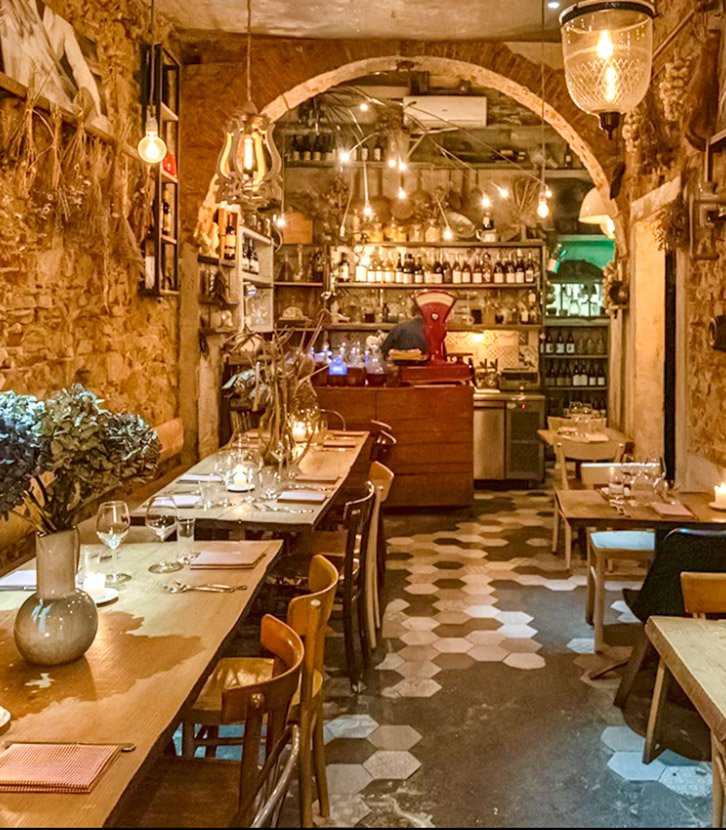
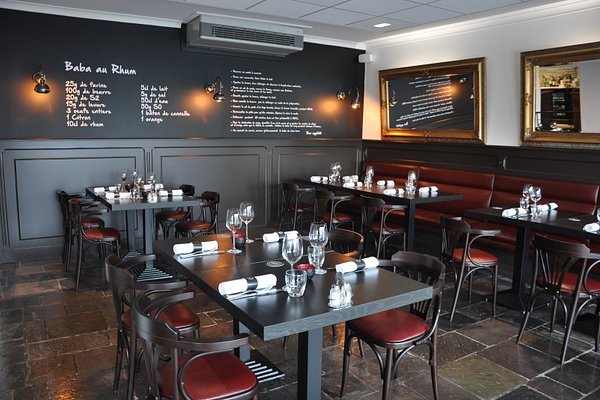
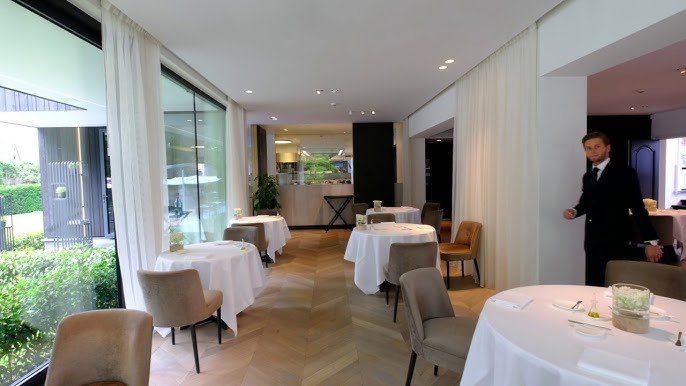
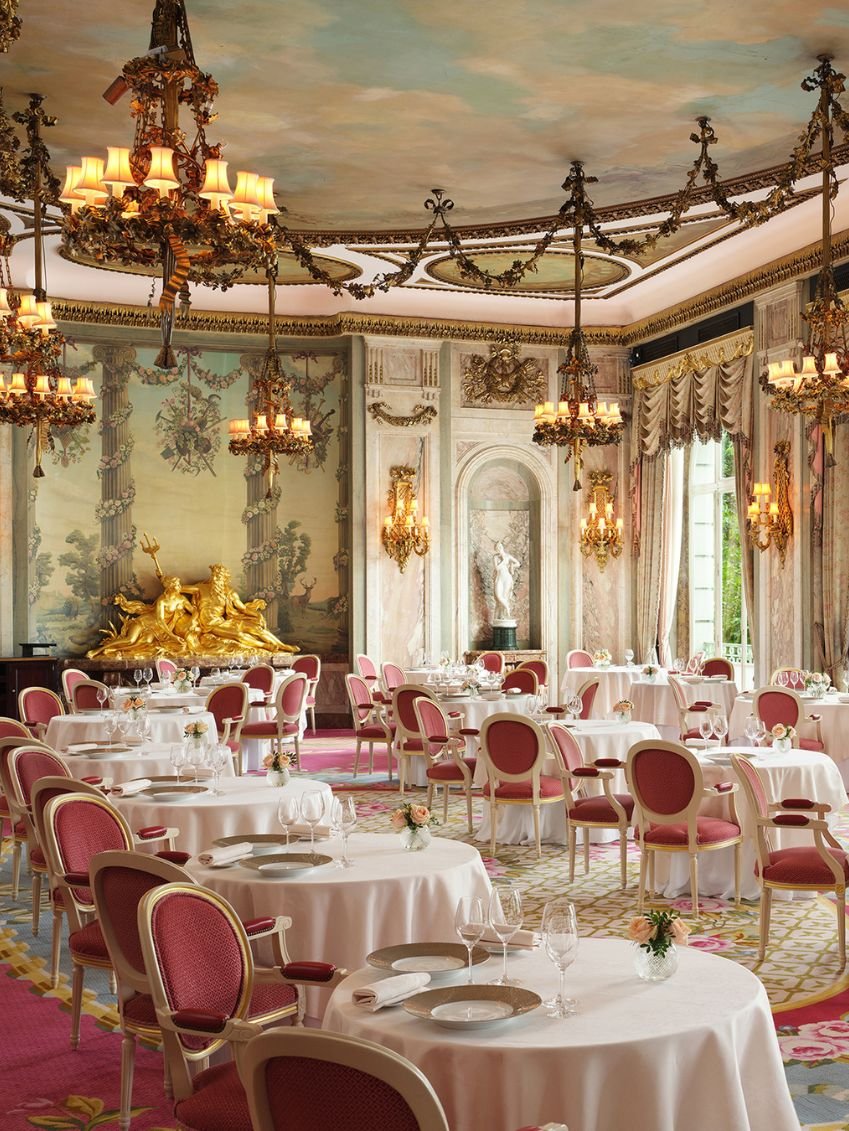
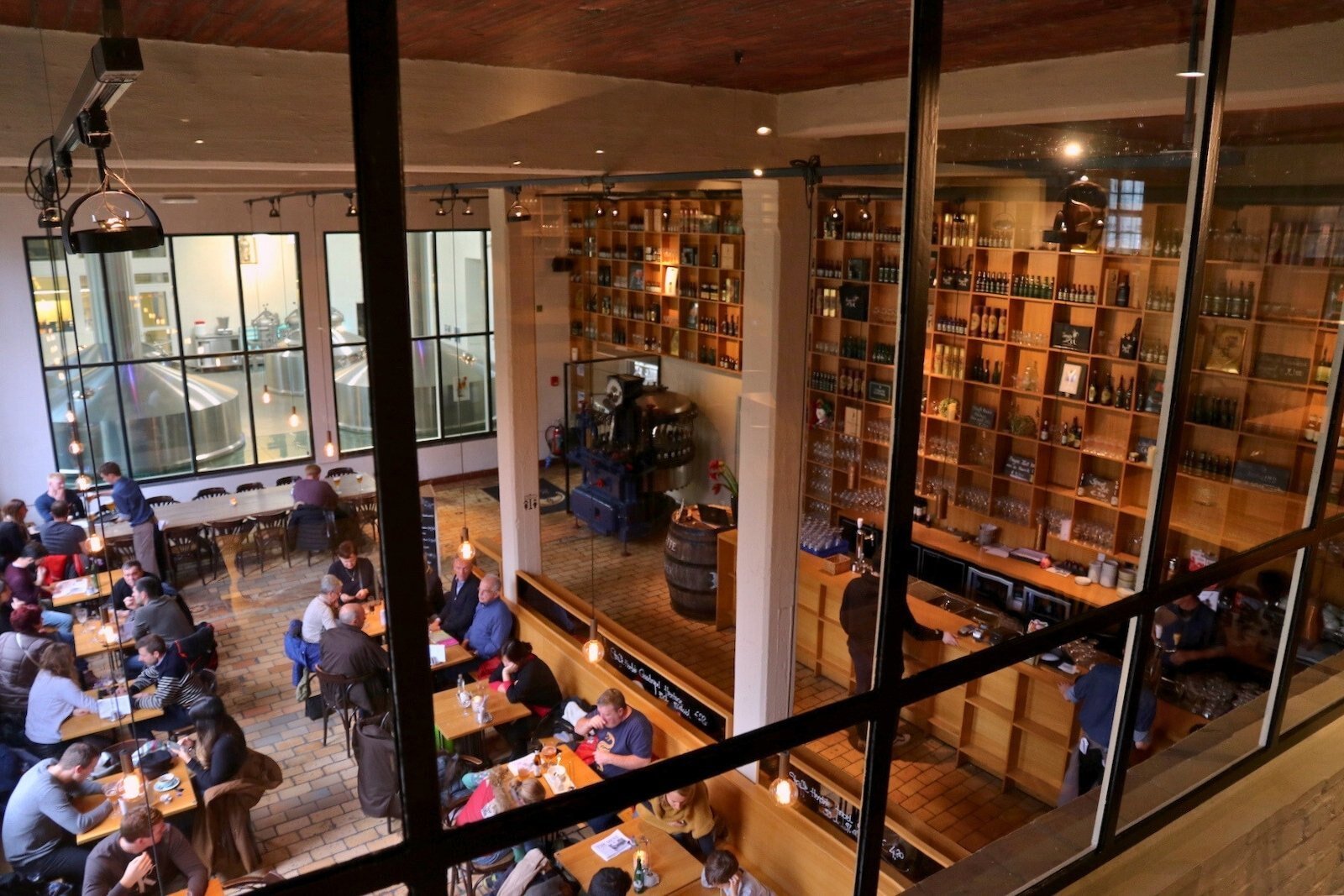
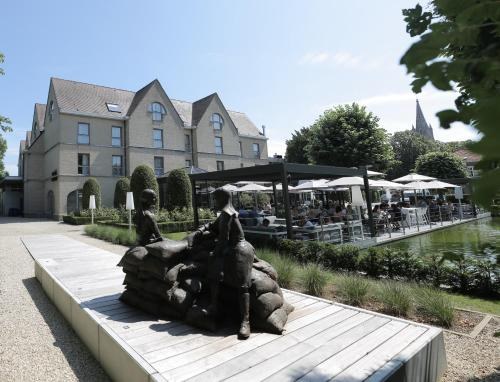
Uncluttered interior blending modern designer elements with minimalist luxury details, chic and bright in a historic presbytery.