SUSHISAMBA
SUSHISAMBA on the Las Vegas Strip fuses Japanese, Brazilian, and Peruvian culinary traditions into a single menu format that operates as a category of its own on the Strip. The physical setting at 3327 S Las Vegas Blvd places it within the concentrated dining corridor where theatrical ambition and menu range are baseline expectations. The result is a restaurant that reads differently depending on what you order first.
Pearl is the En Primeur Club membership app — saves, bookings, and concierge access live there. Same editors, same standards.
- Address
- 3327 S Las Vegas Blvd, Las Vegas, NV 89109
- Phone
- +17026070700
- Website
- sushisamba.com
- Directions
- Get directions
 Saves & bookings on Pearl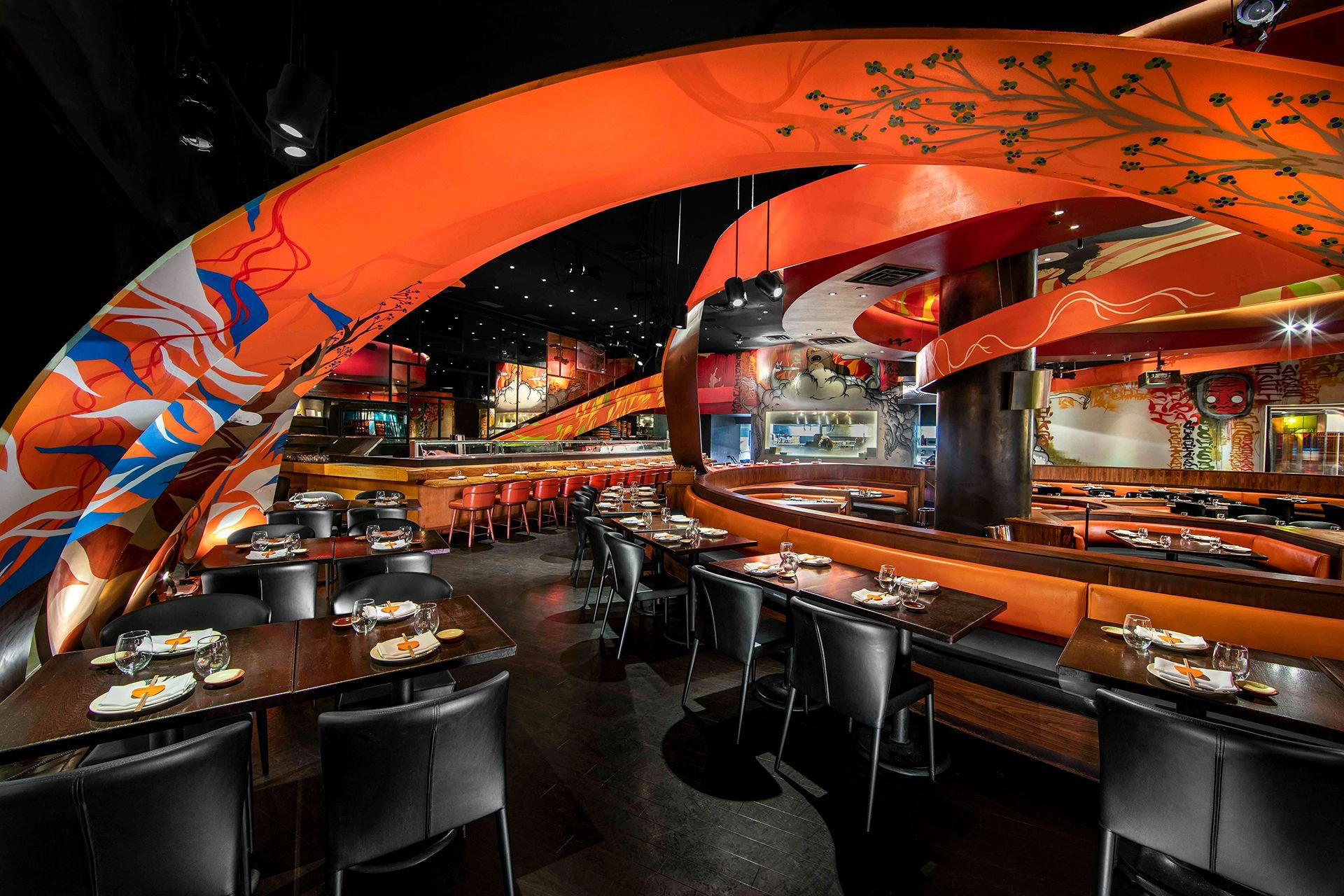
Where the Strip's Appetite for Spectacle Meets Menu Depth
Las Vegas dining has long operated on a paradox: the city that built its restaurant identity on celebrity chef outposts and high-volume spectacle has also quietly produced some of the more architecturally interesting menus in American dining. The Strip corridor around 3327 S Las Vegas Blvd concentrates that dynamic into a few city blocks, where a venue has to earn attention not just through décor or name recognition but through the internal logic of what it serves. SUSHISAMBA sits in that environment and earns its position through a menu structure that most competitors on the Strip do not attempt: a three-cuisine fusion format that draws from Japanese, Brazilian, and Peruvian traditions simultaneously.
The concept did not originate in Las Vegas. The SUSHISAMBA brand established itself first in New York and Miami, where the Japanese-Brazilian-Peruvian fusion format it popularised was received as a coherent culinary proposition. That migration produced a genuine culinary hybrid in Peru and Brazil, and SUSHISAMBA translated that into a restaurant format. By the time the Las Vegas location arrived, the concept had a documented track record in high-density dining markets. For visitors comparing it to Strip neighbors or looking at how it fits the broader American fine dining picture alongside restaurants like Le Bernardin in New York City or Providence in Los Angeles, the relevant comparison is not cuisine type but menu ambition relative to format.
The Architecture of a Three-Tradition Menu
What a menu structured around three distinct culinary traditions actually demands of a kitchen is worth examining directly. Japanese technique anchors the raw and cured preparations: sashimi, nigiri, and maki that require sourcing discipline and knife precision. Brazilian influence surfaces in grilled and charred preparations, where heat and char are applied with a directness that contrasts with the restraint of the Japanese section. Peruvian elements appear most clearly in citrus-forward ceviches and tiraditos, where the leche de tigre acidity and ají pepper heat mark the dish as distinctly Lima-adjacent rather than Tokyo or São Paulo.
The structural challenge of building a menu this way is not originality for its own sake. It is coherence. A diner moving across all three sections of the menu is effectively being asked to trust that the kitchen can execute at a competent level across genuinely different culinary logics. Most Strip restaurants that attempt breadth do so within a single tradition. A venue like Craftsteak commits fully to the American steakhouse format. Others in the market, including 18bin and 108 Eats, operate with tighter editorial menus where the cuisine scope is deliberately narrow. SUSHISAMBA's bet in the opposite direction is either the restaurant's defining asset or its primary risk, depending on what the kitchen delivers on a given night.
Peruvian-Japanese fusion, or Nikkei cuisine as it is formally known, has its own critical vocabulary now, separate from the broader fusion category. Restaurants working in that tradition, from Lima's established Nikkei houses to the London and New York outposts that followed, treat the genre with increasing rigor. SUSHISAMBA operates in adjacent territory, adding the Brazilian layer to that foundation. The menu structure implies a kitchen with range, and the ordering sequence matters: starting with raw Japanese preparations before moving to ceviche and then to grilled dishes follows the internal logic of the menu rather than fighting it.
Las Vegas as Context
Understanding where SUSHISAMBA sits in the Las Vegas dining map requires acknowledging how competitive and how specific that market has become. The Strip is no longer a place where a recognizable brand name alone sustains a restaurant. Diners arriving with reference points from Alinea in Chicago, The French Laundry in Napa, or Atomix in New York City apply a more demanding standard than the Vegas market faced a decade ago. Locally, the competition includes A Different Beast, 777 Korean Restaurant, and Blue Ribbon Sushi Bar and Grill, which occupies adjacent Japanese territory on the Strip. Aburiya Raku, operating off-Strip, represents the more austere end of Las Vegas Japanese dining, where the comparison to SUSHISAMBA is one of format as much as cuisine.
SUSHISAMBA positions against none of those directly. Its competitive set is the entertainment-dining hybrid: a place where the room is part of the experience but the menu is built to hold up independently of the setting. Whether the room delivers that at any given visit depends on factors outside the menu's control, but the menu architecture at least signals intent.
For broader American dining context, the restaurants that have defined serious Japanese-adjacent cuisine in the United States include operations with the critical pedigree of Blue Hill at Stone Barns in Tarrytown for farm-anchored seriousness, or Single Thread Farm in Healdsburg for Japanese technique applied to California produce. SUSHISAMBA's frame of reference is different: it is not aiming at that austere, technique-first positioning. Its model is closer to high-energy dining where the breadth of the menu and the energy of the room are co-equal selling points.
Planning Your Visit
Address: 3327 S Las Vegas Blvd, Las Vegas, NV 89109. Reservations: Recommended. Dress: Smart casual.
- Crispy Yellowtail Taquitos
- Salmon Tiradito
- Japanese A5 Kobe Gyoza
- Filet Mignon Anticucho
- Kagoshima Wagyu Ishiyaki
- Tiger Maki
Peers Worth Knowing
Comparable venues nearby, for context on price, style, and recognition.
| Venue | Cuisine | Price | Notes |
|---|---|---|---|
| SUSHISAMBAThis venue — the venue you are viewing | Japanese-Brazilian-Peruvian Fusion | $$$ | Not listed |
| The Buffet at Wynn | Global Buffet with Asian, Italian, Mexican, and Seafood Specialties | $$$ | South Las Vegas |
| Rang's Cocina Moderne | Modern Spanish-Italian-Asian Fusion | $$$ | Charleston Heights |
| Nittaya's Secret Kitchen | Modern Thai Tapas | $$$ | Desert Shores |
| Alexxa's | Modern Italian | $$$ | The Strip |
| CRUSH | Modern American Grill | $$$ | The Las Vegas Strip |
Continue exploring
More in Las Vegas
Restaurants in Las Vegas
Browse all →
Bars in Las Vegas
Browse all →
At a Glance
- Lively
- Modern
- Energetic
- Elegant
- Date Night
- Group Dining
- Celebration
- Special Occasion
- Open Kitchen
- Hotel Restaurant
- Design Destination
- Extensive Wine List
- Craft Cocktails
- Sake Program
- Beer Program
Current opening hours
- Monday
- 11:30 AM–12 AM
- Tuesday
- 11:30 AM–12 AM
- Wednesday
- 11:30 AM–12 AM
- Thursday
- 11:30 AM–12 AM
- Friday
- 11:30 AM–1 AM
- Saturday
- 11:30 AM–1 AM
- Sunday
- 11:30 AM–12 AM
Hours can change for holidays and private events. Last verified .
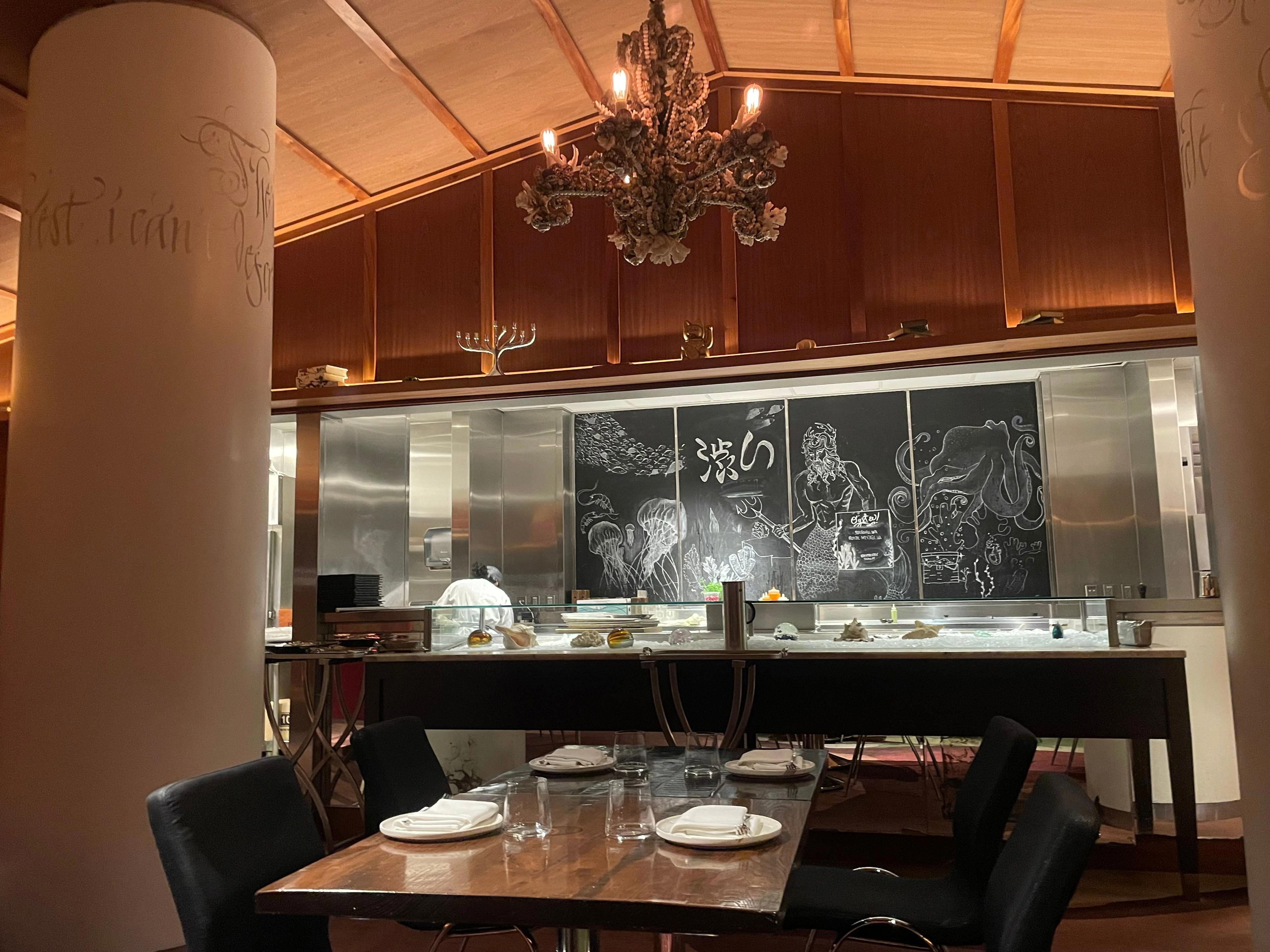
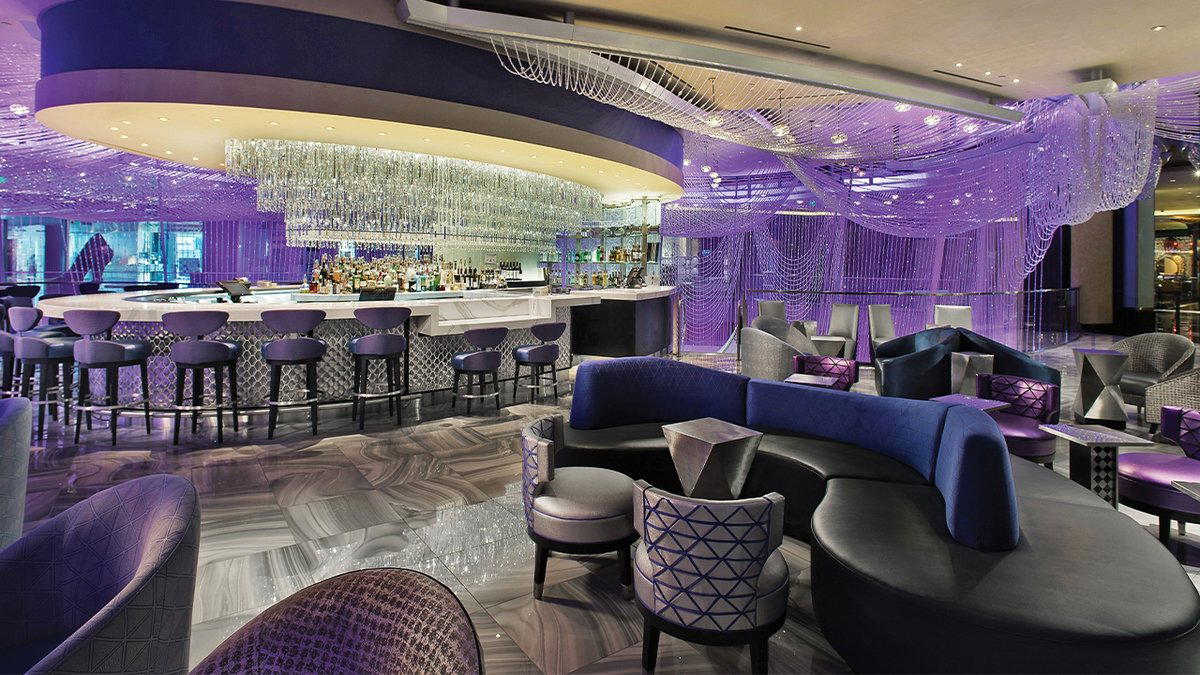
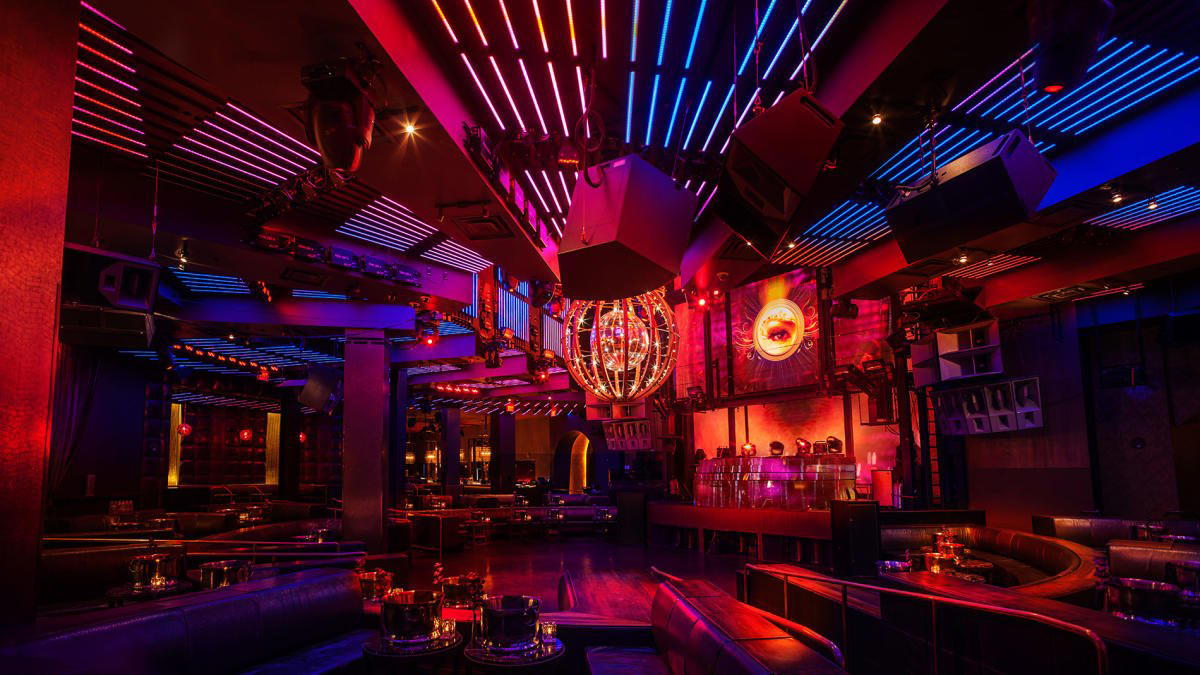
Brilliantly lit with an well-known orange canopy entrance, sweeping theater-style curved bar, and lively energy throughout; open kitchen with fiery robata grill creates dynamic, lively atmosphere.