Tabelog 100 #86
Our verdict
Chef Ryusuke Yamane runs a tight six-day programme with lunch and two evening sittings, making it one of the more accessible serious Edomae counters in the district for daytime bookings.

Pearl is the En Primeur Club membership app, where members save venues, book tables and use the concierge.
The menu
What to order
- Double anago
- Crab croquette
- Nodoguro nigiri
Ginza's Basement Counter and the Case for Lunch
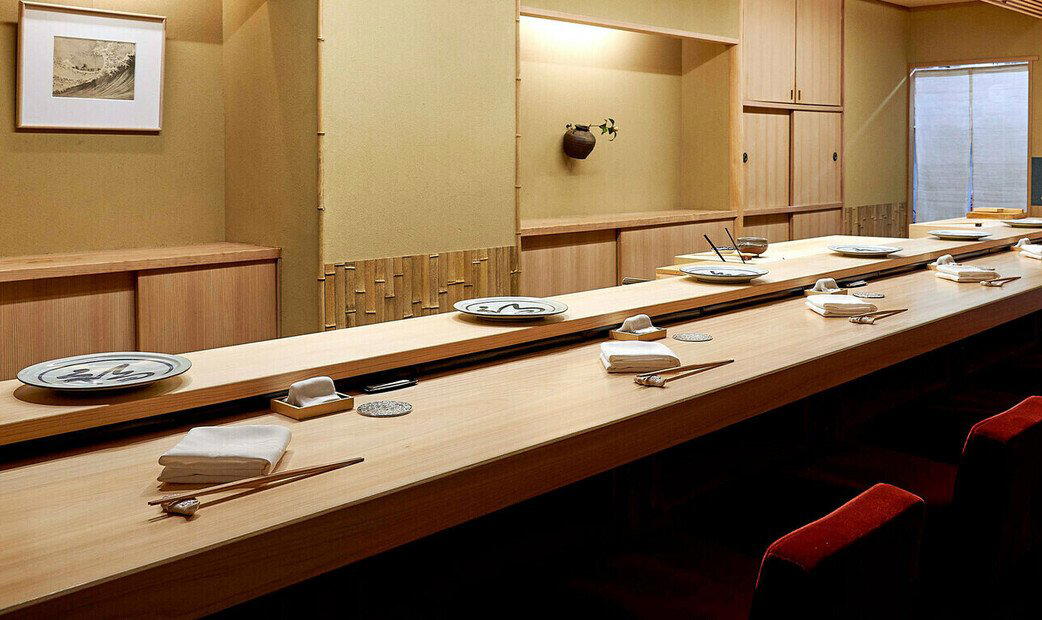
Ginza's sushi scene has long operated on a two-tier system: the well-documented upper bracket of three-starred counters drawing international reservation queues, and a second tier of smaller, less publicised rooms that serious diners treat as the smarter find. Sushi Ryusuke, on the basement level of a building on 7-chome, sits in that second tier. That trajectory is worth reading carefully: OAD rankings at this level reflect sustained critical attention from experienced repeat visitors, not a single season of hype.
Chef Ryusuke Yamane runs the counter. In the broader context of Ginza sushi, the neighbourhood has produced some of the most scrutinised omakase lineages in Japan, a tradition traceable through rooms like Sushi Kanesaka and Harutaka, both of which occupy the upper tier of the same district. Ryusuke operates at a different scale and price point, which is part of why its lunch format deserves specific attention.
Why Lunch Changes the Equation
At most serious omakase counters in Tokyo, lunch is either unavailable or treated as a compressed version of the evening programme, offered at a reduced price with a tighter course count. The value logic is direct: the fish is sourced the same morning, the chef is the same person, and the kitchen has had time to prepare. What changes is the atmosphere and the competition for seats. Evening slots at recognised Ginza counters are among the hardest bookings in the city. Lunch, particularly at a counter with Ryusuke's profile, is the more accessible entry point without meaningful sacrifice in the quality of what arrives in front of you.
Sushi Ryusuke runs a lunch sitting from 12:00 to 1:30 pm, six days a week (closed Sundays), with two evening sittings on the same days, at 6:00 and 8:30 pm. That 90-minute midday window is tight by omakase standards, but the format is consistent with how Tokyo's mid-tier Ginza counters have structured their service for the past decade, keeping the daytime experience disciplined and precise rather than leisurely. For visitors with limited evenings or those managing a broader itinerary across the city, the lunch sitting removes the need to sacrifice an entire evening.
The comparison with the evening format matters here. At the upper end of Ginza, venues like Sukiyabashi Jiro Roppongiten or Edomae Sushi Hanabusa operate on formats where the evening experience is the definitive one, and lunch, where it exists, is the concession. At Ryusuke's level, that hierarchy is less fixed. The OAD recognition it has received reflects the whole programme, not a single service. Lunch here is a full version of what the counter does, not a reduced one.
The Edomae Context
Tokyo sushi at this tier is rooted in Edomae technique: the treatment of fish through ageing, marinating, and temperature control rather than simply presenting the freshest cut possible. This approach, which developed in the Edo period as a way of preserving fish before refrigeration, has evolved into a refined discipline with significant variation between practitioners. The balance between aged complexity and clean flavour, the temperature of rice, the ratio of vinegar and salt, and the sequencing of courses all carry meaning that a single visit starts to decode.
Ginza remains the neighbourhood most associated with this tradition at its most concentrated level. Within a few blocks of Ryusuke's basement address, you have some of the most referenced Edomae counters in the country. That density is useful context for understanding what the OAD recognition signals: in a district where competition for critical attention is high, sustained inclusion in a ranked list over three consecutive years represents a consistent standard of work.
For readers exploring the wider Japanese dining scene beyond Tokyo, comparable sushi rigour appears at different price points and formats in other cities. Sushi Shikon in Hong Kong and Shoukouwa in Singapore are among the counters that have exported the Edomae model to Southeast Asia, though the sourcing and supply chain arguments for eating this style of sushi in Tokyo remain compelling.
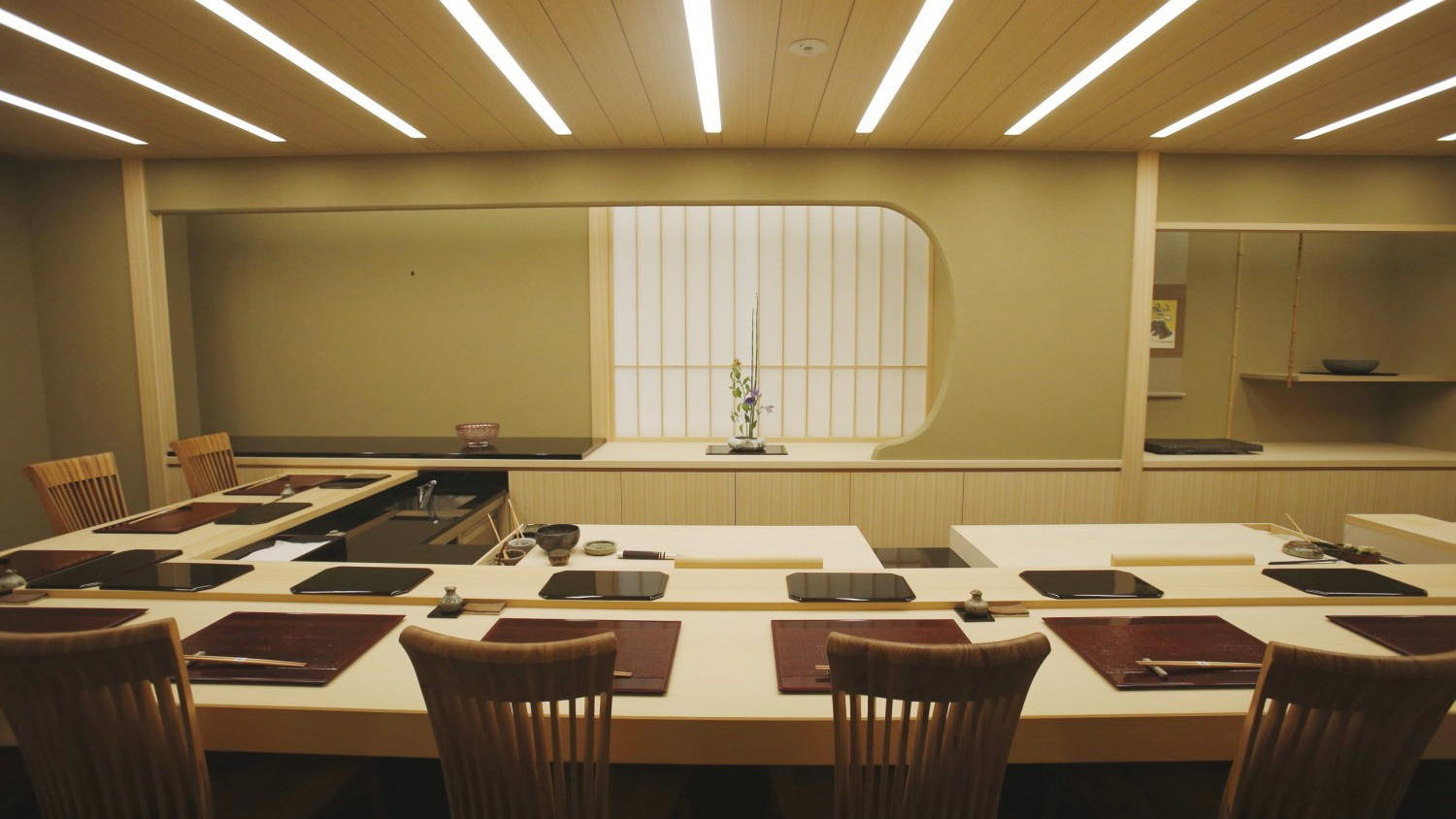
A useful way to position Ryusuke is by what it is not. It is not in the three-Michelin-star tier that draws the largest international queues. It has not been absorbed into the hotel-restaurant format that has reshaped parts of Ginza's dining offer. It is a counter, in a basement, with OAD recognition that places it solidly in the top 300 restaurants in Japan across multiple consecutive years. That is a specific and credible peer group. Compared to Hiroo Ishizaka, which operates in a different Tokyo neighbourhood and culinary register, Ryusuke's identity is more narrowly defined around the Ginza sushi tradition.
That pattern is common among basement counters in this district: low profile externally, high return rate from people who know what they are looking for.
Tokyo's dining options extend well beyond sushi, of course. Our full Tokyo restaurants guide covers the range, while our Tokyo hotels guide, bars guide, and experiences guide round out the city picture. For those travelling beyond the capital, HAJIME in Osaka, Gion Sasaki in Kyoto, akordu in Nara, Goh in Fukuoka, 1000 in Yokohama, and 6 in Okinawa represent a cross-section of what serious dining looks like across Japan right now. And for those curious about the Tokyo wine scene, the city's natural wine and sake bar culture has developed significantly alongside the fine dining tier.
Planning Your Visit
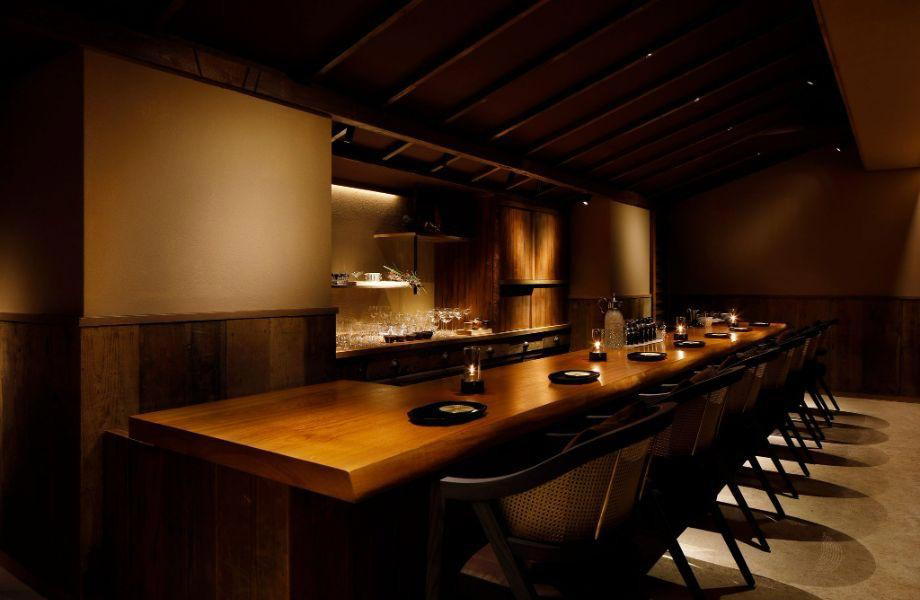
Sushi Ryusuke is located at 7-3-13 Ginza, Chuo City, Tokyo, in the basement of the Ginza Daishi Kanai Building. The counter operates Tuesday through Saturday for lunch (12:00 to 1:30 pm) and two evening sittings (6:00 to 8:00 pm and 8:30 to 10:30 pm). Sunday and Monday are closed.
Quick reference: Ginza 7-chome, B1F. Lunch: 12:00–1:30 pm, Tue–Sat. Two evening sittings from 6:00 pm. Closed Sunday.
Frequently asked questions
What kind of recognition has Sushi Ryusuke received?
What time does Sushi Ryusuke open and close?
Hours at Sushi Ryusuke: Hours: Monday 12–1:30 pm, 6–8 pm, 8:30–10:30 pm Tuesday 12–1:30 pm, 6–8 pm, 8:30–10:30 pm Wednesday 12–1:30 pm, 6–8 pm, 8:30–10:30 pm Thursday 12–1:30 pm, 6–8 pm, 8:30–10:30 pm Friday 12–1:30 pm, 6–8 pm, 8:30–10:30 pm Saturday 12–1:30 pm, 6–8 pm, 8:30–10:30 pm Sunday Closed.
What should I order at Sushi Ryusuke?
Sushi Ryusuke operates as a set omakase counter, meaning there is no à la carte selection. Chef Ryusuke Yamane determines the sequence, which follows Edomae principles: aged, marinated, and temperature-treated fish rather than simply raw cuts over rice. The lunch sitting, running 12:00 to 1:30 pm Tuesday through Saturday, offers an opportunity to experience the full counter format at a session length not common among Ginza's upper-tier peers.
What kind of cuisine does Sushi Ryusuke serve?
How do I find Sushi Ryusuke?
Sushi Ryusuke is located at Japan, 〒104-0061 Tokyo, Chuo City, Ginza, 7 Chome−3−13 銀座 第四 金井 ビル B1, Tokyo.
Who's behind the kitchen at Sushi Ryusuke?
The chef associated with Sushi Ryusuke is Ryusuke Yamane.
What's the signature at Sushi Ryusuke?
The basement location at 7-3-13 Ginza and the structured three-sitting-per-day format signal a programme built around craft repetition.
Recognition Snapshot
| Venue | Cuisine | Price | Awards | Notes |
|---|---|---|---|---|
| Sushi RyusukeThis venue (the venue you are viewing) | Modern Edomae Omakase | $200–300 | Tabelog 100 #86 | Not listed |
| Harutaka | Edo-Style Omakase Sushi | $200–300 | 3 Michelin Stars · World's 50 Best #76 | Sushi |
| RyuGin | Modern Kaiseki | $500+ | 3 Michelin Stars · World's 50 Best #41 | Kaiseki, Japanese |
| L'Effervescence | Modern French with Japanese Influences | $200–300 | 3 Michelin Stars · World's 50 Best #69 | French |
| HOMMAGE | Modern French with Japanese Influences | $150–200 | 2 Michelin Stars · World's 50 Best #78 | Innovtive French, French |
| MAZ | Innovative Peruvian-Japanese Fusion | $150–200 | 2 Michelin Stars · World's 50 Best #28 | Innovative |
Recognition history
Dated appearances from independent guides and award organizations, with the underlying list record or original source where available.
Opinionated About Dining Top Restaurants in Japan Recommended
Opinionated About Dining
Tabelog 100 #86 · No. 86
Tabelog · Tabelog 100 - Sushi - TOKYO - 2025
Full recognition history (5 entries)
Opinionated About Dining Top Restaurants in Japan Ranked #258
Opinionated About Dining
Opinionated About Dining Top Restaurants in Japan Ranked #201
Opinionated About Dining
Opinionated About Dining Top Restaurants in Japan Highly Recommended
Opinionated About Dining