Our verdict
Chef Hideyuki Wadahama runs a programme where the beverage pairing — sake selections chosen to track the progression of skewers — carries as much editorial weight as the charcoal work.

Pearl is the En Primeur Club membership app — saves, bookings, and concierge access live there. Same editors, same standards.
- Address
- 30-8 Sarugakucho, Shibuya, Tokyo 150-0033, Japan
- Phone
- +81 3-5459-3431
- Hours
- Mon–Sat 6 p.m.–12 a.m.Sun Closed
- Website
- arigataya12345.com
- Directions
- Get directions
- Booking
- Book on TableCheck
The menu
What to order
- Hinai chicken skewers
- Chicken liver pate
Yakitori, Sake, and the Shibuya Counter That Earns Both
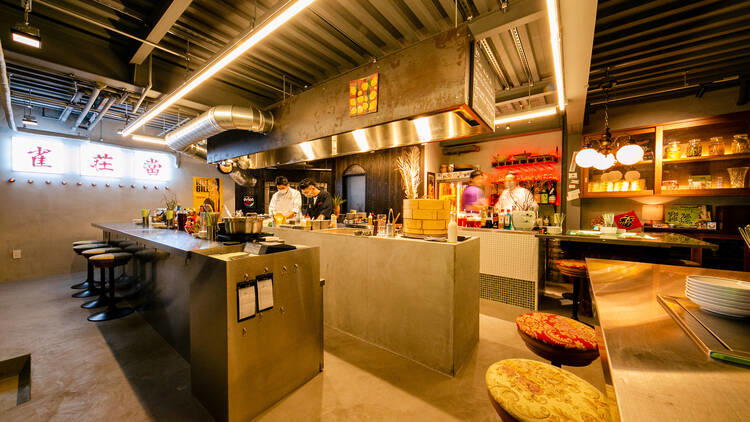
Tokyo's yakitori scene has always occupied a deceptively wide range. At one end sits the fluorescent-lit izakaya, where skewers arrive in quick succession alongside cold draft beer. At the other, a smaller cluster of counters where charcoal selection, bird provenance, and sake pairing operate at the same level of seriousness you'd expect from a kaiseki room. Ranjatai, at 30-8 Sarugakucho in Shibuya, belongs firmly to the second category.
Sarugakucho is a useful address to understand. The neighbourhood sits on the calmer western flank of Shibuya, away from the scramble crossing and the department store clusters. Its streets run quieter, with a concentration of galleries, independent restaurants, and the kind of low-signage storefronts that reward guests who arrive with a reservation rather than a wander. It is the kind of address where a serious yakitori counter can operate without the surrounding noise pulling focus — and Ranjatai uses that context accordingly.
The Beverage Frame: Where Sake Does the Work
In Tokyo's premium yakitori tier, the drinks programme is where counters increasingly distinguish themselves. Beer remains the reflex pairing, and it works, carbonation cuts fat, and bitterness offsets the char. But sake, when selected thoughtfully, does something more specific: it tracks the flavour arc of the meal. A lightly junmai style alongside the early, delicate skewers, neck, wing, cartilage, gives way to fuller, more textured selections as richer cuts arrive. Shochu, particularly the barley or sweet potato varieties, handles the heavier mid-meal territory where fat content is highest.
At Ranjatai, under Chef Hideyuki Wadahama, the integration of sake into the counter experience reflects the broader shift happening across Tokyo's yakitori rooms. The trend is away from a separate drinks list treated as an afterthought and toward a programme where sake selections are sequenced with the skewer progression in mind. This isn't fusion or novelty, it's a return to the logic that drove sake culture in the first place, where regional styles were built to complement the food being produced in the same prefecture. A Niigata junmai daiginjo, clean and restrained, behaves differently alongside chicken than a richer, aged kimoto from Kyoto. The difference matters, and counters that communicate it to guests refine the entire experience without changing a single skewer.
For guests less familiar with sake's register, this kind of programme also functions as an education without being didactic. The progression of the meal does the teaching.
Placing Ranjatai in the Shibuya Yakitori Tier
Tokyo's yakitori counters sort themselves into roughly three tiers by format, price, and booking depth. The entry tier is the standing bar or casual izakaya, fast, affordable, accessible without a reservation. The mid tier involves seated counters with curated menus but still broad accessibility. The upper tier, where Ranjatai operates, is defined by counter seating, a structured progression of skewers, serious beverage programmes, and booking windows that reflect genuine demand.
Compared to Tokyo's broader high-end dining picture, the kaiseki rooms of Aramaki, the sushi counters pulling four-figure per-head checks, the French tasting menus at Aria di Takubo, yakitori at this level represents a more specific, arguably more demanding craft. The margins for error on a single skewer are narrower than on a composed dish. Temperature, timing, and salt application at the grill are visible to everyone at the counter. There is nowhere to hide.
Within the yakitori category specifically, Ranjatai's Shibuya address contrasts with counters operating in other Tokyo corridors. Yakitori Omino and Asagaya BIRD LAND anchor different parts of the city's yakitori geography. 124. KAGURAZAKA operates in the French-influenced Kagurazaka district with its own format logic. Each counter reflects the neighbourhood it occupies. Ranjatai's Sarugakucho location shapes a quieter, more concentrated experience than counters embedded in busier entertainment districts.
For a broader look at where yakitori fits inside Japan's regional dining picture, the craft appears in different registers across the country: Ichimatsu in Osaka and Torisaki in Kyoto show how the category adapts outside Tokyo's density.
What matters is the stability of that figure.
For comparison purposes, the upper tier of Tokyo dining, venues like HAJIME in Osaka or Gion Sasaki in Kyoto, carries institutional recognition built over years of operation. Ranjatai's 2025 Pearl status suggests it has reached a level of consistency that warrants that kind of external endorsement now.
Planning Your Visit
Ranjatai is located at 30-8 Sarugakucho, Shibuya, Tokyo 150-0033. Shibuya Station provides the most accessible approach, with Sarugakucho reachable on foot. The neighbourhood's quieter character means the walk from the station is useful for adjusting expectations, this is not a high-energy, high-decibel dinner venue.
| Venue | Cuisine | Location | Recognition | Format |
|---|---|---|---|---|
| Ranjatai | Yakitori | Sarugakucho, Shibuya | Counter, sake-forward | |
| Yakitori Omino | Yakitori | Tokyo | EP Club listed | Counter |
| Asagaya BIRD LAND | Yakitori | Asagaya, Tokyo | EP Club listed | Counter |
| Ichimatsu | Yakitori | Osaka | EP Club listed | Counter |
For the broader Tokyo dining picture, see our full Tokyo restaurants guide, our full Tokyo bars guide, our full Tokyo hotels guide, our full Tokyo wineries guide, and our full Tokyo experiences guide. For other destinations in Japan, akordu in Nara, Goh in Fukuoka, 1000 in Yokohama, and 6 in Okinawa give useful reference points for the range of Japanese dining at this level.
Frequently asked questions
What's Ranjatai known for in terms of accolades?
Who is the chef at Ranjatai?
The chef associated with Ranjatai is Hideyuki Wadahama.
What do people recommend at Ranjatai?
Guest reviews converge on the skewer-by-skewer progression at the counter, where the yakitori is grilled over charcoal and paced deliberately rather than delivered in bulk. The sake selection draws consistent praise as a serious pairing programme rather than an afterthought.
What's the cuisine at Ranjatai?
Where do I go for Ranjatai?
Ranjatai is located at 30-8 Sarugakucho, Shibuya, Tokyo 150-0033, Japan, Tokyo.
Do they take walk-ins at Ranjatai?
Ranjatai operates as a counter format at 30-8 Sarugakucho, Shibuya — a format that typically runs on reservations, with limited or no walk-in capacity on most evenings. Contacting the venue directly in advance is the reliable approach.
What's the standout thing about Ranjatai?
The combination of counter-format yakitori and a considered sake programme places Ranjatai above the casual izakaya tier without crossing into the reservation-months-ahead formality of the city's most rarefied counters. In Shibuya's yakitori scene, that pairing of accessibility and craft is not a given.
Cuisine and Awards Snapshot
A quick snapshot of similar venues for side-by-side context.
| Venue | Cuisine | Price | Awards | Notes |
|---|---|---|---|---|
| RanjataiThis venue — the venue you are viewing | Michelin-Starred Yakitori Omakase | $50–100 | Not listed | Not listed |
| Harutaka | Edo-Style Omakase Sushi | $200–300 | 3 Michelin Stars · World's 50 Best #76 | Sushi |
| RyuGin | Modern Kaiseki | $500+ | 3 Michelin Stars · World's 50 Best #41 | Kaiseki, Japanese |
| L'Effervescence | Modern French with Japanese Influences | $200–300 | 3 Michelin Stars · World's 50 Best #69 | French |
| HOMMAGE | Modern French with Japanese Influences | $150–200 | 2 Michelin Stars · World's 50 Best #78 | Innovtive French, French |
| MAZ | Innovative Peruvian-Japanese Fusion | $150–200 | 2 Michelin Stars · World's 50 Best #28 | Innovative |