
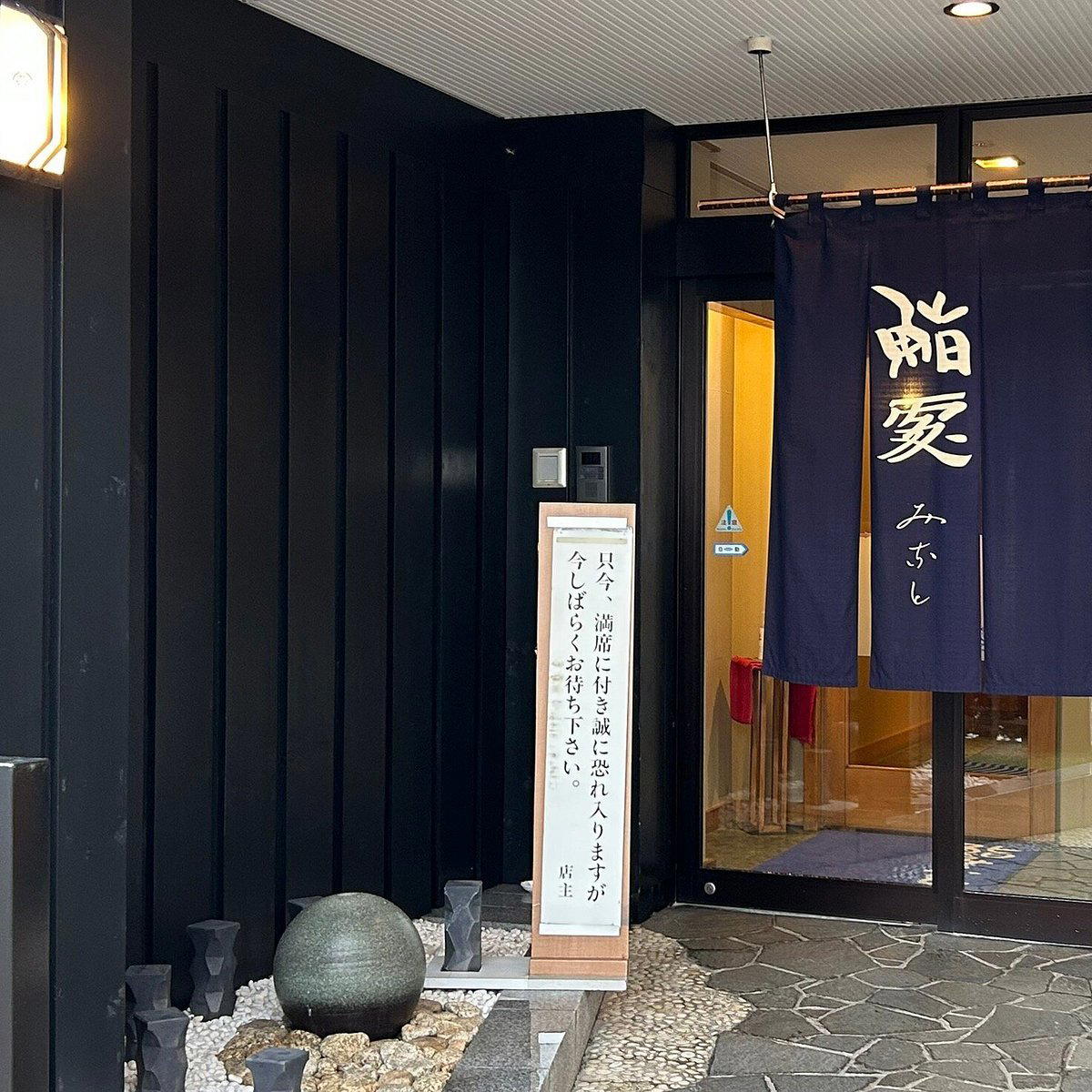
Sushi Okuno gives Takikawa a serious sushi counter in a city better known to travellers as a Hokkaido rail stop than as a dining destination. Its Tabelog Sushi EAST 100 selection in 2025 and fish-focused format place it in the regional conversation around Hokkaido sushi, where sourcing matters as much as polish.
Pearl is the En Primeur Club membership app — saves, bookings, and concierge access live there. Same editors, same standards.
- Address
- 北海道滝川市栄町3-4-5
- Website
- booking.teriyaki.me
 Saves & bookings on Pearl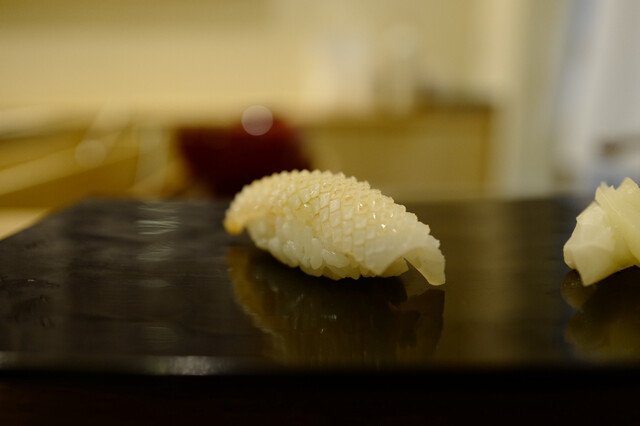
Approaching a serious sushi counter in a smaller Hokkaido city changes the meal’s rhythm before the first piece. Metropolitan noise falls away; the counter becomes the room’s instrument, and the evening rests on the exchange between rice, fish, sake and pacing. In Takikawa, that context matters. This is not Ginza sushi transplanted north, nor a resort dining room using Hokkaido as scenery. Sushi Okuno is a local counter whose credibility comes from ingredient focus, compact format and recognition within Japan’s regional sushi conversation.
Hokkaido sushi has an advantage that needs no embellishment. Cold-water fish, shellfish and seasonal seafood define the island’s reputation, and the strongest counters avoid theatrical excess because the product carries the argument. The question is whether the room keeps attention on sourcing, temperature, rice and sake. Here, public signals point that way: the restaurant is listed for being particular about fish, with nihonshu explicitly emphasised rather than treated as an afterthought.
Takikawa sushi with Hokkaido sourcing at the centre
Takikawa sits inland, making the sourcing story more interesting than a harbour-town narrative. Hokkaido’s dining map is not limited to Sapporo and coastal markets; smaller cities often carry quieter confidence, especially when a restaurant is built around narrow craft rather than a broad menu. Sushi Okuno’s selection for Tabelog 100 Sushi EAST in 2025 gives it a concrete place in that field. It was also selected in 2022, and repeat recognition matters more than one burst of attention because it suggests consistency in a category where regulars quickly notice small variations in rice, fish handling and service rhythm.
The restaurant’s Tabelog score of 3.54 reads differently in Japan than star-driven international rankings. Tabelog’s sushi lists tend to reward diner consensus, category relevance and repeat credibility; for a counter outside the largest urban circuits, inclusion is a stronger signal than the raw number. It places the restaurant inside eastern Japan’s sushi conversation while keeping its identity tied to Takikawa rather than destination-dining theatre.
The fish-first emphasis also separates this counter from broader casual dining nearby. In the surrounding Hokkaido set, Nakaya Kashi Ten sits in a lower sweet-shop price lane, Aji Toku Honten occupies a more everyday bracket, and Dokushaku Sanshiro points toward izakaya-style spending. These comparisons are useful not as direct competition, but because they show how specialised a serious sushi meal is in a smaller city. Sushi at this level asks diners to commit to a narrower format, deliberate pace and close reading of provenance.
The counter format keeps the meal disciplined
Counter seating changes the critical standard. In a dining room, atmosphere can absorb inconsistency; at a sushi counter, every movement is exposed. The format rewards restraint: rice formed close to service, fish handled with minimal interruption, sake chosen to sit beside rather than dominate the meal. The venue’s non-smoking policy and counter-focused room support that concentration. Nothing in the public positioning suggests a sprawling, high-volume restaurant; the appeal is a meal scaled around proximity and timing.
Sake becomes part of the editorial story, not a beverage footnote. Hokkaido seafood can run from lean and mineral to rich and sweet by species and season, and nihonshu gives a counter more flexibility than a wine list built for international comfort. The restaurant’s stated attention to sake signals traditional pairing logic: keep texture, rice and salinity in conversation. For travellers used to sushi as a luxury import in London, New York or Los Angeles, Takikawa’s point is not grandness but the pleasure of watching a regional Japanese counter operate within its own grammar.
The room is flagged as suitable for solo dining, which fits the form. Sushi counters have long been among Japan’s easiest serious formats for one person because the structure gives the solo diner a natural focal point. That does not make the meal casual; it means the experience does not require a group to feel complete. For visitors moving through central Hokkaido by rail, a solo counter seat can give a more precise read of local dining culture than a larger table booked for convenience.
How it fits into a Takikawa itinerary
Takikawa is not a city of overwhelming luxury infrastructure, and that is part of the appeal for diners who prefer specificity over abundance. A sushi reservation here works as an anchor for a compact food-focused stop rather than a casual add-on between major sightseeing days. The nearest station is Takikawa Station, and the restaurant sits close enough for a city-centre evening rather than a remote excursion. Parking is unavailable, so rail and walking logistics matter.
Planning around the broader city helps. Readers building a dining itinerary can start with Our full Takikawa restaurants guide, then place the meal alongside Our full Takikawa hotels guide, Our full Takikawa bars guide, Our full Takikawa wineries guide and Our full Takikawa experiences guide. For broader Japan planning, EP Club also tracks sharp category contrasts, from -Grilled beef Sukiyaki- KAMAKURA TANUKIAN 鎌倉 たぬき庵 in Kamakura and . 鮪と炭火焼き うお炭 秋葉原店 in Tokyo to .cafe in Osaka, .know in Kumamoto, (Shoku) Vietnam in Kawasaki, [Curry Senmon Ten] Maruyama Kyoju. in Sapporo, [ki:] in Kyoto, #肉といえば松田 奈良本店 in Kashihara, 1/3 HAMBURGER FACTORY in Kanazawa, 1000 in Yokohama and 1000mヒュッテ 1000m Hut in Kutchan. Sake-minded travellers comparing Japanese dining outside Japan may also look at Jōdo Saké Bar in Los Angeles and Onigiri Time in Pasadena.
The editorial case for Sushi Okuno is narrow and persuasive: a Hokkaido sushi counter in an inland city, recognised by Tabelog’s Sushi EAST 100, built around fish and sake rather than design drama. Travellers seeking maximalist luxury will find stronger signals in Japan’s major dining capitals. Travellers interested in how regional sushi culture travels beyond those capitals get the clearer lesson here.
At-a-Glance Comparison
Comparable venues by cuisine and price in the same metro.
| Venue | Cuisine | Price | Notes |
|---|---|---|---|
| Sushi OkunoThis venue — the venue you are viewing | Traditional Hokkaido Sushi Omakase | $$$ | Not listed |
| 楽亭 | Handmade Soba | $$$ | Kagurazaka |
| Mizushiro | Traditional Japanese Kaiseki | $$$ | Shikotsu Onsen Bangaichi |
| Meiji no Yakata | Yoshoku (Japanese-Western Fusion) | $$$ | Nikko Fudoson Park |
| 竹彩 | 鉄板焼き | $$$ | 秋月町 |
| はなぶさ 麻布十番店 | Kansai-Style Charcoal-Grilled Unagi | $$$ | Azabu-Juban |
Recognition history
Dated appearances from independent guides and award organizations, with the underlying list record or original source where available.
Tabelog 100 #85 · No. 85
Tabelog · Tabelog 100 - Sushi - EAST - 2025
Continue exploring
More in Takikawa
At a Glance
- Intimate
- Cozy
- Elegant
- Date Night
- Special Occasion
- Solo
- Business Dinner
- Chefs Counter
- Standalone
- Sake Program
- Sustainable Seafood
- Local Sourcing
A small, quiet counter-style sushi bar with an understated, elegant atmosphere typical of high‑end traditional sushi shops, emphasizing focus on the chef’s craft rather than décor or views.