Sushi Masa Westheimer
Our verdict
Sushi Masa Westheimer sits on Houston's busy Westheimer corridor, operating within a city that has quietly built one of the more serious Japanese dining scenes in the American South. The restaurant draws a local following for its sushi program in a part of town where the competition ranges from casual rolls to omakase-format counters. Advance planning is advisable.

Pearl is the En Primeur Club membership app — saves, bookings, and concierge access live there. Same editors, same standards.
- Address
- 9755 Westheimer Rd, Houston, TX 77042
- Phone
- (346) 320-4162
- Hours
- Mon–Thu 11 AM–9:30 PMFri–Sat 11 AM–10:30 PMSun 11 AM–9:30 PM
- Website
- sushimasaus.com
- Directions
- Get directions
- Booking
- Book on OpenTable
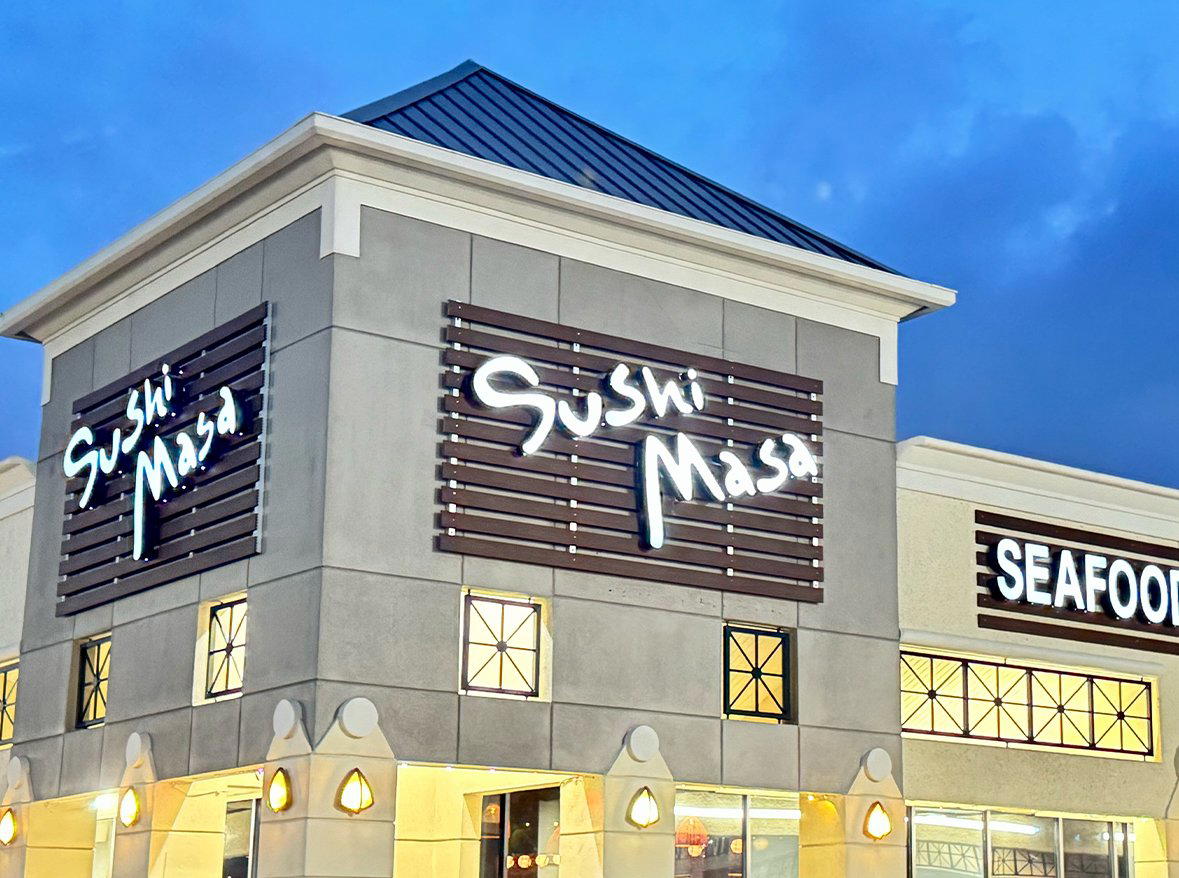
The Room Before the Fish
Along the stretch of Westheimer Road that runs through Houston's Energy Corridor and into the Westchase district, the dining options shift constantly: Vietnamese pho houses, Korean barbecue operations, and strip-mall sushi spots trade places with newer, more considered openings. Sushi Masa Westheimer sits within this corridor at 9755 Westheimer Rd, in a part of the city that doesn't announce itself with the self-consciousness of Montrose or the formality of Uptown. The physical setting here matters not because it dazzles but because it frames the experience honestly: this is a neighborhood-anchored Japanese restaurant in a city that has developed genuine depth in its sushi scene over the past decade.
Houston's relationship with Japanese cuisine has evolved considerably. The city's large and economically diverse population, including significant communities with direct ties to Japan and broader Asia, has created real demand for technically serious sushi rather than Americanized roll formats. That demand now sustains a range of operations, from the counter-service end up through invitation-only omakase formats. Sushi Masa occupies a position within that range that its address and sustained local following help define, even where formal data is limited.
What the Space Signals
In Houston's Japanese dining category, the physical container of a restaurant carries meaning. The Michelin-starred omakase tier, represented nationally by operations like Atomix in New York City, tends to work through minimal interiors, counter seating, and a deliberate separation from street noise. Closer to home, March in Houston's Montrose neighborhood uses its intimate dining room as part of a formal tasting menu proposition. The question for any mid-tier sushi house on a busy arterial like Westheimer is whether the room supports the food or simply shelters it.
Strip-mall Japanese restaurants in American cities have a complicated reputation, often unfairly. Some of the most technically accomplished sushi operations in the United States have operated without architectural distinction, because the craft at the counter doesn't require a stage. The dining public has largely learned this, particularly in cities with educated Japanese food followings. Houston, with its concentration of international residents and its history of absorbing culinary traditions from the Gulf Coast through Southeast Asia, is one of those cities where a plain room can still house serious fish.
At Sushi Masa Westheimer, the spatial arrangement serves a clientele that returns regularly rather than one visiting for a single occasion. That pattern, repeat neighborhood patronage rather than destination dining, defines a specific tier of Houston's Japanese dining scene, and it tells you something about what the kitchen is asked to do consistently.
Houston's Sushi Scene in Wider Frame
To position Sushi Masa accurately within Houston's dining context, it helps to map the tiers. At the high end of formality and price, Houston now has counter-format omakase experiences that price and operate comparably to those in larger coastal markets. Operations like Hidden Omakase represent that tier locally, where the seat count is small, the booking window is extended, and the price per head reflects premium sourcing and a structured progression of courses. Below that, but above casual roll-focused spots, sits a range of sushi restaurants that offer quality fish, skilled knife work, and a broader menu. Sushi Masa Westheimer occupies territory within that middle range, serving a neighborhood that doesn't lack for options but has shown consistent preference for this address.
That positioning matters because Houston's dining scene overall has been pushing toward ambition. Restaurants like Musaafer and BCN Taste & Tradition have moved the city's fine dining conversation in directions that were less visible a decade ago. Le Jardinier Houston brought a New York-connected fine dining format to the market. Tatemó has drawn attention for its technically specific approach to masa. In that context, Japanese restaurants at every tier have been subject to rising expectations from a more engaged local dining public. A sushi operation that survives and retains regulars on Westheimer does so against increasing competition.
For a wider sense of what serious American sushi and Japanese-influenced fine dining looks like at its upper limits, the point of reference shifts to places like Providence in Los Angeles or the seafood precision of Le Bernardin in New York City, restaurants that treat sourcing and technical execution as non-negotiable. Those operations set a standard that filters down through the market, raising the baseline for what serious diners expect from fish cookery even in a mid-range neighborhood setting.
Who Comes and Why
Restaurants on Westheimer's western run attract a specific kind of Houston diner: professionals with international exposure, families with Japanese heritage or a formed preference for Japanese food, and residents of the surrounding neighborhoods who have moved past novelty and want reliability. That demographic doesn't tolerate mediocrity for long. A sushi restaurant that has embedded itself into the Westchase-area dining habits has done so through consistency of product and kitchen standards that hold across services.
The broader pattern across American cities is that neighborhood sushi operations with staying power tend to succeed on a narrow set of virtues: reliable sourcing, clean rice, and a menu that doesn't overreach. The restaurants that try to do too much, stacking fusion elements onto a traditional frame, often lose the regulars who came for the fundamentals. Those that stay disciplined in their approach build the kind of return-visit loyalty that sustains a location on a competitive corridor over years. See analogous cases in other cities: Lazy Bear in San Francisco and Alinea in Chicago demonstrate, in different formats, how a disciplined vision holds a dining room through market shifts, though both operate at considerably higher price points and formality levels than a Westheimer sushi house.
Other benchmarks in premium American dining, from The French Laundry in Napa and Single Thread Farm in Healdsburg to Blue Hill at Stone Barns in Tarrytown, Addison in San Diego, The Inn at Little Washington, and Emeril's in New Orleans and the precision-forward 8 1/2 Otto e Mezzo Bombana in Hong Kong illustrate that technical discipline and spatial intention, at any price tier, form the foundation of durable dining reputations. Sushi Masa operates with a less rarefied format, but the logic of consistency still applies.
For a full orientation to Houston's dining scene across formats and price points, our full Houston restaurants guide maps the options with the same editorial lens.
Planning Your Visit
Address: 9755 Westheimer Rd, Houston, TX 77042. Budget: Mid-range sushi houses in Houston currently price between roughly $30 and $80 per person for a full meal with nigiri and rolls, with omakase-format options commanding more; confirm current pricing directly. Timing: Weekday lunches on the Westheimer corridor generally offer shorter waits than weekend dinner service across the category.
Frequently asked questions
Where exactly is Sushi Masa Westheimer?
Sushi Masa Westheimer is located at 9755 Westheimer Rd, Houston, TX 77042, Houston.
How does Sushi Masa Westheimer compare to Houston's omakase restaurants?
Sushi Masa Westheimer operates in a different category from Houston's high-formality omakase counters, which run at fixed tasting-menu prices and require advance reservations weeks out. At 9755 Westheimer Rd in the Westchase area, Sushi Masa serves the role of accessible, neighborhood-scale Japanese dining — a format that prioritizes regularity of visit over ceremony. For Houston diners choosing between the two tiers, the question is occasion: weeknight convenience versus a structured, multi-course commitment.
What do regulars order at Sushi Masa Westheimer?
Confirmed menu specifics are not in EP Club's database. At Houston neighborhood sushi restaurants in the mid-tier category — the range Sushi Masa occupies on Westheimer — regulars typically anchor on nigiri selections, maki rolls, and donburi bowls. The safest approach is to ask the counter staff what arrived fresh that day.
Do they take walk-ins at Sushi Masa Westheimer?
On a high-traffic corridor like Westheimer Road, mid-tier sushi restaurants in Houston generally accommodate walk-ins during off-peak hours, with weekend evenings being the tightest. Arriving before 6:30 PM or after 8:30 PM usually improves your odds without a reservation.
What has Sushi Masa Westheimer built its reputation on?
No formal awards appear in EP Club's database for Sushi Masa Westheimer. On a corridor as competitive as Westheimer — where dining concepts turn over regularly — sustained presence in the neighborhood is itself a signal of consistent return business. The restaurant sits at 9755 Westheimer Rd, within a stretch that draws Houston professionals and residents with high repeat-dining frequency.
Can Sushi Masa Westheimer handle vegetarian requests?
Vegetarian accommodation at traditional sushi restaurants in the United States varies by kitchen structure and menu design. Sushi formats typically offer vegetable-forward options — cucumber rolls, avocado nigiri, inari — without requiring special preparation. Guests with specific dietary requirements should confirm directly with the restaurant before visiting, as kitchen flexibility differs by venue.
At-a-Glance Comparison
Comparable venues nearby, for context on price, style, and recognition.
| Venue | Cuisine | Price | Notes |
|---|---|---|---|
| Sushi Masa WestheimerThis venue — the venue you are viewing | Japanese Sushi Fusion | $20–30 | Not listed |
| Toga | Yakitori Izakaya | Not listed | River Oaks |
| Handies Douzo | Hand Roll Sushi Bar | $30–50 | Hennessey |
| KA Sushi | Modern Japanese Sushi | $30–50 | Greater Heights |
| Ramen Bar Ichi | Authentic Japanese Ramen | $20–30 | Briar Forest |
| Soto | Modern Japanese Omakase | $50–100 | Midtown |
Continue exploring
More in Houston
Restaurants in Houston
Browse all →
Bars in Houston
Browse all →
Hotels in Houston
Browse all →
Details
- Trendy
- Lively
- Casual Hangout
- Family
- Group Dining
- Open Kitchen
- Sake Program
- A La Carte
- Small Plates
- Japanese Beer
- Sake
- Vegetarian Friendly
- Gluten Free Options
Current opening hours
- Monday
- 11 AM–9:30 PM
- Tuesday
- 11 AM–9:30 PM
- Wednesday
- 11 AM–9:30 PM
- Thursday
- 11 AM–9:30 PM
- Friday
- 11 AM–10:30 PM
- Saturday
- 11 AM–10:30 PM
- Sunday
- 11 AM–9:30 PM
Hours can change for holidays and private events. Last verified .
Welcoming and fun atmosphere with moderate noise levels.