Sushi Enya Sawtelle
Sushi Enya Sawtelle occupies a specific niche in Los Angeles's increasingly tiered omakase market: a West Side address on Olympic Boulevard that puts serious Japanese counter dining within reach of the Sawtelle Japantown corridor. The restaurant operates in a segment where format discipline and spatial design carry as much weight as sourcing, placing it in conversation with the city's broader shift toward intimate, counter-led Japanese dining.
Pearl is the En Primeur Club membership app — saves, bookings, and concierge access live there. Same editors, same standards.
- Address
- 11301 W Olympic Blvd #102, Los Angeles, CA 90064
- Phone
- +12134461759
- Website
- opentable.com
- Directions
- Get directions
 Saves & bookings on Pearl
West Side Counter Culture: Where Sawtelle's Japanese Dining Scene Converges
Los Angeles's relationship with omakase dining has reorganized itself over the past decade. What was once a format concentrated in the SGV corridor and a handful of high-ticket West Hollywood rooms has spread outward, with the Sawtelle Japantown district on the city's West Side emerging as one of the more coherent clusters of serious Japanese dining outside downtown. Sushi Enya Sawtelle, positioned on Olympic Boulevard near that corridor, sits within this geographic and culinary shift. The address is not incidental: Sawtelle's density of Japanese restaurants, markets, and food culture gives a counter like this an ambient credibility that a standalone room in a less specific neighborhood would have to construct from scratch.
The broader Los Angeles omakase market has split into recognizable tiers. Below that sits a middle tier of serious, technically grounded counters that draw on similar sourcing philosophy and spatial intimacy but operate at a scale and price point accessible to a wider range of diners. Sushi Enya Sawtelle occupies this middle ground, where the physical design of the space — the counter arrangement, the sightlines to the chef's station, the ratio of seats to working surface — often signals more about a restaurant's intentions than a press release would. Comparable Japanese dining rooms in this tier, including Hayato in the Arts District, have demonstrated that Los Angeles diners will commit to format-driven, spatially considered Japanese experiences when the room earns that commitment.
The Architecture of Attention: Reading the Room at Sushi Enya
In Japanese counter dining, the physical container is not decorative, it is functional in ways that determine the entire experience. The distance between a diner and the chef's cutting board, the material of the counter surface, the ceiling height, the acoustic dampening or absence of it: these elements shape what a meal feels like before a single piece of fish is placed. The leading counters in Tokyo's Ginza, and increasingly their Los Angeles equivalents, treat the room as a precision instrument. The intimacy is engineered, not accidental.
Sushi Enya Sawtelle's location within a commercial development on Olympic Boulevard reflects a pattern common across the West Side's Japanese dining scene: serious food housed in unassuming exteriors, where the quality of the interior counter experience is the point rather than a landmark address or a dramatic entrance. This is a format with precedent in Japan, where some of Tokyo's most respected sushi-ya occupy upper floors of nondescript office buildings or side streets deliberately chosen for their absence of foot traffic. The design logic prioritizes the dining room itself over street presence.
For diners arriving from the broader Los Angeles restaurant circuit, the sprawling contemporary rooms that define much of the city's high-end dining, from Providence on Melrose to Somni's theatrical tasting format, a Japanese counter operates on entirely different spatial logic. The counter is simultaneously kitchen, stage, and dining surface. There is no separation between the labor of preparation and the act of consumption, which is precisely why the physical design matters: when the counter is the whole experience, every centimeter of it carries meaning.
Sawtelle in the Los Angeles Japanese Dining Conversation
Los Angeles has a deeper infrastructure of Japanese food culture than almost any American city outside Hawaii. The San Fernando Valley, the SGV, Little Tokyo, and the Sawtelle corridor each represent distinct nodes in that network, with different price points, formats, and audience assumptions. Sawtelle's Olympic Boulevard stretch operates in a neighborhood where Japanese grocery stores, ramen shops, izakayas, and specialty counters coexist within a few walkable blocks, which creates both competition and context. A sushi counter here is not asking diners to make a conceptual leap, the neighborhood primes them for Japanese dining discipline before they walk through the door.
This contrasts with the positioning of Japanese dining in other American cities. Atomix in New York operates Korean fine dining in a context where that format had to build its own cultural scaffolding. In Los Angeles, the scaffolding for Japanese counter dining already exists, built across decades of immigration, culinary education, and a dining public that has absorbed omakase format expectations more thoroughly than almost any other American market.
For visitors building a Los Angeles itinerary around serious dining, the West Side Japanese corridor offers a coherent alternative to the broader city restaurant circuit. Those spending more time across the city might also consider Kato's New Taiwanese counter format in West Adams or Osteria Mozza's Italian anchoring on Melrose, both of which represent the same impulse toward format discipline in different culinary traditions. Regionally, Addison in San Diego and Lazy Bear in San Francisco offer reference points for how the West Coast's premium dining market has evolved, though none replicate the particular density of Japanese dining culture that the Sawtelle corridor concentrates. Further afield, The French Laundry in Napa, Single Thread Farm in Healdsburg, and Blue Hill at Stone Barns in Tarrytown each represent a different model of spatially committed dining that shares the counter format's emphasis on the room as a designed experience. Across the country, Le Bernardin in New York, Alinea in Chicago, The Inn at Little Washington, Bacchanalia in Atlanta, Emeril's in New Orleans, and 8½ Otto e Mezzo Bombana in Hong Kong each demonstrate how a well-defined room and format can anchor a dining identity across very different culinary traditions. For a broader view of where Sushi Enya Sawtelle sits within Los Angeles's full dining spectrum, see our full Los Angeles restaurants guide.
Planning Your Visit
Sushi Enya Sawtelle is located at 11301 W Olympic Boulevard, Suite 102, in the Sawtelle district of West Los Angeles. The Olympic Boulevard address places it within easy reach of West LA, Brentwood, and Santa Monica, with the Sawtelle Japantown corridor a short distance north. As is common with counter-format Japanese dining rooms in this tier, prospective diners should expect advance planning to be necessary, omakase counters at this level of the market typically operate on reservation systems rather than walk-in availability, and the seat count in counter-format rooms is inherently limited by the spatial logic of the format. Arriving with confirmed plans rather than hoping for walk-in access is the standard approach for any serious counter in this neighborhood. For specific hours, current pricing, and reservation availability, checking directly with the restaurant is the appropriate step given that operational details at this level of the market change with season and format evolution.
How Sushi Enya Sawtelle Los Angeles compares with similar nearby venues.
| Venue | Cuisine | Price |
|---|---|---|
| Tsujita LA Artisan Noodles | Japanese Cuisine | Not listed |
| Killer Noodle | Ramen, Japanese | $ |
Continue exploring
More in Los Angeles
Restaurants in Los Angeles
Browse all →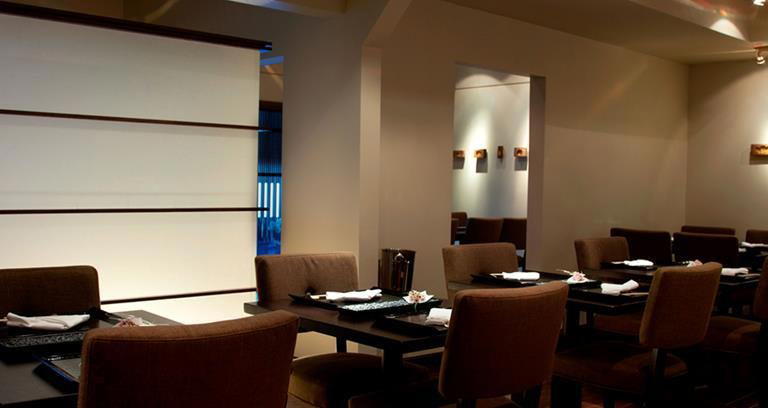
Bars in Los Angeles
Browse all →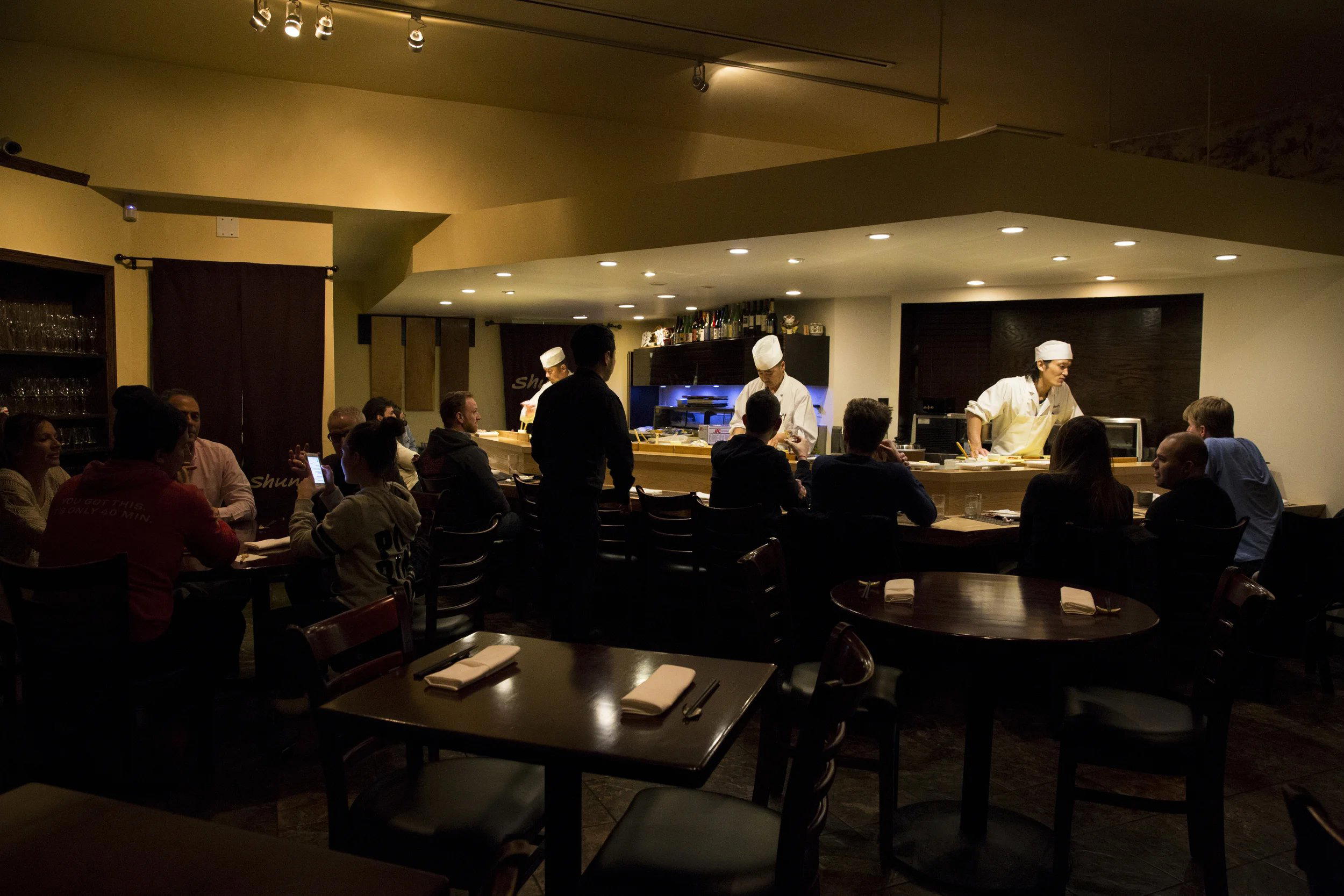
Hotels in Los Angeles
Browse all →
Wineries in Los Angeles
Browse all →
At a Glance
- Warm
- Energetic
- Trendy
- Date Night
- Casual Hangout
- Sake Program
Current opening hours
- Monday
- 5:30–10 PM
- Tuesday
- 5:30–10 PM
- Wednesday
- 5:30–10 PM
- Thursday
- 5:30–10 PM
- Friday
- 5:30–10:30 PM
- Saturday
- 5:30–10:30 PM
- Sunday
- 5–10 PM
Hours can change for holidays and private events. Last verified .
Warm, energetic, and welcoming with a clean Japan-like feel and moderate noise level.
Know Before You Go
- Getting there
- 11301 W Olympic Blvd #102, Los Angeles, CA 90064