Stefano's Restaurant, housed in Mildura's Grand Hotel on Langtree Avenue, occupies a position that few regional Australian dining rooms can claim: a serious kitchen in a genuinely remote growing region, where the surrounding Murray-Darling basin supplies ingredients that metropolitan restaurants spend considerably more to source. For visitors arriving from Melbourne or Sydney, it reframes what regional dining in Australia can mean.
 Discover on Pearl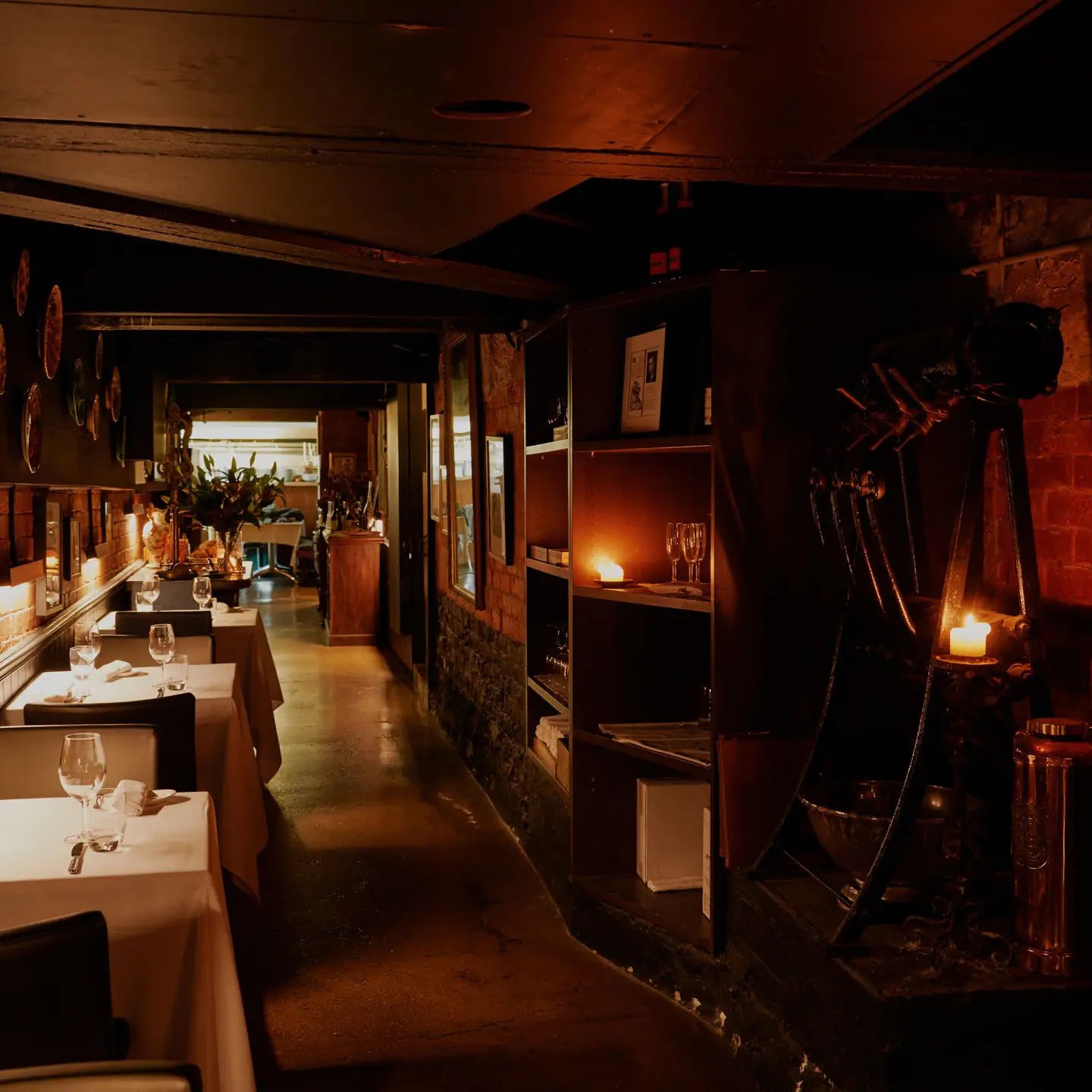
A Grand Hotel Address in Australia's Inland River Country
The approach to Stefano's sets the register before you reach the dining room. The Grand Hotel on Langtree Avenue is one of Mildura's few genuinely historic structures, and entering through its corridors carries the kind of architectural weight that purpose-built restaurants in newer precincts rarely manufacture. Mildura itself sits at roughly 550 kilometres north of Melbourne, where the Murray and Darling rivers converge and the surrounding flatlands produce some of the most concentrated agricultural output in Australia. That geography is not incidental to what happens at the table.
Regional Australian dining has long operated in two distinct modes: the destination restaurant that draws visitors from capital cities specifically for the meal, and the local institution that earns its reputation over decades by serving a community with consistency. Stefano's, in its position inside a heritage hotel in an inland city that most Melburnians associate with dried fruit and citrus orchards rather than fine dining, sits between these poles in a way that makes it worth understanding on its own terms. For a wider map of what serious regional dining looks like across Victoria and beyond, our full Mildura restaurants guide covers the broader picture.
Where the Produce Actually Comes From
The Murray-Darling basin context matters more here than it does at virtually any other serious Australian restaurant. The region produces table grapes, citrus, stone fruit, almonds, olives, and vegetables at scale, and the proximity of that supply chain to Stefano's kitchen is a structural advantage that metropolitan restaurants with aligned sourcing philosophies, places like Brae in Birregurra or Attica in Melbourne, have to engineer deliberately and at greater cost. Here, it is simply the surrounding reality.
Australian restaurants that frame their identity around ingredient provenance tend to fall into two camps. The first treats sourcing as marketing, rotating a handful of named farms through menu copy while the actual cooking relies on conventional supply. The second embeds sourcing at the structural level, where what is available in a given week shapes what appears on the plate. The Sunraysia district around Mildura, which supplies much of southeastern Australia's fresh produce, gives a kitchen operating in this location a genuine claim to the second model. That distinction matters when comparing Stefano's to peers further down the eastern seaboard: a venue like Rockpool in Sydney or Le Bernardin in New York City operates with sourcing ambitions that require significant logistical infrastructure. In Mildura, the orchard is closer than the airport.
Italian culinary traditions, which inform the cooking at Stefano's, have a particular coherence with this kind of produce-led approach. The northern Italian relationship between kitchen and local agriculture, built around seasonal availability and preservation rather than year-round uniformity, translates well to a region where the growing calendar is pronounced and the surplus in stone fruit or citrus season is real. That alignment between tradition and place is the most compelling editorial argument for Stefano's position in the Australian dining conversation.
The Italian Tradition in a River Town
The presence of serious Italian cooking in Mildura is less anomalous than it might appear to visitors arriving from the coast. The Sunraysia region has had a significant Italian-Australian community since postwar migration waves brought workers to the fruit-growing industry, and that demographic history created a local culture with genuine culinary roots rather than adopted style. Restaurants in this tradition, from Hungry Wolfs Italian Restaurant in Newcastle to Italian-leaning rooms in Melbourne's inner suburbs, typically operate without the agricultural context that Mildura provides by default. Stefano's sits within a tradition that has local historical grounding, which is a different credential than urban Italian restaurants with imported aesthetic.
For points of comparison in the Italian-Australian dining register, Carlton Wine Rooms in Carlton and Bar Carolina in South Yarra represent the Melbourne end of the spectrum, where Italian influence sits inside a dense urban dining market. Stefano's operates in the inverse condition: a smaller city, a more concentrated local audience, and a much shorter distance between producer and plate.
Mildura as a Dining Destination
The broader question for visitors deciding whether Mildura warrants a specific trip is one that Australian regional dining has been working through for several decades. The precedent set by destinations like the Yarra Valley, the Barossa, or the Margaret River, where a combination of wine production, agricultural scenery, and serious kitchen work justifies the journey, applies here with some modification. Mildura has the Murray River, the surrounding semi-arid landscape, and a concentration of producers that the inland location makes genuinely distinctive.
Visitors flying from Melbourne should allow for the roughly one-hour flight time, as driving the full distance is a separate commitment of five to six hours. Those combining the trip with broader regional exploration will find that the Sunraysia district rewards time spent beyond a single meal: the region's olive oil production, table grape harvest seasons, and river access all contribute to a stay that extends the culinary argument beyond the dining room. For comparison, the kind of regional commitment that Jaani Street Food in Ballarat or Lenzerheide Restaurant in Adelaide inspires is calibrated to shorter drives from major cities. Mildura requires a different threshold of commitment, and Stefano's is the dining anchor most likely to clear it.
The Grand Hotel address also simplifies the logistics for overnight visitors, as accommodation, dining, and a sense of Mildura's historical built environment occupy the same building. That concentration is a practical advantage for anyone arriving from interstate without local knowledge of where to stay.
Planning a Visit
Reservations at Stefano's are advisable, particularly across the summer stone fruit season when regional visitor numbers climb and the produce calendar is at its most active. The Grand Hotel location on Langtree Avenue is central to Mildura's main commercial strip and walkable from most in-town accommodation. For visitors building a broader itinerary around serious Australian cooking, the circuit that includes Brae in Birregurra on the way back toward Melbourne, or combining a Mildura stop with time in the Akasiro in Collingwood or Atomix in New York City tier of destination dining, positions Stefano's as the regional counterpoint to urban refinement rather than a lesser alternative to it. The comparison is instructive: both ends of the spectrum are doing serious work; they simply have different raw materials to work with.
Quick Comparison
These are the closest comparables we have in our database for quick context.
| Venue | Cuisine | Price | Awards | Notes |
|---|---|---|---|---|
| Stefano's Restaurant | This venue | |||
| Attica | Australian Modern | World's 50 Best | Australian Modern | |
| Brae | Modern Australian | World's 50 Best | Modern Australian | |
| Flower Drum | Cantonese | World's 50 Best | Cantonese | |
| Rockpool | Australian Cuisine | World's 50 Best | Australian Cuisine | |
| Saint Peter | Australian Seafood | World's 50 Best | Australian Seafood |
Continue exploring