STADTSALAT
STADTSALAT on Friedrichstraße brings the fast-casual salad bar format into Düsseldorf's city-centre lunch circuit, positioning plant-forward bowls as an everyday habit rather than an occasion. The format fits a broader German urban shift toward ingredient-conscious, lower-waste eating. For visitors or locals who want something light and considered between appointments, this is a practical, low-friction stop.
Pearl is the En Primeur Club membership app — saves, bookings, and concierge access live there. Same editors, same standards.
- Address
- Friedrichstraße 56, 40217 Düsseldorf, Germany
- Website
- stadtsalat.de
- Directions
- Get directions
 Saves & bookings on Pearl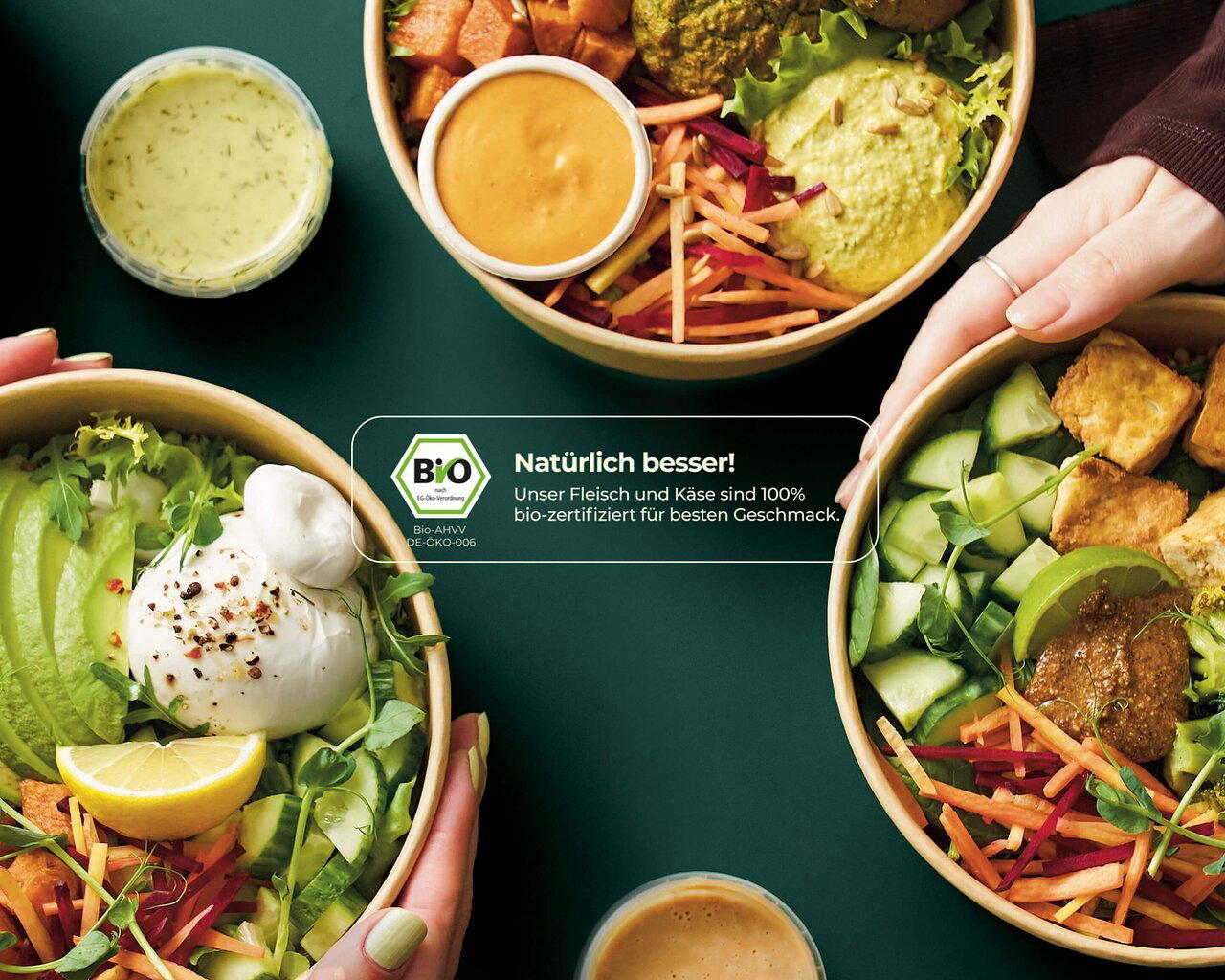
The Friedrichstraße Context
Düsseldorf's Friedrichstraße runs through a stretch of the city that is neither the Altstadt's evening-crowd concentration nor the Königsallee's luxury retail corridor. It occupies a working mid-city register: office lunch traffic, quick-service formats, and a resident population that eats out frequently but practically. In that environment, the salad-bar model operates very differently from how it performs in, say, a food-hall setting. The decision-making speed, portion customisation, and waste-minimisation logic of build-your-own bowls fit the noon hour here in a way that a plated restaurant format simply does not.
That context matters when reading STADTSALAT against the broader category. Germany's fast-casual plant-forward segment has expanded meaningfully over the past decade, particularly in cities with dense office districts. Formats like this one occupy a specific niche: they compete not against full-service restaurants but against döner counters, bakery lunches, and the growing tier of grain-bowl concepts that have followed the international trend toward ingredient transparency. In Düsseldorf's city centre, that competitive set includes everything from Alanya Döner to the more international-facing quick formats clustered near the Hauptbahnhof.
Sustainability as Operational Logic, Not Branding
The salad-bar format carries a structural sustainability argument that is worth separating from the marketing version of the same idea. When a kitchen builds its output around raw and minimally processed vegetables, the waste calculus changes: trim waste from a cucumber is categorically different from protein trim in a meat-forward kitchen, and cold-chain requirements are less energy-intensive than maintaining hot-holding lines. The build-your-own model also shifts over-ordering risk to the customer side rather than the kitchen, reducing prepared-food waste at the end of service.
This is not a claim unique to STADTSALAT as a brand, but it is a feature of the format they operate. Across European cities, the fast-casual salad segment has attracted diners who are less interested in ethical certification signals and more interested in what ends up in the bin at close of business. The format's answer to that question is structurally better than most of what surrounds it on a typical German high street. For a city like Düsseldorf, where 3h's burger & chicken and similar quick-service formats represent one end of the city-centre lunch spectrum, a venue built around cold, plant-heavy assembly represents a meaningfully different position on that axis.
How the Format Sits in the City's Eating Patterns
Düsseldorf's dining reputation is anchored at the fine-dining end by venues with significant national and international recognition. Restaurants in the German three-Michelin-star tier, such as Aqua in Wolfsburg and Schwarzwaldstube in Baiersbronn, define one pole of German culinary ambition. Closer to the city, Vendôme in Bergisch Gladbach represents the kind of destination dining that draws visitors from across the region. STADTSALAT operates in an entirely different register from all of that — and that distinction is the point.
The gap between a destination tasting menu and a lunchtime salad bowl is not a quality gap; it is a format gap. What fast-casual plant-forward venues contribute to a city's food system is frequency and accessibility. The question of whether a city's everyday eating reflects any of its high-end culinary values, including ingredient sourcing and minimal processing, is one the salad-bar tier answers more directly than most. The same shift toward seasonal produce and supplier transparency that informs the menus at places like JAN in Munich or ES:SENZ in Grassau filters into the fast-casual segment, albeit without the prestige apparatus.
Within Düsseldorf itself, the city's eating culture is broad. The Altstadt concentration of traditional German formats — Rhenish cuisine, Altbier-anchored taverns, contrasts with an internationally diverse quick-service tier that reflects the city's large expatriate and business-travel population. Venues like Arca Alacati and Anfora represent the mid-tier sit-down end of that internationalism. STADTSALAT sits in a faster, lighter lane.
The Ethical Sourcing Question in Fast-Casual
One underexamined aspect of plant-forward fast-casual formats is how sourcing ethics play out at volume. The fine-dining end of the market has well-developed language for supplier relationships, direct farm sourcing, and seasonal constraint. The fast-casual end tends to source at a scale where those relationships are harder to verify and harder to maintain consistently. That tension is not specific to STADTSALAT, it is a category-wide challenge. Venues like Amuni Wein- und Käsebar resolve it partly by operating at smaller volume, where producer relationships are more tractable. High-throughput salad concepts face a different version of the problem.
What can be said with confidence is that the format's commitment to cold, vegetable-led assembly does reduce certain environmental load factors compared to hot-food quick-service. It does not automatically resolve sourcing questions. Diners who treat that distinction as meaningful will find the format directionally aligned with their preferences; those seeking certified supply-chain transparency will need to ask specifically. The broader German consumer market has moved toward greater labelling pressure on this front, and fast-casual operators have had to respond more explicitly in recent years than was expected of them a decade ago.
Practical Considerations
STADTSALAT is located at Friedrichstraße 56, 40217 Düsseldorf. For visitors building a Düsseldorf eating itinerary across multiple formats and price points, the full Düsseldorf restaurants guide provides a broader map of the city's dining options, from quick-service through to the fine-dining tier represented nationally by venues like Victor's Fine Dining by christian bau in Perl, Waldhotel Sonnora in Dreis, and Restaurant Haerlin in Hamburg. For internationally focused comparisons, Le Bernardin in New York City, Atomix in New York City, CODA Dessert Dining in Berlin, and Schanz in Piesport represent different poles of the German and international dining spectrum.
Know Before You Go
- Address: Friedrichstraße 56, 40217 Düsseldorf, Germany
- Format: Fast-casual, build-your-own salad bar
- Well suited for: Weekday lunch, quick plant-forward meals
- Booking: Walk-in format; no reservation infrastructure expected for this category
- Phone / Website: Not publicly listed in current data
How STADTSALAT Düsseldorf compares with similar nearby venues.
| Venue | Cuisine | Price |
|---|---|---|
| Fritz's Frau Franzi | Creative | €€€€ |
Continue exploring
More in Düsseldorf
Restaurants in Düsseldorf
Browse all →
Bars in Düsseldorf
Browse all →
Hotels in Düsseldorf
Browse all →
Wineries in Düsseldorf
Browse all →
At a Glance
- Modern
- Trendy
- Business Dinner
- Casual Hangout
- Solo
- Organic
- Local Sourcing
Current opening hours
- Monday
- 11:30 AM–8:15 PM
- Tuesday
- 11:30 AM–8:15 PM
- Wednesday
- 11:30 AM–8:15 PM
- Thursday
- 11:30 AM–8:15 PM
- Friday
- 11:30 AM–8:15 PM
- Saturday
- 12:30–8:15 PM
- Sunday
- 12:30–8:15 PM
Hours can change for holidays and private events. Last verified .
Modern, chic, and clean setting that invites casual lingering.
Know Before You Go
- Getting there
- Friedrichstraße 56, 40217 Düsseldorf, Germany