
Tabelog 100 #99
Our verdict
Sapporo’s soup curry culture is built around broth, spice choice, and practical cold-weather eating rather than ceremony. Soup Curry Okushiba Shoten Ekimae souseiji sits in the city’s accessible curry tier, with Tabelog Curry EAST “Tabelog 100” selections in 2023 and 2024 giving it a firmer signal than the average station-area counter.

Pearl is the En Primeur Club membership app, where members save venues, book tables and use the concierge.
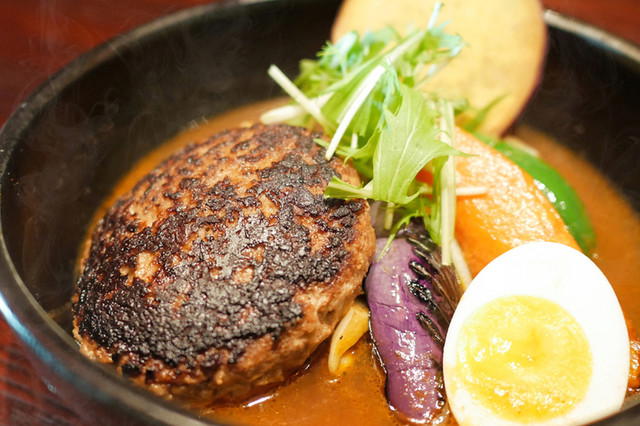
The menu
What to order
- Shrimp broth soup curry
- Hamburger steak soup curry
The approach is pure Sapporo casual dining: urban movement, quick lunch decisions, and a restaurant rhythm where practical meals matter. In that setting, soup curry makes particular sense. It is warming, modular, and less formal than the city’s hotel dining rooms, but it carries its own grammar: broth first, spice level second, rice on the side, then vegetables or protein doing the work of structure.
Soup Curry Okushiba Shoten Ekimae souseiji belongs to the practical end of that tradition rather than the destination-tasting-menu end of Sapporo eating. The useful signal is not luxury; it is consistency within a crowded local category. Recognition in the 2024 Tabelog Hyakumeiten curry selection puts it inside a recognized curry cohort, while its Tabelog score of 3.61 points to the kind of steady local approval that matters more here than imported fine-dining language.
Sapporo soup curry, read through broth rather than spectacle
Soup curry is one of Sapporo’s clearest contributions to Japanese casual dining. Unlike thicker Japanese curry rice, the Sapporo style usually treats the soup as a seasoned broth with rice kept separate, giving the diner more control over pace and ratio. That format is also why the category travels well across seasons: it works during deep winter without becoming heavy, and it can absorb vegetables, meat, and spice variations without losing its identity.
The sustainability angle in this style is quiet but relevant. Soup curry kitchens can make a meal feel abundant through broth architecture and vegetable use rather than luxury protein alone. That does not make every bowl an ethical manifesto, and no diner should read sourcing claims where none are stated. But as an urban format, soup curry is well suited to lower-waste thinking: stock-based cooking, flexible toppings, and portion structures that can serve office lunches, family meals, and solo dining without changing the basic production model.
Okushiba’s Sapporo presence is especially useful for understanding how the city’s curry scene differs from its ramen scene. Ramen often runs on speed, specialization, and noodle texture; soup curry gives more room to customize heat, rice, and add-ons. For contrast, other Sapporo dining rooms speak to the city’s appetite for spice in different forms, while unnamed curry specialists show how broad the curry conversation becomes once Sapporo moves beyond a single house style.
A Sapporo curry room with useful constraints
The format’s constraints shape the meal. This is a casual urban stop rather than a leisurely fine-dining room, and that changes the decision calculus: it is best read as a practical Sapporo meal rather than a table to build an entire evening around weeks ahead. Its role fits the city’s everyday movement; the appeal is convenience, pace, and a clear local identity.
That is also where the pricing sits intelligently. With lunch and dinner both listed in the JPY 1,000 - JPY 1,999 range, Soup Curry Okushiba Shoten Ekimae souseiji occupies a very different spend bracket from Teppanyaki Ishikari, SKY RESTAURANT “TANCHO,” or Restaurant & Bar “SKY J,” which serve different occasions entirely. Picante Sapporo ekimae ten sits in a comparable casual curry conversation, which is the more relevant comparison than Sapporo’s formal restaurants. The choice is not between luxury and compromise; it is between which version of local, fast-moving Sapporo dining fits the day.
There is also a visitor-friendly layer without turning the place into a tourist construct. The listed categories, Soup Curry, Curry, and Hamburger steak, make the format easy to understand before arrival, especially for diners trying to place the meal within Sapporo’s broader casual-food landscape. The value is in treating it as part of a day in motion rather than as a ceremonial detour.
How to place it within a Sapporo food itinerary
The strongest use case is a flexible Sapporo meal: casual enough for changing plans, and specific enough to avoid defaulting to generic city food. It also suits diners who want the city’s cold-climate comfort cooking without committing to ramen for every casual meal. The format is natural for friends, solo diners, and travelers who want a clear read on local casual dining.
For a broader map of the city, use this curry stop as one anchor rather than the whole story. Our full Sapporo restaurants guide gives the restaurant spread, while Our full Sapporo hotels guide, Our full Sapporo bars guide, Our full Sapporo wineries guide, and Our full Sapporo experiences guide help frame where to stay, drink, and spend time between meals. Sapporo rewards that kind of planning: casual food can be serious, and serious food does not always require a formal room.
Travelers building a wider Japan itinerary can also read this meal against other regional formats in general terms: beef-focused set dining, tuna and charcoal cooking, urban café pacing, contemporary regional dining, Vietnamese cooking in Japan, and quieter Kyoto-style restraint all show how different dining registers work across the country. Outside Japan, Japanese formats shift again when they leave their home context.
The editorial read is simple: this is not the Sapporo meal for ceremony. It is the Sapporo meal for understanding why soup curry has lasted as a civic comfort food: flexible, city-friendly, affordable, and credible enough to be recognized in the 2024 Tabelog Hyakumeiten curry selection. In a city with long winters and serious casual dining, that combination carries weight.
Frequently asked questions
What's Soup Curry Okushiba Shoten Ekimae souseiji's location?
Sapporo.
What's the pricing like at Soup Curry Okushiba Shoten Ekimae souseiji?
Pricing at Soup Curry Okushiba Shoten Ekimae souseiji is listed as JPY 1,000 - JPY 1,999 JPY 1,000 - JPY 1,999.
Can I walk in to Soup Curry Okushiba Shoten Ekimae souseiji?
Plan around ordinary Sapporo dining rhythms rather than assuming a formal occasion. Its 2024 Tabelog Hyakumeiten curry recognition and 3.61 Tabelog score make it a credible casual curry stop.
What is Soup Curry Okushiba Shoten Ekimae souseiji known for?
Soup Curry Okushiba Shoten Ekimae souseiji is known for Soup Curry, Curry, and Hamburger steak in Sapporo.
City Peers
Comparable venues to place this listing in its category.
| Venue | Cuisine | Price | Awards | Notes |
|---|---|---|---|---|
| Soup Curry Okushiba Shoten Ekimae souseijiThis venue (the venue you are viewing) | Hokkaido shrimp-broth soup curry | $20–30 | Tabelog 100 #99 | Not listed |
| Ramen Sapporo Ichiryuan | Hokkaido miso ramen | $10–20 | Tabelog 100 #88 | JPY 2,000 - JPY 2,999 JPY 1,000 - JPY 1,999 |
| Teppanyaki Ishikari | Teppanyaki & Wagyu Steakhouse | $100–150 | Tabelog 100 #82 | JPY 15,000 - JPY 19,999 JPY 8,000 - JPY 9,999 |
| SKY RESTAURANT “TANCHO” | Japanese Kaiseki | Not listed | Not listed | Not listed |
| Restaurant & Bar “SKY J” | International Hotel Dining with Hokkaido Ingredients | Not listed | Not listed | Not listed |
| Picante Sapporo ekimae ten | Sapporo soup curry | $10–20 | Tabelog 100 #35 | JPY 1,000 - JPY 1,999 |
Recognition history
Dated appearances from independent guides and award organizations, with the underlying list record or original source where available.
Tabelog 100 #99 · No. 99
Tabelog · Tabelog 100 - Curry - EAST - 2024
Continue exploring
More in Sapporo
Restaurants in Sapporo
All restaurants in Sapporo →
Bars in Sapporo
All bars in Sapporo →



Details
- Cozy
- Lively
- Classic
- Solo
- Family
- Group Dining
- Casual Hangout
- After Work
- Standalone
- Beer Program
- A La Carte
- Beer
- Pescatarian Friendly
Casual, cozy underground soup curry shop with a warm local feel, close seating in a compact 26-seat space, and the bustling atmosphere of a popular spot near Sapporo Station.