Soukaen sits in Hofu, a city in Yamaguchi Prefecture that rewards those who look beyond the obvious stops on the Sanyo coast. In a region where ingredient sourcing from the Seto Inland Sea and Chugoku mountain hinterland defines the table, Soukaen represents the kind of address that draws serious eaters prepared to travel for provenance over prestige. See our full guide to dining in Hofu for context on where it fits.
Pearl is the En Primeur Club membership app — saves, bookings, and concierge access live there. Same editors, same standards.
- Address
- 1 Chome-1-15 Kuwanoyama, Hofu, Yamaguchi 747-0808, Japan
- Phone
- +81835243000
- Website
- soukaen.biz
- Directions
- Get directions
 Saves & bookings on Pearl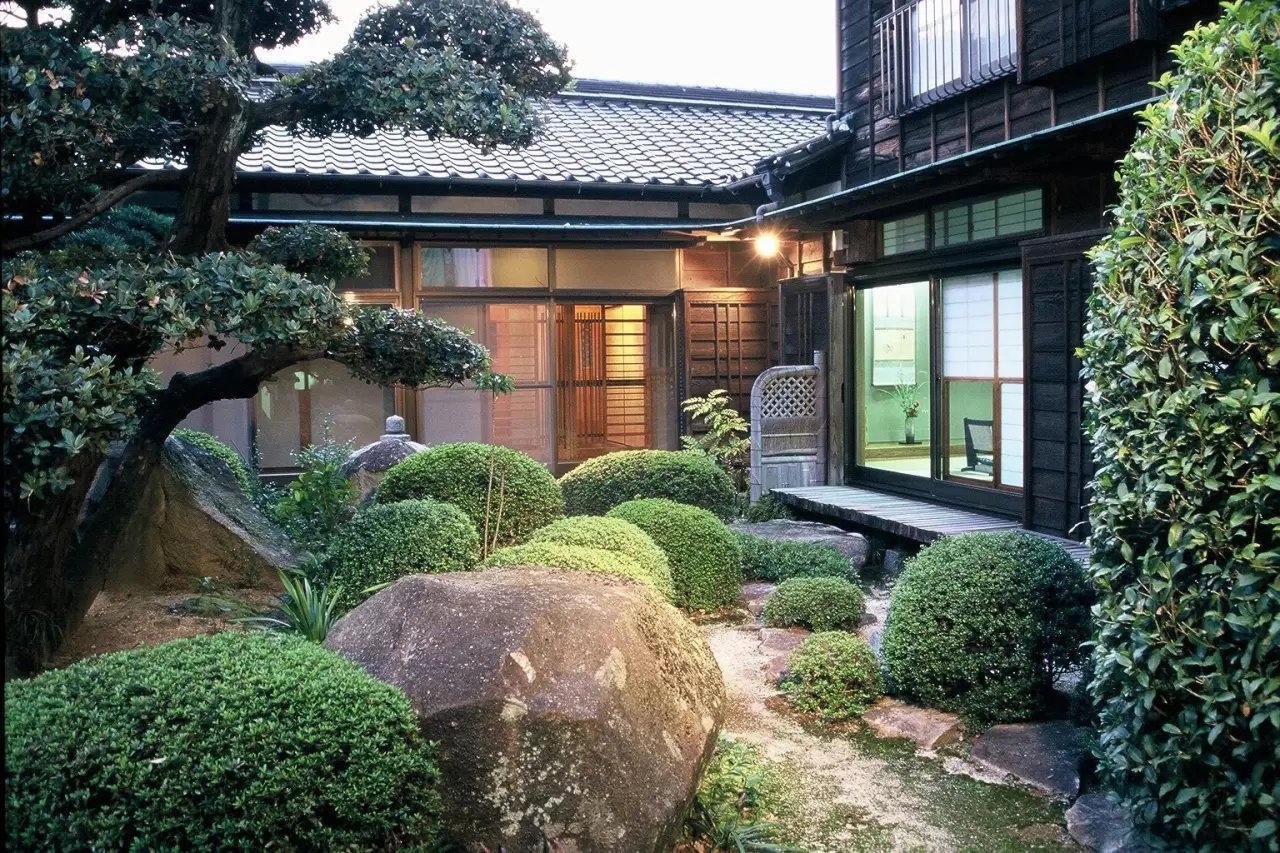
A City That Earns Its Detour
Hofu sits on the Sanyo coast of Yamaguchi Prefecture, roughly midway between Hiroshima and Shimonoseki, and is the kind of city that rarely appears on curated dining itineraries despite the quality of raw ingredients passing through it. The Seto Inland Sea, which frames this stretch of southern Honshu, is among Japan's most productive coastal zones: sea bream, octopus, oysters, and small-boat fish define the local table in ways that don't transfer easily to urban restaurant supply chains. What reaches a counter in Hofu on a Tuesday morning may not reach Osaka or Tokyo at equivalent freshness by any route. That provenance gap is precisely why destinations like Soukaen, at 1 Chome-1-15 Kuwanoyama, draw the attention they do from visitors who treat ingredient origin as a primary filter rather than an afterthought.
What the Setting Signals
Kuwanoyama is a residential address in Hofu's central grid, the kind of location that in Japanese dining culture often signals a deliberately local orientation: this is not a venue positioned for tourist foot traffic or transit convenience. Arriving here on foot from Hofu Station involves a short walk through a streetscape that shifts from civic to residential in a way that primes the transition into a quieter, more considered meal. Japan's smaller-city dining culture has a long tradition of this arrangement. The venues that matter most are frequently unmarked or underlit from the exterior, their reputations sustained by repeat custom and word-of-mouth rather than visibility. Soukaen is a restaurant in Hofu, Yamaguchi Prefecture serving traditional Japanese kaiseki with tenjin hamo, priced at about $50 per person. Soukaen fits that pattern.
Comparable addresses in Japan's secondary cities follow similar logic. Gion Sasaki in Kyoto and akordu in Nara both operate in cities where the dining address functions as a deliberate statement of local rootedness rather than metropolitan ambition. Soukaen's Kuwanoyama location reads the same way.
Yamaguchi's Ingredient Geography
Understanding what a Yamaguchi kitchen works with requires a brief geography lesson. The prefecture occupies the westernmost tip of Honshu, bordered by three distinct bodies of water: the Seto Inland Sea to the south, the Hibiki Sea to the north, and the Kanmon Strait at its western edge. Each supports a different catch profile. Inland, the Chugoku mountains feed river systems that supply freshwater fish, mountain vegetables, and wild forage that shift meaningfully with the seasons. Spring brings bamboo shoots and wild greens; autumn moves toward root vegetables, mushrooms, and the deeper flavours that suit slow preparations.
Fugu, the puffer fish that Yamaguchi Prefecture produces in larger volume than anywhere else in Japan, is the region's most discussed ingredient internationally. But the more instructive story is in the everyday supply: small-boat fishers working the Seto shallows, agricultural producers in the Hofu plain, and the preserved food traditions — dried fish, pickled vegetables, fermented seasonings — that connect modern kitchens to centuries of local practice. Restaurants operating within that supply network have a structural advantage that no amount of metropolitan purchasing power can replicate. The ingredient simply doesn't travel as well as the reputation.
This is the sourcing logic that separates regional Japanese dining from its urban counterparts at places like Harutaka in Tokyo or HAJIME in Osaka, where extraordinary technique compensates for the miles between catch and counter. In Hofu, the miles are simply shorter.
The Regional Dining Context
Japan's western Honshu corridor has been developing a more coherent dining identity over the past decade, partly through the expansion of Michelin coverage into smaller cities and partly through increased domestic travel by Japanese diners seeking alternatives to the saturated prestige circuits of Tokyo and Kyoto. Fukuoka anchors the western end of this corridor; Goh in Fukuoka exemplifies the kind of technically serious, regionally grounded cooking that has raised the benchmark for the broader area. Yamaguchi Prefecture benefits from proximity to that conversation without being subsumed by it.
The result is a dining environment where smaller operators can sustain a strong local following without competing directly on the recognition metrics that govern Tokyo bookings. Addresses like 三本木 石川製 in Nanao and 湖鱒庄屋 in Takashima illustrate how regional specificity, rather than national profile, can be the more durable foundation for a serious kitchen. Soukaen operates in that same register.
Further afield, comparisons with coastally-sourced programs at Blue Ocean Steak in Nakagami District and ingredient-focused menus at bodai point to a wider pattern across Japan's regional dining scene: the most interesting sourcing stories are happening away from the headline cities.
Placing Soukaen in the Hofu Picture
Within Hofu specifically, the dining scene is anchored by seafood-led formats that reflect the city's proximity to the Seto coast. いか鮮本家 represents the more casual end of that spectrum, a reference point for understanding the range across which Hofu's restaurants operate. Soukaen occupies a different position in that range, one shaped by its address and the expectations that come with it.
Other regional operators that repay attention for those building a western Honshu itinerary include 夕日亭乃川亭 in Sapporo, 庄羽屋 in Nishikawa Machi, and Bistro Ange in Toyohashi, each of which illustrates a different facet of how Japan's secondary cities are building credible dining identities on local terms. For those whose reference points run to international programs, Le Bernardin in New York City and Atomix in New York City offer a useful counterpoint: what world-class technique looks like when decoupled from regional sourcing, and why the trade-off matters.
Planning a Visit
Hofu is accessible by Shinkansen from Hiroshima in under thirty minutes and from Shin-Osaka in approximately ninety, with local connections from Shin-Yamaguchi Station on the Ube Line. The city itself is compact and walkable from Hofu Station. Soukaen is open daily from 11:30 AM to 3 PM and 5 to 10 PM, and reservations are essential. Yamaguchi Prefecture's dining culture tends toward earlier service times than Tokyo norms, and many smaller operators close between lunch and dinner without posted notice, so confirming arrangements in advance is standard practice rather than optional. Seasonal timing matters: the Seto Inland Sea's seafood supply shifts substantially between spring and winter, and a visit calibrated to the season will return a more coherent picture of what the kitchen is working with. For additional context on restaurants in the area, Cafe Naoshima Konichiwa in Naoshima and Birdland in Sakai round out the picture of what serious eating across this part of the Seto corridor looks like in practice.
- Tenjin Hamo Course
- Hamo Shabu
- Hamo Sashimi
- Hamo Somen
- Seared Hamo
- Puffer Fish Course
At a Glance
- Elegant
- Romantic
- Classic
- Scenic
- Special Occasion
- Date Night
- Group Dining
- Celebration
- Private Dining
- Garden
- Historic Building
- Standalone
- Sake Program
- Local Sourcing
- Sustainable Seafood
- Garden
Current opening hours
- Monday
- 11:30 AM–3 PM, 5–10 PM
- Tuesday
- 11:30 AM–3 PM, 5–10 PM
- Wednesday
- 11:30 AM–3 PM, 5–10 PM
- Thursday
- 11:30 AM–3 PM, 5–10 PM
- Friday
- 11:30 AM–3 PM, 5–10 PM
- Saturday
- 11:30 AM–3 PM, 5–10 PM
- Sunday
- 11:30 AM–3 PM, 5–10 PM
Hours can change for holidays and private events. Last verified .
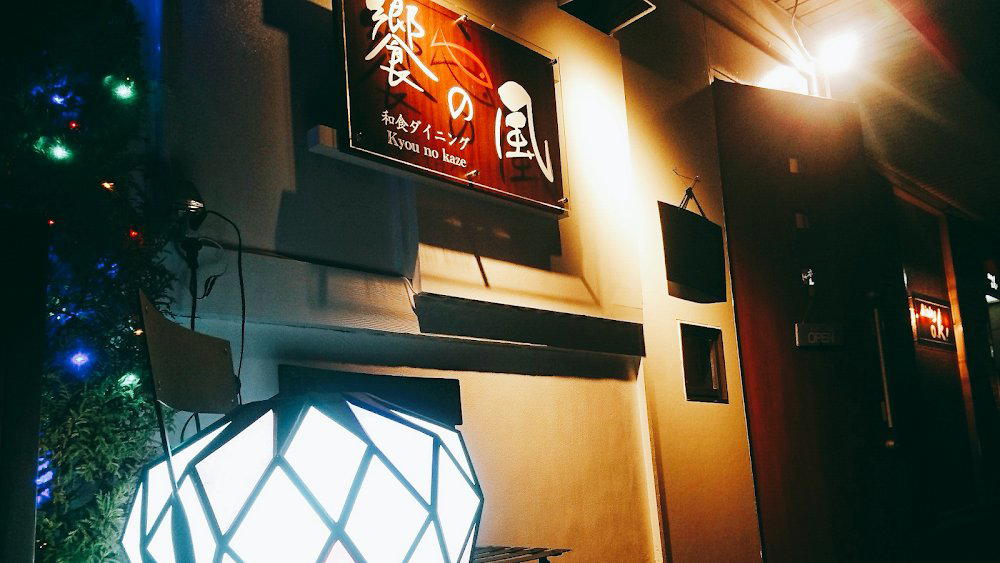
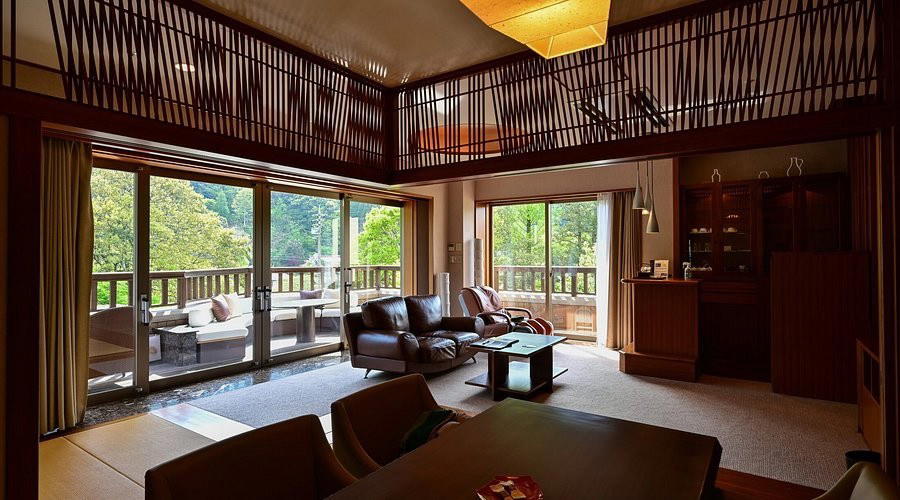
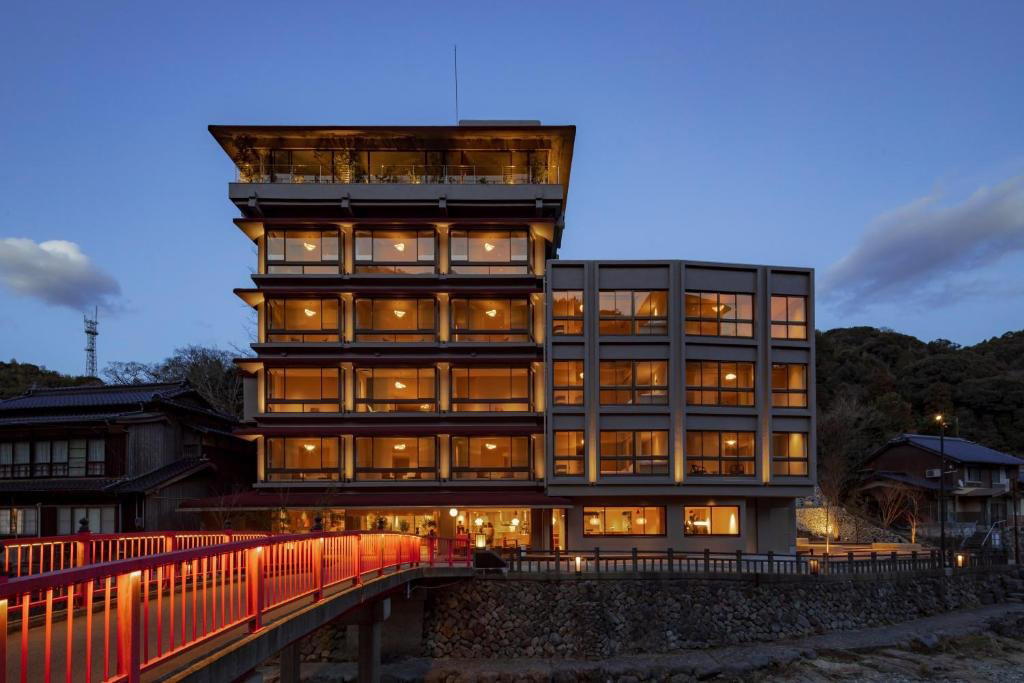
Serene and refined atmosphere enhanced by a traditional Japanese garden; intimate setting in a pure Japanese house made of stucco and cypress.
Know Before You Go
- Getting there
- 1 Chome-1-15 Kuwanoyama, Hofu, Yamaguchi 747-0808, Japan