Soregashi
On Santa Monica Boulevard in Hollywood, Soregashi occupies a register that LA's Japanese dining scene has increasingly carved out: intimate, deliberately paced, and rooted in a culinary tradition that resists shorthand. The address places it among a generation of Japanese restaurants in Los Angeles that draw on deep craft lineage rather than broad-menu accessibility, making it a reference point for the city's serious omakase and kaiseki tier.
Pearl is the En Primeur Club membership app — saves, bookings, and concierge access live there. Same editors, same standards.
- Address
- 6775 Santa Monica Blvd #3, Los Angeles, CA 90038
- Phone
- +13234985060
- Website
- soregashi-la.com
- Directions
- Get directions
 Saves & bookings on Pearl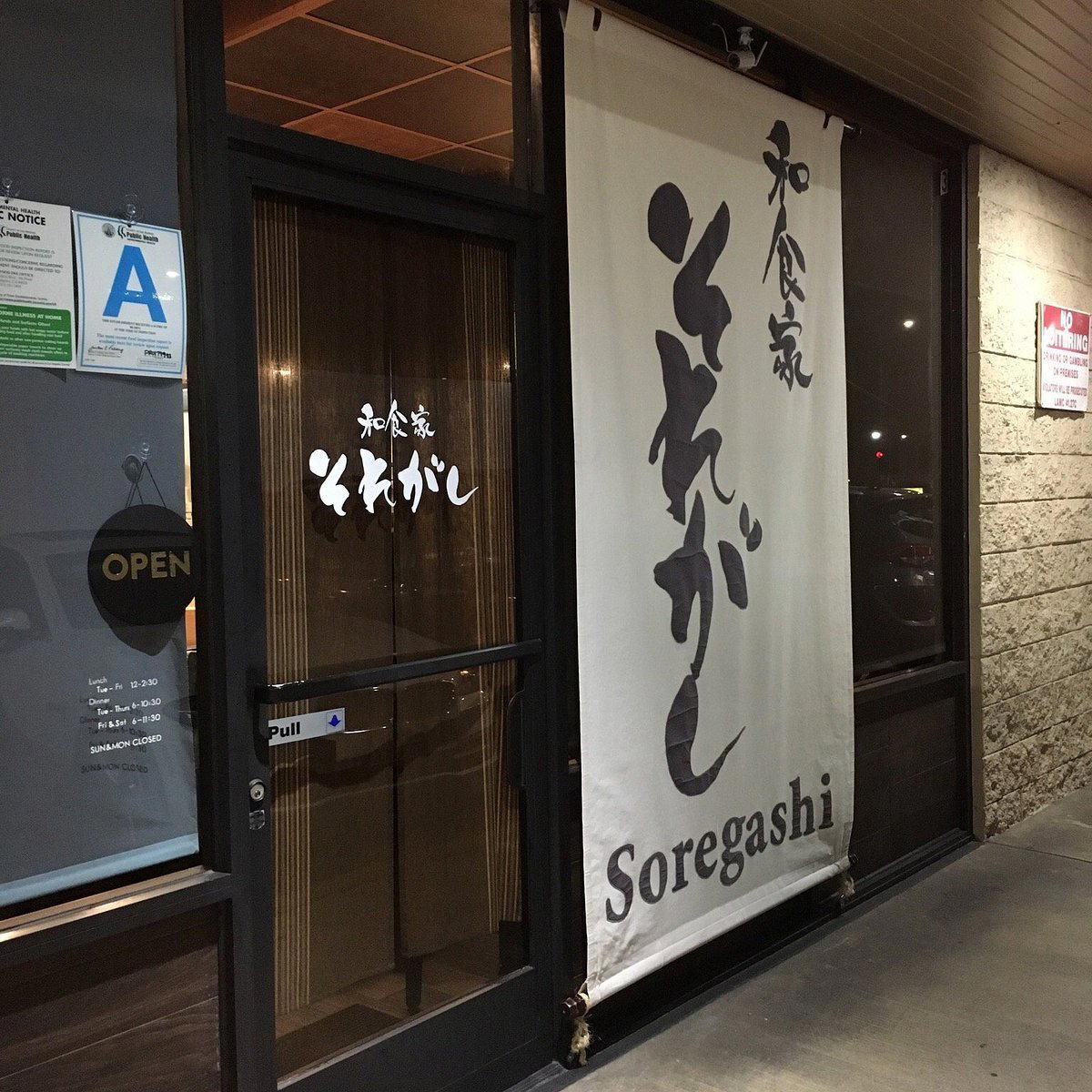
Japanese Dining in Los Angeles: Where Soregashi Sits in the Conversation
Los Angeles has, over the past two decades, developed one of the most consequential Japanese dining scenes outside Japan itself. That development did not happen evenly. It moved in waves: first the democratization of sushi across the city's sprawl, then the arrival of serious ramen culture, then a quieter but more significant shift toward high-commitment Japanese formats — kaiseki, omakase, and kappo — that demand both culinary fluency from the kitchen and patience from the guest. Soregashi, at 6775 Santa Monica Boulevard in Hollywood, belongs to that third wave. It is not a gateway restaurant. It is a restaurant for people who already know what they are looking for.
The Santa Monica Boulevard corridor through Hollywood and into West Hollywood has long functioned as a kind of informal axis for LA's Japanese community businesses. Soregashi's position at that address places it in a neighborhood where Japanese cultural institutions, grocers, bookshops, izakayas, have layered over decades, giving the area an ambient fluency with Japanese culinary codes that a downtown or Westside location might not carry. That context matters. The city's most focused Japanese restaurants tend not to explain themselves at length. They assume a baseline of knowledge in the room.
The Cultural Weight of Restraint-Based Japanese Cooking
To understand what distinguishes the upper tier of LA's Japanese dining from its broader market, it helps to understand what Japan's most disciplined culinary traditions are actually doing. Kaiseki, the multi-course form rooted in Kyoto's tea ceremony culture, is not a tasting menu in the European sense. It is a seasonal and philosophical structure, where the sequence of dishes traces a logic of temperature, texture, and ingredient that mirrors the progression of a meal in classical Japanese aesthetics. Kappo, a freer format that emerged from Osaka, brings that precision to a counter setting where the cook works openly in front of the guest.
Both traditions share a core commitment: the ingredient, treated with technical precision and minimal interference, is the statement. This is not the restraint of limitation. It is the restraint of confidence. In a city where restaurants regularly compete on spectacle, the Japanese dining tradition at its most serious operates on different terms entirely, terms that LA's most attentive diners have come to read as fluently as they read any other culinary language. For comparable depth of commitment in the Japanese format in Los Angeles, Hayato in the Arts District represents the kaiseki tier, drawing multi-month reservation queues for its highly structured omakase. Soregashi enters a related but distinct conversation.
How Soregashi Compares Within LA's High-Commitment Japanese Tier
Hayato holds a Michelin star and operates a fully structured kaiseki format with advance bookings that reflect its recognition. Kato, while Taiwanese rather than Japanese in its culinary roots, occupies a similar conceptual register: intimate, counter-forward, and oriented toward a guest who is investing in an experience rather than a meal. These restaurants collectively represent LA's answer to the question of what precision dining looks like outside the French-lineage model.
The broader LA fine dining tier includes French-leaning and New American formats, Providence with its contemporary seafood focus, Somni at the molecular and progressive end, and Osteria Mozza anchoring the Italian category, but those formats operate on different structural logic. Soregashi's point of reference is not that group. It is the smaller cohort of Japanese-rooted restaurants where the cultural tradition itself sets the terms, not the European tasting-menu convention.
Nationally, the analogues are instructive. Atomix in New York City performs a similar function for Korean fine dining: a non-European culinary tradition rendered at the highest technical level, with awards recognition that has brought it into the conversation with Le Bernardin and its peers. The question for LA's Japanese dining tier is whether it achieves comparable critical gravity. Hayato's Michelin recognition suggests the infrastructure for that recognition exists. Soregashi sits within a scene that has demonstrated it can earn it.
Hollywood as a Dining Address: Reading the Neighborhood
Hollywood's dining identity has historically been complicated by its tourist-facing surface, a strip of high-volume, low-ambition operations built around the Walk of Fame corridor. But the blocks running east-west along Santa Monica Boulevard tell a different story. This stretch functions as a neighborhood dining address rather than a destination address, which in practice means the room fills with locals, industry regulars, and a guest demographic that is not consulting a tourist map. For a restaurant operating in the Japanese tradition of quiet craft, that audience mix matters. A room that understands what it is watching is a fundamentally different room from one that needs everything explained.
For broader context on how Hollywood fits within LA's dining geography, and how Soregashi's address relates to other high-commitment operations across the city, our full Los Angeles restaurants guide maps the neighborhoods and formats in detail.
Planning a Visit: What to Know Before You Go
For restaurants in this tier in Los Angeles, a category that includes Hayato and the upper omakase counters, advance planning of four to eight weeks is a reasonable baseline expectation, with popular time slots filling faster. The Santa Monica Boulevard address is accessible by Metro (the B Line's Hollywood/Vine and Hollywood/Highland stations are both within walking distance), which is a practical consideration for a format where a full omakase or tasting progression makes driving afterwards inadvisable.
Comparable investment-level dinners nationally, Lazy Bear in San Francisco, Single Thread Farm in Healdsburg, The French Laundry in Napa, Alinea in Chicago, Addison in San Diego, Blue Hill at Stone Barns in Tarrytown, The Inn at Little Washington, Bacchanalia in Atlanta, and Emeril's in New Orleans, all operate with advance reservation requirements and, in most cases, prepayment or deposit structures that reflect the per-head investment involved. LA's equivalent tier follows the same logic. Arriving without a reservation at a restaurant of this type, particularly mid-week, occasionally works; on weekends, it does not.
How Soregashi Los Angeles compares with similar nearby venues.
| Venue | Cuisine |
|---|---|
| Salt’s Cure | New American |
Continue exploring
More in Los Angeles
Restaurants in Los Angeles
Browse all →
Bars in Los Angeles
Browse all →
Hotels in Los Angeles
Browse all →
Wineries in Los Angeles
Browse all →
At a Glance
- Classic
- Casual Hangout
- Sake Program
Current opening hours
- Monday
- Closed
- Tuesday
- 5:30–10 PM
- Wednesday
- 5:30–10 PM
- Thursday
- 5:30–10 PM
- Friday
- 5:30–10 PM
- Saturday
- 5:30–10 PM
- Sunday
- Closed
Hours can change for holidays and private events. Last verified .
Casual strip mall setting providing an authentic Japanese dining experience focused on fresh sushi and traditional preparations.
Know Before You Go
- Getting there
- 6775 Santa Monica Blvd #3, Los Angeles, CA 90038