Tabelog 100 #42
Our verdict
Soba Kiri Oshiro gives Osaka’s soba scene a quieter counterpoint to the city’s louder street-food shorthand. Its Tabelog 100 Soba WEST selections in 2024 and 2025 place it among the region’s serious buckwheat specialists, while the format remains restrained, accessible, and suited to diners who value craft over ceremony.

Pearl is the En Primeur Club membership app, where members save venues, book tables and use the concierge.
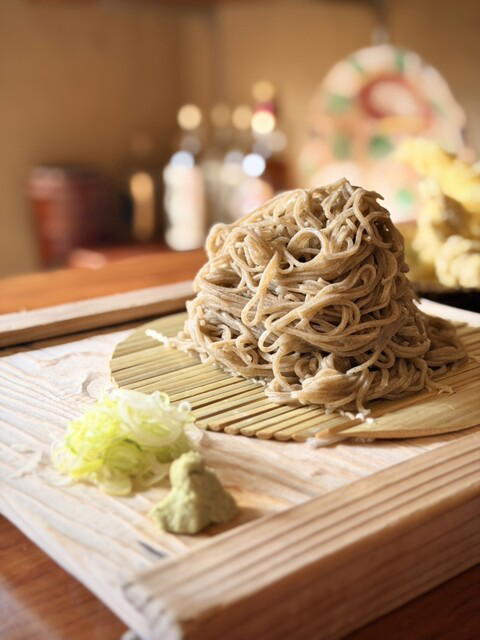
Approaching Soba Kiri Oshiro in Osaka, the mood shifts from the city’s neon appetite to something lower in volume: a specialist noodle stop where the appeal lies in focus, timing, and the quiet pace of a simple meal rather than spectacle. That setting matters for soba. The cuisine rewards attention to grain, water, cut, and timing, not theatrical plating. Soba Kiri Oshiro belongs to Osaka’s tradition of specialist noodle houses where the meal is precise, restrained, and judged on craft.
Osaka is often read through takoyaki, okonomiyaki, kushikatsu, and the city’s gift for feeding crowds quickly. Soba asks for a different lens. In western Japan, where udon often dominates casual noodle culture, a serious soba room has to make its case with texture and discipline. Recognition in the 2025 Tabelog Hyakumeiten listings gives Soba Kiri Oshiro a useful external signal: this is not merely a casual noodle stop, but part of a smaller class of buckwheat-focused Osaka dining rooms.
Osaka value, soba discipline, and a meal that does not need ceremony
The value proposition here is not volume. It is the chance to eat a narrowly focused Japanese craft meal without entering the pricing logic of tasting-menu Osaka. Compared with casual udon addresses such as Kamaage Udon Isshin or Udon Yukino, the meal reads as more deliberately specialised; compared with dinner-led Osaka rooms such as PiEDRA or Matasaburo, the commitment remains compact. That middle position is the point: soba technique, a Japanese-cuisine setting, and a focused meal that suits a solo diner as well as two friends.
Good soba houses tend to be unforgiving because the variables are few. Buckwheat can read coarse, fragrant, clean, or flat depending on milling, hydration, and cut. The dipping broth has to carry depth and seasoning without smothering the noodle. The meal’s apparent simplicity is why a recognised soba specialist can feel more revealing than a longer menu elsewhere. There is less to hide behind.
Soba Kiri Oshiro’s appeal is strongest for travellers who have already eaten the obvious Osaka hits and want a different register of the city. The experience is best understood as a focused noodle stop rather than a long social meal. Its listed budget of JPY 2,000–JPY 2,999 for both lunch and dinner frames the visit clearly: this is a compact craft recommendation, not a splurge built around breadth or ceremony.
Where it fits in Osaka's quieter dining map
Osaka is not only the postcard version of dining, and that helps. Soba Kiri Oshiro sits within the city’s broader rhythm of purposeful, specialist meals, away from the idea that every memorable stop has to be loud, central, or built for spectacle. That extra intent is part of the editorial case. Osaka’s better meals are not confined to a single dining format; they often sit in everyday parts of the city where repeat local traffic matters more than passing spectacle.
For a broader read on the city, place this stop alongside other Osaka dining that shows different forms of precision: bakery craft, casual local rhythm, mass-appeal comfort food, pizza technique, and Italian dining. None of those are substitutes for soba; together they show how Osaka’s food culture moves between speed, craft, and local loyalty. Soba Kiri Oshiro’s role in that map is narrower and more specific: buckwheat noodles, Japanese cuisine, and a restrained meal where the category itself does most of the talking.
Travellers building a full city plan should use a wider Osaka restaurants guide for dining, then pair it with Osaka hotels, bars, wineries, and experiences research. The wider Japan map also rewards cross-reading across regional food styles, but this venue is best judged on its own terms rather than by importing expectations from other cities or formats. For Japanese dining culture abroad, generic comparisons can be interesting, yet Soba Kiri Oshiro’s case remains local: a recognised Osaka soba specialist with a clear budget and a focused reason to visit.
The practical judgment: go for craft, not breadth
This is a narrow recommendation, which is exactly why it works. Diners seeking a broader Osaka night out may prefer to build the meal into a wider itinerary, while diners interested in soba as a craft category get a clearer bargain: a recognised regional specialist, a compact meal, and a setting that asks for focus rather than ceremony. The 2025 Tabelog Hyakumeiten recognition and a listed score of 3.60 give the visit a credible filter, but the stronger reason to go is category fit. In a city famous for louder pleasures, this is Osaka in a quieter key.
Frequently asked questions
Where is Soba Kiri Oshiro located?
Osaka.
What's the price range at Soba Kiri Oshiro?
Pricing at Soba Kiri Oshiro is listed as JPY 2,000 - JPY 2,999 JPY 2,000 - JPY 2,999 View spending breakdown.
When can I go to Soba Kiri Oshiro?
Check current opening details directly before visiting Soba Kiri Oshiro, as specific hours are not provided here.
What makes Soba Kiri Oshiro worth seeking out?
Its 2025 recognition in Tabelog Hyakumeiten gives it immediate credibility, and its listed categories are Soba (Buckwheat noodles) and Japanese Cuisine. In Osaka, it also keeps pricing in the JPY 2,000–JPY 2,999 range for both lunch and dinner, which makes the focus on soba craft easier to justify.
Same-City Peers
Comparable venues to calibrate price, style, and recognition.
| Venue | Cuisine | Price | Awards | Notes |
|---|---|---|---|---|
| Soba Kiri OshiroThis venue (the venue you are viewing) | Traditional Soba Noodle Shop | $20–30 | Tabelog 100 #42 | Not listed |
| Kama Hiro | Japanese Udon | $10–20 | Tabelog 100 #90 | JPY 1,000 - JPY 1,999 JPY 1,000 - JPY 1,999 |
| PiEDRA | Spanish restaurant & bar | $30–50 | Tabelog 100 #78 | JPY 5,000 - JPY 5,999 JPY 1,000 - JPY 1,999 |
| Matasaburo | Dry-aged Wagyu Steak & Yakiniku | $50–100 | Tabelog 100 #16 | JPY 10,000 - JPY 14,999 JPY 4,000 - JPY 4,999 |
| Udon Yukino | Osaka Udon & Curry Udon Shop | $10–20 | Tabelog 100 #58 | JPY 999 |
| Kamaage Udon Isshin | Traditional Kamaage Udon Shop | $10–20 | Tabelog 100 #16 | JPY 999 JPY 1,000 - JPY 1,999 View spending breakdown |
Recognition history
Dated appearances from independent guides and award organizations, with the underlying list record or original source where available.
Tabelog 100 #42 · No. 42
Tabelog · Tabelog 100 - Soba - WEST - 2025