
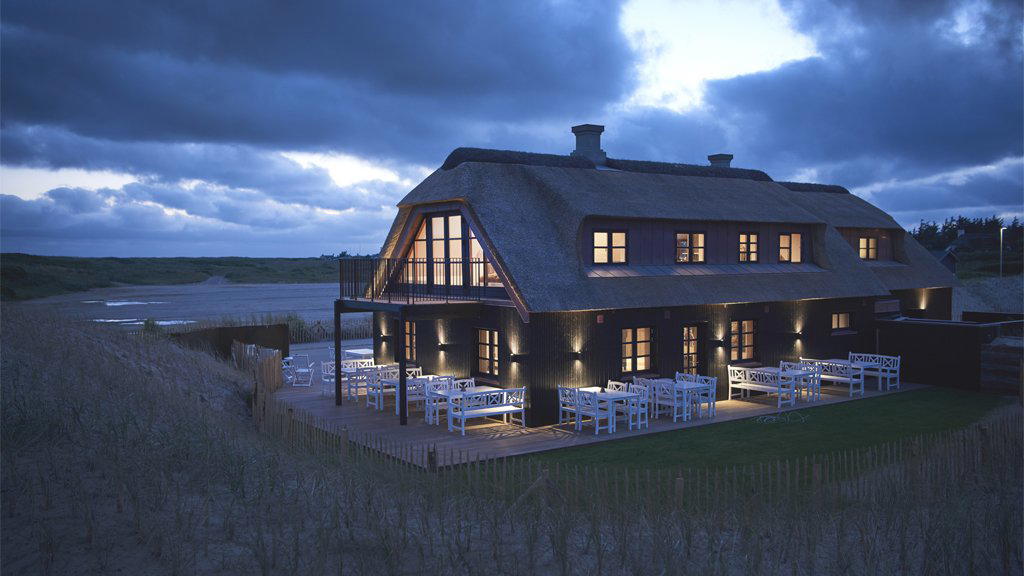
Sønderho Kro occupies a thatched inn at the southern tip of Fanø, one of Denmark's most remote inhabited islands. The kitchen draws on the island's coastal position and Jutland's agricultural interior, placing it within a tradition of destination dining that Denmark's rural west has quietly sustained for decades. For travellers willing to cross the ferry, the reward is a meal grounded in place rather than performance.
Pearl is the En Primeur Club membership app — saves, bookings, and concierge access live there. Same editors, same standards.
- Address
- Kropladsen 11, 6720 Fanø, Denmark
- Phone
- +4575164009
- Website
- sonderhokro.dk
- Directions
- Get directions
 Saves & bookings on Pearl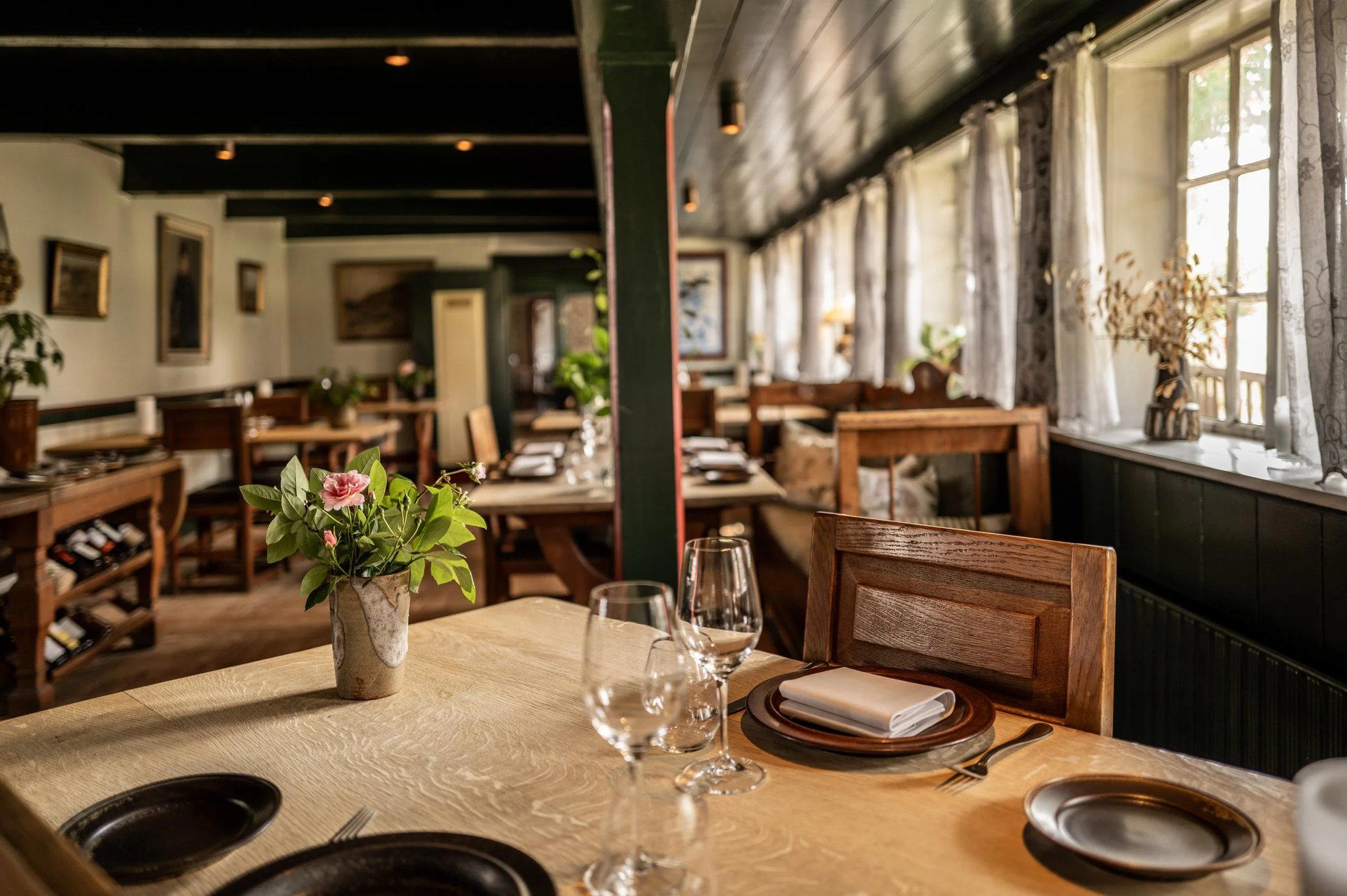
Where the North Sea Shapes the Plate
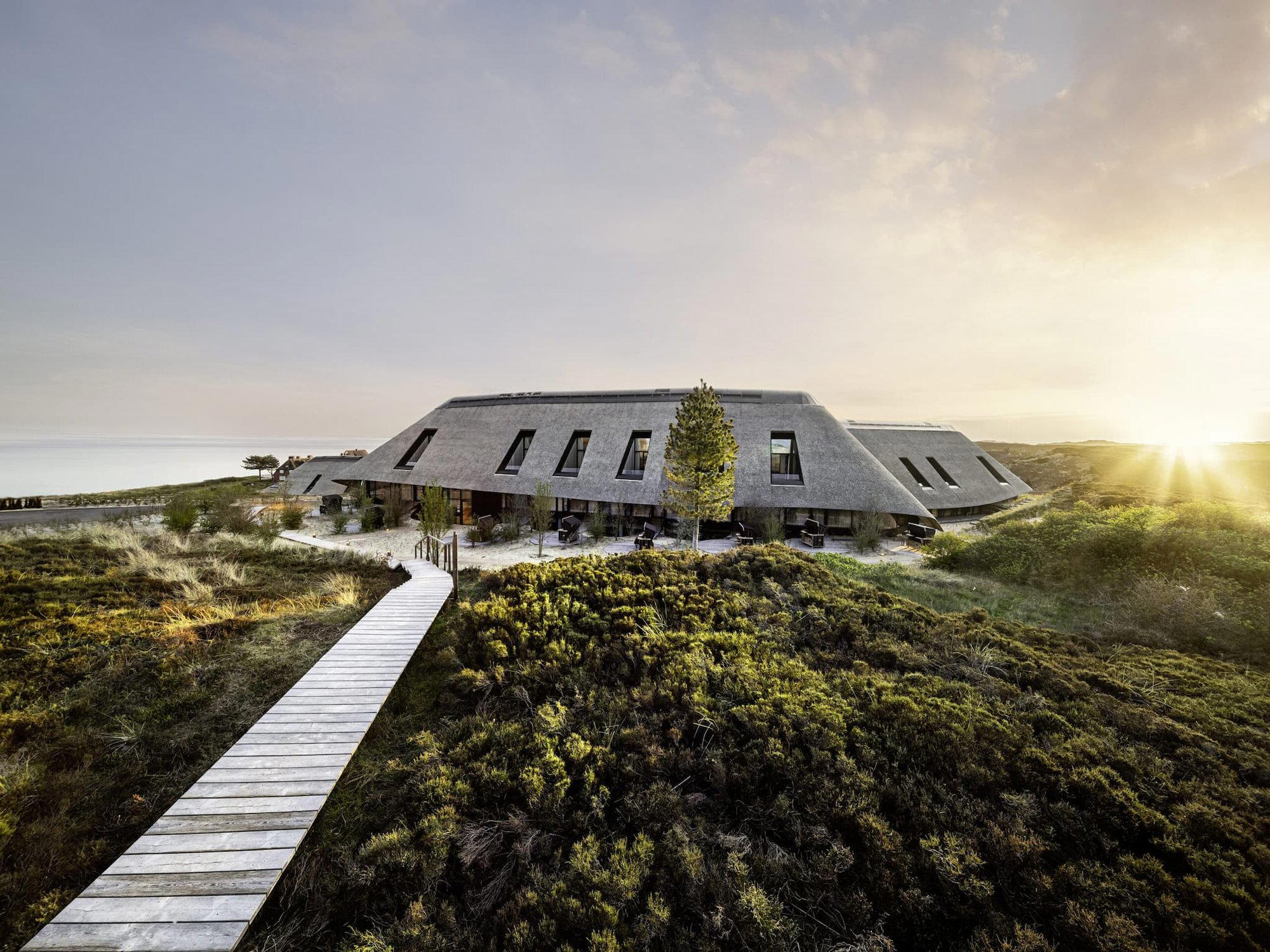
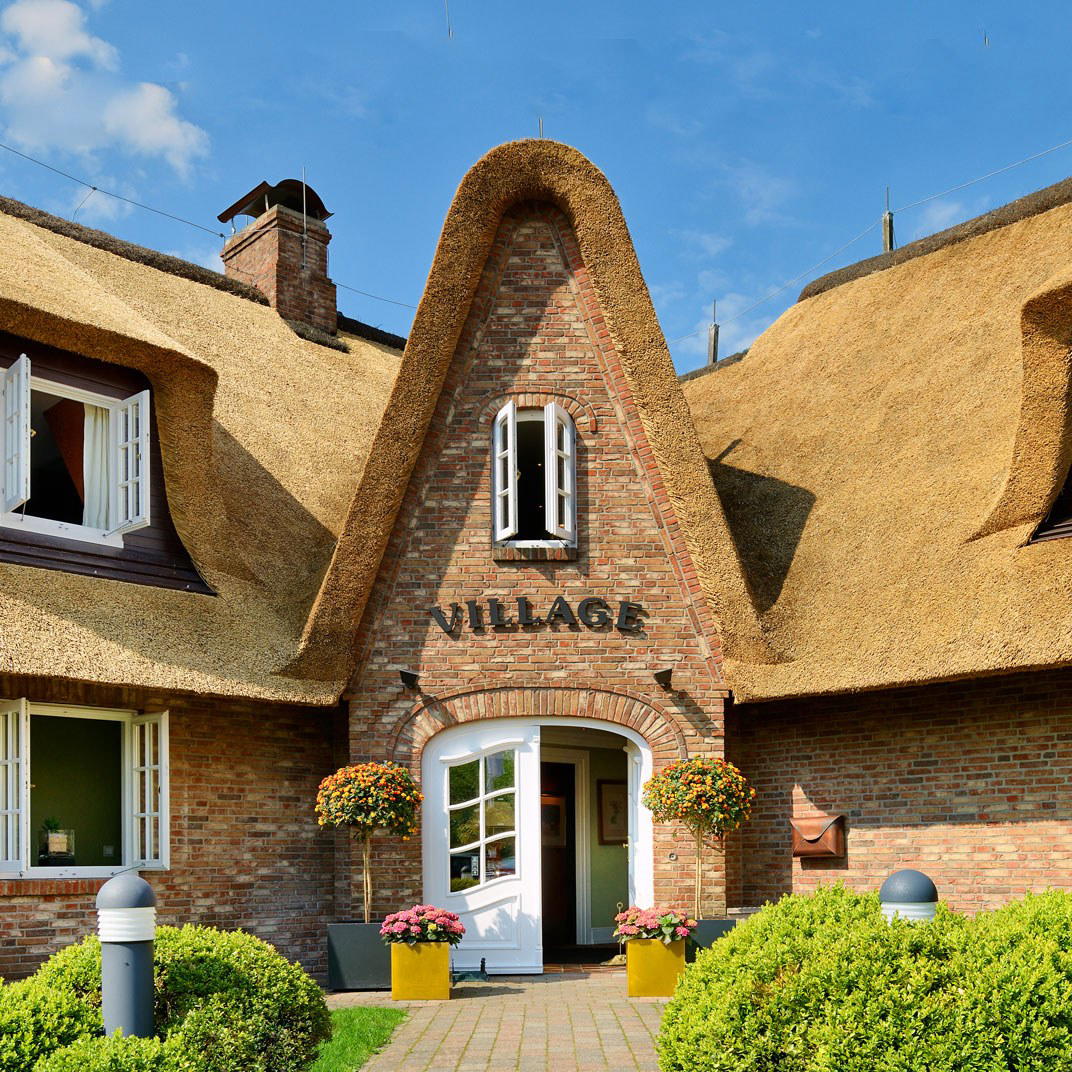
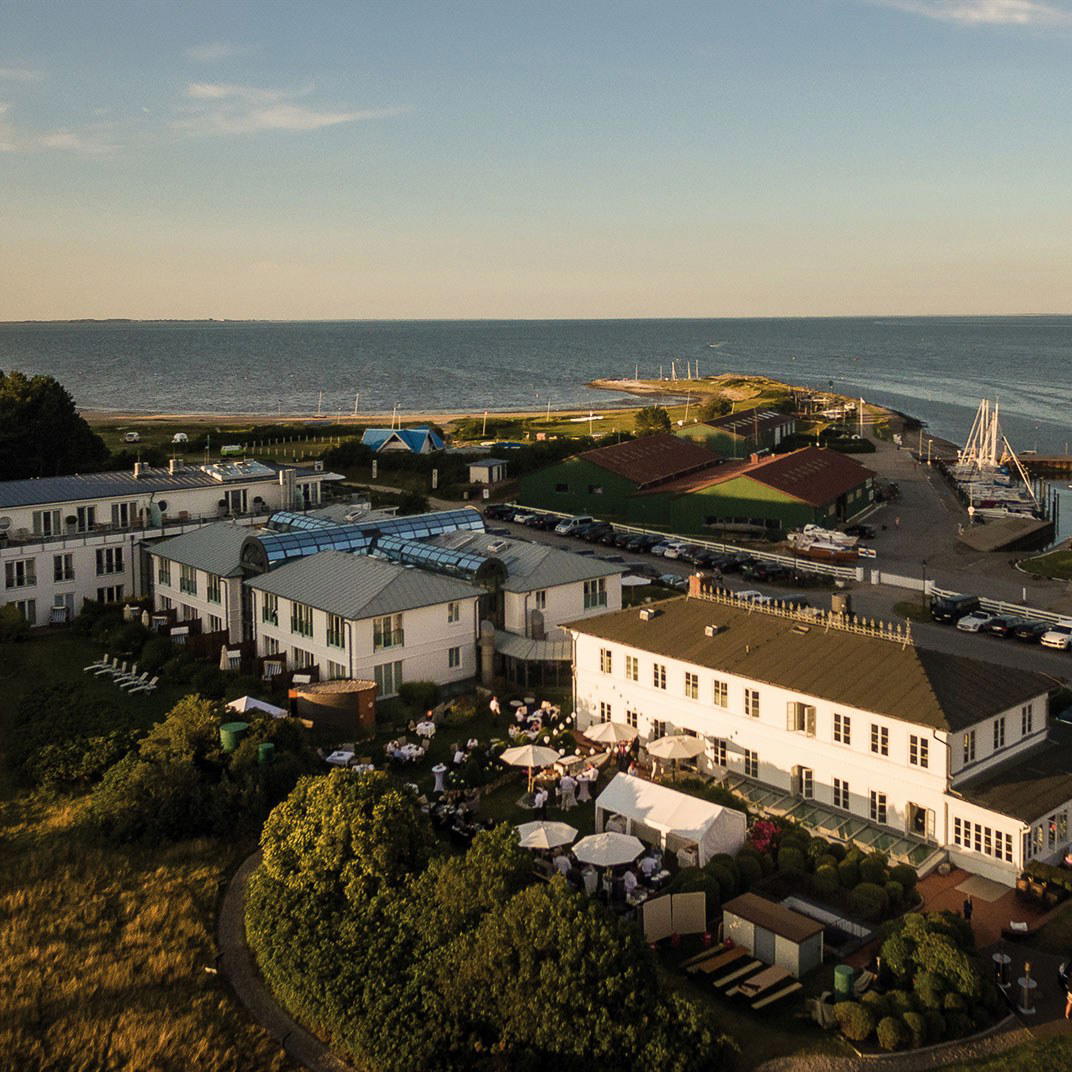
Fanø is not a convenient destination. To reach Sønderho Kro, you cross the ferry from Esbjerg, a twelve-minute passage that nonetheless signals a deliberate departure from the mainland's dining circuit. The village of Sønderho sits at the island's southern end, a cluster of low thatched houses where the wind off the Wadden Sea is a constant presence. Arriving at Kropladsen 11, the inn reads as an extension of that environment: whitewashed walls, a thatched roof, and proportions that suggest centuries of weathering rather than recent renovation. The physical context is not incidental to the meal that follows, it is the premise of it.
Denmark's western coast has long operated a strand of serious destination dining that the Copenhagen conversation tends to overshadow. Henne Kirkeby Kro in Henne established decades ago that rural Jutland could sustain a kitchen at serious European level. LYST in Vejle and Frederikshøj in Aarhus have since extended that logic further north. Sønderho Kro belongs to this tradition: a kitchen whose authority derives not from urban proximity but from the specificity of its location. The Wadden Sea coastline, a UNESCO World Heritage site, produces a distinct larder, tidal mudflats, salt marsh grazing, North Sea fish populations, that a kitchen positioned here can access in ways that no city restaurant can replicate.
Ingredient Logic: What the Island Provides
The sourcing argument for cooking on Fanø is geographic before it is philosophical. The Wadden Sea's tidal flats yield shellfish whose salinity and mineral character reflect a specific marine environment. Salt marsh lamb, grazed on vegetation that grows in brackish conditions along the Jutland coast, carries a flavour profile that differs measurably from inland-reared animals. These are not marketing narratives, they are the product of verifiable ecological conditions, the same conditions that have led chefs in northern France's Mont-Saint-Michel bay and England's Gower Peninsula to build regional identities around comparable salt marsh terroirs.
Denmark's broader New Nordic movement, anchored by kitchens like Geranium in Copenhagen and the now-closed Noma, articulated a sourcing discipline that has since filtered into regional kitchens across the country. What distinguishes the leading rural practitioners from trend-followers is whether geography actually constrains and informs the menu, or whether local sourcing is applied selectively over an otherwise generic tasting format. At Fanø, the island's isolation enforces a degree of commitment that city restaurants cannot replicate by choice: supply chains are shorter because they have to be, and the kitchen's relationship with coastal and agricultural producers is a practical reality rather than a positioning decision.
The broader Jutland agricultural interior, accessible from Fanø via Esbjerg, supplies root vegetables, dairy, and grain. Cold-climate cooking traditions in this part of Denmark tend toward preservation, fermentation, and slow cooking methods. A kitchen on Fanø sits at the intersection of these two supply logics: the sea's immediacy and the land's depth.
Sønderho Kro in Denmark's Regional Dining Map
For travellers planning a dining itinerary through Denmark, the country offers destination kitchens spread well beyond the capital. Alimentum in Aalborg anchors the far north; ARO in Odense covers Funen's distinct agricultural identity; Domæne in Herning works from Jutland's interior. The restaurant occupies a position that none of these share: an island kitchen, physically separated from the mainland, where the dining experience is bound to the act of travel in a way that reinforces rather than decorates the meal.
Comparable formats elsewhere in Denmark and Scandinavia tend to lean into the inn structure, overnight stays attached to a serious kitchen, where the meal is the anchor event of a longer visit. Dragsholm Slot Gourmet in Hørve and Frederiksminde in Præstø operate in this mode on Zealand. On Fanø, the ferry crossing adds a further layer of commitment: this is not a restaurant you drift into from a nearby hotel. The visit requires planning, and that planning tends to attract a specific kind of diner, one whose attention to the meal is already calibrated before they arrive.
For travellers whose Danish dining reference points are built around Copenhagen's tasting counter circuit, Jordnær in Gentofte, Parsley Salon in Hellerup, or the capital's denser concentration of recognized kitchens, the restaurant represents a different proposition. The editorial argument for making the crossing is not about competing with those kitchens on their own terms. It is about what a meal grounded in a genuinely isolated coastal terroir can offer that no urban kitchen, however technically accomplished, can substitute.
Planning the Visit
Fanø is reached by ferry from Esbjerg, which connects by rail from Copenhagen in under two and a half hours, or by road from Aarhus in approximately ninety minutes. The ferry crossing to Fanø's main town of Nordby takes roughly twelve minutes; Sønderho is a further drive south across the island. Given the logistics and the inn format, an overnight stay in Sønderho is the sensible framework for any serious visit rather than a day trip from the mainland. Seasonal timing matters on this part of the Danish coast: the Wadden Sea tidal environment is most dramatically present in late spring and autumn, and the island's population swells in summer, which affects accommodation availability across all of Fanø. Booking well in advance, particularly for weekend dates, is advisable.
In Context: Similar Options
Comparable venues nearby, for context on price, style, and recognition.
| Venue | Cuisine | Price | Notes |
|---|---|---|---|
| Sønderho KroThis venue — the venue you are viewing | Nordic Farm-to-Table | $$$ | Not listed |
| Kammerslusen | Danish Seasonal Seafood | $$$ | Ribe |
| KOLVIG By Skovmose | Modern Danish with Scandinavian influences | $$$ | historic heart |
| Aagaard Kro | Modern Danish Fine Dining | $$$ | Egtved |
| Restaurant Strandpavillonen | Danish Coastal Fine Dining | $$$$ | Hjerting |
| Weis Stue | Classic Danish | $$$ | Torvet |
Recognition history
Dated appearances from independent guides and award organizations, with the underlying list record or original source where available.
White Guide Denmark Restaurants - Masters Level
White Guide

At a Glance
- Cozy
- Classic
- Rustic
- Well Known
- Date Night
- Special Occasion
- Celebration
- Group Dining
- Historic Building
- Standalone
- Extensive Wine List
- Local Sourcing
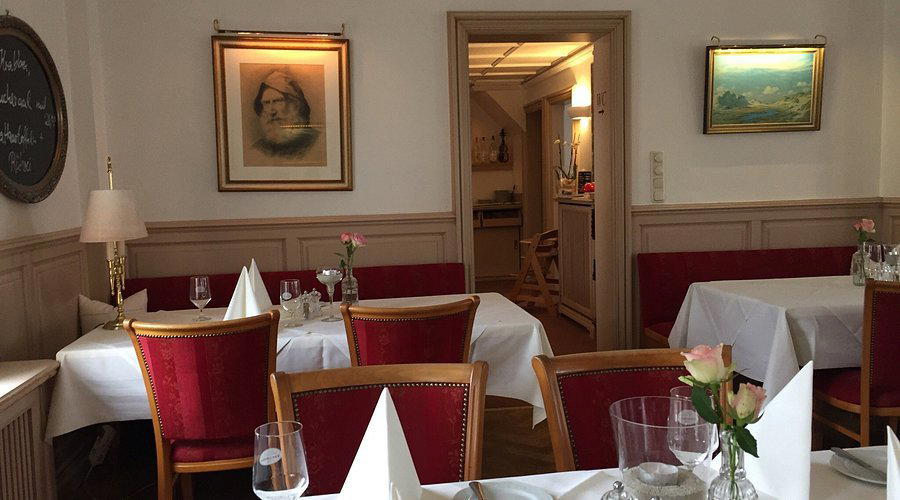
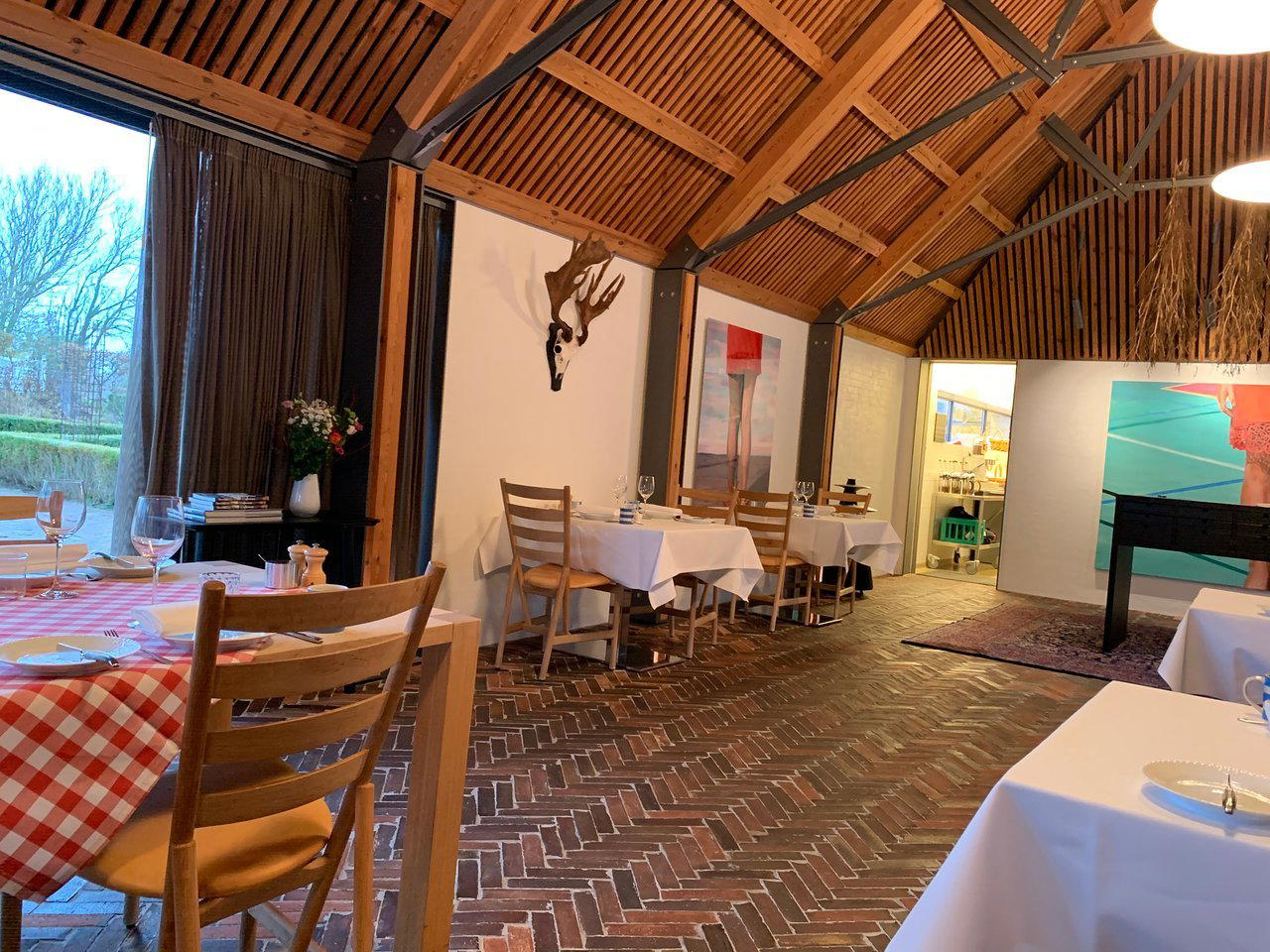
Authentic and historic, with a charming, down-to-earth atmosphere that feels warm and quietly refined.