Sitti's Table


James Beard Award Semi Finalist · Diners, Drive-Ins and Dives Featured Restaurant
Our verdict
On 13th Street in Cody, Wyoming, Sitti's Table occupies the kind of address that rewards locals who pay attention. The name suggests a family table rather than a restaurant transaction, and in a town that serves as the eastern gateway to Yellowstone, that framing carries weight. What it signals, above all, is a kitchen with a specific point of view about where food comes from.

Pearl is the En Primeur Club membership app, where members save venues, book tables and use the concierge.
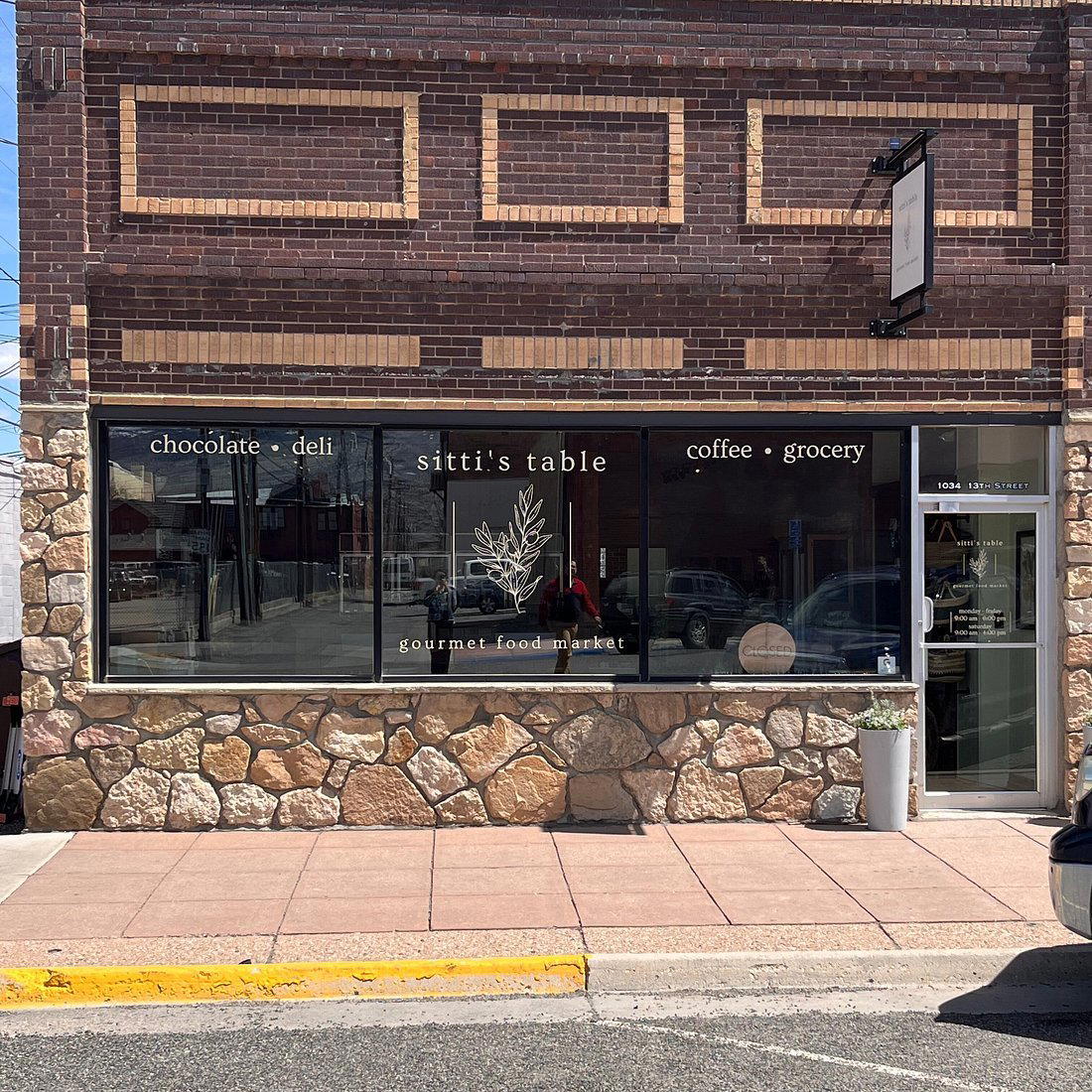
A Table at the Edge of the Rockies
Cody sits at a junction that most travelers pass through rather than pause at: the eastern approach to Yellowstone, a corridor of sagebrush and high desert that opens, almost without warning, into one of North America's most dramatic ecosystems. The town's dining scene has historically reflected that transience, organized around convenience rather than conviction. Sitti's Table, at 1034 13th Street, reads as a deliberate counter-argument to that pattern. The address places it within the working grid of the city rather than on a tourist strip, which tends to mean a room that fills with people who chose to be there rather than people who simply ran out of road.
The name itself is the first signal. Sitti is the Arabic word for grandmother, and in the culinary traditions where that word carries the most weight, it implies a kitchen rooted in memory, repetition, and a specific geography of ingredients. That framing matters in a place like Cody, where the surrounding terrain, the Shoshone National Forest, the Bighorn Basin, the ranches spread across Park County, provides a larder that most American cities would struggle to replicate. In the American West, the gap between where food is grown and where it is eaten has historically been wide. Restaurants that close that gap tend to operate with a different texture than those that don't.
Where the Ingredients Begin
The farm-to-table framing has been so thoroughly co-opted by marketing language that it has lost most of its descriptive power. What it originally pointed toward, though, still matters: a kitchen's sourcing radius determines what seasonal cooking actually looks like, and in Wyoming, that radius encompasses some of the most sparsely populated and ecologically intact ranchland in the lower 48 states. Beef raised on high-altitude grass, foraged ingredients from subalpine elevations, root vegetables grown in the brief but intense growing season of the northern Rockies, these are not interchangeable with their commodity equivalents.
Restaurants operating in this register, where sourcing is the editorial spine of the menu rather than a footnote, have become an identifiable cohort across the American West and Mountain states. Brutø in Denver and Frasca Food & Wine in Boulder represent that sensibility at different price points and with different culinary traditions as their anchor. Further afield, Blue Hill at Stone Barns in Tarrytown and Single Thread Farm in Healdsburg have built entire institutional identities around the sourcing premise. What distinguishes Sitti's Table from those reference points is geography: this is Cody, Wyoming, a town of roughly ten thousand people, and the ambition implied by the name does not have a large metropolitan dining culture to lean on for context or competition.
That isolation cuts both ways. It removes the competitive pressure that sharpens kitchens in dense urban markets, but it also removes the noise. A kitchen with a grandmother's name above the door, operating in a high-desert city where the nearest major airport requires a drive, is making a statement about intention before the first dish arrives. The sourcing question in this context is not a branding exercise; it is an operational commitment.
The Broader American Table
The restaurants that have defined American fine dining over the past two decades share a common thread that is less about technique than about conviction. The French Laundry in Napa, Alinea in Chicago, Le Bernardin in New York City, and Providence in Los Angeles all operate at price points and in markets that make their ambition legible immediately. The more interesting phenomenon, arguably, is what happens when that same quality of intention appears in smaller cities. Addison in San Diego, Bacchanalia in Atlanta, and The Inn at Little Washington in Washington all operate outside the two or three cities that typically anchor conversations about American dining, and all of them have built reputations that exceed their zip codes.
Cody is a different scale again, but the logic is the same. A restaurant named for a grandmother, in a city that functions as a gateway rather than a destination, is making a bet that the food will do the traveling for it. Ingredient sourcing in the Wyoming context carries additional weight precisely because the landscape surrounding the city is so specifically itself: you cannot replicate high-altitude ranchland terroir with product shipped from a national distributor. Kitchens that make that commitment tend to attract guests who are paying attention, whether they arrive as Yellowstone visitors with an extra evening, or as locals who have been waiting for a table worth keeping.
For comparative context on what ingredient-driven kitchens look like when they are operating at full intensity, Lazy Bear in San Francisco, Emeril's in New Orleans, Atomix in New York City, ITAMAE in Miami, Causa in Washington, D.C., and 8½ Otto e Mezzo Bombana in Hong Kong all demonstrate, across very different culinary traditions, what happens when a kitchen treats provenance as a non-negotiable rather than a menu footnote. Sitti's Table belongs to a conversation that includes these rooms, even if the price point and the city population are several orders of magnitude apart.
Planning Your Visit
Sitti's Table is located at 1034 13th Street in Cody, Wyoming, within the residential-commercial grid of the city center. Cody's position as the eastern Yellowstone gateway means the city fills during peak summer months, when the national park draws its highest visitation; if you are combining a Yellowstone trip with a dining detour, the shoulder seasons of late spring and early autumn typically offer easier access to the town itself. For a broader orientation to what else Cody's dining scene offers, our full Cody restaurants guide maps the options by neighborhood and price tier.
Frequently asked questions
Is Sitti's Table child-friendly?
Nothing in the available record for Sitti's Table indicates a children's menu or family-specific programming. Given its address in Cody's residential-commercial grid at 1034 13th Street, the setting is likely accessible to families, but confirming suitability for younger diners is worth a direct call or check of current listings before visiting.
Does Sitti's Table reflect Wyoming's local food culture, and what makes it relevant to the Cody dining scene?
Cody occupies a specific agricultural corridor where ranching, high-desert foraging, and proximity to Yellowstone's visitor economy create a distinct regional food culture that few restaurants in the area have attempted to translate into a sit-down format. Sitti's Table, based at 1034 13th Street in the city center, is positioned editorially within that tradition of ingredient-first American cooking.
What dish is Sitti's Table famous for?
The restaurant's editorial framing ties it to Wyoming's agricultural supply chain and the broader American farm-driven cooking movement, which suggests the menu reflects seasonal and regional sourcing. Checking directly with the restaurant will confirm what is currently on offer.
What part of town is Sitti's Table in?
Sitti's Table is located at 1034 13th St, Cody, WY 82414, Cody.
What's the best way to book Sitti's Table?
Searching the address directly on Google Maps or OpenTable will surface the most current contact and reservation options. Walk-in availability in a city of Cody's size is often possible outside peak Yellowstone season, but confirming ahead is advisable in summer months.
How It Stacks Up
Comparable venues nearby, for context on price, style, and recognition.
| Venue | Cuisine | Price | Awards | Notes |
|---|---|---|---|---|
| Sitti's TableThis venue (the venue you are viewing) | Mediterranean Cafe with Lebanese Influences | $10–20 | James Beard Award Semi Finalist · Diners, Drive-Ins and Dives Featured Restaurant | Not listed |
| Sure Hand | Wood-Fired Pizza | $20–30 | Not listed | Town Square |
| Longhorn Cafe | American Steakhouse | $20–30 | Not listed | Devils Tower |
| Sapporo | Japanese Steakhouse & Sushi | $20–30 | Not listed | Not listed |
| Silver Creek Steakhouse | Classic Steakhouse with Buffet | $20–30 | Not listed | Gillette |
| The Blue Lion | New American Fine Dining | $50–100 | Not listed | downtown Jackson |
Recognition history
Dated appearances from independent guides and award organizations, with the underlying list record or original source where available.
James Beard Award Semi Finalist
James Beard Award
Diners, Drive-Ins and Dives Featured Restaurant
Diners, Drive-Ins and Dives · 2026 Diners, Drive-Ins and Dives Featured Restaurants
Details
- Cozy
- Lively
- Casual Hangout
- Brunch
- Open Kitchen
- Local Sourcing
- A La Carte
- Vegetarian Friendly
- Vegan Options
Current opening hours
- Monday
- Closed
- Tuesday
- 8 AM–3 PM
- Wednesday
- 8 AM–3 PM
- Thursday
- 8 AM–3 PM
- Friday
- 8 AM–3 PM
- Saturday
- 8 AM–3 PM
- Sunday
- Closed
Hours can change for holidays and private events. Hours as of .
Lively and bustling atmosphere in a small, community-favorite spot with standing room only on busy days.