Siti

Michelin Plate
Our verdict
Siti sits at the base of East Austin's Frances Inn, drawing on Chef Laila Bazahm's Filipino roots to present a broad sweep of Southeast Asian cooking, Philippines, Malaysia, Thailand, Singapore, and Indonesia, in a space inspired by Singaporean shop houses. Shared plates range from wagyu spring rolls with house-made sweet chili glaze to char kway teow lifted by duck confit, placing Siti firmly in Austin's growing roster of serious Asian dining.

Pearl is the En Primeur Club membership app, where members save venues, book tables and use the concierge.
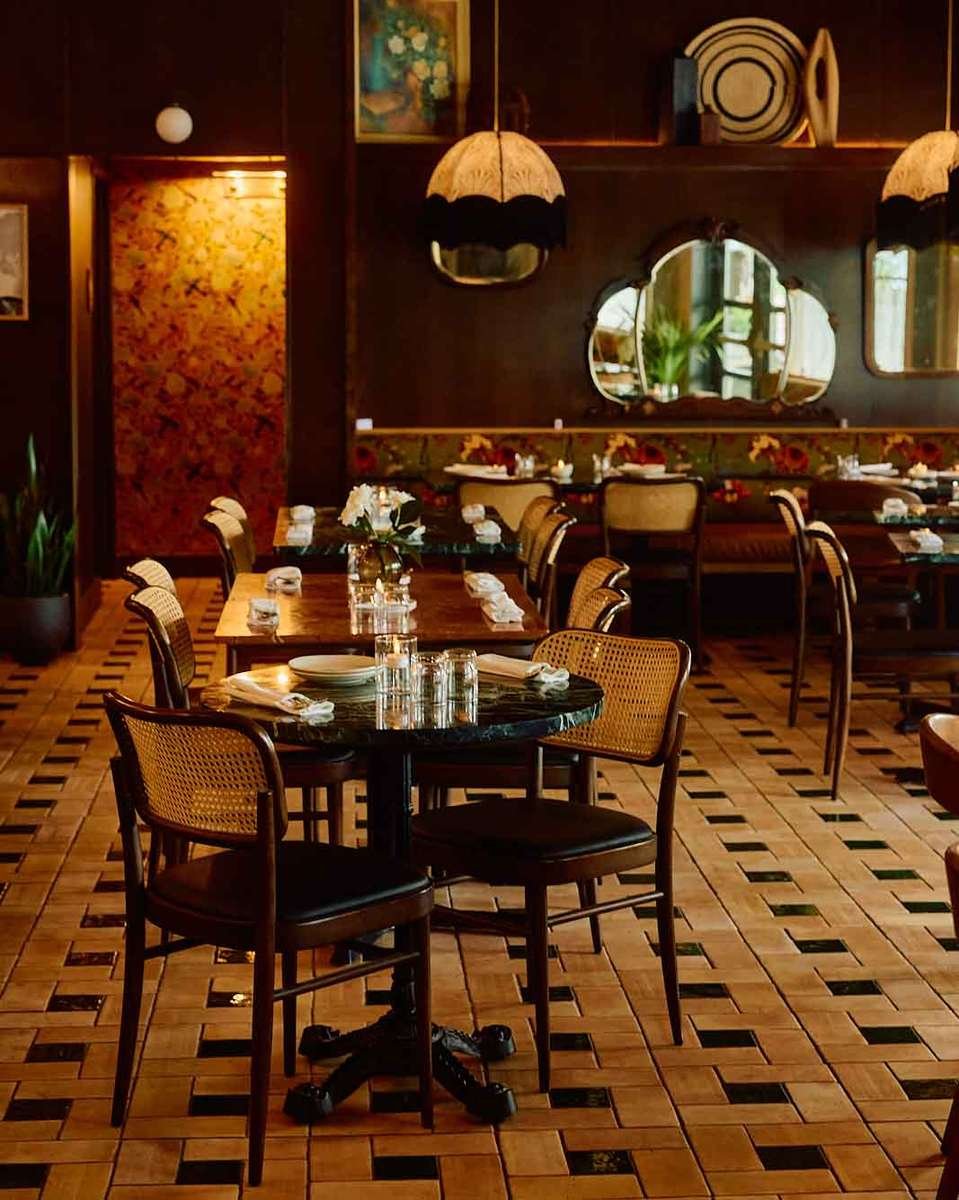
Color, Texture, and the Architecture of a Southeast Asian Room
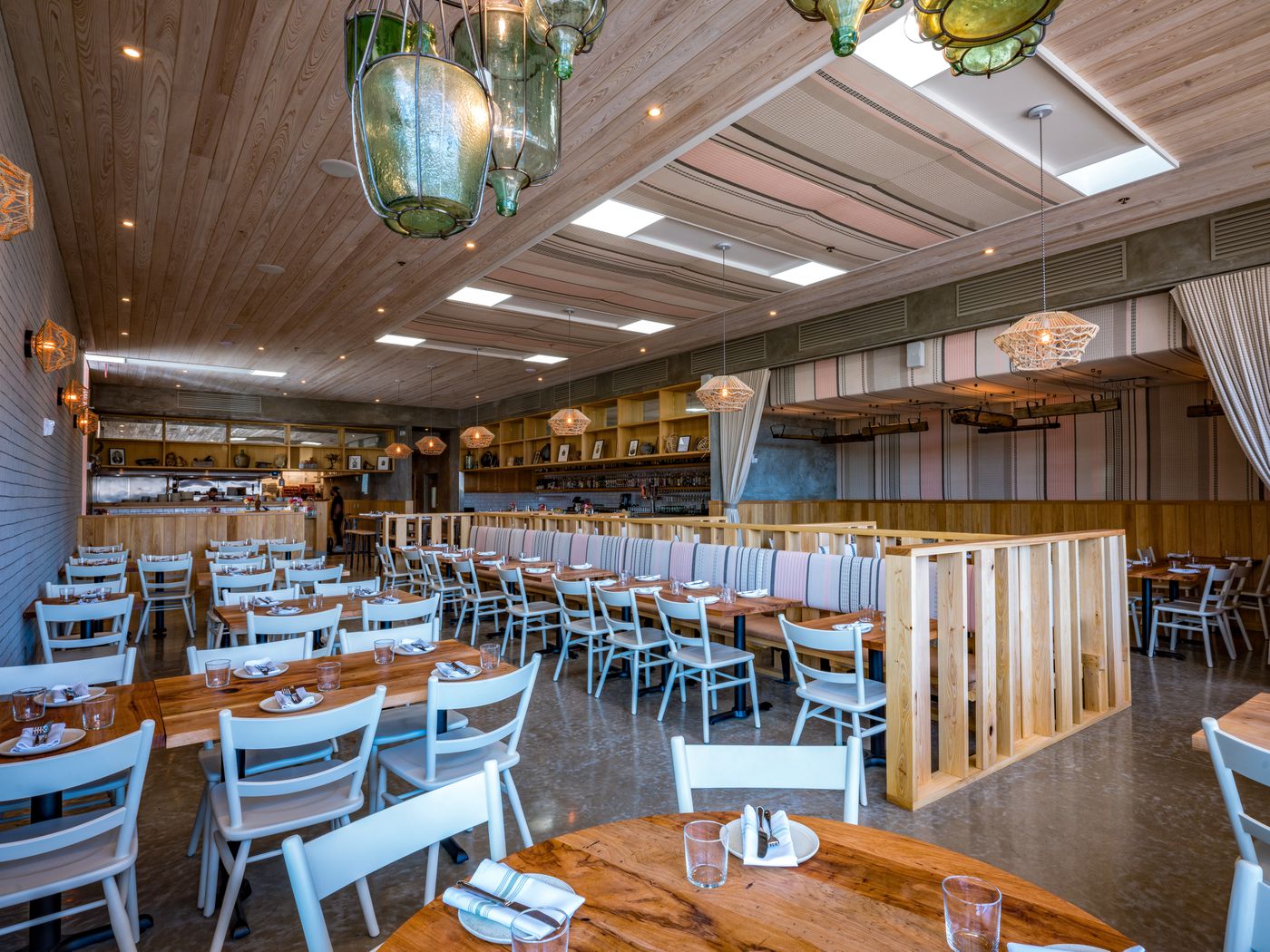
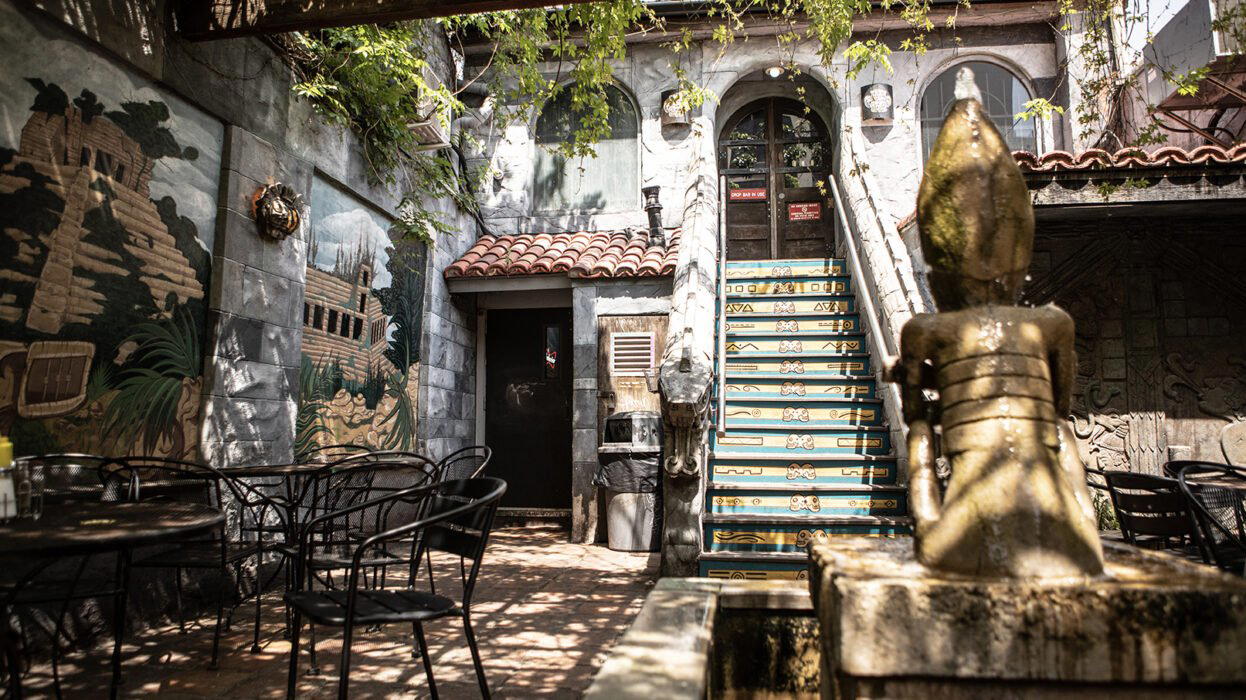
East Austin's dining corridor along 11th Street has developed a pattern over the past decade: independent restaurants with strong identities occupying ground-floor spaces beneath boutique accommodation. Siti fits that pattern precisely, anchored at the base of the Frances Inn and drawing its visual language from Singaporean shop house architecture. That reference is not incidental. The layered colors, the textural contrasts, the sense that the room has been assembled from different material histories, these are decisions that reflect the food's own logic, where multiple Southeast Asian traditions sit alongside each other without collapsing into a single homogenized category.
The interior reads as contemporary cool without trading in the minimalism that has dominated Austin's mid-tier restaurant openings. Different surfaces hold the light differently. The room invites attention without demanding it, which is the harder design problem to solve. For a cuisine rooted in the social architecture of shop houses, spaces where commerce, hospitality, and family operated in close proximity, the atmosphere carries real coherence.
What Southeast Asian Cooking Looks Like in Austin Right Now
Austin's Asian dining scene has expanded considerably, but it has done so unevenly. Japanese omakase formats, represented locally by venues like Craft Omakase, occupy one end of the spectrum. On the other end, casual noodle and rice-bowl operations have proliferated across the city. What has been slower to develop is the middle register: sit-down Southeast Asian restaurants with genuine breadth, shareable formats, and cooking that treats the region as something more than a single national cuisine.
Siti operates in that middle register. The menu moves across the Philippines, Malaysia, Thailand, Singapore, and Indonesia without flattening those traditions into a pan-Asian blur. That breadth is a deliberate editorial position, and a technically demanding one. Cooking credibly across five distinct culinary traditions requires a kitchen with real range, and the menu's construction reflects that ambition. This positions Siti differently from the strong Izakaya format at Kemuri Tatsu-ya or the wood-fired American focus at Hestia. The competitive reference point is not local but national: restaurants like Lazy Bear in San Francisco or the tasting-format precision of Alinea in Chicago demonstrate what happens when a kitchen commits fully to a coherent culinary identity. Siti is working toward something analogous, but through a Southeast Asian lens.
The Menu: Shared Plates Across Five Culinary Traditions
The menu is designed to be shared, which is structurally appropriate for this kind of cooking. Southeast Asian food culture, particularly in the Philippines, Malaysia, and Singapore, has always organized meals around communal tables with multiple dishes arriving in overlapping succession. Translating that into a contemporary Austin restaurant requires some negotiation, but the format holds.
Wagyu spring rolls with house-made sweet chili glaze and smoked aioli represent the kitchen's approach to the more familiar end of the menu: a recognized format pushed toward something more considered through premium protein and house-produced condiments. The sweet chili glaze is made in-house, which matters because it changes the flavor register considerably from the commercially produced versions that dominate in casual Asian-American restaurants.
The char kway teow is the more instructive dish. Rice noodles with Chinese sausage, shrimp, and vegetables is a Malaysian and Singaporean staple with a specific wok-hei requirement, the high-heat breath of a seasoned carbon steel wok that creates charred, smoky edges on the noodles. The decision to add a whole leg of duck confit is an act of amplification rather than fusion: duck confit is a European preservation technique, but the richness it contributes here functions exactly as the dish's internal logic would want. It is the kind of culinary crossover that the shop house tradition itself practiced, as Straits Chinese cooking absorbed European and Indian influences across generations.
Dessert operates at a register that matches the savory courses. The banana split riff and house-made ice cream keep the menu from ending on an overly austere note, which is consistent with how Southeast Asian meals actually conclude, sweet, often fruit-forward, approachable.
Chef Laila Bazahm and the Filipino Thread
Filipino-rooted chefs working across the broader Southeast Asian tradition occupy a specific position in American restaurant culture right now. The Philippine culinary canon, with its Spanish colonial overlays, its Chinese trading influences, its Malay foundations, is itself a compressed history of the same cross-cultural exchanges that produced Singaporean and Malaysian cooking. A chef with that background bringing dishes from across the region is not performing a survey course; they are returning to the source material.
Laila Bazahm's Filipino background functions as the organizing sensibility behind the menu rather than its explicit subject. The dishes do not cluster around Filipino cooking specifically, but the palate that understands how to balance sour, salty, sweet, and umami across a wide range of preparations is one that Filipino cuisine trains rigorously. That sensibility is present in the menu's construction, even when the individual dishes reference Malaysia or Thailand.
For context on what chef-driven restaurants with deep culinary lineages look like at the highest tier nationally, venues like Le Bernardin in New York City or The French Laundry in Napa demonstrate the organizing power of a single culinary intelligence applied consistently across a menu. Siti is working at a different scale and price point, but the principle, that a menu's coherence comes from the chef's own cultural fluency, applies.
East Austin Context and How Siti Fits
The Frances Inn location places Siti in a part of East Austin that has attracted restaurants with specific identities rather than broad-appeal formats. The neighborhood's restaurant density has grown considerably, and the competition for repeat visitors is real. Barley Swine operates nearby with its New American tasting format, and the barbecue corridor, anchored by venues like la Barbecue and InterStellar BBQ, defines another strand of East Austin's dining identity. Siti sits in a different lane entirely, which is a strategic advantage as much as it is a stylistic choice.
For visitors building an Austin itinerary around serious dining, the neighborhood rewards walking. The Frances Inn itself provides accommodation if proximity matters, and the surrounding blocks carry enough restaurant and bar density to fill an evening before and after dinner. Our full Austin bars guide covers the options in detail, and our full Austin restaurants guide maps the broader dining picture across the city.
Planning Your Visit
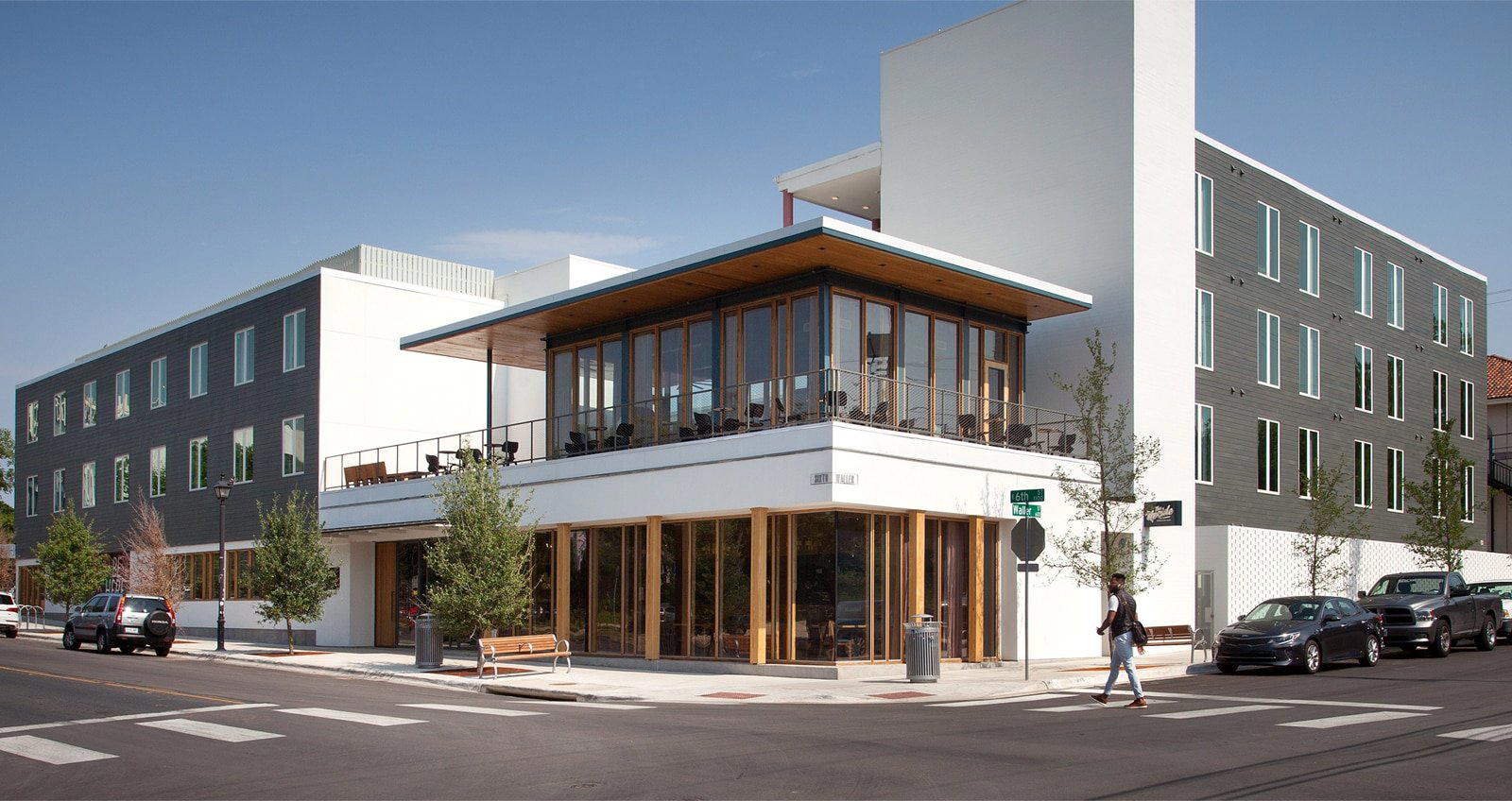
Siti is located at 1123 E. 11th St. in East Austin, at the base of the Frances Inn. The shared-plate format works well with three or more people, which allows the table to cover the menu's range properly. Visitors planning a broader Austin stay can reference our Austin hotels guide for accommodation across the city's neighborhoods, and our Austin experiences guide for activity programming. Reservations are advisable, particularly on weekend evenings when East Austin's dining rooms fill early. Those with broader Texas interests may find the Austin wineries guide a useful complement to the dining picture.
Frequently asked questions
What's Siti's location?
Siti is located at 1123 E. 11th St. Austin.
Does Siti have a Michelin star or similar recognition?
Siti has received recognition including: Inspired by Singaporean shop houses and offering an updated take on Asian colonial decor, Siti is located at the base of East Austin's Frances Inn. Inside, it's contemporary cool, where different colors and textures create an intriguing and….
What's the signature dish at Siti?
The char kway teow makes the clearest case for the kitchen's approach: a Malaysian and Singaporean rice noodle preparation with Chinese sausage, shrimp, and vegetables, given additional weight with a whole leg of duck confit. It's a single dish that illustrates Chef Laila Bazahm's method throughout the menu, a recognizable Southeast Asian framework pushed further by technique and sourcing.
Is Siti reservation-only?
Siti occupies the base of the Frances Inn at 1123 E. 11th St. in East Austin, a corridor that has grown increasingly competitive for walk-in seating. Contacting the venue directly before visiting is advisable, particularly for groups using the shared-plate format, which works best with three or more diners.
What do critics highlight about Siti?
Coverage focuses on two related qualities: the breadth of Southeast Asian traditions represented, Philippines, Malaysia, Thailand, Singapore, and Indonesia, and the way those traditions are applied with discipline rather than superficially merged. Chef Laila Bazahm's Filipino background provides the organizing perspective, which gives the menu a point of view rather than a survey-course feel.
Peers in This Market
Comparable venues nearby, for context on price, style, and recognition.
| Venue | Cuisine | Price | Awards | Notes |
|---|---|---|---|---|
| SitiThis venue (the venue you are viewing) | Modern Southeast Asian | $50–100 | Michelin Plate | Not listed |
| Fabrik | Modern Vegan Fine Dining | $50–100 | We're Smart World 5 Radishes | Blackland |
| Comedor | Modern Mexican | $150–200 | Michelin Plate | Downtown |
| Fonda San Miguel | Interior Regional Mexican | $50–100 | Not listed | Brentwood |
| 1618 Asian Fusion | Asian Fusion | Not listed | Not listed | Riverside |
| Space Cowboy | Modern Global Fusion Tapas | Not listed | Not listed | Central East Austin |
Recognition history
Dated appearances from independent guides and award organizations, with the underlying list record or original source where available.
Michelin Plate
Michelin · 2026 Michelin Plate
Siti
Featured Guides
Superbueno Review: East Village Mexican American Cocktail Bar Worth Visiting?
Visiting Tignanello Winery: The Impossible Tour & How to Taste It Anyway (Fonte de’ Medici Review 2026)

Is Nobu Malibu Worth Visiting in 2026? How the World Famous Celebrity Hotspot Got its Reputation
Visiting Chateau Lafite Rothschild Winery (and How to Arrange a Tasting)
Continue exploring
More in Austin
Restaurants in Austin
All restaurants in Austin →
Bars in Austin
All bars in Austin →



Details
- Trendy
- Lively
- Modern
- Elegant
- Date Night
- Special Occasion
- Group Dining
- Open Kitchen
- Craft Cocktails
- Local Sourcing
- Small Plates
- A La Carte
- Craft Cocktails
- Vegetarian Friendly
Current opening hours
- Monday
- Closed
- Tuesday
- 5–9 PM
- Wednesday
- 5–9 PM
- Thursday
- 5–10 PM
- Friday
- 5–10 PM
- Saturday
- 11 AM–3 PM, 5–10 PM
- Sunday
- 11 AM–3 PM, 5–9 PM
Hours can change for holidays and private events. Hours as of .
Buzzy and brisk dining room with rattan chairs, floral wallpaper, and framed Southeast Asian street scenes; contemporary cool with different colors and textures; quiet patio out back.