Siena Italian Trattoria
A neighborhood Italian trattoria on the western edge of Las Vegas, Siena sits apart from the Strip's high-volume dining circuit, offering a more grounded alternative for residents and visitors seeking familiar regional Italian cooking without the spectacle. It occupies a slice of the city that rarely draws culinary attention, which makes understanding what it does, and for whom, worth the effort.
Pearl is the En Primeur Club membership app — saves, bookings, and concierge access live there. Same editors, same standards.
- Address
- 9500 W Sahara Ave, Las Vegas, NV 89117
- Phone
- +17023603358
- Website
- sienaitalian.com
- Directions
- Get directions
 Saves & bookings on Pearl
West of the Strip: Italian Dining in Las Vegas's Residential Fringe
Las Vegas dining divides cleanly along geographic lines. The Strip operates at a different scale entirely, celebrity names, hotel investment, and a captive tourist audience that resets nightly. Move west along Sahara Avenue toward the residential neighborhoods, and the dining character shifts. Operators here address a local clientele with repeat-visit expectations rather than first-impression imperatives. That pressure produces a different kind of restaurant: one that must earn loyalty rather than foot traffic.
Siena Italian Trattoria at 9500 W Sahara Ave sits in that off-Strip context, positioned in a part of the city where Italian-American cooking has functioned as neighborhood anchor rather than destination draw. To understand what a trattoria format means in this setting, it helps to understand how Italian dining has split across American cities in the past decade. At one end, ambitious Italian programs with imported ingredients, regional specificity, and tasting-menu formats compete for critical attention, venues like 8½ Otto e Mezzo Bombana in Hong Kong represent that tier at a global level. At the other, the trattoria model, looser and convivial, has remained durable precisely because it does not try to be something else.
The Team Dynamic in a Trattoria Setting
The trattoria format is one of the few in Italian dining where the collaboration between kitchen, floor, and wine service defines the experience more consistently than any single component. Unlike a tasting-menu room where the chef's vision dominates every interaction, a well-run trattoria depends on a front-of-house that knows how to pace a table, a wine program that covers enough ground without overcomplicating the choice, and a kitchen that executes familiar dishes at the right temperature and weight. When those three elements are aligned, the result feels effortless. When one is off, the whole format exposes itself.
This dynamic is what separates a neighborhood Italian restaurant that builds a genuine following from one that simply fills seats. Across American cities, the trattoria rooms that hold their position year after year tend to be the ones where the floor staff are as fluent in the menu as the kitchen, where a sommelier or trained server can steer a table toward a wine that makes the pasta course make more sense, or where pacing is adjusted without being asked. It is a less visible kind of craft than what you find at destination addresses like Le Bernardin in New York City or The French Laundry in Napa, but it is craft nonetheless.
Las Vegas's restaurant scene has historically underinvested in this kind of collaborative floor culture at the neighborhood level, concentrating its training resources in the high-margin Strip properties. Off-Strip venues that develop genuine team cohesion tend to stand apart from the broader market as a result.
Positioning Within Las Vegas's Broader Italian Category
Italian is among the more contested categories in Las Vegas dining. On the Strip, Italian-branded restaurants operate at premium price points with formats ranging from modern Italian small plates to red-sauce classics dressed up in designer rooms. Off the Strip, the competition is different, smaller operators, lower price ceilings, and a clientele that has more context for value because they eat locally rather than expensing a business dinner. Siena's address on the western residential corridor places it in this second competitive set, where it sits alongside other neighborhood operators rather than against the hotel-backed programs.
For comparison, the dining scene on the Strip pulls from the same national talent pool that supplies places like Lazy Bear in San Francisco, Alinea in Chicago, and Addison in San Diego, venues where investment levels and operational complexity sit at a different tier entirely. The neighborhood Italian trattoria is not competing on those terms, nor should it. Its competitive set is defined by consistency, hospitality, and the ability to serve the same guest forty times a year without the experience feeling mechanical.
Other off-Strip operators worth considering include 108 Eats, 18bin, and A Different Beast, each of which addresses a local audience with a format built for repeat visits. For those whose Las Vegas itinerary includes a larger steakhouse meal, Craftsteak operates at a different price point and format. And for a sense of how Korean dining fits into the off-Strip residential picture, 777 Korean Restaurant offers a useful reference point.
Italian Cooking as Neighborhood Infrastructure
The trattoria's persistence across American dining is not accidental. Italian cooking, particularly in its simpler regional expressions, translates more cleanly to the neighborhood context than most other European cuisines. The ingredient logic is legible, pasta, protein, vegetable, wine, and the format tolerates modification for dietary needs without compromising structural integrity the way a more technically elaborate cuisine might. A kitchen producing handmade pasta alongside roasted proteins can typically accommodate a gluten-free guest, a vegetarian, or a diner avoiding dairy with less disruption than a kitchen built around complex sauces or single-product tasting menus.
That adaptability matters in a neighborhood context, where a trattoria might be feeding a family group with mixed dietary needs on a Tuesday, a couple celebrating an anniversary on a Friday, and a group of local regulars on a Sunday. The format has to flex. The leading Italian neighborhood restaurants in American cities, from the trattoria tier upward toward more ambitious programs like Single Thread Farm in Healdsburg or Blue Hill at Stone Barns in Tarrytown at the farm-to-table end, share a commitment to hospitality that absorbs the variation in their dining rooms without making it feel like an accommodation.
Siena's position on the western edge of Las Vegas, away from the city's entertainment infrastructure, suggests it operates primarily for this kind of mixed, repeat-visit local audience. That is a harder market to serve than tourists, and it rewards consistency over time.
Planning Your Visit
Address: 9500 W Sahara Ave, Las Vegas, NV 89117. Reservations: Recommended. Dress: Smart casual. Budget: About $40 per person. Timing: Mon to Sun hours are 10 AM to 9 PM on Monday and Tuesday, 10 AM to 10 PM on Wednesday, 10 AM to 11 PM on Thursday through Saturday, and 10 AM to 9 PM on Sunday.
The Short List
Comparable venues nearby, for context on price, style, and recognition.
| Venue | Cuisine | Price | Notes |
|---|---|---|---|
| Siena Italian TrattoriaThis venue — the venue you are viewing | Summerlin, Authentic Italian Trattoria | $$$ | Not listed |
| Brezza | Northern Strip, Modern Coastal Italian | $$$ | Not listed |
| Prosecco Fresh Italian Kitchen - Las Vegas | Spencer Ridge, Fresh Italian Trattoria | $$$ | Not listed |
| Zio's | Not listed | $$$ | Paradise Road, Contemporary Italian Steakhouse |
| ai Pazzi | Not listed | $$$ | Angel Park Ranch, Contemporary Italian with Sardinian Influences |
| Casa Di Amore | Not listed | $$$ | Sante Fe Haciendas, Traditional Italian Steakhouse |
Continue exploring
More in Las Vegas
Restaurants in Las Vegas
Browse all →
Bars in Las Vegas
Browse all →
At a Glance
- Rustic
- Cozy
- Classic
- Group Dining
- Family
- Casual Hangout
- Private Dining
- Live Music
Current opening hours
- Monday
- 10 AM–9 PM
- Tuesday
- 10 AM–9 PM
- Wednesday
- 10 AM–10 PM
- Thursday
- 10 AM–11 PM
- Friday
- 10 AM–11 PM
- Saturday
- 10 AM–11 PM
- Sunday
- 10 AM–9 PM
Hours can change for holidays and private events. Last verified .
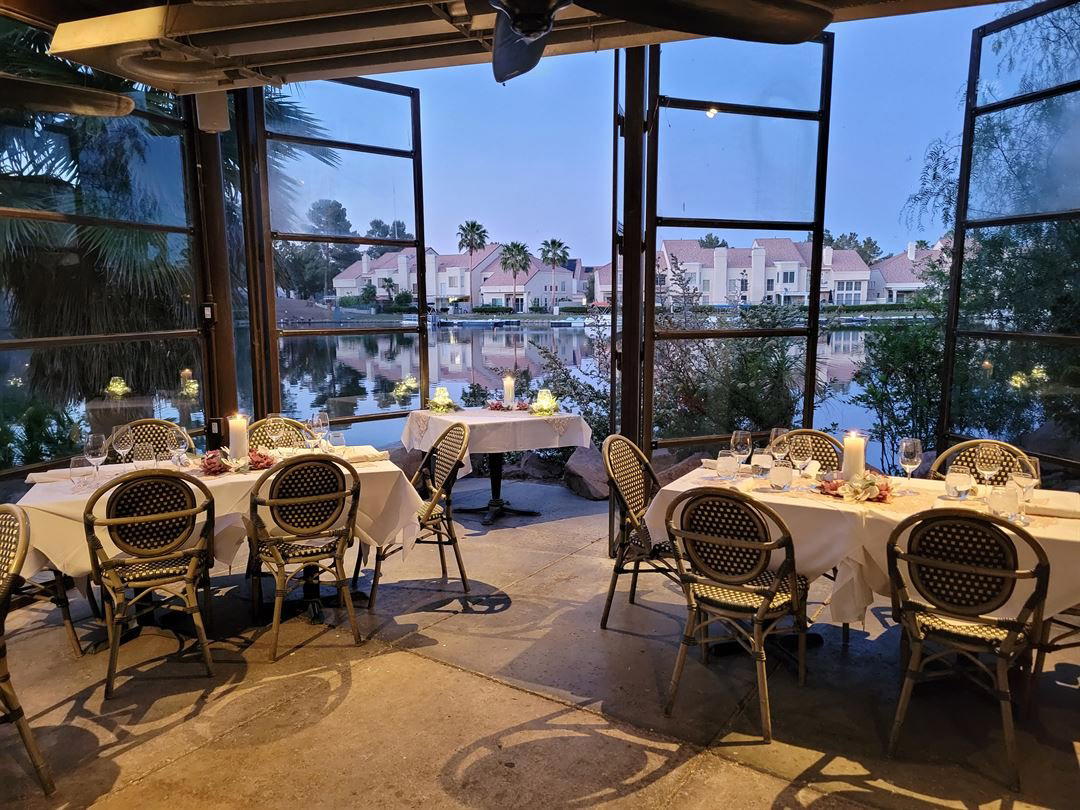
Warm and inviting casual atmosphere with rustic charm evoking a quaint Italian village, featuring indoor and outdoor dining.