Shorefyre International Marketplace
Our verdict
Shorefyre International Marketplace occupies a retail address along Kalākaua Avenue, Waikīkī's main commercial corridor, positioning it within a stretch that draws both visitors and local regulars. The marketplace format places it in a category of Honolulu food venues that prioritize sourcing breadth and accessibility over tasting-menu formality. Confirmation of current hours, pricing, and reservation policy requires direct contact with the venue.

Pearl is the En Primeur Club membership app, where members save venues, book tables and use the concierge.
The menu
What to order
- Signature 50/50 Loco Moco
- Singapore Clams
- Lemon Pepper Bacon Shrimp
A Marketplace Format on Waikīkī's Busiest Street
Kalākaua Avenue runs the full length of Waikīkī and functions as the primary artery connecting the beach strip to the broader commercial fabric of Honolulu. At its most saturated, the boulevard is a study in competing formats: hotel restaurants drawing captive guests, fast-casual outlets absorbing foot traffic, and a smaller tier of specialty operators who have chosen visibility over exclusivity. Shorefyre International Marketplace, located at suite 396 within the 2330 Kalākaua address, occupies the latter category. The marketplace designation signals something specific in the current Honolulu dining context: a format built around sourcing range and communal access rather than the tasting-menu architecture that defines venues like 53 By The Sea or the New American refinement of Fête (New American).
The international marketplace model has its own logic in a city like Honolulu. Hawaii's food culture has always operated at a crossroads, shaped by waves of migration from Japan, Korea, the Philippines, Portugal, and across the Pacific. A format that reflects multiple culinary traditions simultaneously is not an editorial compromise here, it is an accurate representation of how many islanders actually eat. The question worth asking of any venue operating in this format is how deliberately it sources its inputs and how transparently it handles provenance.
The Sustainability Case for the Marketplace Model
Across the American restaurant industry, the venues that have made the most measurable progress on sustainability metrics are not always the ones with the highest price points or the most visible media coverage. Operations like Blue Hill at Stone Barns in Tarrytown and Single Thread Farm in Healdsburg have made farm-to-table sourcing central to their critical identity, but their formats are high-cost and low-volume by design. The marketplace format, by contrast, operates at a different scale, and that scale, when managed carefully, can produce genuinely lower food-mile footprints, particularly in an island context where the cost of importing ingredients is both financial and environmental.
Hawaii faces a specific version of the sourcing challenge that continental American restaurants do not. The state imports an estimated 85 to 90 percent of its food. Against that backdrop, any operator on Oʻahu that prioritizes local proteins, regional produce, or Pacific-sourced ingredients is making a choice with measurable consequences. The international marketplace format, which draws from multiple culinary traditions, creates both an opportunity and a constraint: it can honour Hawaii's multi-ethnic food heritage while sourcing deliberately from local producers, or it can default to imported commodity ingredients that undercut the premise of the model.
The same sourcing tension shapes high-end operations elsewhere on the island. 3660 On the Rise, which operates in a more formal register, has long navigated the balance between European technique and Pacific ingredient sourcing. The marketplace tier handles that balance under different economic constraints, which makes the choices more visible and more consequential at a per-item level.
Honolulu's Food Format Spectrum
Honolulu's dining spectrum runs from ceremonial luau formats like Ahaaina Luau, which anchor cultural performance to communal food, through to refined contemporary kitchens. Within that spectrum, the marketplace occupies a democratic middle register: accessible price points, broader menu range, and a format that does not require advance booking or formal dress. That accessibility is not a concession to lower standards. Some of the most ingredient-honest cooking in any city happens at this tier, precisely because the economics demand efficiency and the sourcing decisions are not masked by elaborate preparation.
For visitors staying along Kalākaua, the practical calculus is direct. A marketplace format at suite 396 of a major commercial address is designed for drop-in access, which aligns with the rhythm of a beach-adjacent stay. The contrast with reservation-dependent venues is deliberate: marketplaces trade exclusivity for range, and that trade reflects a different theory of what a meal should accomplish. In a city where 855-ALOHA and a range of other operators compete for the same visitor dollar, format differentiation matters as much as cuisine type.
For context on how Honolulu's food scene distributes across formats and neighbourhoods, the full Honolulu restaurants guide maps the broader competitive set. The city's best-performing venues across categories tend to share one characteristic: a clear point of view on sourcing, whether that manifests in the oceanic focus of Providence in Los Angeles-style seafood programs or in the farm-system rigor associated with operations like The French Laundry in Napa.
International Marketplace Formats in a National Context
Across the United States, the international food hall and marketplace format has matured considerably since its mid-2010s proliferation. Early iterations prioritized novelty and vendor density over coherence; more recent openings, including those drawing on the editorial model pioneered by operations adjacent to venues like Alinea in Chicago and Atomix in New York City, have demonstrated that accessibility and ambition are not mutually exclusive. The question for any marketplace in 2024 and beyond is whether it has a sourcing thesis or simply a vendor mix.
Hawaii's geographic isolation makes that thesis more urgent than in continental markets. An international marketplace on Oʻahu that draws from Pacific Rim culinary traditions while sourcing from local farms, fisheries, and producers is making an argument about what island food culture can look like at scale. That argument is worth evaluating on its merits, which requires transparency from the operator about where ingredients originate.
Know Before You Go
- Address: 2330 Kalākaua Ave, Suite 396, Honolulu, HI 96815
- Format: International Marketplace (walk-in format implied by venue type)
- Reservations:53 By The Sea and 3660 On the Rise.
- Is Shorefyre International Marketplace reservation-only?
- Marketplace formats in Honolulu generally operate on a walk-in basis, which would align with the venue's location on Kalākaua Avenue's high foot-traffic corridor. However, this should be verified directly with the venue before visiting, particularly during peak Hawaii visitor season from December through February and June through August. Award-tracked restaurants in Honolulu that do operate on reservation systems, such as Fête (New American), offer a contrast in format approach.
- How does Shorefyre International Marketplace fit into Honolulu's broader food scene compared to more formal dining options?
- Shorefyre International Marketplace occupies the accessible, multi-cuisine tier of Honolulu's food spectrum, in contrast to the prix-fixe and reservation-led operations that anchor the city's fine dining segment. Its Kalākaua Avenue location places it at the center of Waikīkī's visitor corridor, making it available to a wider audience than venues with more restrictive formats. For a full picture of how Honolulu's dining options distribute across cuisines and price points, the EP Club Honolulu guide covers the competitive range.
Frequently asked questions
What part of town is Shorefyre International Marketplace in?
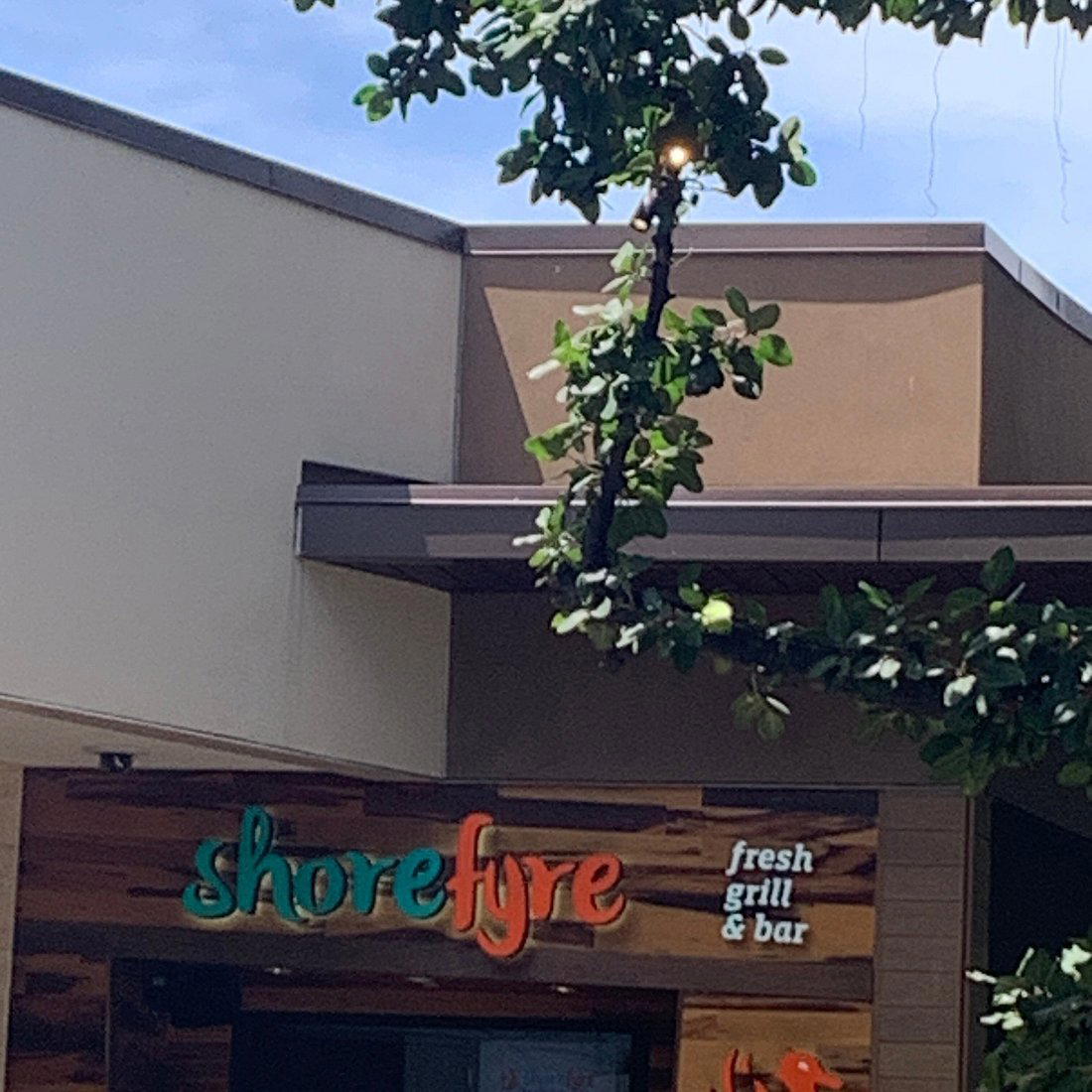
Shorefyre International Marketplace is located at 2330 Kalākaua Ave #396, Honolulu, HI 96815, Honolulu.
Where exactly is Shorefyre International Marketplace located within Waikīkī, and how does its position on Kalākaua Avenue affect the dining experience?
Shorefyre sits at suite 396 of 2330 Kalākaua Ave, placing it along Honolulu's primary Waikīkī corridor where foot traffic from the beach strip and surrounding hotels is consistent throughout the day. That position on Kalākaua Avenue puts the marketplace within the commercial spine that connects Waikīkī's retail and hospitality blocks, making it accessible without requiring transport across the neighbourhood. The marketplace format suits that location well, given the avenue's mix of visitors and residents moving through at varied hours.
What dish is Shorefyre International Marketplace famous for?
Shorefyre operates as a multi-vendor international marketplace at 2330 Kalākaua Ave in Waikīkī, which means no single dish defines the venue. The format distributes culinary identity across multiple operators rather than centering on one kitchen or signature item. For specific vendor offerings, visiting the marketplace directly on Kalākaua Avenue is the most reliable way to assess what is currently available.
Is Shorefyre International Marketplace reservation-only?
Marketplace formats of this kind on Kalākaua Avenue in Honolulu typically operate as walk-in venues rather than reservation-driven seatings. Shorefyre's address within a commercial complex at suite 396 of 2330 Kalākaua Ave suggests a food hall layout, where counter and stall dining replaces the seated reservation model. Confirming current access policies directly with the venue is advisable before visiting.
Peers Worth Knowing
Comparable venues nearby, for context on price, style, and recognition.
| Venue | Cuisine | Price | Notes |
|---|---|---|---|
| Shorefyre International MarketplaceThis venue (the venue you are viewing) | Island-Inspired American Grill | $20–30 | Not listed |
| Lappert's Hawaii | Hawaiian Ice Cream & Coffee | $10–20 | Waikiki |
| Cream Pot | French-Inspired American Breakfast & Brunch | $30–50 | Waikiki |
| Scratch Kitchen Ward | Southern Comfort & Cajun | $20–30 | Ala Moana |
| Plumeria Beach House | Hawaiian Fusion Seafood | $50–100 | Kahala |
| Kai Market | Island Inspired American Breakfast Buffet | $30–50 | Waikiki |