
Tabelog 100 #98
Our verdict
Shiomi Skippers is a Tokyo hamburger specialist in Koto’s Shiomi area, selected for Tabelog 100 - Hamburger - 2026. Its reputation rests on a menu built around house-made buns, a casual dining format, and a price band that keeps it closer to everyday Tokyo dining than destination tasting-menu culture.

Pearl is the En Primeur Club membership app, where members save venues, book tables and use the concierge.
The menu
What to order
- Skippers Egg Cheese Burger
- Juicy burgers with signature onion sauce
- Home-cut fries
- Steak
Shiomi Skippers is not best understood through the language of lacquered counters and hotel-lobby dining rooms. Its context is Tokyo at a more practical scale: local meals, repeat visits, and a format that does not need grand ceremony to make its case. That context matters for hamburgers in Tokyo, because the category has grown in a different direction from the city’s luxury sushi and French-led tasting menus. The serious burger shop here is judged less by ritual than by structure: bun, patty, drink, timing, and repeatability.
Shiomi Skippers enters that conversation as a Tokyo address with a Tabelog 100 - Hamburger - 2026 selection, a useful signal in a category where recognition is often discussed differently than it is for ramen, sushi, or tempura. The listing places it within a focused hamburger conversation rather than simply a casual-meal fallback. Its price band also keeps the experience in accessible territory: dinner is listed at JPY 3,000 - JPY 3,999, while lunch is listed at JPY 1,000 - JPY 1,999. That suits a menu category built for lunch, early dinner, and everyday use as much as for destination dining.
A burger menu where the bun carries the argument
Tokyo’s hamburger scene has spent years absorbing American references, then filtering them through Japanese expectations around texture, portion control, and craft repetition. The difference between a passable burger and a serious one often sits in the bread. A dense bun turns the whole thing heavy; a fragile one collapses before the last bite. At Shiomi Skippers, the point is not to describe the burger as luxury, but to read the category as a composed object whose balance has to hold from first bite to last.
In a city where many specialist restaurants build authority around sourcing, aging, or chef lineage, this is a more workmanlike kind of authorship. The burger itself becomes the organizing principle of the visit, not a pretext for formality. That choice puts the restaurant in a different register from broader casual-dining peers around Tokyo. Tandoor Bar Kamalpur Kiba ten sits in a similar general spending conversation but answers a different craving; Rairai Ken and Mon Cher Touyouchou koujou occupy lower everyday price territory; BAR Opa Monzennakachou ten is built around drinking rather than the architecture of a plate. The comparison is not about hierarchy. It shows how Tokyo dining rewards specificity: one format, clearly presented, with enough structure to justify repeat visits.
The Tabelog score of 3.57 is also worth reading in category context. Japanese review platforms tend to compress ratings, and casual specialists rarely receive the same international attention as more formal destination rooms. A 2026 Hamburger 100 selection places Shiomi Skippers inside a defined category list rather than a neighbourhood-only conversation. For travellers, that distinction is useful: it suggests a focused detour rather than a place chosen only because it happens to be nearby.
Casual by format, more considered than the label suggests
The practical shape of the restaurant matters because hamburgers in Tokyo can split between tiny independent counters, American-style diners, and local rooms that function across the day. Shiomi Skippers belongs in the casual-specialist lane: approachable in price, specific in category, and clear about what diners are coming for. That does not make it anonymous. It makes the format legible: a Tokyo hamburger restaurant whose reputation rests on execution rather than theatricality.
The broader point is also telling. Tokyo casual dining has become increasingly comfortable treating low-formality food with serious attention, especially for guests who want quality without the full choreography of a tasting menu. That shift has helped categories such as curry, yakitori, burgers, and pizza earn more serious attention. For a broader read on the city’s range, see Our full Tokyo restaurants guide, then compare how casual formats sit beside bars, hotels, and cultural stops in Our full Tokyo bars guide, Our full Tokyo hotels guide, Our full Tokyo wineries guide, and Our full Tokyo experiences guide.
Within Tokyo, the useful lens is not whether a hamburger can compete with omakase or kaiseki. It cannot, and it does not need to. The better question is whether the restaurant understands the category’s engineering. Shiomi Skippers’ public identity as a hamburger specialist gives the menu a clear centre of gravity. For diners mapping a day across the city, it works as a focused meal rather than a long-form occasion.
Where it fits in a Tokyo itinerary
Tokyo rewards travellers who do not treat every meal as a trophy reservation. The city’s appeal is cumulative: stations with local rhythms, practical restaurants, and a food culture where modest formats can still be taken seriously. A hamburger specialist with category recognition fits that pattern neatly. It is easier to slot into a day than a formal tasting menu, but it carries enough editorial weight to justify planning around it.
Readers building a wider Tokyo dining map can place this stop among sharply different formats: other dining rooms, local counters, bakeries, bars, curry shops, and casual restaurants that each answer a different kind of appetite. For a broader Japan circuit, the category can also be contrasted with unnamed casual and specialist venues in other cities, where similar ideas of comfort, craft, and repeatability take different forms. Across the Pacific, Japanese casual formats likewise show how familiar ideas can translate abroad without needing the structure of fine dining.
The editorial case is clean: this is not a luxury dining play, and that is the point. Tokyo’s food culture is strongest when small categories are taken seriously. A burger shop recognized in the 2026 Tabelog Hamburger 100, with a listed score of 3.57 and an accessible lunch-and-dinner budget, gives travellers a grounded way to read that side of the city.
Budget Reality Check
Comparable venues to calibrate price, style, and recognition.
| Venue | Cuisine | Price | Awards | Notes |
|---|---|---|---|---|
| Shiomi SkippersThis venue (the venue you are viewing) | Casual Burger & Grill | $20–30 | Tabelog 100 #98 | Not listed |
| McLean -old burger stand- | Classic American-style burger stand | $20–30 | Tabelog 100 #82 | Taitō, Classic American-style burger stand |
| CANNONBALL DINER | Gourmet American Burger Diner | $20–30 | Tabelog 100 #42 | Taitō, Gourmet American Burger Diner |
| TEDDY BROWN | Wagyu Burger & Cafe | $20–30 | Tabelog 100 #89 | Shibuya, Wagyu Burger & Cafe |
| fummy's grill | California Cuisine with Asian-Western Fusion | $30–50 | Not listed | Shibuya, California Cuisine with Asian-Western Fusion |
| FIRE HOUSE | American-style Gourmet Burgers | $10–20 | Tabelog 100 #55 | Bunkyō, American-style Gourmet Burgers |
Recognition history
Dated appearances from independent guides and award organizations, with the underlying list record or original source where available.
Tabelog 100 #98 · No. 98
Tabelog · Tabelog 100 - Hamburger - 2026
Continue exploring
More in Tokyo
Restaurants in Tokyo
All restaurants in Tokyo →



Bars in Tokyo
All bars in Tokyo →






Details
- Modern
- Cozy
- Scenic
- Lively
- Casual Hangout
- Family
- Group Dining
- Solo
- After Work
- Waterfront
- Standalone
- Beer Program
- Waterfront
- Street Scene
- A La Carte
- Beer
- Cocktails
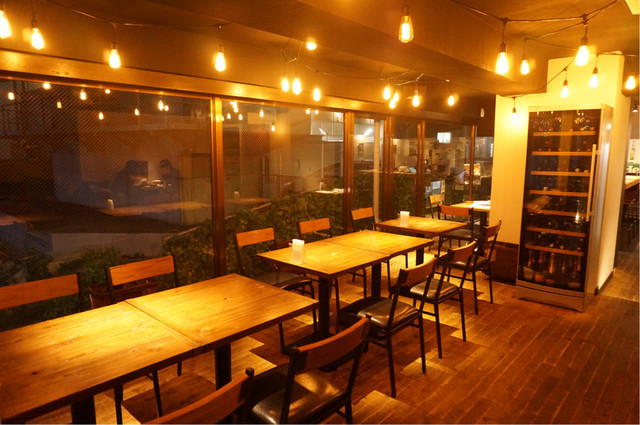
Modern and relaxed with a clean, sleek interior, canal views through large windows, and a casual neighborhood feel that works for both families and small groups.