
Tabelog 100 #30
Our verdict
Shinhaku sits in Osaka’s serious yakitori tier: reservation-only, counter-led, and selected for Tabelog’s Yakitori WEST 100 in 2025 after appearances in prior years. The appeal is the ritual as much as the grillwork, with a compact room, a fixed pace, and the manners expected of a small Japanese counter.

Pearl is the En Primeur Club membership app, where members save venues, book tables and use the concierge.
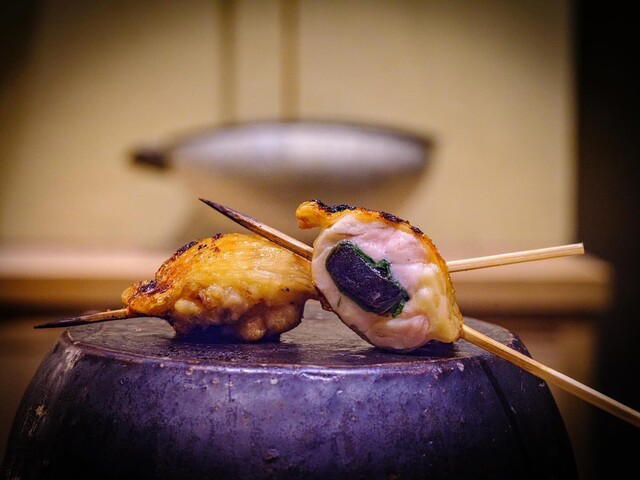
The menu
What to order
- Yakitori omakase course
- Kishu duck shabu-shabu course
Approaching Shinhaku in Osaka, the city changes register. The department-store glare and main-street energy give way to a quieter dining mood, with small restaurants that depend less on passing trade than on diners who know exactly where they are going. That setting suits yakitori at its stricter end: a meal built around timing, heat, silence between courses and the discipline of a counter where every guest feels the rhythm of the grill.
In Osaka, yakitori often splits into two broad camps. One is casual, beer-led and elastic, happy to absorb walk-ins and late orders. The other is a controlled evening format, closer in spirit to sushi or tempura counters, where the sequence matters and the room asks for attention. Shinhaku belongs to the second camp. Its Tabelog Hyakumeiten recognition for yakitori in 2025 places it among yakitori addresses judged by consistency rather than novelty.
A yakitori meal paced like a counter ritual
Yakitori’s apparent simplicity is deceptive. Chicken, charcoal and seasoning leave little space for disguise, and the meal depends on small decisions that compound over the evening: portioning, skewer order, rest time, salt or tare, and when to move from leaner cuts to richer ones. At this level, the experience is less about abundance than calibration. The counter is not theatre in the showy sense; it is a working line where the guest watches repetition become precision.
That is why etiquette matters in this category. A coordinated service changes the social contract. Late arrival does not merely inconvenience a host; it can disrupt the sequence for the room. Strong fragrance is also more than a matter of politeness at a grill counter, because smoke, fat and sake all register subtly in a compact space. Conversation belongs at a lower volume than in an izakaya. These customs are not ornamental Japanese formality. They protect the meal’s pacing.
The drinks, whatever the final selection on the night, should be read through the same lens of seriousness. Contemporary Osaka yakitori counters no longer sit only in the beer-and-highball lane. Focused rooms often treat grilled chicken as a pairing format, where sweetness, umami, cut and acidity can each play a role around the grill. Shinhaku’s placement in that bracket matters because it tells the diner to expect a composed evening, not a loose skewer crawl.
Osaka gives the room its adult temperature
Osaka is a useful corrective to its own louder dining image. The city’s appetite is often caricatured through bright signs, street-food queues and late-night neon, but its serious restaurants frequently operate in quieter pockets and smaller rooms. Here, the dining culture is more appointment than spectacle. The mood is professional, compact and purposeful.
That city context affects how a yakitori counter reads. In a nightlife frame, charcoal smoke can feel like a prelude to a longer evening. In Osaka, at a restaurant like Shinhaku, it becomes the evening itself. A focused grill-led format makes sense for business dining and for diners who want concentration over social sprawl. Osaka has many democratic food rituals, but this is one of its more controlled forms: sharper timing, a clearer sequence and a stronger expectation that the guest will follow the pace of the meal.
The comparison inside Osaka is not with broad casual dining or bakery culture, even though the city’s range is part of its charm. A wider itinerary might include unnamed mass-market staples for an everyday Osaka benchmark, daytime stops for contrast, and other dining rooms for the city’s wider range. Shinhaku occupies a narrower lane: a reservation-led yakitori format where the decision is less about variety and more about whether the evening should be built around a grill counter.
How to read its place in Osaka dining
Tabelog’s Hyakumeiten lists are useful in Japan because they recognize depth within categories, not only luxury signals. For yakitori, that distinction matters. The genre has everyday roots, but its upper tier now competes with other counter cuisines for diners who care about product, pacing and the authority of the person controlling the fire. A 2025 Hyakumeiten recognition for yakitori is a meaningful trust signal because it reflects category-specific attention in a crowded dining city.
Price also frames the expectation, even when the finer details belong in planning tools rather than prose. Tabelog lists Shinhaku in the JPY 15,000 - JPY 19,999 dinner range, so this is not an inexpensive skewer stop and should not be judged against one. The more relevant comparison is with Osaka counters where the evening is structured and the meal’s value sits in execution rather than volume. Az/ Bifun Azuma Oosaka ten, by contrast, serves a different decision: useful for diners seeking another kind of Osaka meal, less relevant for those choosing a grill-led counter ritual.
The practical reading is simple. Choose this kind of restaurant when punctuality, quiet attention and a full evening around yakitori sound appealing. Avoid it when the plan requires flexibility, a quick meal or a table that can absorb changing appetites. Osaka rewards both styles, but confusing them leads to disappointment. Shinhaku is for the diner who understands that yakitori can be as exacting as sushi when the room is small and the fire sets the pace.
For broader trip planning, see Our full Osaka restaurants guide, Our full Osaka hotels guide, Our full Osaka bars guide, Our full Osaka wineries guide and Our full Osaka experiences guide. Readers comparing Japanese dining formats beyond Osaka can also look to other unnamed dining rooms in Japan and abroad as broader context, while keeping Shinhaku’s appeal anchored in Osaka yakitori.
Frequently asked questions
What does dinner at Shinhaku typically cost?
Pricing at Shinhaku is listed as JPY 15,000 - JPY 19,999.
Where exactly is Shinhaku?
Osaka.
Should I book Shinhaku in advance?
Yes. For a focused yakitori restaurant in this price band, planning ahead is sensible, especially if the meal is a key part of an Osaka itinerary.
What's Shinhaku best at?
Shinhaku is strongest as a yakitori restaurant in Osaka, backed by its Tabelog Hyakumeiten recognition for yakitori in 2025.
Is Shinhaku allergy-friendly?
Confirm any allergy or dietary needs directly before booking. As with many focused yakitori restaurants, the format may leave limited room for last-minute changes at the table.
Cuisine-First Comparison
Comparable venues by cuisine and price in the same metro.
| Venue | Cuisine | Price | Awards | Notes |
|---|---|---|---|---|
| ShinhakuThis venue (the venue you are viewing) | High-End Yakitori Omakase & Duck Shabu-Shabu | $100–150 | Tabelog 100 #30 | Not listed |
| Wagyu Matsushita Kamidoori ten | Premium Wagyu Yakiniku, Sukiyaki & Shabu-Shabu | $100–150 | Tabelog 100 #55 | Kita |
| Sushi shizuku Nishitenma | Edo-mae Sushi Omakase | $150–200 | Tabelog 100 #65 | Kita |
| Osaka Teppanyaki Kobe Beef TATARA | Kobe beef teppanyaki with French-influenced courses | $50–100 | Tabelog 100 #24 | Kita |
| Tori Ichi | Traditional Osaka Yakitori & Chicken Dishes | $50–100 | Tabelog 100 #16 | Chūō |
| Yakitori Tokei | Premium Yakitori Omakase | $50–100 | Tabelog 100 #85 | Higashiosaka (Yoshita) |
Recognition history
Dated appearances from independent guides and award organizations, with the underlying list record or original source where available.
Tabelog 100 #30 · No. 30
Tabelog · Tabelog 100 - Yakitori - WEST - 2025
Continue exploring
More in Osaka
Restaurants in Osaka
All restaurants in Osaka →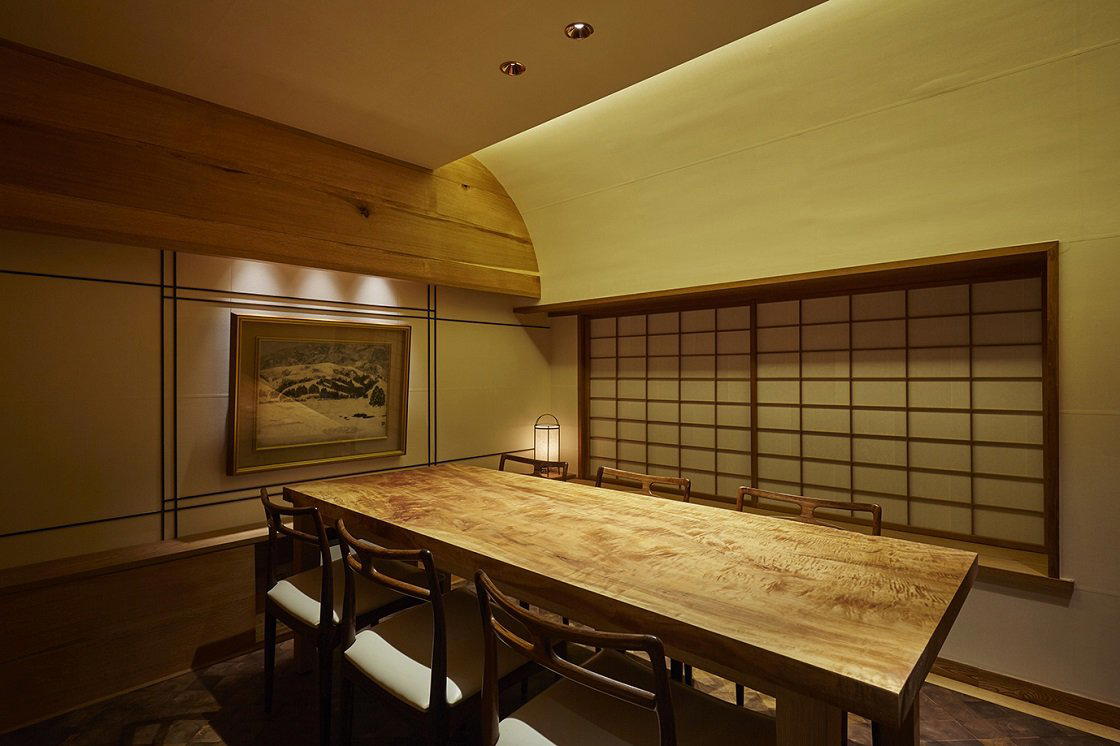


Bars in Osaka
All bars in Osaka →




Hotels in Osaka
All hotels in Osaka →



Wineries in Osaka
Browse all →
Details
- Cozy
- Elegant
- Intimate
- Modern
- Business Dinner
- Date Night
- Special Occasion
- Group Dining
- After Work
- Private Event
- Chefs Counter
- Private Dining
- Standalone
- Design Destination
- Sake Program
- Tasting Menu
- Omakase
- Counter Dining
- Set Menu
- Sake
- Shochu
- Wine
A small, stylish townhouse hideout with a sleek counter on the first floor and a tranquil private room upstairs; lighting is warm and subdued, creating a relaxed yet refined atmosphere suited to focused omakase dining and business occasions.